
One marketer on Reddit opened LinkedIn one morning in May and counted 14 posts. Nine were about the same four frameworks they'd been reading about for three years, and AIDA was one of them. Their point was that marketers keep recycling the same dozen mental models in slightly new words.
They're right about the recycling. The bigger problem is that most lists of content marketing frameworks stop at the name. They don't say where a framework came from or whether anyone has shown it works.
They also skip the question that matters now. Does it help you show up when someone asks ChatGPT or Google's AI Overviews instead of scrolling ten blue links? Below are ten frameworks, ranked. I checked each origin against the original source where one exists on October 19, 2026, and left out any date no source could back up.
The 10 frameworks at a glance
The order runs from most to least useful for Google and AI search. Frameworks that start from what buyers type sit at the top, because search engines rank pages for queries and AI engines answer questions. The ones near the bottom are about how often you post or how you persuade.
| Framework | Where it came from | Starts from | AI questions it helps with |
|---|---|---|---|
| Pain-point SEO | Grow and Convert | Buying-intent keywords | Best X for Y, alternatives, X vs Y |
| They Ask, You Answer | Marcus Sheridan, book in 2017 | Questions buyers ask sales | Price, problems, comparisons |
| Topic clusters | HubSpot, April 2017 | A topic and its subtopics | Broad questions that fan out |
| Jobs to be done | Christensen and others, HBR, 2016 | The progress a buyer wants | How do I questions |
| E-E-A-T | Google, Experience added in 2022 | Trust and first-hand proof | All of them, indirectly |
| Skyscraper technique | Brian Dean, Backlinko | Pages that earned links | Few directly |
| Hero, Hub, Help | Google's YouTube guidance | A mix of content types | Help content only |
| Content pyramid | Gary Vaynerchuk | One big pillar piece | Few directly |
| 4-1-1 rule | Andrew Davis, Tippingpoint Labs | A posting ratio | None |
| AIDA and PAS | Early ad and sales copy | The reader's mood | None |
What AI engines answer, and why that sets the order
AI engines cite different kinds of pages for different kinds of questions. When we sorted 308 citations from answers to 24 buying questions in September 2026, roundups and alternatives pages took 71% of the citations for software questions. For services such as accounting and insurance, it flipped, and explainers and service pages took about 70%.
So a framework that leads you to a fair roundup or a clear explainer gives an engine something to quote. A posting ratio doesn't produce any page at all. Our AEO content playbook breaks down which format each question type gets answered from.
The content marketing frameworks, ranked for Google and AI search
1. Pain-point SEO
Grow and Convert, the content agency, says on its own page that it coined pain-point SEO. The idea is to rank content ideas by buying intent instead of search volume, with conversions as the goal. The page carries a Benji Hyam byline and was last updated on March 17, 2026, but it doesn't say when the term first appeared.
The evidence is the agency's own client data. In one client's screenshot, top-of-funnel posts converted between 0.03% and 0.19%, while three bottom-of-funnel posts converted at 0.3%, 0.4% and 4.3%. Another client's article drew only 1,612 pageviews but brought in 39 product signups. That's an agency showing results for the method it sells, with the clients unnamed.
It fits AI search because it picks the queries people ask when they're ready to buy, like "best help desk for a small team". Those are the questions where roundups win most citations. Funny enough, "pain point seo" itself gets about 50 US searches a month in Google keyword data. That's the kind of small, high-intent query the method tells you to chase.
2. They Ask, You Answer
Marcus Sheridan published They Ask, You Answer in January 2017, and a second edition came later. The framework grew out of his pool company, River Pools and Spas, around the 2008 recession. His rule was to answer every question buyers ask in public, including the ones most companies dodge, like what things cost and what goes wrong.
The proof is mostly one company's story, told by the man who runs it. Still, the advice lines up with what AI engines quote. In the same 308-citation sample, head-to-head comparisons made up 15% of OpenAI's citations, and pricing pages earned 7 of the 167 software citations.
If your buyers talk to sales before they sign, this is where I'd start. Take the ten questions your sales team hears every week and publish an honest page for each one.
AI search traffic grew 835% this year. Is your content ready?
RankControl generates 26 content formats optimized for ChatGPT, Claude, and Perplexity. Published on your domain, matched to your brand.

3. Topic clusters (hub-and-spoke)
HubSpot's research team gave us the words "pillar" and "cluster" in a report from April 2017. HubSpot also sells software for planning clusters, so treat the report as an origin story from a company with something to sell.
The AI case comes from query fan-out, where Google splits one question into several smaller searches. A study covered by Search Engine Land in December 2025 looked at about 173,000 URLs. Pages that also ranked for a fan-out query were 161% more likely to be cited in AI Overviews, a point Search Engine Land repeated on X in October.
Ranking for the main query isn't enough. Pages that also ranked for a fan-out query were 161% more likely to be cited in AI Overviews. Here's how to build #SEO clusters that cover both: https://t.co/MMxHFetXCO https://t.co/AiAWrrZCoY
 Search Engine Land@senginelandOct 5, 2026
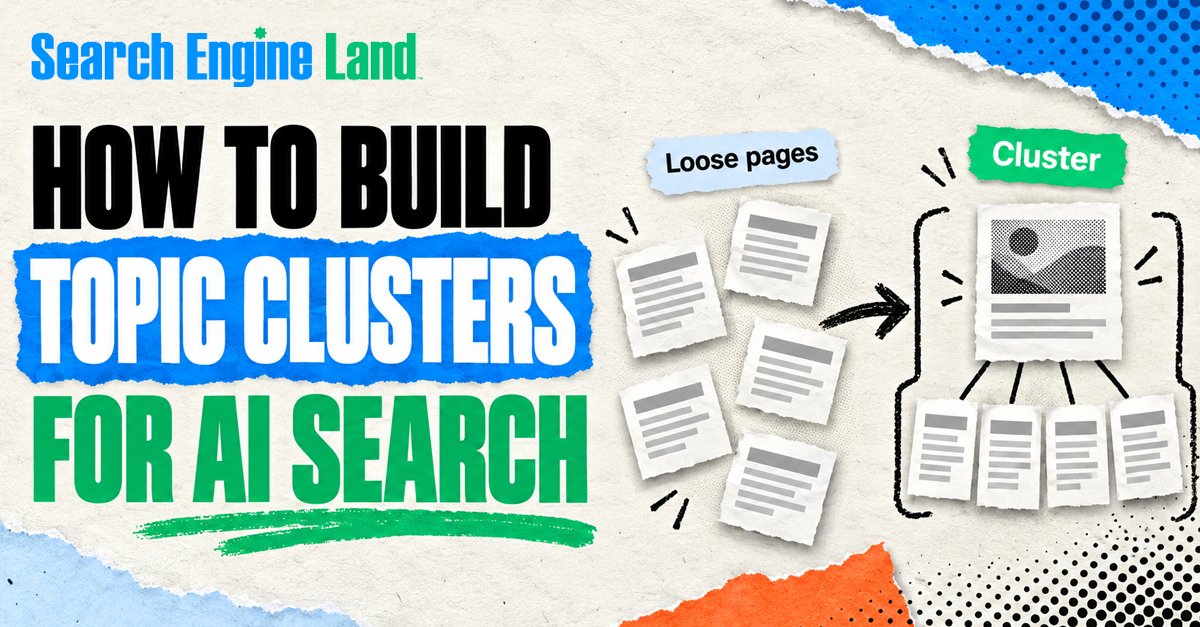
We've covered how to build one step by step in topic clusters vs content hubs, so I won't repeat it here.
4. Jobs to be done
Clayton Christensen, Taddy Hall, Karen Dillon and David Duncan laid out jobs to be done in the September 2016 issue of Harvard Business Review. The theory says people "hire" a product to make progress, so you study the job, not the buyer's age or title. Nobody I could find was first to apply it to content. Marketers picked it up bit by bit.
This is where JTBD and pain-point SEO split. JTBD tells you why someone buys, which you learn in interviews. Pain-point SEO tells you what they type. Grow and Convert even built "JTBD keywords" on the theory, meaning searches where someone describes a problem your product solves without naming a product.
Reddit lands on the pain-point side. One r/content_marketing reply split content into "what they think people want to see" and "what customers actually want to know". A reply in r/DigitalMarketing said a campaign written around the exact complaints buyers posted in forums beat the team's prior six months.
My take is to run the interviews first, then turn what you hear into a keyword list. JTBD content suits "how do I" questions, and for service questions explainers took about 70% of the citations in our sample.
5. E-E-A-T as an editing lens
Google added the first E, for Experience, on December 15, 2022, in a Search Central post by Elizabeth Tucker. E-E-A-T stands for experience, expertise, authoritativeness and trust, and it lives in the guidelines Google's human raters use.
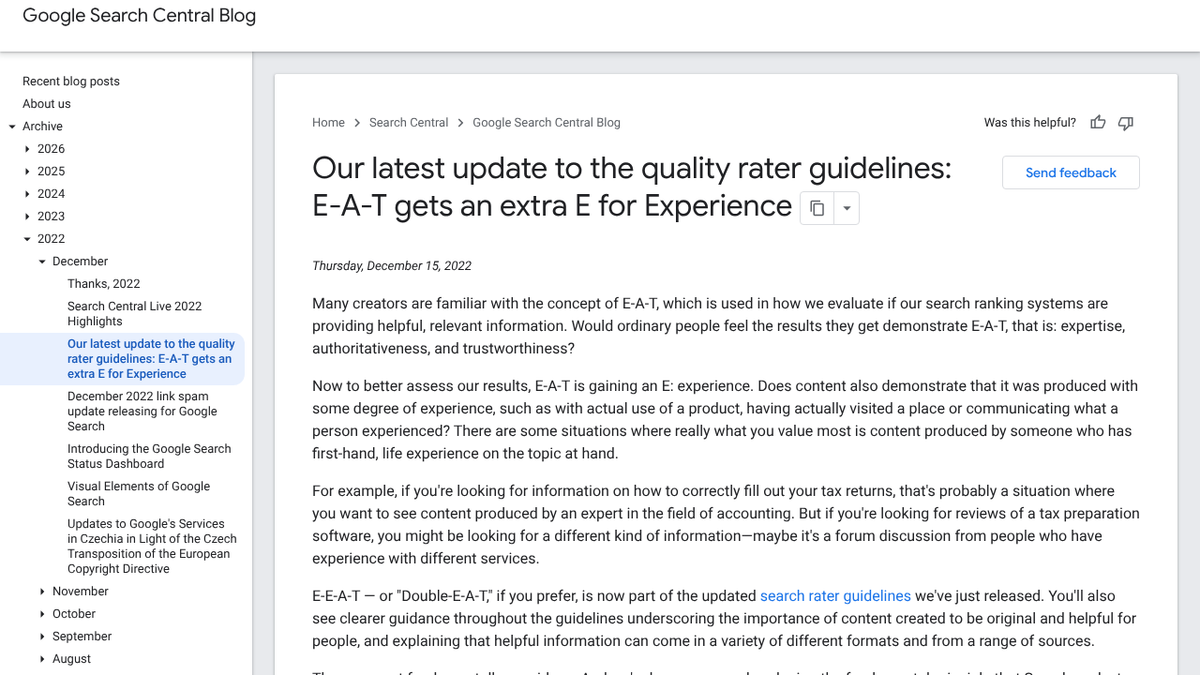
The same guidelines say rater scores don't directly change rankings. So E-E-A-T can't tell you what to write, but it's a good check on a finished draft. Does it show first-hand use, name who wrote it, and back its numbers with sources? Our E-E-A-T explainer goes deeper on what raters look for.
6. The skyscraper technique
Brian Dean's Backlinko page lays out the method. You find a page that already earned lots of links, make a better one, and email the sites that linked to the old page. His proof is a list of Google ranking factors he published on April 18, 2013. By his account, 160 emails landed 17 links, an 11% hit rate, and organic traffic to his whole site doubled in 14 days. It's still one case study by the person who named the method.
Practitioners are blunter now. In an r/Agentic_SEO thread asking whether the method still works, one reply called it "a fancy name for 'create good content and ask people to link to you'", which is "easier said than done." Another said it still works, just less, because Google cares more about intent.
For AI answers, the "make it bigger" half is the weak part. Ahrefs found a 0.04 correlation between word count and AI Overview citations across 174,000 cited pages, as we noted in pillar pages for the AI search era. More than half of those citations went to pages under 1,000 words, so keep the outreach and drop the 6,000-word habit.
7. Hero, Hub, Help
This one is widely credited to Google's guidance for YouTube publishers. Contentoo's guide links it to Lazar Dzamic, a former Googler, and I couldn't find a dated Google source, so it gets no date here. Hero content is the rare big campaign, hub content is the regular series people come back for, and help content answers what people search for.
No study I found tests it, since it's a planning model for a video calendar. For search, only the help part counts. "How do I" searches on Google and YouTube need an answer, and a hero campaign rarely gives one.

Built by the team that got cited in 48 hours.
Content generation, backlink building, AI visibility tracking, and Google rankings. One platform, zero guesswork.
8. The content pyramid
Two models share this name. Doug Kessler at Velocity Partners talked about a B2B content quality pyramid, but this entry is Gary Vaynerchuk's model, which his own site calls a reverse pyramid. You make one big pillar piece, like a keynote or a vlog, and cut it into dozens of small posts for each platform. His site gives no date for it.
There's no outside evidence beyond his own media business, but the AI angle is worth a look. One r/marketing reply suggested pulling the sources AI engines cite for twenty buyer questions in your category. In B2B tech, the commenter said, it's mostly Reddit, a couple of review sites and other people's ranked lists, and "the brand blog is rarely on it."
The pyramid gets your ideas into those places. The pillar at the top should be a page worth keeping fresh, which is what cornerstone content is about.
9. The 4-1-1 rule
For every six posts, four should educate or entertain, one can be a soft pitch, and one can be a hard pitch. Andrew Davis created it at Tippingpoint Labs, Joe Pulizzi spread it through the Content Marketing Institute, and the name comes from the US "411" information line. Contently wrote about it in February 2012, and an Adobe post from July 11, 2012 calls it a rule for Twitter.
It's a ratio, so there's nothing to test against search. It keeps a feed from reading like an ad, and it says nothing about what to publish, which is why it sits ninth.
10. AIDA and PAS
AIDA is older than most people think. A three-step version ran unsigned in Printers' Ink on February 9, 1898. E. St. Elmo Lewis gave a talk on it in Rochester on January 6, 1910, and the acronym first appeared in a 1921 article by C. P. Russell, according to the Wikipedia history of AIDA. PAS, short for problem, agitate, solve, is a decades-old direct-response formula with no clean origin I could find.
The evidence is weak. In a 1999 survey of more than 250 papers, Vakratsas and Ambler found little real support for step-by-step models of how ads work. A reply under that Reddit post about LinkedIn put it well, saying "we tried AIDA and it flopped so we did x instead" is worth more than another post calling AIDA timeless.
Use them inside a page, on a landing page or in a sales email, once pain-point SEO or They Ask, You Answer has picked the topic. AI engines quote facts from a page, and a persuasion formula adds none.
Which framework fits which job
Most teams need two of these, one to pick topics and one to check quality.
| If your job is | Use | Because |
|---|---|---|
| Picking the first 20 topics | Pain-point SEO | It ranks ideas by buying intent |
| Selling to buyers who talk to sales | They Ask, You Answer | It turns sales questions into pages |
| Organizing 30 or more posts | Topic clusters | Fan-out rewards full coverage |
| Learning what buyers need | Jobs to be done | Interviews show the job behind a search |
| Checking drafts | E-E-A-T | It asks for proof and a named author |
| Earning links to one page | Skyscraper outreach | Sites that already link will listen |
| Planning video or social | Hero Hub Help, 4-1-1 | They balance big moments and pitches |
If you can only run one, start with pain-point SEO and check every draft against E-E-A-T. The common mistake is treating a posting ratio or a copy formula as a plan. Orbit Media's 2026 survey found 92.4% of bloggers use AI for blogging, yet only 13.9% say their blog gets strong results, the lowest share in 13 years. More output hasn't fixed topic choice, and our digital content strategy template walks through the rest of a plan.
Running the question-first part on autopilot
Pain-point SEO and topic clusters need the same steady work. Someone has to find the questions, write against what already ranks, publish, and then check whether search engines and AI answers picked the page up. That last step is the one that slips, because checking seven AI engines by hand every week takes real hours.
RankControl does that loop for you. We plan titles from the questions buyers actually search within your topics, write each article against the pages already ranking for its keyword, and publish it on your own site. Every week we check 50 queries on seven AI engines, from ChatGPT and Claude to Grok, Google AI Mode and Google AI Overviews, so you see which of your pages they cite.
You can run every framework here by hand with a spreadsheet and a lot of tabs. Or RankControl can run the question-first part every month for one $400/mo plan with a 7-day free trial, while you spend your time on the interviews only you can do.
See your first AI citation report in under 5 minutes.
No setup calls. No onboarding meetings. Connect your domain and see where AI mentions your brand right now.