
In February, a marketer shared in r/DigitalMarketing what they'd noticed about which content each AI engine cites. ChatGPT seemed to reward sites that had written deeply on one topic. Perplexity pulled from a wider mix, including forums and niche sites, and favored fresh content. AI Overviews behaved like Google with extra steps.
Content that gets cited by ChatGPT vs Perplexity vs AI Overviews
been nerding out on this lately so figured id share what ive noticed ChatGPT seems to pull from whatever has strong topical authority. like if you've written extensively about one thing, you show up more. doesn't seem to care much about tra...
Their sharpest point was that the overlap between the three was surprisingly small. That matches what we've seen, but in our data the engine wasn't the biggest variable. The kind of question was.
We sorted 308 citations by page format, from answers to 24 buying questions we collected on September 26. The answers came from OpenAI's API with web search turned on and from Perplexity's API. This playbook covers what the citations showed, then the format to publish for each kind of question. Sources were checked on September 27, 2026.
What 308 citations say about formats
Half the questions were about software, such as help desks and CRMs. The other half were about services, such as accountants and business insurance. Here's how the cited pages broke down:
| Format | Software questions (167 citations) | Services questions (141 citations) |
|---|---|---|
| Roundup or alternatives page | 118 | 21 |
| Product or service page | 14 | 45 |
| Explainer or how-to article | 4 | 53 |
| Head-to-head comparison | 10 | 12 |
| Review site or marketplace listing | 11 | 0 |
| Official docs or government page | 1 | 8 |
| Pricing page | 7 | 0 |
Four more citations went to single-product reviews and other pages.
For software, roundups took 71% of the citations. For services, it flipped: explainers and service pages took about 70%, and roundups only 15%. A buyer asking for the best help desk gets a list of lists, while a buyer asking how to choose an accountant gets guides and firm pages.
We call this the question-format match. The format an engine cites depends mostly on the kind of question, so the page to publish depends on which questions you want to win. Most AEO advice skips this step and recommends one format for everything.
The engines differed too. Roundups made up about half of Perplexity's citations, against 28% of OpenAI's, which spread its citations more evenly across comparisons, product pages and review sites. Treat all of this as one snapshot: the API isn't the ChatGPT app, and each question ran once or twice.
One more thing stood out. Of the 118 roundups cited for software questions, 85 were published by a company selling in that category. Most of the "best help desk software" pages engines cite are written by help desk companies.
See your first AI citation report in under 5 minutes.
No setup calls. No onboarding meetings. Connect your domain and see where AI mentions your brand right now.

The playbook, question by question
Start from the questions buyers ask, then pick the format:
| Buyer question | Example | What to publish |
|---|---|---|
| Best option for a need | "best help desk for a small team" | An honest roundup or alternatives page |
| One option against another | "Help Scout vs Front" | A head-to-head comparison |
| Cost | "how much does Help Scout cost" | A pricing page with the billing period spelled out |
| Who can help me | "CPA for real estate investors in Denver" | A service page that names who you serve |
| How to do something | "how to choose an accountant" | An explainer that answers in the first paragraph |
| Is it any good | "is QuickBooks legit" | Current review profiles and case studies |
| Rules and requirements | "how to claim the R&D tax credit" | Links to official sources, plus your own help docs |
Roundups and alternatives pages
These win software questions, so every software company needs a few. Write them for your category's real buying questions and include your own product where it honestly fits. Say who each option suits instead of ranking everything as "best."
Two cautions apply. Engines are starting to discount lists, and our separate test of the formats GPT-5.6 cites found it skipped listicles entirely in favor of vendors' own pages. And a roundup that ranks you first on every question reads as an ad. Our guide to alternatives pages covers how to write one that holds up.
If you publish one as a vendor, say so near the top. Readers spot the conflict anyway. Most of the vendor roundups we saw still gave competitors real entries, often with prices. A page that admits its bias while treating rivals fairly is easier to trust than one pretending to be neutral.
Head-to-head comparisons
Comparisons were a small share overall but a large one for OpenAI, at 12 of its 78 citations. Most came from third-party comparison sites. One was Intercom's own page comparing itself with Help Scout, cited for a question about support software for SaaS startups.
Keep them fair. Name the other product's real strengths, show both prices with dates and say which kind of buyer each fits. Our guide to comparison pages that get cited goes into structure.
Pricing pages
Pricing pages were only 7 of 308 citations, but they matter more than the count suggests, because they're where answers about your product get their numbers. They're also where we found errors. Help Scout's pricing page is a good example:
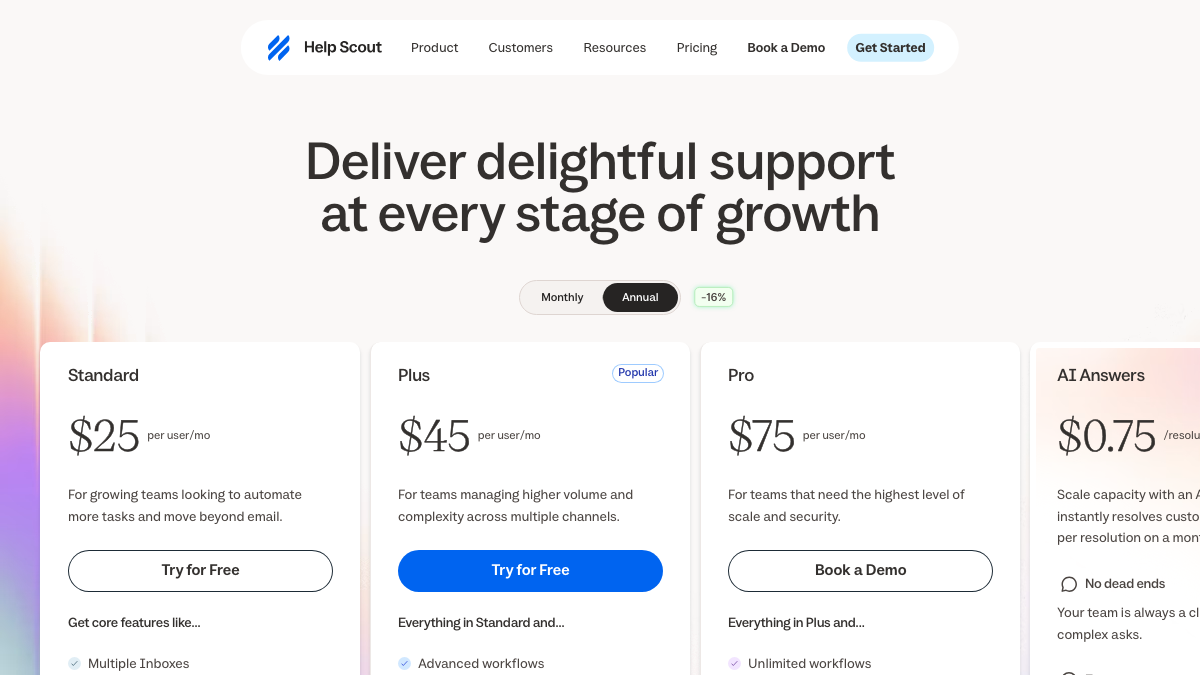
The toggle defaults to annual billing, and the word "annual" doesn't appear next to the prices. In our checks this month, both Google's AI Overview and Perplexity repeated $25, $45 and $75 without saying those were annual prices. Our Perplexity citation audit shows how that happens.
The fix is small. Write the billing period next to each price, list plan limits in plain text and add a "last updated" date.
Your competitors are building backlinks while you read this.
Organic outreach, social mentions, and citations from Editorial Circle member sites, with managed backlinks available as an add-on. Grow your domain authority without running the campaign yourself.

Product and service pages
Service pages carried the services questions. For "CPA for real estate investors in Denver," both engines cited individual firms' real estate pages over directories. The pages that got cited said plainly who they served and where, and which problems they handled.
Software product pages worked the same way on narrower questions. For "best customer support software for a SaaS startup," Perplexity cited Help Scout's and Zendesk's pages written specifically for SaaS companies. If you serve several segments, give each one its own page with its own specifics.
Explainers and how-to guides
For services questions, explainers took 38% of citations. On Perplexity, the question "how do I choose a good accountant" drew 13 cited guides. Four came from accounting software companies: QuickBooks, Xero, FreshBooks and Sage, all selling to the same small businesses that ask.
That's the opportunity. Write the explainer your buyers need a step before they need you, and answer the question in the first paragraph. For category terms, a clear definition page helps too, as our guide to glossary pages shows.
Review profiles and case studies
G2, Capterra, Software Advice and app marketplace listings drew 11 citations, all on software questions. You don't write those pages, but you control your profiles. Keep your plan names, prices and categories current, since an old listing can outrank your own page as a source.
Listings can also disagree with your own site without being wrong. The Help Scout answer cited its Shopify App Store listing, which showed the monthly price of $30 for the Standard plan, while the pricing page showed the annual $25. The answer had to reconcile the two, and it settled on a range.
Case studies didn't show up in our buying questions, but they're what engines reach for when someone asks whether a product works for a company like theirs.
Official docs and data pages
Government pages and help documentation took nine citations, mostly for questions about rules, such as which IRS form claims the R&D tax credit. You can't replace those sources, but you can link to them and keep your own help docs public and crawlable.
Original data works the same way for factual questions. None of our buying questions asked for a statistic, so data pages didn't appear here. They're a different job, covered in our guide to statistics and data roundup posts.
How to find the format a question rewards
You don't need our dataset to do this for your own market. Pick one buyer question, ask it in ChatGPT and Perplexity, and open every page each answer cites. Then sort the pages into the formats in the table above.
A few rules kept our sorting consistent. A page listing several options went into roundups, even if it was called a guide. A page comparing two or three named products went into comparisons. Pages that sold one company's own offering counted as product or service pages, whatever their title said.
Do this for your top 20 questions and a pattern shows up quickly. Questions where most citations are roundups need a roundup or alternatives page. Questions where firms' own pages win need a stronger service page. Run each question more than once, since a single answer can cite a different mix.
What to publish first
If you're starting from zero, work in this order:
- Fix your pricing and product pages, since answers about you quote them directly.
- List your top 20 buyer questions and tag each with the format it rewards.
- Publish the missing pages in that format, starting with the questions closest to a purchase.
- Keep your review profiles current, then add comparisons for your three closest competitors.
Check the answers again after each batch. Formats that win today can lose ground after a model update, as listicles did with GPT-5.6. Our guide to prioritizing AEO projects covers how to rank this work against everything else on the list.
Done by hand, publishing eight solid articles a month takes 16 to 24 hours, and checking 50 questions on seven engines takes about six hours a week. Those are rough estimates.
RankControl's content engine writes each article against the pages already ranking for its keyword and publishes it on your own domain. The content engine covers the formats in this playbook, from comparisons to how-to guides. AI visibility tracking runs your 50 questions every week on seven engines, marks each one as mentioned, cited or both, and records which competitors and sources each engine used.
You can map questions to formats yourself with a spreadsheet and your team's writers. Or RankControl's agents can publish and track the pages every week while you choose which questions to win.
You're getting AI traffic. But do you know where it comes from?
RankControl credits every visit to the assistant that sent it: ChatGPT, Perplexity, Claude, Gemini, Copilot, or Grok. Full source attribution, next to your Google traffic.