
Every number you've read about how GPT-5.6 changed ChatGPT's sources came from someone outside OpenAI. OpenAI's own release notes from August 6 describe a more reliable model and a new setting for how much thought it puts into an answer. The GPT-5.6 system card covers safety testing. Neither says anything about web search or citations. The shift everyone's been charting was measured by third-party trackers watching the answers change.
So we measured it ourselves, for one narrow question: which content formats does ChatGPT cite now? On September 26, 2026, we sent 12 B2B buying questions to GPT-5.6 through OpenAI's API, with web search on, and sorted every citation by the type of page it pointed to.
What we asked, and what came back
We picked questions across the stages of a purchase. That meant three "X vs Y" comparisons like Asana vs monday.com for a 30-person team, three "best X for Y" questions like payroll software for a restaurant, and two about cost. It also meant two how-to questions and two definitions, "what is revenue operations" and "what is a data clean room."
Ten of the 12 set off a search, and they returned 44 citations between them. Here's how they sorted by format:
| Page format | Citations | Share |
|---|---|---|
| Help-center docs and technical standards | 16 | 36% |
| Vendor product and feature pages | 14 | 32% |
| Vendor pricing pages | 12 | 27% |
| Third-party cost guides | 2 | 5% |
| Listicles, review sites, independent comparisons, video, news | 0 | 0% |
Every one of the 44 went to a vendor's own site, a documentation page, a standards body or a cost guide. Not one went to a "best tools" roundup, a review site like G2, or an independent comparison article, and that held for the six questions those formats are written for.
See your first AI citation report in under 5 minutes.
No setup calls. No onboarding meetings. Connect your domain and see where AI mentions your brand right now.

Comparison questions went to the vendors themselves
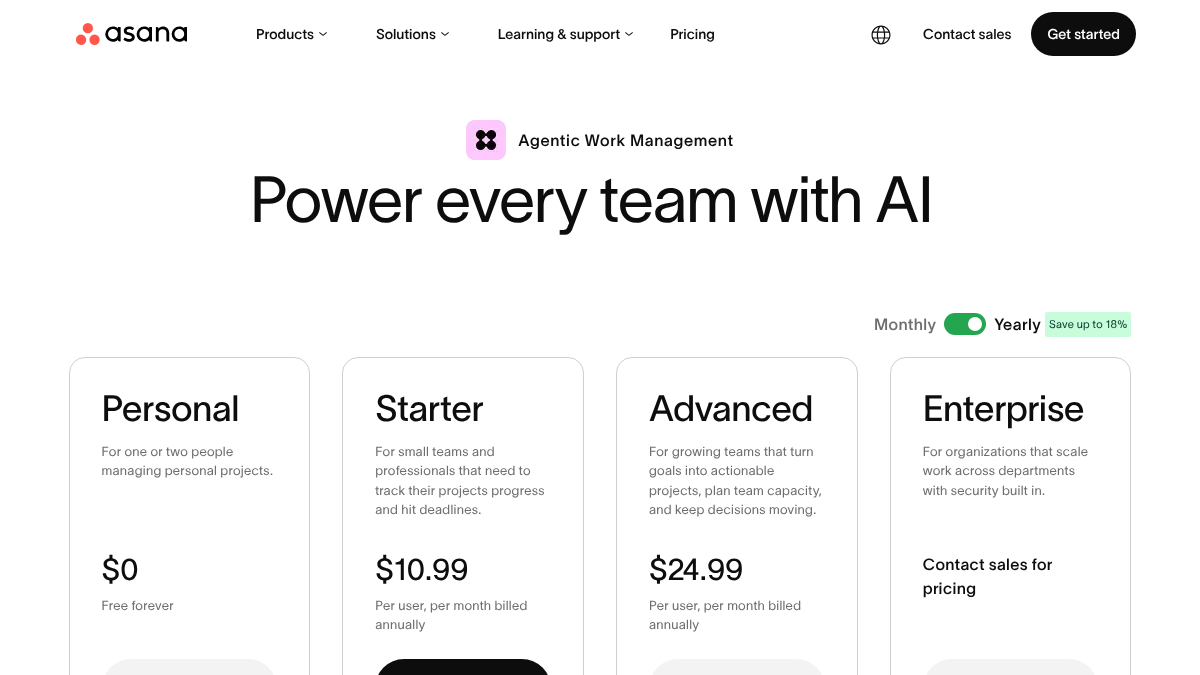
For the three comparisons, ChatGPT built its own side-by-side from the vendors' pages. All eight citations were vendor pages, mostly pricing. For Asana vs monday.com, it cited Asana's pricing page and monday.com's support docs.
One result stood out. For QuickBooks vs Xero, ChatGPT cited QuickBooks' site and nothing from Xero. If your competitor's pricing page is clearer than yours, ChatGPT may build the whole comparison from their side. We covered how to structure those pages in GEO for ChatGPT.
Best-for questions went to product pages
For the "best X for Y" questions, ChatGPT again skipped the roundups and went to the products. The restaurant payroll question cited six vendors directly: 7shifts, ADP, Gusto, OnPay, Toast and Square. The CRM question for solar installers cited five vendors' product pages.
That's a real change for anyone who built a content plan around "best tools" listicles. On ChatGPT, at least in our sample, the listicle wasn't the source. The vendors on the list were.
How-to questions went to whoever owns the answer
The two how-to questions split in a way that explains the whole pattern. For migrating from Mailchimp to Klaviyo, all eight citations were Klaviyo and Mailchimp help-center pages, and one Klaviyo article was cited four times in a single answer. For setting up SSO, ChatGPT cited the standards themselves: the OpenID Connect spec, IETF RFCs, an OASIS SAML overview and the OWASP cheat sheet. No vendor blogs, no tutorials.
We'd sum it up as the answer owner rule: ChatGPT cites whoever owns the answer. Prices are owned by the vendor, so it cites pricing pages. Migration steps are owned by the product, so it cites help docs. A protocol is owned by a standards body, so it cites the spec.
The cost questions fit too. A software switching cost question cited vendor pages. "How much does a SOC 2 audit cost" cited two third-party cost guides, because no single vendor owns the price of a service.
Definition questions didn't trigger a search at all
Both definition questions got no web search and no citations. GPT-5.6 answered "what is revenue operations" and "what is a data clean room" from what the model already knew. We saw the same thing with older models in earlier tests, and it's even clearer here.
If your content plan leans on glossary posts to win ChatGPT citations, those posts may never enter the contest. They can still earn Google traffic and AI Overview citations, so they aren't worthless. They're just the wrong bet for ChatGPT.
Your competitors are building backlinks while you read this.
Organic outreach, social mentions, and citations from Editorial Circle member sites, with managed backlinks available as an add-on. Grow your domain authority without running the campaign yourself.

Format by format, where things stand
Our larger October sample of which page types AI cites adds shopping, local and statistics questions to the picture. Putting our test next to the larger benchmarks, here's how each format looks on ChatGPT right now:
| Format | On ChatGPT after GPT-5.6 |
|---|---|
| Pricing pages | Cited often, especially for comparisons |
| Product and feature pages | Cited often for "best X for Y" questions |
| Public help-center docs | Cited for how-to questions about a product |
| Standards and specs | Cited for protocol and compliance how-tos |
| Cost guides for services | Cited when no single vendor sets the price |
| Independent comparison articles | None in our test, still common on Perplexity |
| "Best tools" listicles | None in our test, less often in larger samples |
| Review-site profiles | None in our test, strong on Perplexity |
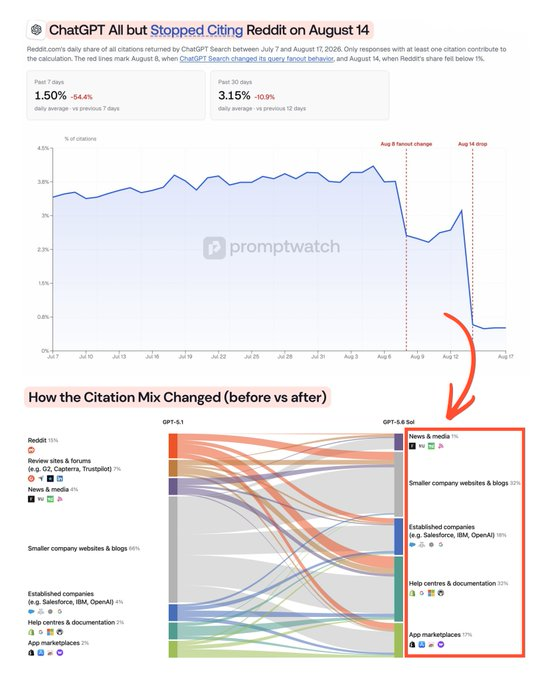
| Reddit and forums | Largely gone from ChatGPT since August |
| Glossary and definition posts | Often never searched for |
The pattern in that table is the answer owner rule again. The formats that held up are the ones where the page itself is the source of the fact.
Other engines didn't make the same move
This isn't a rule for every AI engine. A benchmark Gadex ran on August 11, days after the update, looked at 50 prompts across ChatGPT, Perplexity and Gemini. It found 83.3% of ChatGPT's citations came from vendor-owned domains, with pricing pages the single biggest group.
Perplexity went the opposite way in the same benchmark. Most of its citations went to comparison, list and review pages. So the roundups and review profiles that ChatGPT ignored still matter for Perplexity, and Google's AI Overviews also cite plenty of third-party pages.
The tilt also isn't entirely new. VisibleIQ studied ChatGPT back in March, on GPT-5.4. It found about three quarters of product-specific citations already pointed to the product's own website. GPT-5.6 seems to have pushed further in a direction ChatGPT was already heading.
The change also reached people well outside marketing. When the news that Reddit was fading from ChatGPT's citations hit r/technology, the thread drew more than 3,000 upvotes, and the top comments welcomed it.
Reddit fades from ChatGPT citations
One AI news account on X noticed something that fits our results. Around the time Reddit dropped out, ChatGPT's own searches got more specific, with queries like "official pricing" and searches limited to a single vendor's site.
Reddit is disappearing from ChatGPT citations right now, but I honestly think everyone is focusing on the wrong part of the story: Reddit isn’t what matters most here. Because something much bigger seems to have changed in how ChatGPT searches. 8 August: ChatGPT started citing https://t.co/DZ2GEyRP66
 AI Evolution@AiEvolutio58513Sep 8, 2026
A five-minute check on your own pricing page
You can see where you stand with two questions. Ask ChatGPT, with search on, "[your product] vs [main competitor] for a [size] team" and "[your product] pricing." Then look at what it cites.
If it cites your pricing page and gets your prices right, you're in good shape. If it cites a competitor's comparison page or a review site for your prices, your own page probably isn't giving it what it needs. The usual fixes are putting prices in plain text rather than in an image or a script, saying clearly what each plan includes and who it's for, and adding the date you last changed prices.
Run it more than once, too. When we reran the Asana vs monday.com question the same day, ChatGPT cited the same two companies but a different monday.com support article. Single answers move around, so look for the pattern across a few runs.
What to change in your content plan
Start with the formats ChatGPT cites now, since they're pages you already own:
- Your pricing page. Put plan names, prices, limits and who each plan fits in plain text, and keep it current. It's the page ChatGPT reached for most in comparison questions.
- Your product and feature pages. Say what the product does for a specific use case in the first lines, with numbers where you have them.
- Your help center. Make sure it's public and crawlable, since it's what ChatGPT cites for how-to questions about your product. Docs behind a login can't be cited.
Keep the listicles, comparisons and review profiles, but for Perplexity and Google more than ChatGPT. Our comparison pages guide covers what still makes them work.
Remember this was 12 questions on one day. The trackers that follow thousands of prompts report some roundups still getting cited by ChatGPT, and answers change from one day to the next. For the wider August timeline, see what changed in GPT-5.6 and what happened to Reddit citations.
Checking this for your own brand takes a few hours a month by hand. Ask ChatGPT your buyers' questions, note which of your pages get cited, and note which competitor pages get cited instead. Or RankControl can run it for you. AI visibility tracking checks up to 50 buyer questions every week on seven engines, including ChatGPT and Perplexity, and shows which sources each engine quoted.
For a first look, run a free check of your brand in AI answers.
You're getting AI traffic. But do you know where it comes from?
RankControl credits every visit to the assistant that sent it: ChatGPT, Perplexity, Claude, Gemini, Copilot, or Grok. Full source attribution, next to your Google traffic.