
Perplexity sells itself to marketers with a confident headline. "Accurate research that ships campaigns," its enterprise marketing page says. Underneath, it lists six marketing jobs it claims to do.
So is Perplexity good for marketing? We think the fairest way to answer is to take those six claims one at a time. For each, here's what Perplexity says, what holds up and what you should check yourself. We read its marketing page, help center and pricing on October 18, 2026, along with what users report on Reddit. Then we cover the other half of the question, which is Perplexity as a place your brand can get cited.
If you want the general tour of what Perplexity is and how to set it up, our guide to Perplexity for marketers covers that. This post is the verdict.
The six jobs Perplexity claims
Perplexity's marketing page is aimed at enterprise teams. Its six use cases are grouped under labels like research and optimization.
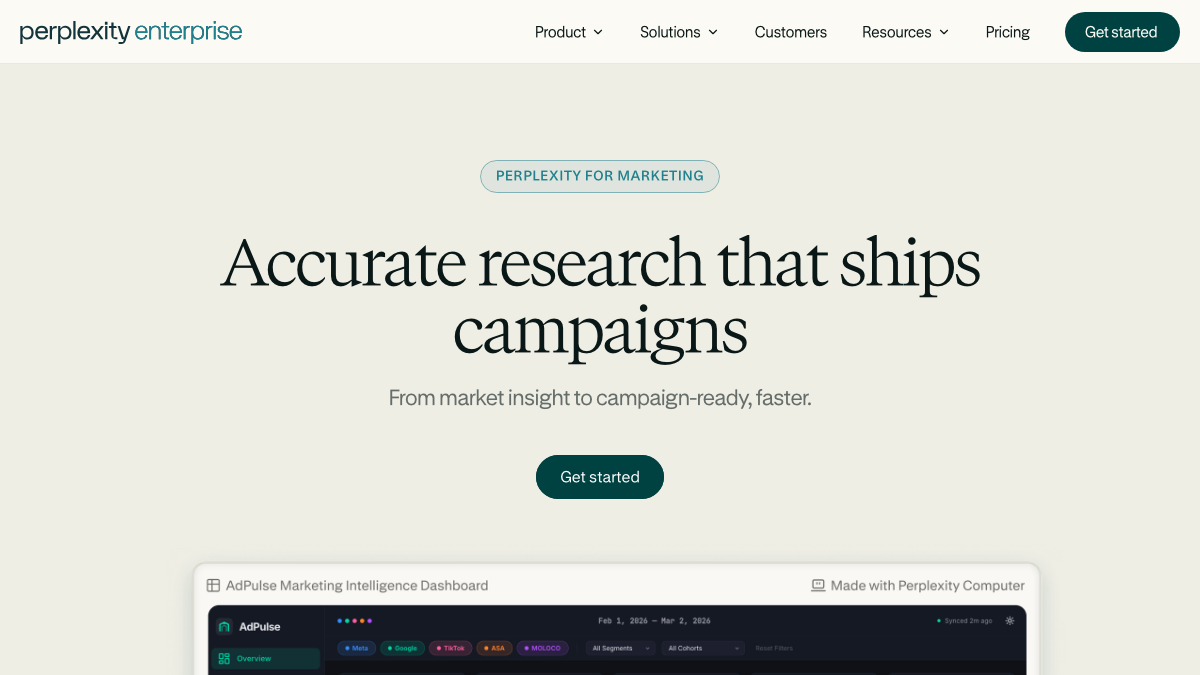
Here's the short scorecard. The sections below explain each verdict.
| Job Perplexity claims | Our verdict | Why |
|---|---|---|
| Competitor messaging audit | Strong fit | Reads public pages and cites them |
| Campaign brief writing | Good first draft | Useful context, still needs your brand and data |
| Customer sentiment analysis | Depends on your data | Public reviews yes, private tickets need setup |
| Win/loss dashboards | Enterprise only | Needs CRM access and an agent plan |
| SEO analysis | Verify everything | Doesn't say where ranking and link data comes from |
| Ad keyword recommendations | Verify everything | Volumes and bids need a first-party check |
The pattern is clear. Perplexity is best when the job is reading the public web and showing its sources. It's weakest when the job needs data that lives in someone else's index.
Competitor messaging audit: strong fit
Perplexity says it can "pull positioning language, recent campaign themes, and product claims from competitor web presence" and turn them into a cited comparison.
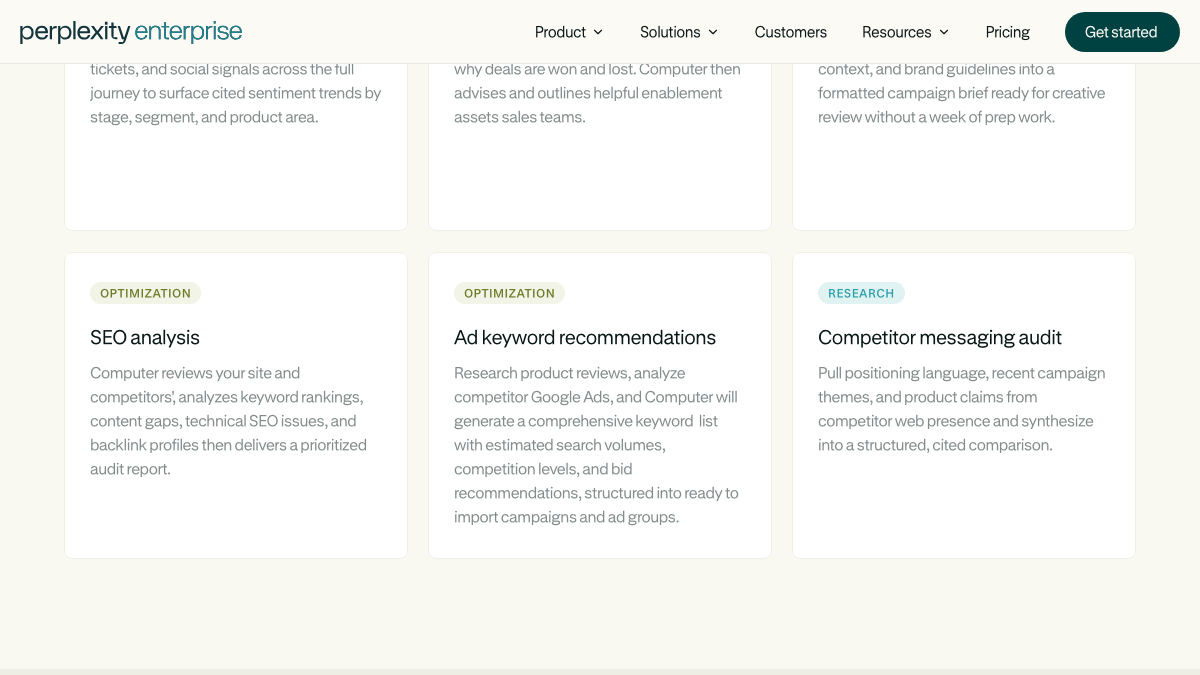
This is the best match between what Perplexity does and what a marketer needs. Competitor homepages, pricing pages and launch posts are public. Perplexity reads them and links each claim back to its page, so you can check a quote in one click.
The limit is freshness. If a competitor changed its pricing last week, an answer built on an older copy of the page can be wrong. Open the pricing page itself before you quote a number.
Campaign brief writing: good first draft
The page says Perplexity can combine "audience research, market context, and brand guidelines into a formatted campaign brief ready for creative review."
The market context part is where it earns its place. A brief that cites real category stats and competitor positioning is better than one built from memory. But the brand guidelines and audience research have to come from you. Perplexity doesn't know your customers. Treat the output as a draft that saves an hour, not a brief you can send as is.
Customer sentiment analysis: depends on your data
Perplexity says it can "aggregate customer reviews, support tickets, and social signals" into sentiment trends.
For public reviews, like G2, app stores and Reddit, this works the way the competitor audit does. It reads what's public and cites it. Support tickets are different. They're private, so Perplexity can only analyze them if your team connects them, which is an enterprise setup job. A small team using the free or Pro plan gets the public half only.
Win/loss dashboards: enterprise only
Win/loss analysis means reading your CRM notes each week to see why deals close or fall through. Perplexity's page describes its agent, Computer, doing this and suggesting sales assets.
That needs two things a small team may not have, a connected CRM and a plan that includes Computer. Perplexity's help center says Max and Enterprise Max plans come with monthly credits for Computer tasks. If you're on a cheaper plan, plan around not having this one.
See your first AI citation report in under 5 minutes.
No setup calls. No onboarding meetings. Connect your domain and see where AI mentions your brand right now.

SEO analysis: verify everything
Here the claim gets bigger. The page says Computer "reviews your site and competitors', analyzes keyword rankings, content gaps, technical SEO issues, and backlink profiles then delivers a prioritized audit report."
Content gaps and technical issues on public pages are fair game for a tool that reads the web. Rankings and backlink profiles are a different matter. Those numbers come from large crawl indexes that SEO tools spend years building, and the page doesn't say where Perplexity's figures come from.
So check any ranking number against Google Search Console, which is free and comes straight from Google. Treat any backlink count as a rough pointer. Our guide to what Perplexity means for SEO covers the search side in more depth.
Ad keyword recommendations: verify everything
The page says Computer will "generate a comprehensive keyword list with estimated search volumes, competition levels, and bid recommendations."
The keyword ideas themselves can be useful, especially when they come from reading competitor ads and reviews. The volumes and bids are where to be careful. Google's own Keyword Planner gives those numbers for free, from Google's data. Run any list Perplexity gives you through it before you build a campaign on the figures.
What users say about accuracy
The biggest complaint about Perplexity isn't any single job. It's accuracy. A thread on r/perplexity_ai asked what the point of paying is, after the poster kept getting wrong information even on the Pro plan. Several replies agreed. One person said they'd switched to Claude for reliability, and another described writing fact-check prompts against Perplexity's own answers.
I'm finding perplexity is giving me alot of incorrect information even on the pro plan. I have to keep checking it for accuracy, and it continues to let me down. What's going on? What's the point of paying for the subscription then? Are any of you experiencing this? And what other platform is better
A more recent thread put the question plainly. The poster used Perplexity for quick lookups, but re-checked sources for anything they'd put their name on. They asked whether others trust the citations or open every one. The top reply said a serious researcher reads the sources.
For people using Perplexity for serious research — how do you verify the answers?
Perplexity is my go-to for quick lookups, but for anything I'd put my name on, I find myself re-checking sources and it takes a while. What's your workflow? Do you trust the citations, or open every one?
That's the right habit. Perplexity's citations make checking fast, which is its real advantage over tools that don't show sources. But checking is still your job.
We call this the receipt rule. Perplexity hands you a receipt for every claim. The receipt is only worth something if you look at it.
What it costs
Perplexity's help center lists a free plan, Pro for individuals, and Max at $200 a month or $2,000 a year. For teams, Enterprise Pro starts at $40 per seat a month, or $400 a year. Several of the six jobs above lean on Computer, so check which plan includes enough Computer credits before you budget for them.
For most small marketing teams, the research jobs that score best, competitor audits and brief context, work fine on an individual plan.
Perplexity as a place to get cited
The other half of the question is whether Perplexity is worth winning as a channel. It's smaller than ChatGPT, but it isn't shrinking.
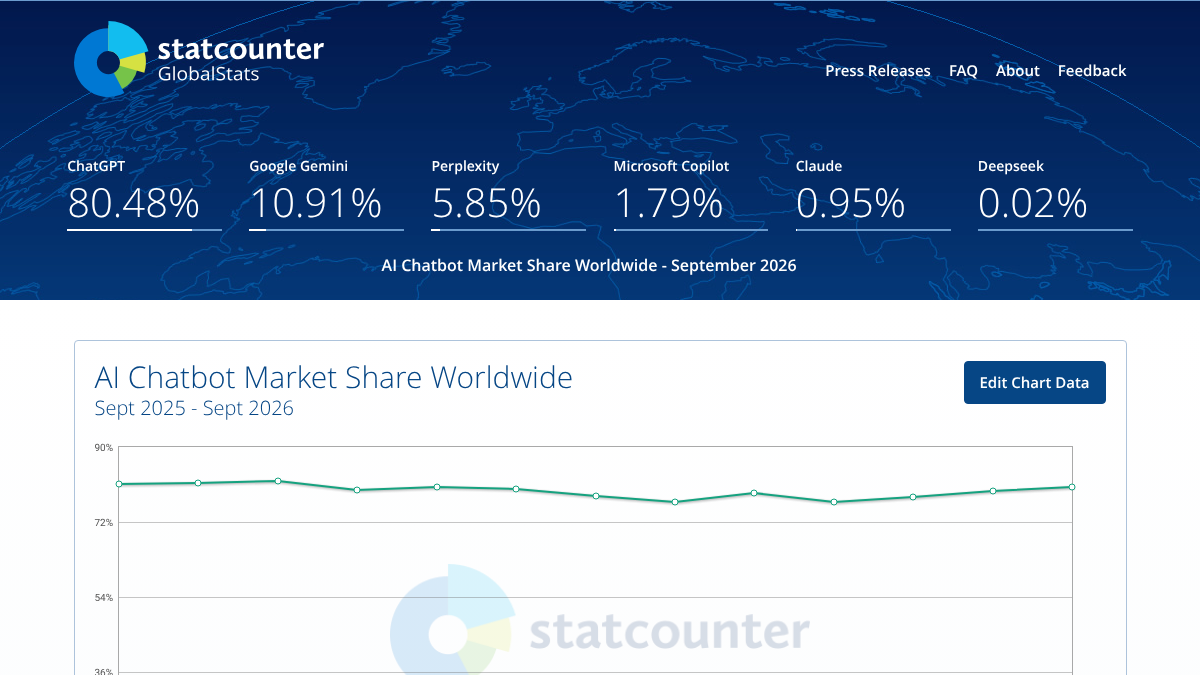
Statcounter put Perplexity at 5.85% of AI chatbot referrals worldwide in September 2026. That's up from 4.31% in August, the figure our earlier guide used. SE Ranking's 2026 study, covering 101,574 websites, measured Perplexity at 7.23% of AI referral traffic. In both, it's third behind ChatGPT and Gemini. Our breakdown of AI referral traffic by engine shows where Perplexity does better by country.
Perplexity also shows its sources more visibly than most engines, as numbered links beside the answer. A citation there is easy for a reader to click. That makes it a good channel for pages that answer a specific question with real detail.
Getting cited is mostly about the same things that work everywhere. Make sure Perplexity's crawler can reach your pages, put a clear answer near the top, and earn mentions on the sites it already cites. Our post on whether blocking AI crawlers stops Perplexity citing you covers the crawler side.
Your competitors are building backlinks while you read this.
Organic outreach, social mentions, and citations from Editorial Circle member sites, with managed backlinks available as an add-on. Grow your domain authority without running the campaign yourself.

The verdict
Perplexity is good for marketing research that depends on public pages and benefits from sources, above all competitor audits and the market context in a brief. It's a weak source of SEO and ad numbers, which you should take from first-party tools instead. And it's a real, if smaller, channel for getting your pages cited and visited.
Doing it yourself or handing it off
Using Perplexity for research takes no setup. Getting your brand into its answers takes ongoing work. You need pages that answer buyer questions, a check on whether Perplexity cites them, and a way to see when that changes. Done by hand, that's a few hours a week.
RankControl handles that part. It writes and publishes articles aimed at the questions your buyers ask, on your own domain. Its AI visibility tracking checks up to 50 of those questions every week across seven AI engines, Perplexity included, and records whether each answer mentioned you, cited you or both. Expect traffic from Google and AI search first, with citations following more slowly as other sites link to and mention you.
You're getting AI traffic. But do you know where it comes from?
RankControl credits every visit to the assistant that sent it: ChatGPT, Perplexity, Claude, Gemini, Copilot, or Grok. Full source attribution, next to your Google traffic.