On September 26, we asked OpenAI's API, with web search on, which CRM works best with Gmail for a five-person sales team. Before answering, it ran two searches, one of them "Pipedrive Gmail integration official pricing 2026," and pulled in 63 sources. The finished answer cited six of them.
That gap between what an engine reads and what it cites is most of what you need to understand about AI citation engines. This guide explains what the term means, how an engine builds and cites an answer, how accurate the citations are and how to measure your own. Sources were checked the same day.
Two things people mean by citation engine
An AI citation engine is an AI system that answers a question by searching the web or an index, then writes a response with links to the sources behind specific claims. ChatGPT's search mode and Perplexity are the best-known examples, and most AI assistants now work this way when they search.
The phrase has a second meaning that confuses things. When we searched "ai citation engine" and "citation engine" on Google, every organic result was a reference formatter for students, the kind of tool that turns a URL into an APA or MLA citation, such as Citation Machine and ZoteroBib. "Citation machine" alone gets about 450,000 US searches a month. Those tools don't search the web or pick sources, so this guide is about the first meaning.
How a citation engine builds an answer
Every engine does this differently in the details, but the sequence is similar across them:
- Decide whether to search. Our fifth test question, the difference between SPF, DKIM and DMARC, got no search and no citations at all, because the model could answer from what it already knew.
- Turn the question into searches. The model often writes brand names into its own queries. For "best payroll software for a US company with remote employees in several states," its search read "Gusto Rippling ADP Paychex comparison" before it had opened a single page.
- Read candidate pages. Depending on the engine and tier, that can mean full pages or short snippets. A July 2026 study of 1,249 ChatGPT answers found the free tier often worked from snippets of about 200 characters without opening the pages at all.
- Write the answer and attach sources. Each citation links a span of answer text to a URL, which is why the same page can support one sentence and be absent from the next.
OpenAI's developer documentation shows the last two steps plainly. A search call can run searches and, on reasoning models, open pages and look inside them. The answer then carries url_citation annotations that give each cited source's URL and title, plus where in the answer it applies.
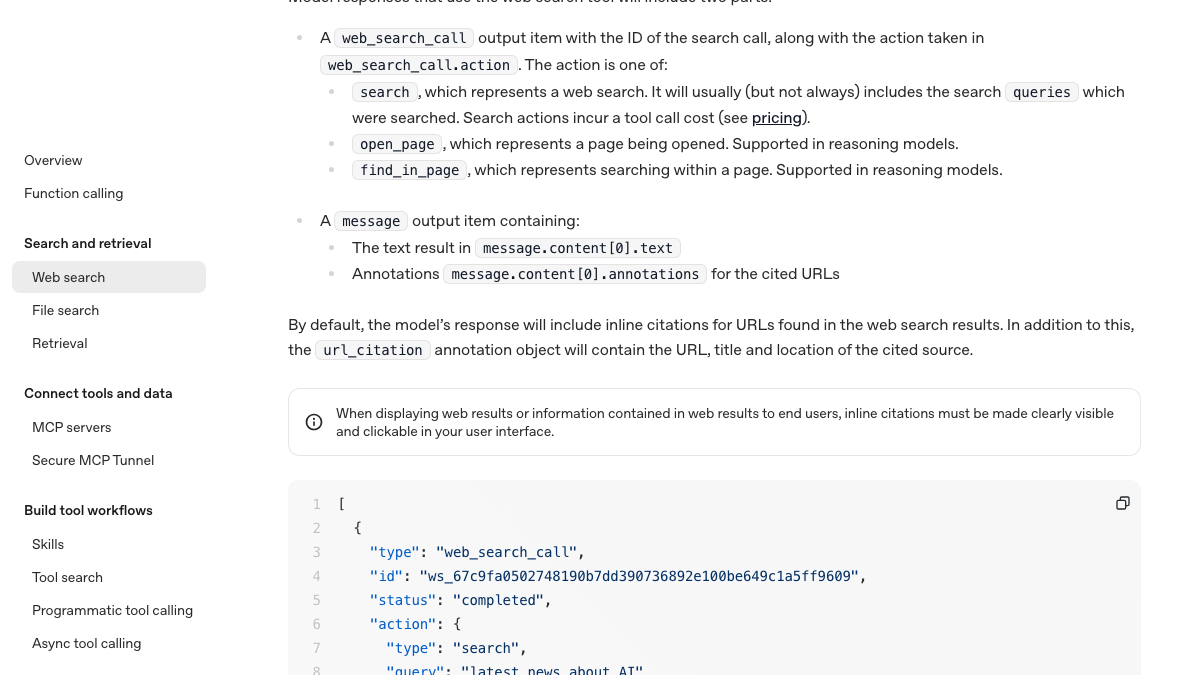
One detail from our test is useful for analytics. Every URL OpenAI's API cited carried a utm_source=openai tag, and the ChatGPT app adds utm_source=chatgpt.com to the links it shows, which is how clicks from citations become visible in your reports.
Most pages an engine reads never get cited
The gap in our opening example wasn't unusual. Across the four questions where OpenAI's API searched, it consulted 162 sources and cited 14 unique URLs:
| Question | Sources consulted | URLs cited |
|---|---|---|
| Best project management software for a 20-person marketing agency | 21 | 2 |
| Which CRM works best with Gmail for a five-person sales team | 63 | 6 |
| How much SOC 2 compliance costs for a startup | 38 | 2 |
| Best payroll software for remote employees in several states | 40 | 4 |
We call that the citation cut: the share of pages an engine reads that make it into the answer. Here it was under one in ten. Most of the survivors were vendors' own pages. For the SOC 2 question, the two cited pages were a startup guide from Vanta and a cost page from Drata, both compliance automation vendors, and 13 of the 14 cited URLs across all four answers came from companies describing their own products. TechRadar was the only third party.
Perplexity's API cut differently. It returned a list of 15 to 20 sources for each of our five questions, 93 in total, but the answer text pointed to only 41 of them. So even the visible source list includes pages that didn't shape a single sentence. Our explainer on how AI engines choose sources to cite covers the ranking side of the cut engine by engine.
15 hours a week manually. Or 15 minutes with RankControl.
Track citations, monitor competitors, and fix content gaps across every AI search engine. Automatically.

Why a citation isn't an endorsement
A citation also doesn't mean the engine agreed with your page. Lily Ray noticed this in June with self-promotional listicles: Google's AI answers still cited them as sources but skipped the brand that had ranked itself first, while sometimes recommending the competitors on the same list.
Google is definitely changing how it factors in information from self-promotional listicles. In most examples I am now seeing, Google may still cite the self-promotional listicle, but it skips the brand recommending itself as #1 in the response. However, it might still https://t.co/OMm86zkpxx
 Lily Ray 😏@lilyraynycJun 1, 2026

The reverse happens too. A news publisher posted on r/SEO in September that ChatGPT had cited about 700 of its pages while naming the outlet only five times. The most useful reply treated the two numbers as separate mechanisms: citations come from retrieval, and naming a source in the text is closer to a style habit of the model.
ChatGPT has cited about 700 of our pages and named the site five times. Is a citation worth anything without the name?
Context so you know what size site this is. News, English, 84% US traffic. Three months old website and domain and most of the growth happened in the last six weeks. Semrush currently estimates 171K monthly organic off 2.3K ranking keywords...
For a brand, that means two separate measures, and our comparison of mention tracking and citation tracking explains how to record both.
How accurate are AI citations?
Less accurate than the tidy footnotes suggest. In a March 2025 study, the Tow Center for Digital Journalism asked eight AI search tools to identify the source of quotes from news articles. Collectively they gave incorrect answers to more than 60% of queries, ranging from 37% wrong for Perplexity to 94% for Grok 3, and 154 of Grok 3's 200 citations led to error pages.
The problem wasn't limited to one test. A study coordinated by the European Broadcasting Union and the BBC, published in October 2025, found that 31% of AI assistant answers about the news had serious sourcing problems, such as missing or incorrect attributions.
Medical answers fared no better. A Stanford team's automated audit, published in Nature Communications in 2025, found that 50% to 90% of responses from leading models weren't fully supported by the sources they cited, and some were contradicted by them.
Users notice. A Perplexity subscriber posted in May that the engine, when challenged, admitted it had attributed claims to sources that didn't mention them and called one a "fabricated citation."
I'm perplexed by perplexity citation
The reason why I used perplexity at the beginning is its inclusion of source and citation, though the other gen AI has caught up. However I'm appalled by the recent use of Perplexity where it made up citation and include wrong source. I sco...
For a marketer, the practical risk is a correct link next to a wrong claim. When an engine cites your page, read the sentence it attached the link to, because that sentence is what the buyer believes you said.
How the main engines differ
The engines share the same basic steps but differ in how they show citations and what they lean on:
| Engine | How citations appear | What it tends to cite |
|---|---|---|
| ChatGPT | Inline links and a sources panel | Since GPT-5.6, more official brand pages and site-specific searches |
| Perplexity | Numbered sources on nearly every answer | Reddit and YouTube, with a lean toward fresh pages |
| Google AI Overviews and AI Mode | Link cards grounded in Google Search | Pages from its own index, with YouTube and Reddit prominent |
| Copilot | Inline citations from the Bing index | Retailers such as Amazon, plus Wikipedia |
| Claude | Inline citations from web search | Brand-owned pages, which took 64% of citations in one June analysis |
Citations also don't last. An analysis of 3.5 million citation events found that half of the citations ChatGPT gives in a week are gone within about 3.4 weeks, and Perplexity's last about 5.8 weeks. Our per-engine citation data goes deeper on why the same page can hold one engine and miss another.
AI search traffic grew 835% this year. Is your content ready?
RankControl generates 26 content formats optimized for ChatGPT, Claude, and Perplexity. Published on your domain, matched to your brand.

How to measure your citations
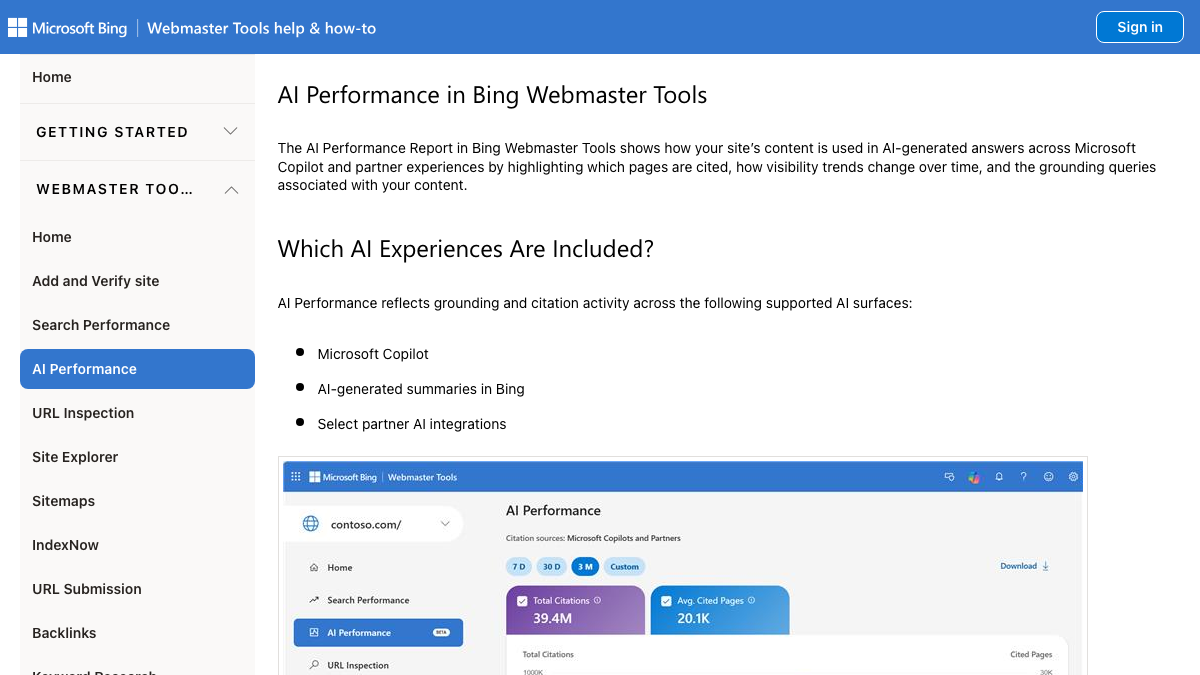
Two of the big platforms now report AI visibility to site owners directly. Bing Webmaster Tools has an AI Performance report covering Copilot and Bing's AI summaries, with the grounding queries the AI used when it retrieved your cited pages. Google added generative AI performance reports to Search Console in June 2026, showing impressions within AI features on Search.
For ChatGPT, Perplexity, Claude and Grok, there's no first-party report, so you have to ask the questions yourself. Because citations change from run to run, count how often your pages appear across repeated checks rather than trusting a single screenshot. Note which page was cited and the sentence it supports, and look at which competitor pages took the spots you missed.
Done by hand, checking 50 questions on seven engines takes about six hours a week, and publishing eight solid articles a month takes 16 to 24 hours more. Those are rough estimates.
RankControl does the repeated part. AI visibility tracking runs your 50 questions every week on seven engines, marks each one as mentioned, cited or both, and records which competitors and sources each engine used. For a quick first read, the free AI visibility checker shows who ChatGPT cites for three questions from your market.
You can run the checks yourself with a spreadsheet and an hour a week. Or RankControl's agents can run them every week while you work on the pages that make it through the citation cut.

Built by the team that got cited in 48 hours.
Content generation, backlink building, AI visibility tracking, and Google rankings. One platform, zero guesswork.