If you want an AI citation finder for a term paper, this is the wrong page, and academic tools like Scite are built for that job. This guide covers the other kind, which shows you the web pages AI search engines like ChatGPT and Perplexity cite when people ask about a topic.
Most people start with their own brand. They ask ChatGPT a buyer question, scan the answer for their name and stop. The more useful question sits one step back. Who does each engine trust for this topic, and what kind of pages are they?
The answer is a source map, a sheet of every page cited across a set of questions, sorted by domain and page type. It shows where to publish and where to get listed. I read each engine's own help docs on how it shows sources on October 19, 2026.
What an AI citation finder should show you
A useful finder shows which domains and pages get cited, how often each comes back, and whether the cited page belongs to the brand the answer picks.
I call the set of pages an engine keeps going back to for a topic its source pool. Pools can be tiny. One small marketing firm owner on r/GEO_optimization asked 12 patient-style questions about aesthetic clinics on ChatGPT, Perplexity and Gemini, one run each. Of the 24 answers that showed sources, one local guide site was cited in 19. Gemini showed none at all.
This post maps a topic. For your own brand, our AI citation tracking guide covers metrics and cadence, and how to check ChatGPT citations goes deep on one engine. Our guide to tracking AI citations for free has the sample-size math.
1. Pick a topic and write 20 questions
Pick a topic narrow enough that one buyer would ask about all of it. "Payroll software for small teams" works. "HR" is too wide, since its questions pull from unrelated pools.
Then write about 20 questions the way people type them, and mix four kinds.
| Question kind | Example | What it shows |
|---|---|---|
| Best-of | "best payroll software for a 10-person company" | Which lists hold the shortlist |
| Comparison | "Gusto vs ADP for a small business" | Who engines trust to judge two vendors |
| Problem | "how do I pay a contractor in another state" | Which guides answer first |
| Cost | "how much does payroll software cost per employee" | Who engines trust for prices |
Keep the wording fixed, since small changes in phrasing can send an engine to other pages. Run each one in a private window or signed-out session, so past chats don't steer the answer.
26 content formats. Published on your domain. Matched to your brand.
Guides, comparisons, listicles, case studies, and more. RankControl generates content that gets cited by ChatGPT, Perplexity, Claude, Gemini, Grok, Google AI Mode, and Google AI Overviews.

2. Read each engine's sources the way its docs describe them
Each engine puts its sources in a different spot, and some document it far better than others.
ChatGPT
According to OpenAI's ChatGPT search help page, ChatGPT can search the web to answer questions "with current information and links to relevant sources." It searches on its own when a question needs fresh facts, and people who aren't signed in can use it too.
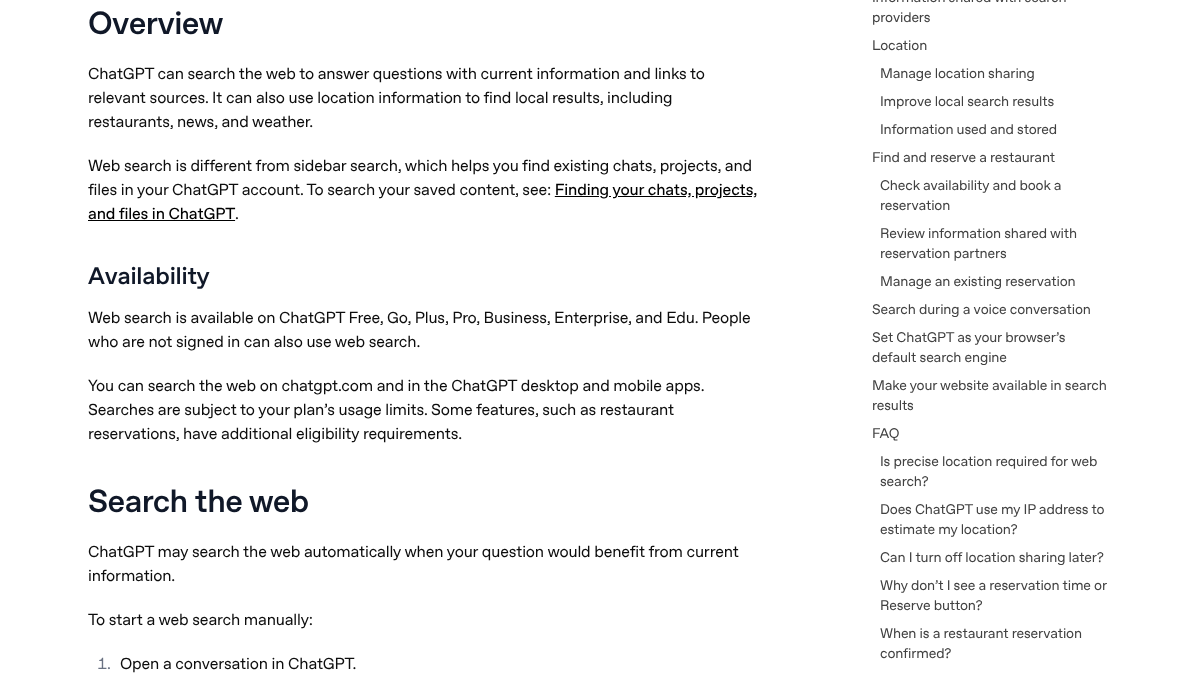
Look for inline citations next to claims and the Sources button under the answer. An answer that never searched comes from training data and has no links, so log it as "no sources" rather than skipping it.
Perplexity
Perplexity's help center says each answer includes "numbered citations linking to the original sources." The numbers sit next to the sentence they support, so you can see which page backs which claim.
Some sources carry a small shield with a Government, Academic or Trusted label. Perplexity's page on source labels explains that its source review sets the label for a whole site, and payments don't change it. Note the label when you see one.
Google AI Overviews and AI Mode
Google says the least about the display. Its AI Mode help page tells people to "click the links for AI sources," and AI Mode may show a plain set of web links when it isn't confident in an answer. Log those too.
Claude
Anthropic's web search help page says that when Claude searches, "every response includes citations, so you can easily verify sources yourself." The answer can also quote the lines it relied on.
Microsoft Copilot
Copilot is the thinly documented one. I couldn't find a consumer help article on how its citations look. The closest is one sentence in Microsoft's Copilot Transparency Note, dated August 18, 2026, which said web-grounded answers carry "hyperlinked citations listed below the text." Log those, and lean on Bing's own report below for Microsoft data.
Grok
xAI documents citations for developers, not for the grok.com app, so read this as how the system works. The citations docs describe two sources, the open web and X posts, with inline citations shown as numbered links in the [[1]] style.
The same docs draw a line worth copying. Grok's full citations list holds every URL it came across while researching, even ones the answer never used. Log only the inline links as cited.
3. Decide how many runs each question needs
One run per question is a coin toss. In a January 2026 SparkToro study, 600 volunteers ran 12 prompts through ChatGPT, Claude and Google's AI tools, 2,961 times in all. The odds of the same brand list coming back twice were under 1 in 100.
The study suggested at least 60 to 100 runs for a meaningful read. It also found that consistency swings by category, from about 97% for the top result in a near-monopoly category down to 30 to 40% in broad ones.
Running one question 100 times by hand isn't realistic, and a topic map doesn't need it. The map counts domains across all your questions, so 20 questions run three times each gives you 60 answers per engine. SparkToro's range was per prompt, so that's a looser read, but it's enough to see which domains keep coming back.
One caveat worth adding is that volunteers collected the runs themselves, so it's a field sample with no lab controls.
4. Log every cited page in one sheet
Use one row per cited page, not one per answer. Per-page rows let you count domains later, and per-answer rows don't.
| Column | Example entry |
|---|---|
| Date | November 3 |
| Engine and run | Perplexity, run 2 |
| Question | best payroll software for a 10-person company |
| Cited URL | The full link, tracking tags removed |
| Domain | The root site |
| Page type | Review site, listicle, vendor page, guide, forum thread |
| Brand picked | The product the answer told the reader to choose |
Twenty questions, three runs and seven engines make 420 answers. At about a minute each to run and log, my rough estimate is seven hours for one pass.

Your competitors are getting cited by AI. You're not.
Every day without citation tracking is a day your competitors pull ahead in ChatGPT, Perplexity, and Claude.
5. Read the map by domain and page type
Start with a pivot table of domains by engine, and count the share of answers each domain shows up in. I call that its repeat rate, and the highest rates mark who holds the topic.
Then sort by page type to see what kind of work wins.
| Page type that leads | What to do |
|---|---|
| Review sites and directories | Get listed and reviewed there |
| Listicles and roundups | Get onto those lists, or publish a fair one |
| Vendor pages | Publish clear pricing and comparison pages |
| Guides and help docs | Write the guide that answers it better |
| Forum threads | Take part in those threads in good faith |
In the clinic test, the pool was mostly guides and directories, not the clinics' own sites. A lifestyle magazine's list of the best medical spas showed up in 9 answers. The one clinic that got cited was third on that list. The poster wrote that being on the few pages in the pool seemed to matter more than having your own page.
Next, check the brand column against the domain column, because a cited page and a recommended brand don't always match. A practitioner on r/AISearchLab tracked about 2,200 answers over six weeks across six AI surfaces, including both of Google's. They found answers that cited a brand's own blog post and then recommended a competitor anyway.
Tracked ~2,200 AI answers over 6 weeks. ChatGPT almost never names a brand it didn't cite
For the last month I've been running the same set of buyer questions every week through ChatGPT, Claude, Gemini, Perplexity and both Google AI surfaces. They're questions like "best X for Y". I log which brands each answer names, in what or...
The same post reported that ChatGPT and Google AI Mode often put a different brand on top for the same question. So a domain that leads one engine's pool can be missing from the next. Our piece on how AI engines choose sources explains why, and mention vs citation tracking covers why named and cited move apart.
Add Bing's AI Performance report for Copilot
Bing is the one engine that gives you citation data for free. Bing Webmaster Tools launched its AI Performance report in February 2026. It counts how often your pages show as sources in Copilot and Bing's AI summaries, and lists grounding queries, the phrases the AI used to fetch content.
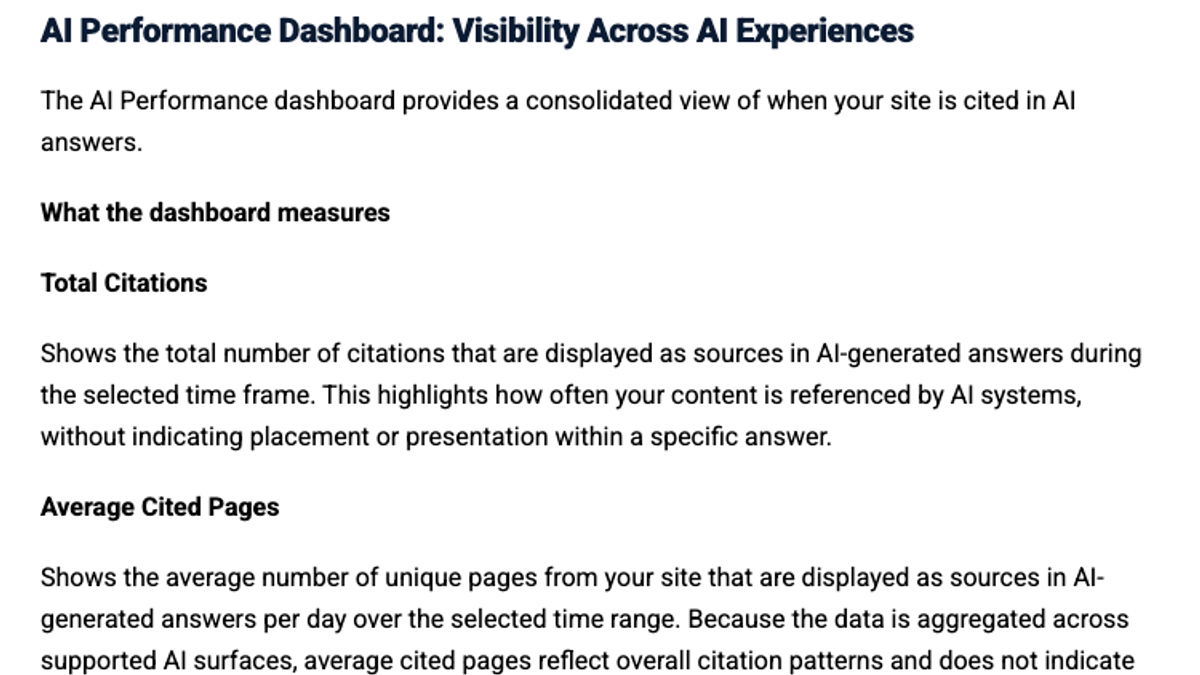
On June 16, 2026, Microsoft added Citation Share in preview, which its announcement defined as your site's percentage of all citations shown for the same grounding query.
For a topic map, there's a catch. The report covers sites you've verified, so it shows your slice, not who holds the rest. Use the grounding queries to add phrasings to your list, and use Citation Share to check your manual Copilot count.
Where AI citation finder tools take over
Building the map once is the easy part. Noticing when the pool shifts is harder, since a model update can reshuffle it.
Paid tools do the repeat runs for you. Ahrefs Brand Radar shows cited pages next to its backlink data. On Ahrefs' pricing page on October 19, 2026, its AI data started at $199 a month, with the Lite plan at $129. Our list of free AI visibility tools covers the no-cost checkers. Semrush's AI Visibility Toolkit also shows which pages get cited, for $99 a month on its own.
RankControl's free AI visibility checker is narrower than a topic finder. The checker asks ChatGPT three buyer questions from your own market and records every source each answer cites, in about a minute with no signup. You won't get a whole topic map, but you do get a quick look at where ChatGPT sends your buyers.
For the weekly version, RankControl's AI visibility tracking checks 50 of your buyer questions every week across seven AI engines. Our tracking records whether each answer named you, cited you or both, plus the competitors and sources each one used. We offer one flat plan at $400 a month with a 7-day free trial.
You can build the map by hand with 20 questions, a clean browser and a sheet, then redo it after every model update. Or RankControl's agents can run the weekly checks and write pages for the gaps, while you get on with the rest of your work.
200+ SaaS teams already track their AI citations.
They know exactly when ChatGPT mentions their brand, and when it stops. Do you?