
Every AI visibility tool says it tracks "AI search," and very few mean the same engines by it. One checks ChatGPT, Perplexity and Google. Another adds Claude only on an enterprise contract. A third tracks Grok daily for $100 a month. This list of the best AI search visibility tools sorts them by the thing their pricing pages bury: which of the six engines in the title each one checks, and what that costs.
I read every vendor's pricing page and docs in September 2026.
The engine gap
I call it the engine gap: the engines your buyers use that your tracker doesn't check. It's easy to miss, because a dashboard with four engines looks as complete as one with eight.
One pattern stood out in the pricing pages. Of the ten tools below, only four cover all six engines named in this post's title at their entry price: RankControl, Trakkr, AthenaHQ and Rankscale. Grok is the engine most often left out, and Claude is next. Several tools do cover both, but only on an enterprise contract you have to negotiate.
The gap matters because engines don't agree. In r/SaaS, a founder ran the same 20 prompts through six AI assistants every morning for three weeks. ChatGPT and Perplexity pulled from completely different sources, and a thread that got them cited on one did nothing on the other.
I tried tracking our brand mentions across ChatGPT, Claude, and Gemini manually for 3 weeks. Here's what I found
Engine coverage at a glance
| Tool | ChatGPT | Perplexity | Claude | Gemini | Grok | Google AI | Entry price |
|---|---|---|---|---|---|---|---|
| Semrush | Yes | Yes | No | Yes | No | AIO + AI Mode | $99/mo |
| RankControl | Yes | Yes | Yes | Yes | Yes | AI Mode | $400/mo |
| Ahrefs Brand Radar | Yes | Yes | Custom prompts | Yes | No | AIO + AI Mode | $129/mo (Lite) |
| Profound | Yes | Enterprise | Enterprise | Yes | No | AIO; AI Mode on Enterprise | Free trial, then custom |
| AthenaHQ | Yes | Yes | Starter | Yes | Starter | AIO + AI Mode | Free, then $295/mo |
| Trakkr | Yes | Yes | Yes | Yes | Yes | AIO | $100/mo |
| Rankscale | Yes | Yes | Yes | Yes | Yes | AIO + AI Mode | $20/mo |
| Peec AI | Pick 3 | Add-on | Enterprise | Pick 3 | Enterprise | Pick 3 | $95/mo |
| Scrunch | Yes | Yes | Enterprise | Enterprise | Enterprise | AIO; AI Mode on Enterprise | $250/mo |
| Otterly.AI | Yes | Yes | Add-on | Add-on | No | AIO; AI Mode add-on | $29/mo |
15 hours a week manually. Or 15 minutes with RankControl.
Track citations, monitor competitors, and fix content gaps across every AI search engine. Automatically.

The 10 best AI search visibility tools by engine
1. Semrush AI Visibility Toolkit
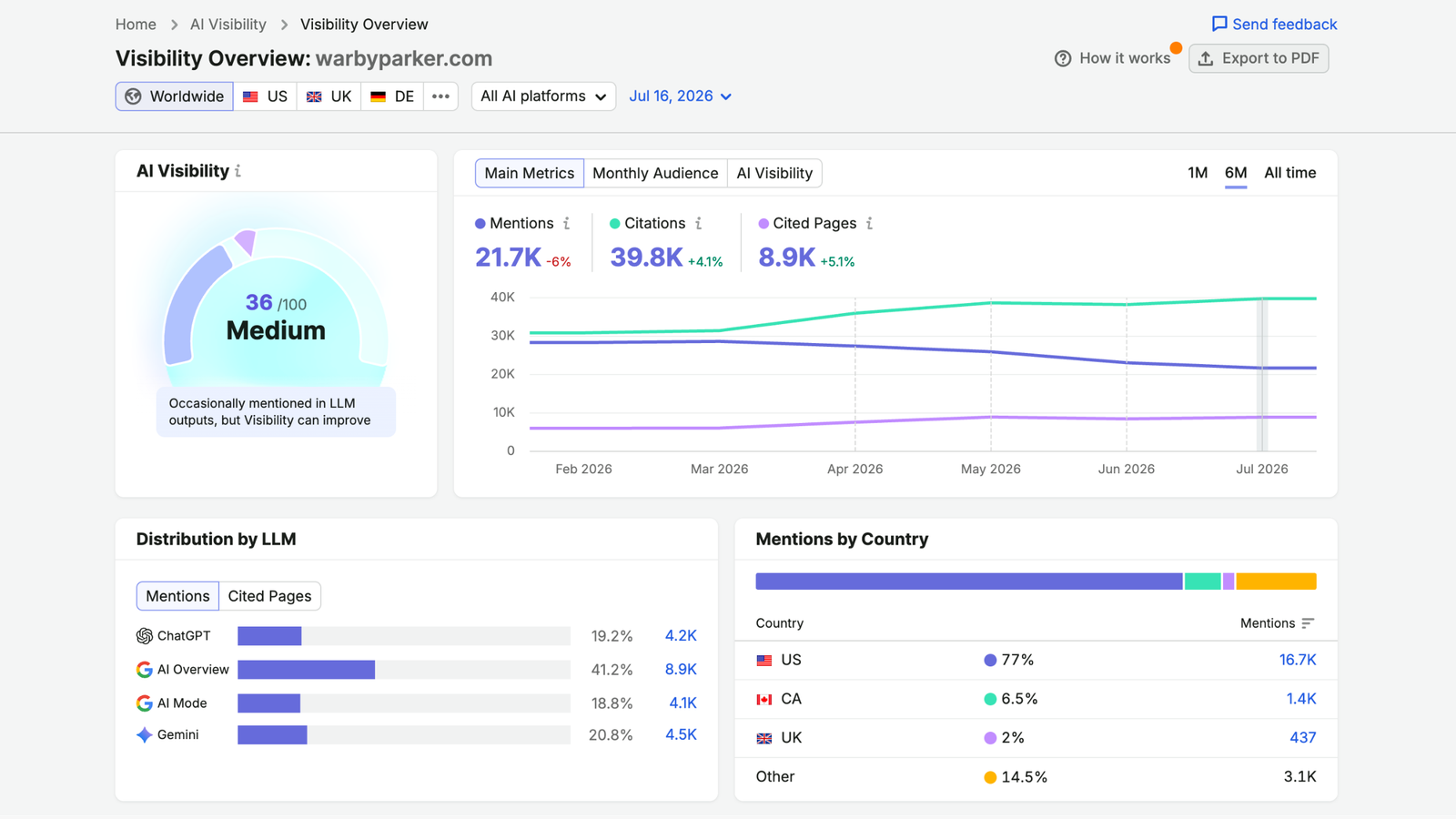
Semrush has the deepest data of anyone here for the engines it covers. Its reports track ChatGPT, Perplexity and Gemini, plus both of Google's AI surfaces. All of it sits next to the keyword and backlink data most SEO teams already use. The toolkit costs $99 a month on its own or added to a Semrush plan, and it tracks 25 prompts.
The gap is Claude and Grok, which it doesn't track today. Its reports also differ from each other. The weekly Brand Performance view covers five engines, while the daily Prompt Tracking view covers three: ChatGPT, AI Mode and Gemini. For teams whose buyers live on ChatGPT and Google, those gaps rarely matter, and the SEO data around them is hard to match.
2. RankControl
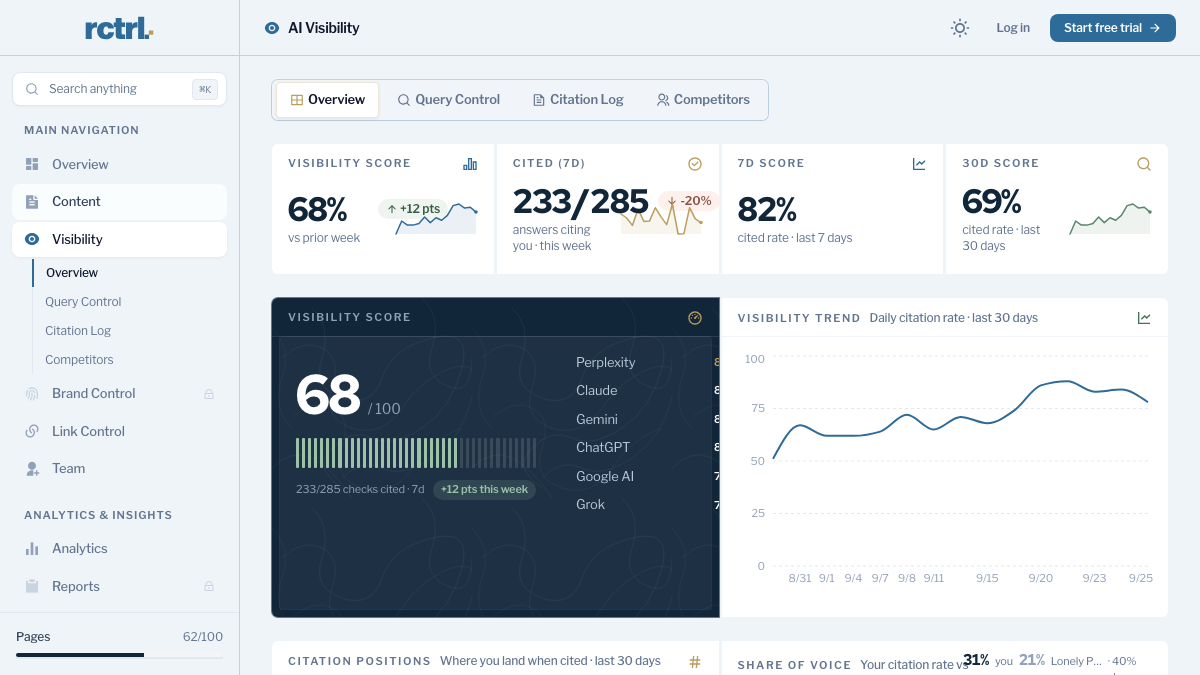
RankControl's AI visibility tracking checks 50 questions every week on all six engines in this post's title, and on Google AI Overviews too. That means ChatGPT, Perplexity and Claude, plus Gemini, Grok and Google AI Mode. Each check shows which competitors got named instead of you and which sources the answer quoted, and you get a notification when a new citation appears.
RankControl is also the only tool here that does the work after the tracking on the same plan. Our agents publish up to 100 articles a month on your own site and pitch the sites those answers cite from your mailbox, after you approve each email. The plan costs $400 a month, with a 7-day free trial.
3. Ahrefs Brand Radar
Ahrefs Brand Radar runs a huge prompt index across six platforms: ChatGPT, Perplexity and Gemini, plus Copilot and both Google surfaces. It re-tests that index monthly on a 90-day window. Custom prompts, which you write yourself and which can update daily, add Claude.
Lite at $129 a month includes a small custom-prompt quota, five prompts on one platform. The full index costs $199 a month per platform, or $699 for all of them. It has no Grok coverage on any plan.
Its real strength is research. The cited-pages view shows which URLs the answers quote in your market, and that list doubles as an outreach target list. There's no trial, which makes it a harder first purchase than most tools here.
4. Profound
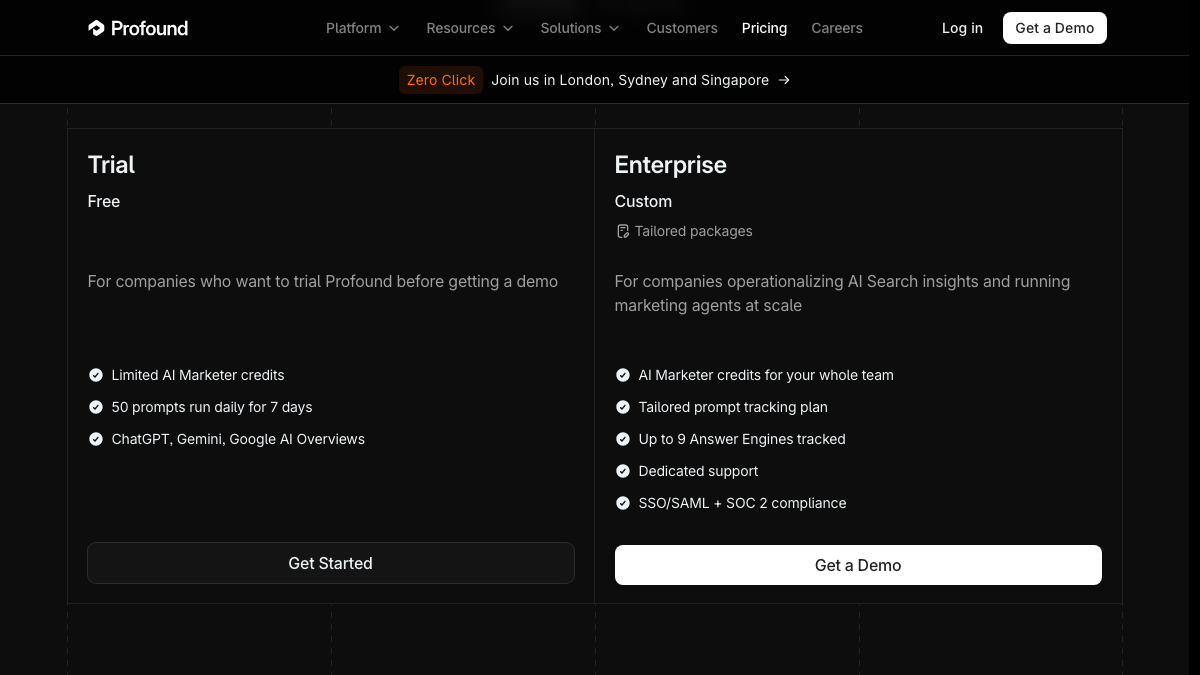
Profound's free trial runs 50 prompts a day for seven days on ChatGPT, Gemini and Google AI Overviews, with no exports or history. After that, it's an Enterprise quote with up to nine engines. The Enterprise list adds Perplexity, AI Mode and Copilot, then DeepSeek, Claude and Exa. Grok isn't on it.
It suits large brands that want daily monitoring, agents that draft and publish content, and a team to help run it all. Its MCP server lets Claude or Cursor read your visibility data. Agencies can add client workspaces at $399 a month each. Our RankControl vs Profound comparison covers the rest of the trade.
5. AthenaHQ
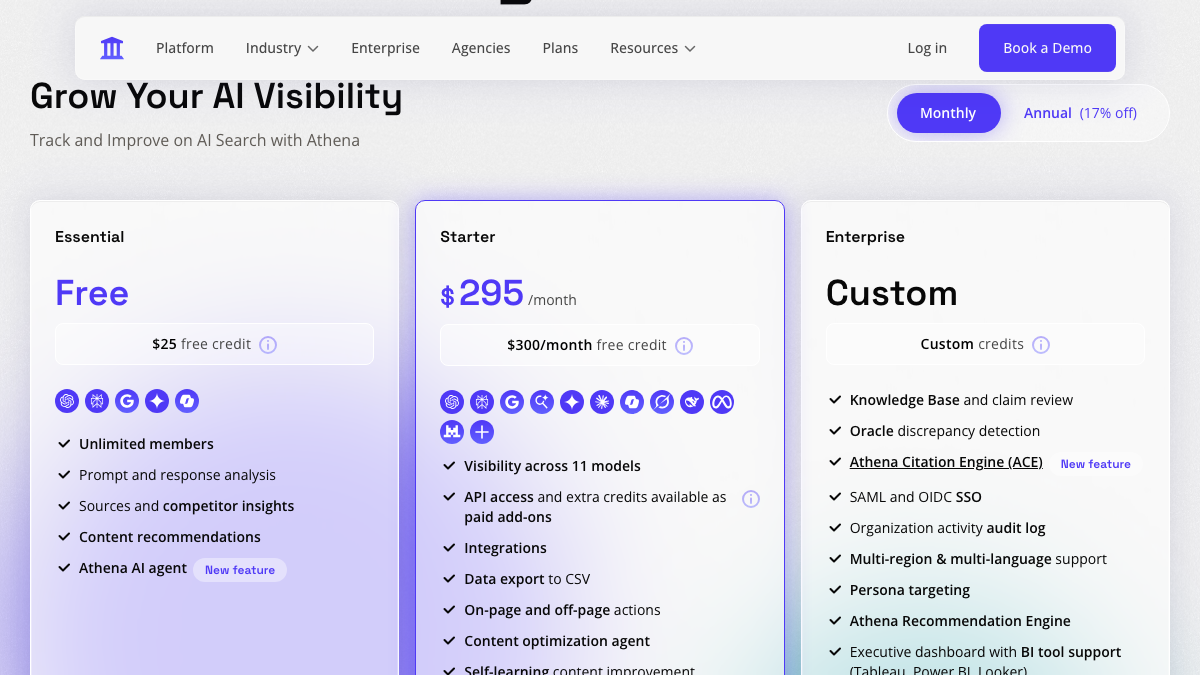
AthenaHQ covers the most models at a self-serve price. Its free Essential tier tracks five: ChatGPT, Perplexity and Gemini, plus AI Overviews and Copilot. Starter, at $295 a month or $245 billed yearly, jumps to 11 models. The added ones include AI Mode, Claude and Grok, along with DeepSeek, Meta AI and Mistral.
It runs on credits, and you choose which models to scan and on which days, so the cadence is yours to set. Starter also includes a citation outreach pipeline that finds the authors of cited pages and drafts emails, and it can publish content to several CMSs. The API is an add-on, not part of Starter.
6. Trakkr
Trakkr checks eight models every day at 7am UTC for $100 a month. The list covers all six engines in this post's title except AI Mode, using AI Overviews for Google. DeepSeek and Meta AI come on top. That's 50 prompts for one brand, with a 14-day trial that takes a card. It doesn't list Google AI Mode.
For daily coverage per dollar, nothing on this list beats it. The Growth plan also includes 25 articles a month, pushed to your CMS as drafts, and outreach to the publishers that cite your competitors. Our RankControl vs Trakkr comparison goes through it in detail.
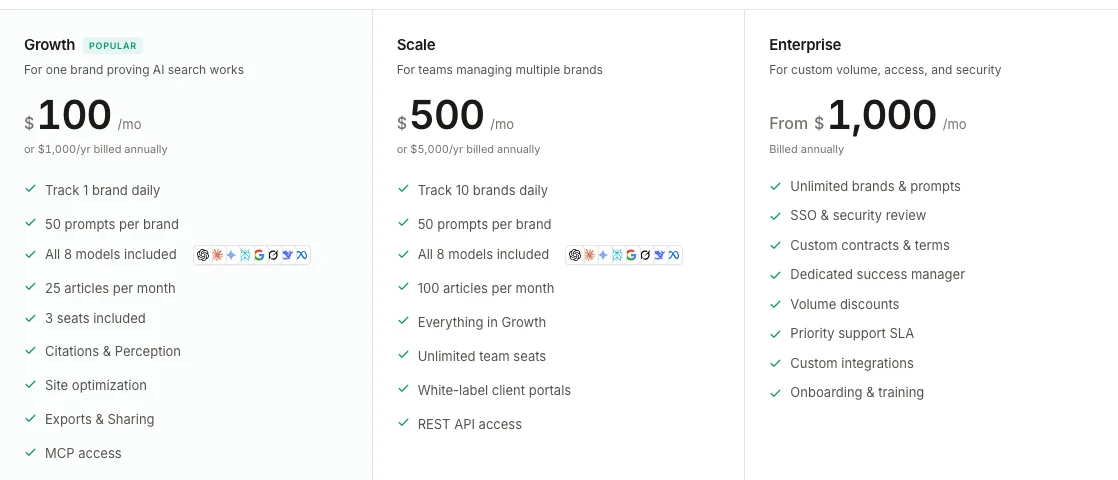
7. Rankscale
Rankscale charges by the answer. Plans start at $20 a month, and Pro costs $99 for 1,200 credits, enough for up to 4,800 answers. Each query uses a fraction of a credit, and the cost depends on the engine.
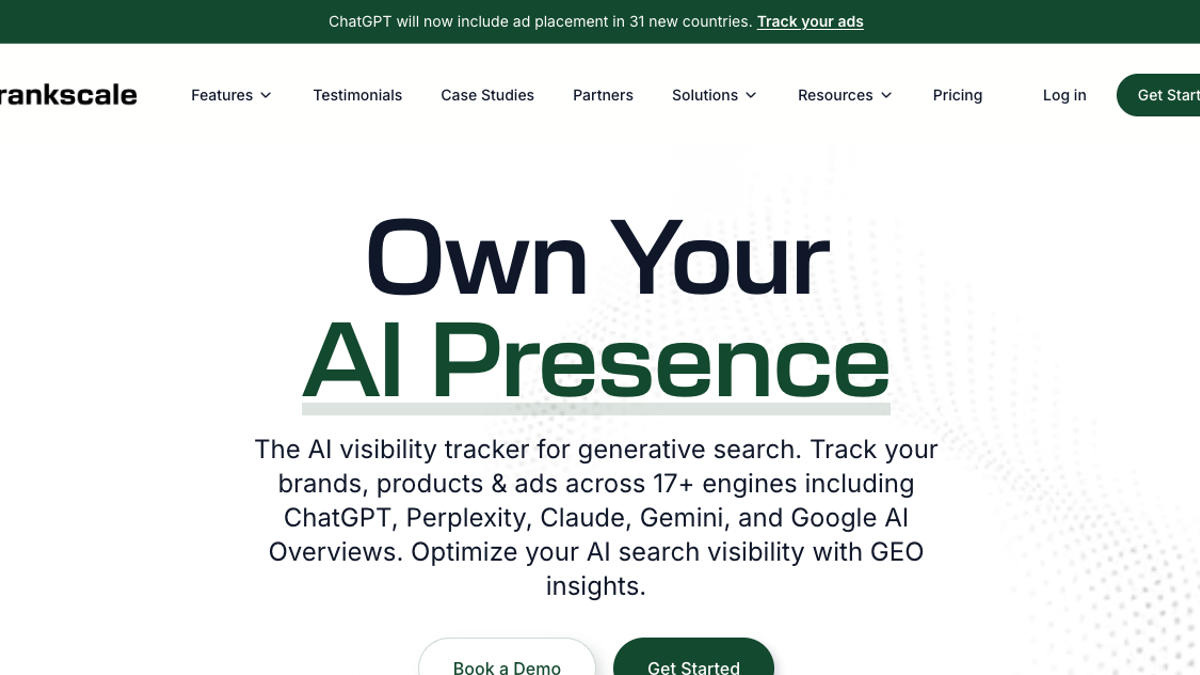
Its engine list is the longest here. It covers all seven engines in this post's title, including both Google surfaces. Copilot, DeepSeek and Mistral are among the extras. You can set the cadence anywhere from hourly to monthly, and unused credits can roll over to the next cycle. Pro includes 10 brand dashboards and a 7-day free trial. It's the cheapest way to see which engines matter for your market before you commit to one. Our Rankscale switch guide explains how its credits add up.
8. Peec AI
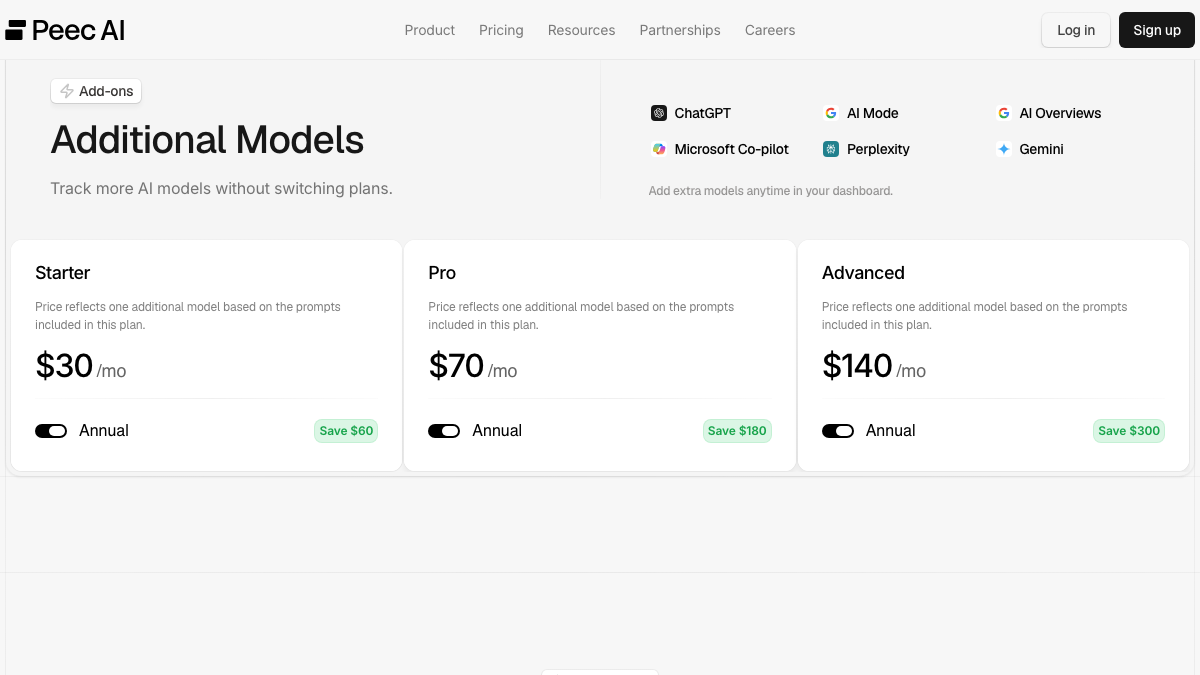
Peec AI's $95 Starter plan tracks three models of your choice and checks them daily. You pick them from a menu of six: ChatGPT, Gemini and Copilot, plus AI Mode, AI Overviews and Naver AI. More models cost extra, starting at $30 a month on Starter, and the add-on list includes Perplexity.
Claude and Grok sit on Enterprise plans. The Starter plan covers 50 prompts with unlimited users, which suits a team that shares one dashboard. Pro and Advanced, at $245 and $495 a month, raise the prompt limits. Peec fits a team that already knows which three engines matter and wants clean daily data on those. Our Peec AI alternatives roundup covers the tools teams compare it with.
9. Scrunch
Scrunch's Core plan costs $250 a month for 125 prompts on four engines: ChatGPT, Perplexity, Google AI Overviews and Copilot. Enterprise raises that to nine. The additions are Claude, Gemini and Meta AI, plus AI Mode and Grok.
New prompts are checked daily for their first 14 days, then every 72 hours by default, so Core data is less frequent than most trackers here. Core also includes five site audits, while the API sits on Enterprise.
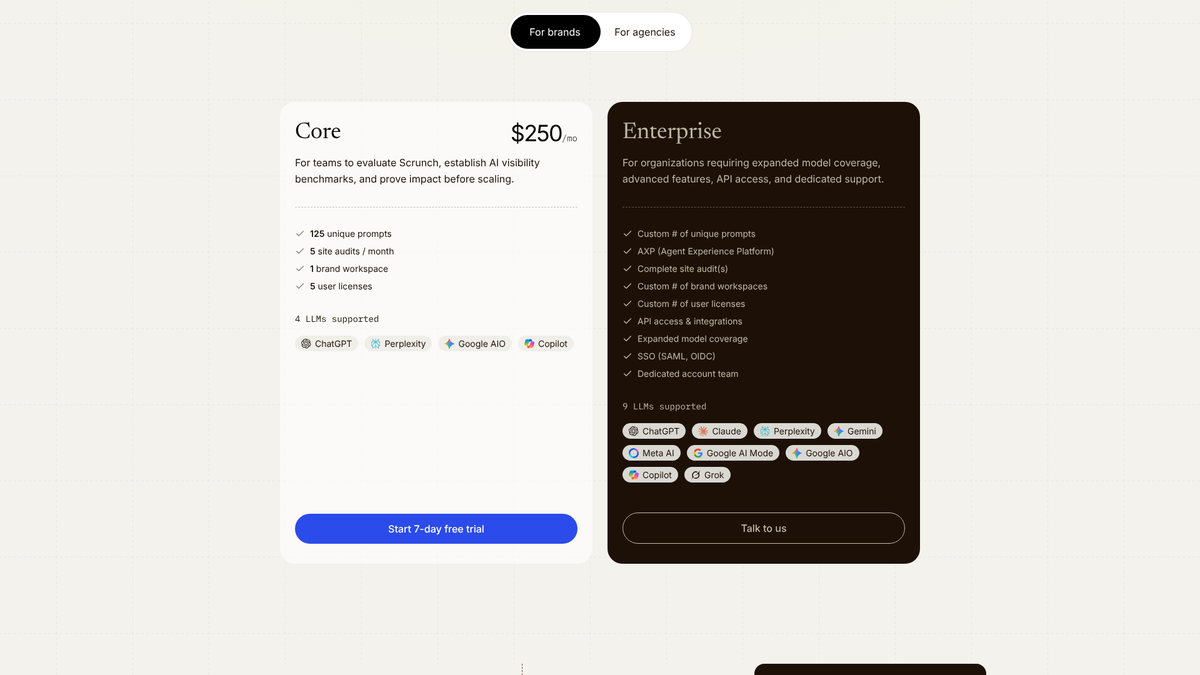 Scrunch also sells an agent-experience layer that serves AI crawlers a version of your pages built for them, which is a different kind of product from the trackers here.
10. Otterly.AI
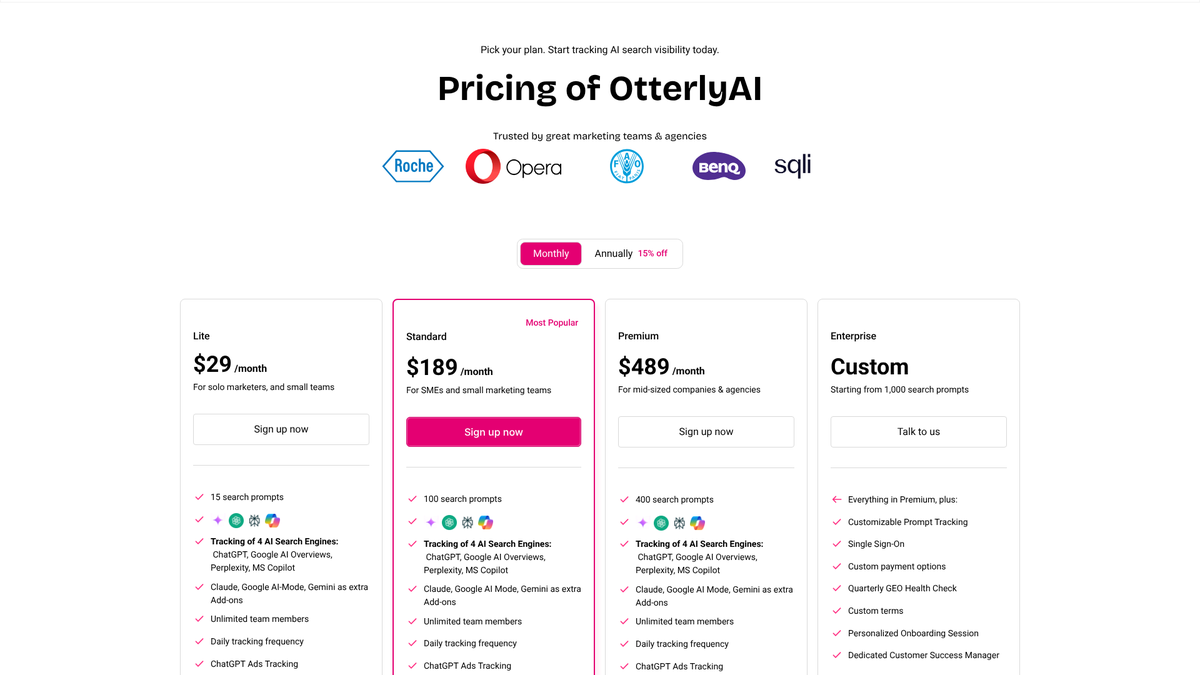
Otterly.AI is the cheapest full dashboard here. Lite costs $29 a month for 15 prompts on four base engines: ChatGPT, Google AI Overviews, Perplexity and Copilot. Google AI Mode, Gemini and Claude are add-ons. Standard at $189 covers 100 prompts, and Premium at $489 covers 400.
It has no Grok coverage on any plan. Every plan, including Lite, can export its data, and Standard adds API access. In June 2026 Otterly also released a Claude Skill, so you can query the data from Claude. That makes it a low-risk first tracker if your buyers don't use Grok. Our Otterly.AI alternatives roundup compares it with the tools people move to next.
AI search traffic grew 835% this year. Is your content ready?
RankControl generates 26 content formats optimized for ChatGPT, Claude, and Perplexity. Published on your domain, matched to your brand.

How to choose the engines you track
Start with your buyers, not with the longest list. In r/aeo this September, someone asked whether tools offering three, four or eight engines were worth it. One reply said to track the engines that already send traffic and citations. Another suggested asking every inbound lead where they found you, since most trace back to a few engines.
Which AI Engines to Tracking and monitor?
I see lot of GEO tools offering 3, 4 & 8 ai engines for tacking and I'm not sure does really that many needed? If all engines have same optimization strategy then its worth doing but if it otherwise then its guessing with more data.
If price decides it for you, our comparison of what one checked answer costs runs that math on ten tools.
Then mix your question types. John, who builds AI visibility tooling, logged ChatGPT citing glossary and dictionary pages for a "what is" prompt, and research and measurement posts for a buying decision. Almost none of the sources overlapped between the two.
how to optimize so ChatGPT cites you ChatGPT pulls different sources for different prompt types. same model. different citation graph. I logged this on ChatGPT with two prompts in the same category (GEO / AI visibility). you can swap the category for yours. Example 1 /
 John@johnbuildssSep 23, 2026
So a useful setup covers each engine your buyers use, with both kinds of questions, checked on a steady schedule. Weekly is enough for most teams, since single answers move from run to run.
Trackers outside this list price the gap in other ways. LLM Pulse's plans include five engines, with Claude and Grok sold as add-ons whose price rises with the plan. Our LLM Pulse comparison breaks that down.
Our pick
If your buyers live on ChatGPT and Google and you already use Semrush, its toolkit gives you the deepest data for those engines. If you need all seven engines covered and want the pages and pitches that move the numbers, RankControl does both on one plan.
For daily coverage on a small budget, Trakkr is the value pick, and Rankscale is the cheapest way to test many engines first. Before you pick any of them, the free AI visibility check shows who ChatGPT cites for three questions from your market today.

Built by the team that got cited in 48 hours.
Content generation, backlink building, AI visibility tracking, and Google rankings. One platform, zero guesswork.