
Trakkr is an AI visibility tracker that has grown content and outreach tools around its data, so RankControl vs Trakkr.ai comes down to measuring more or publishing more. Trakkr checks eight AI models every day from $100 a month. RankControl's agents plan, write, publish and pitch on one $400 plan, and check six engines every week.
Both want the same result: your brand named in AI answers. They put the money in different places.
Everything below about Trakkr comes from its pricing page, docs and terms, which I read on September 27, 2026. If you're already leaving, our Trakkr switch guide covers the exports and the code to remove.
RankControl vs Trakkr at a glance
| RankControl | Trakkr | |
|---|---|---|
| Price | $400/mo or $4,000/yr | $100/mo Growth; $500/mo Scale; Enterprise from $1,000/mo |
| AI engines | 6, weekly, including Google AI Mode | 8, daily, including DeepSeek and Meta AI |
| Tracked questions | 50 | 50 per brand; add-ons up to 250 |
| Content | Up to 100 pages a month, written and published | 25 articles a month (100 on Scale), pushed as drafts |
| Publishing | Native posts on 9 destinations, auto-publish optional | Drafts on WordPress, Webflow, Shopify or GitHub |
| Outreach | From your mailbox after approval; follow-ups stop on reply | From your mailbox; doesn't read your inbox |
| Site layer | Analytics log AI crawler visits | AI Pages middleware serves crawlers an optimized copy |
| MCP / API | 80+ MCP tools | MCP on any paid plan; REST API on Scale |
| Seats | 5 | 3 on Growth; unlimited on Scale |
| Terms | Cancel at period end, no pro-rated refunds | 14-day money-back for new subscribers; cancel at period end |
What Trakkr is in 2026
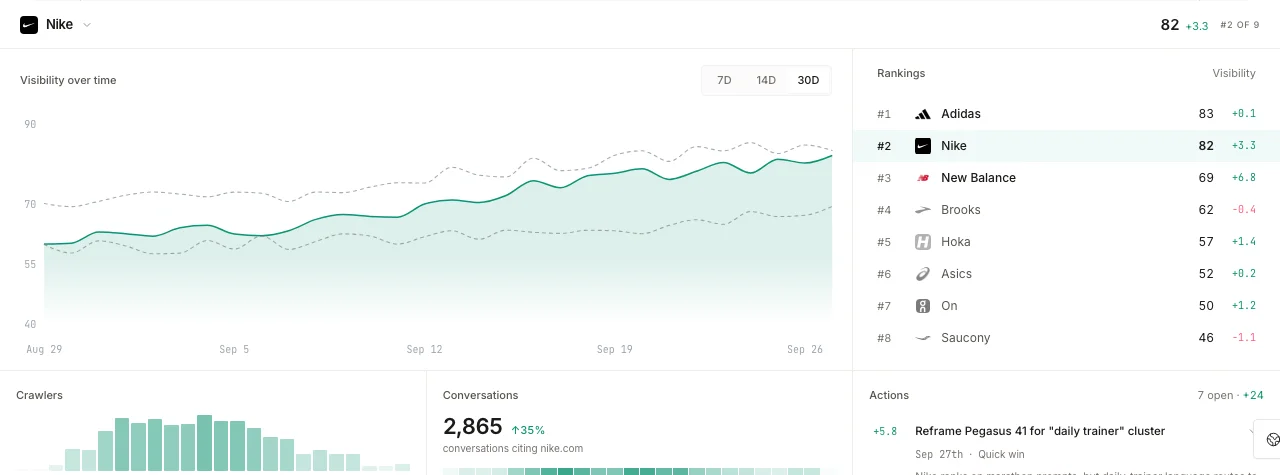
Trakkr is a London company founded in 2025 by Mack Grenfell. It sends your prompts to eight AI models every day and reads each answer for mentions, rank, sentiment and sources. That becomes a Visibility Score, a Presence Score and an Average Rank. Data refreshes at 7am UTC.
Around that core it has built a lot. Perception analysis rates how models describe you across 20 dimensions. Citation discovery shows which pages the models quote, and an agent answers questions about your data. Its public site also runs a large research and data operation, including an open study of political bias in AI models and a leaderboard of the brands AI recommends most.
The first week on each tool
Trakkr's trial runs 14 days on Growth, and checkout takes a card, so it converts to $100 a month unless you cancel. You enter your website, and Trakkr identifies your industry, competitors and starting prompts. A research scan checks 500+ prompts in your market to show where you appear. You can also import a prompt list from another tool as CSV.
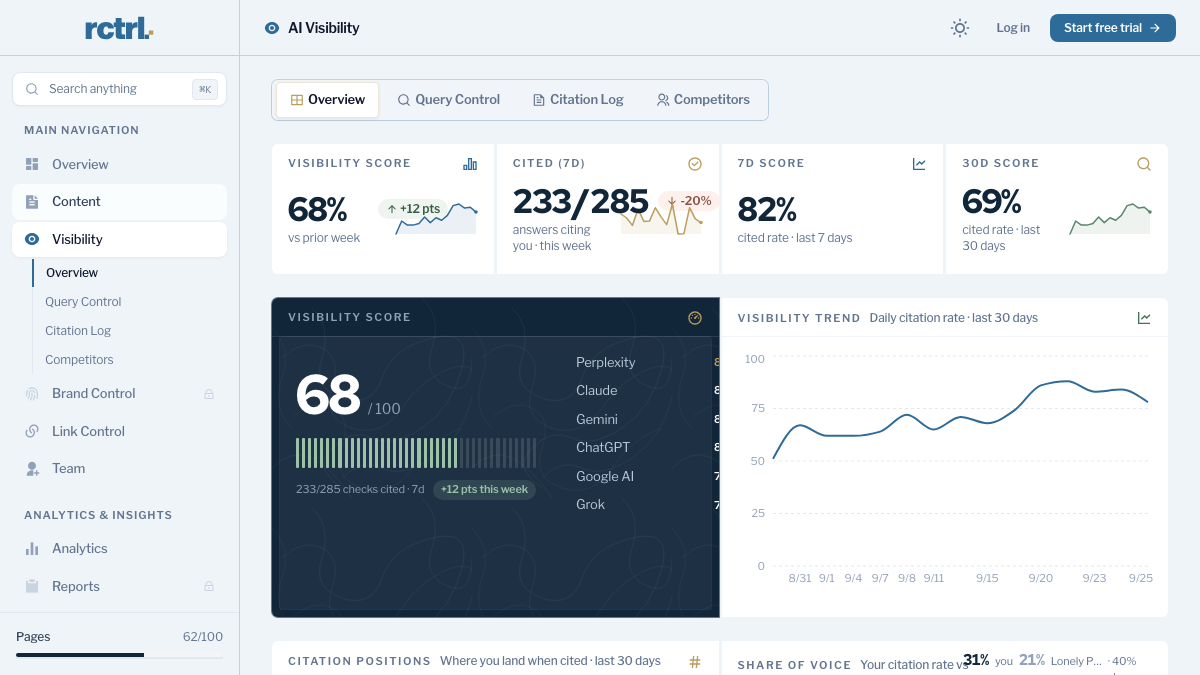
RankControl's trial runs 7 days, with the card up front and $0 charged today. Setup reads your site and drafts your brand profile, products, buyers and competitors for you to correct. You connect a CMS, add up to 50 questions and 10 competitors, and the first weekly check runs across six engines. Meanwhile the planner builds a calendar from the questions you're losing.
15 hours a week manually. Or 15 minutes with RankControl.
Track citations, monitor competitors, and fix content gaps across every AI search engine. Automatically.

RankControl vs Trakkr on AI visibility
Trakkr measures more than we do, and more often. It checks eight models every day, including DeepSeek, Meta AI and Google AI Overviews, which RankControl doesn't track. Its perception scores and daily citation maps go deeper than our weekly checks. If your job is reporting AI visibility across many brands, that depth is real.
Users notice it. In August, Rohan Jha posted that Trakkr was giving more insights than better-known tools such as Profound and Peec AI, and praised the interface.
Have been using https://t.co/9xsaarhFd9 GEO tool, and I can say it is giving more insights than many other famous tools like Profound, peec Ai. And UI is also very user-friendly. @MackGrenfell : there should be a x account for Trakkr #geo #aeo
 Rohan Jha ¯\_(ツ)_/¯@Rohanjha2023Aug 2, 2026
RankControl checks your questions every week on six engines, including Google AI Mode, which Trakkr doesn't list. Each check shows which competitors got named instead of you and which sources the answer quoted. You get a notification when a new citation appears, and the weekly brief lists what you gained.
More measurement isn't the same as more visibility. In r/MarketingandAI this August, a marketer asked whether AI visibility is useful or another vanity metric. The top reply said a mention means little when the model spends the next paragraph explaining why another product is better. What changes that paragraph is what gets published and who cites it.
Is AI visibility actually useful or are we just creating another vanity metric?
The output ratio
I call it the output ratio: how many measurements a plan buys for every page it helps you publish. Trakkr's pricing page lists 12,000 data points a month on Growth, which is 50 prompts on eight models every day. Against 25 article credits, that's 480 data points for each article.
RankControl's 50 questions on six engines each week come to about 1,300 checks a month. Against up to 100 published pages, that's roughly 13 checks per page. One plan leans toward watching, the other toward shipping.
Trakkr's own growth story leans toward shipping. In March, Mack Grenfell posted that building its programmatic SEO pages took 80 million tokens and produced more than 13,000 pages, with traffic up 466% in 60 days.
It took 80M tokens to build our programmatic SEO pages. Result? 13,000+ pages and +466% traffic in 60 days. https://t.co/E9pLPlwKYD
 mack@MackGrenfellMar 11, 2026
That's the right lesson. Pages on your own domain, in volume, move traffic. The Growth plan gives a single brand 25 drafts a month to act on it.
Content and publishing
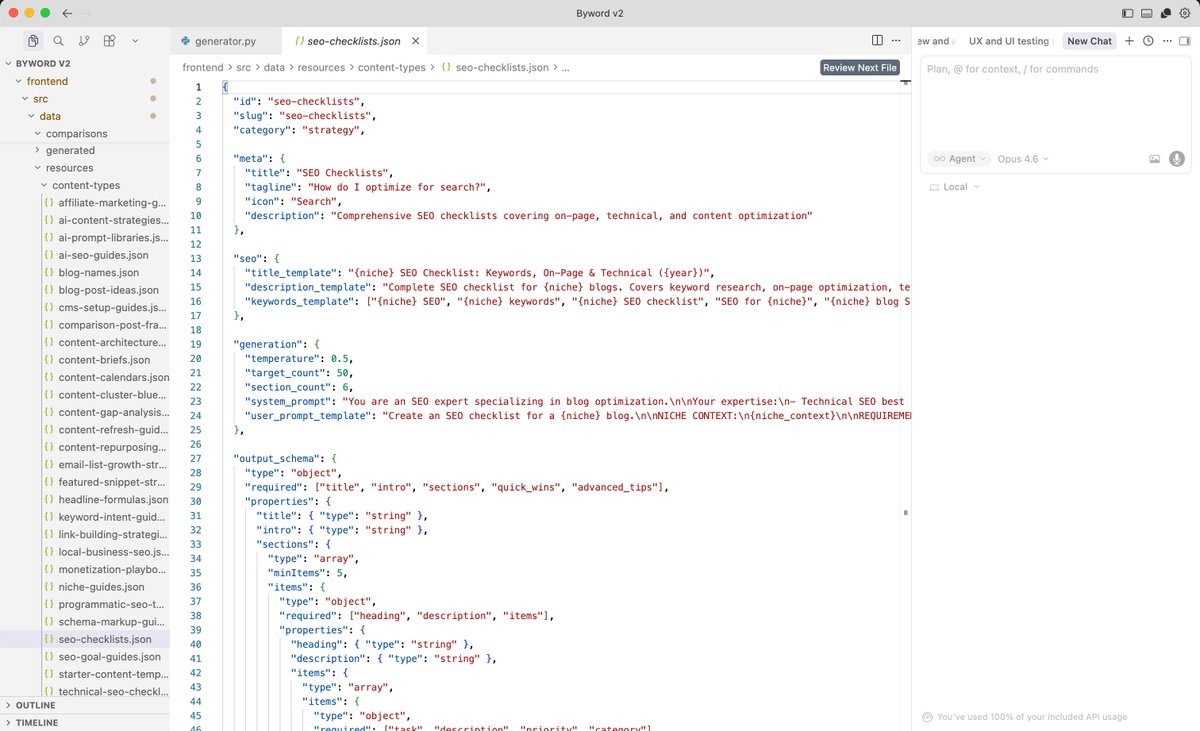
Trakkr's articles run through five named passes, from Research to Score. The research step pulls your knowledge base, voice profile and internal link candidates. Each draft gets a citation-likelihood score from 0 to 100 and eight checks, such as an answer-first opening, question-shaped headings and complete schema. A typical article finishes in a couple of minutes.
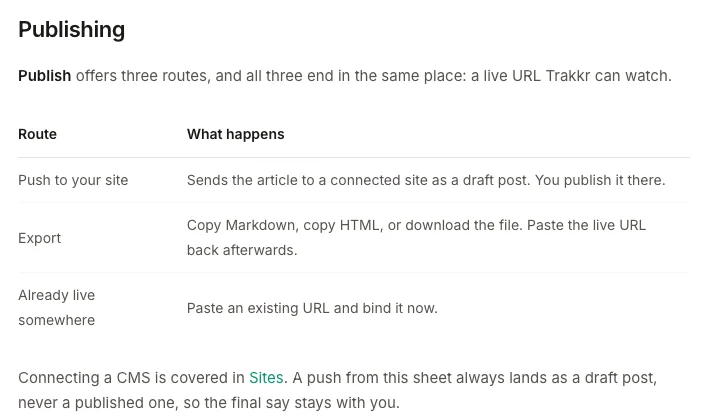
Publishing is where the two tools split. Trakkr pushes the article to a site you've connected on WordPress, Webflow, Shopify or GitHub. Its docs say a push always lands as a draft, never a published post. You can also copy it as Markdown or HTML, then paste the live URL back so Trakkr can track it.
Growth includes 25 article credits a month and Scale 100, spread across up to ten brands. Credits reset monthly and don't roll over, and more come as paid top-ups.
The content engine in RankControl plans titles from the questions you're losing, researches the pages already ranking for each keyword and writes the article across 26 content types. It publishes up to 100 pages a month as native posts through one of nine destinations. Auto-publish is off until you turn it on, and after that articles go out on their planned dates.

AI search traffic grew 835% this year. Is your content ready?
RankControl generates 26 content formats optimized for ChatGPT, Claude, and Perplexity. Published on your domain, matched to your brand.

Links and outreach
Both tools send pitches from your own mailbox, which is rare in this category. Trakkr's outreach queue lists publishers that cite your tracked competitors on pages where you don't appear, ranked by an impact score. It leaves .gov, .edu and Wikipedia out entirely and ranks Reddit, YouTube and review sites lower, since there's no editor there to pitch. A research agent reads each page and its contact details before drafting the pitch. Trakkr sends it but doesn't read your inbox, and it marks a publisher Won when you start appearing there more often.
Link Control in RankControl starts from each article you publish. It finds prospects and contacts, and sends the pitch from your mailbox once you approve it. Follow-ups stop when someone replies. Managed Backlinks adds five links a month from DR 25+ sites for $350, and the social agent drafts replies to live Reddit and X threads where one of your articles answers the question.
AI Pages and your site
AI Pages is Trakkr's most unusual feature. It's middleware you install in front of your site, as a Cloudflare Worker, an edge function or a WordPress plugin. When an AI crawler asks for a page, it gets an optimized version, while people and Googlebot get the original. Growth includes 2,500 crawler requests a month.
The docs say the optimized copy restates the facts on your page rather than adding new ones, and the middleware fails open if anything goes wrong. It's still code in your request path that holds a Trakkr API key, so someone on your team needs to own it.
Site connections do more than publish. Trakkr can push approved fixes back to a connected site, such as schema, metadata and robots.txt changes, and each fix waits in a Pending list until you apply it. On GitHub, every change opens a pull request for your team to review. Automations add alerts by email, Slack or webhook when visibility drops or a competitor gains, with three rules on Growth and unlimited rules on Scale.
RankControl doesn't serve crawlers a separate version, and it doesn't push technical fixes to your site. Its analytics log AI crawler visits on your own domain and sync Search Console daily, and a weekly email sums up new citations, ranking moves and visits from AI answers.
Working from Claude
Trakkr's MCP server works on any paid plan and covers your visibility data, prompts, citations and reports, plus its suggested actions. The REST API and Looker Studio need Scale. RankControl's MCP server has 80+ tools covering tracking, planning, writing and publishing, and publishing through it stays a dry run until you confirm.
Price and who each fits
Trakkr is cheaper to start. Growth costs $100 a month for one brand, with extra prompts at $39 to $99 per brand and seats at $20 each past three. Scale costs $500 for ten brands, unlimited seats and a white-label client portal on your own domain. For an agency reporting on many clients, that portal has no equivalent in RankControl.
RankControl costs $400 a month for one workspace. That includes up to 100 published pages, tracking on six engines, link outreach and five seats. The Dedicated Strategist add-on is $1,500 a month if you want a person running the plan.
Trials, refunds and cancelling
Trakkr's 14-day trial takes a card and converts unless you cancel. New subscribers also get a 14-day money-back guarantee, and cancelling ends the plan at the close of the billing period. Annual plans cost ten months' price, are billed upfront and renew automatically, with a reminder email before each renewal. After you cancel, you have 30 days to export your data before Trakkr deletes it.
RankControl's trial runs 7 days with nothing charged today. Cancelling takes effect at the end of the billing period, with no pro-rated refunds, and your articles stay in your CMS.
RankControl vs Trakkr: which wins AI search visibility?
For AI search visibility, RankControl wins because it spends your budget on output. It publishes up to 100 pages a month on your own site and pitches the sites AI engines already cite from your mailbox. Every week it shows which answers named you across six engines.
Trakkr is the stronger pure tracker, and at $100 it's hard to beat for daily coverage of eight models. But a score only moves when new pages exist and other sites mention you, and 25 drafts a month is a thin supply for that.
You can run that loop by hand, or RankControl's agents can run it for you, starting with a 7-day free trial. Before you decide, the free AI visibility check shows who ChatGPT cites for three questions from your market today.

Built by the team that got cited in 48 hours.
Content generation, backlink building, AI visibility tracking, and Google rankings. One platform, zero guesswork.