
Scroll through your own blog and ask which posts an AI assistant would ever quote. If you can only name a couple, you're not alone. Blogs mostly fill up with posts aimed at a keyword or a calendar date, and very few get written as the page an answer can lean on.
We tested which posts actually get picked on September 27, 2026. Twelve everyday B2B questions, the kind blog posts usually target, went into Google, and we wrote down every source the AI Overviews cited. Then we held those results up against our earlier ChatGPT and Perplexity checks. Your chances turn on two things: the engine, and the kind of post.
Where blog posts get cited, engine by engine
Set the three big engines next to each other and your blog's worth changes with each one:
| Engine | What we saw | Source |
|---|---|---|
| Google AI Overviews | About 60% of 96 cited sources were blog posts | 12 blog-topic questions, September 2026 |
| Perplexity | 7 of 10 new SaaS blog posts appeared among its sources | 10 posts one to three months old |
| ChatGPT search | 2 of 94 cited pages were blog posts | 12 buyer questions |
Your odds are best with Google, whose AI Overviews cited 96 sources across our questions. Blog posts made up 58 of them, written by vendors, publishers or independent writers. The mix of questions included how-to and definition searches, and it also had comparisons, templates and statistics. YouTube came second with 19 sources. Vendor product or landing pages had 14, and review sites like G2 didn't appear at all.
Perplexity also leans on blogs, as its own help page shows in a worked example where it would "scan health and fitness websites, medical journals, and yoga blogs." Our 90-day check of new SaaS blog posts saw it happen quickly. Within a few months, Perplexity had picked up 7 of the 10 posts as sources.
ChatGPT is where your blog mostly disappears. Given 12 software buying questions, its search cited 94 pages, and two of them were blog posts. It favored vendors' pricing pages, help articles and product pages. It cited none of the 10 new posts from the 90-day check. On 6 of those 10 questions, it skipped searching the web entirely.
So think of your blog as working for you on Google and Perplexity. When the asking happens in ChatGPT, the pages that count sit outside the blog, which is what our guide to building AI search visibility without listicles is about.
Which posts earn citations: reference posts
Take "how to calculate customer churn rate" as your example search. Questions like that pulled the most blog posts into Google's AI Overviews, and definition questions like "what is a headless cms" pulled the fewest. Question type mattered a lot:
| Question type | Example we searched | Share of sources that were blog posts |
|---|---|---|
| How-to | how to calculate customer churn rate | 79% |
| Statistics | b2b saas churn rate statistics | 69% |
| X vs Y | crm vs customer data platform | 60% |
| Template or checklist | saas onboarding checklist template | 56% |
| Best way to | best way to reduce saas churn | 53% |
| What is | what is a headless cms | 44% |
The posts that come out on top are the ones you'd check to get one thing right, and we call them reference posts. You'd use one to get a formula correct, run through steps, look up a benchmark or tell two options apart. An AI answer has the same need, so it lifts the page that meets it.
Definitions go elsewhere. Google answered "what is a headless CMS" by citing vendors' category pages, Sanity's and Contentful's for instance, ahead of any blog post. You'll do better claiming your category's definition with a glossary or category page built for it.
Some formats pit you against video. Out of eight sources for "kanban vs scrum," five were YouTube videos.
Template searches want something the reader can use. For "content marketing plan template," the cited sources included HubSpot's downloadable template page, a template collection from Smartsheet and a template from Airtable, as well as blog posts. A post that only talks about a template is competing with pages where the reader walks away with the file.
200+ SaaS teams already track their AI citations.
They know exactly when ChatGPT mentions their brand, and when it stops. Do you?

What the cited posts had in common
If you think you need original research to get cited, the four posts we pulled apart say otherwise. They were Stripe's churn calculation guide, Chargebee's post about lowering churn, Atlassian's kanban vs scrum page and a roundup of churn statistics put together by a B2B marketing consultancy.
Not one carried first-party data. Stripe walks through the standard churn formula and quotes zero Stripe figures, and the statistics roundup assembles 33 figures that came from other organizations. Each page earned its citation by covering its question clearly and in full.
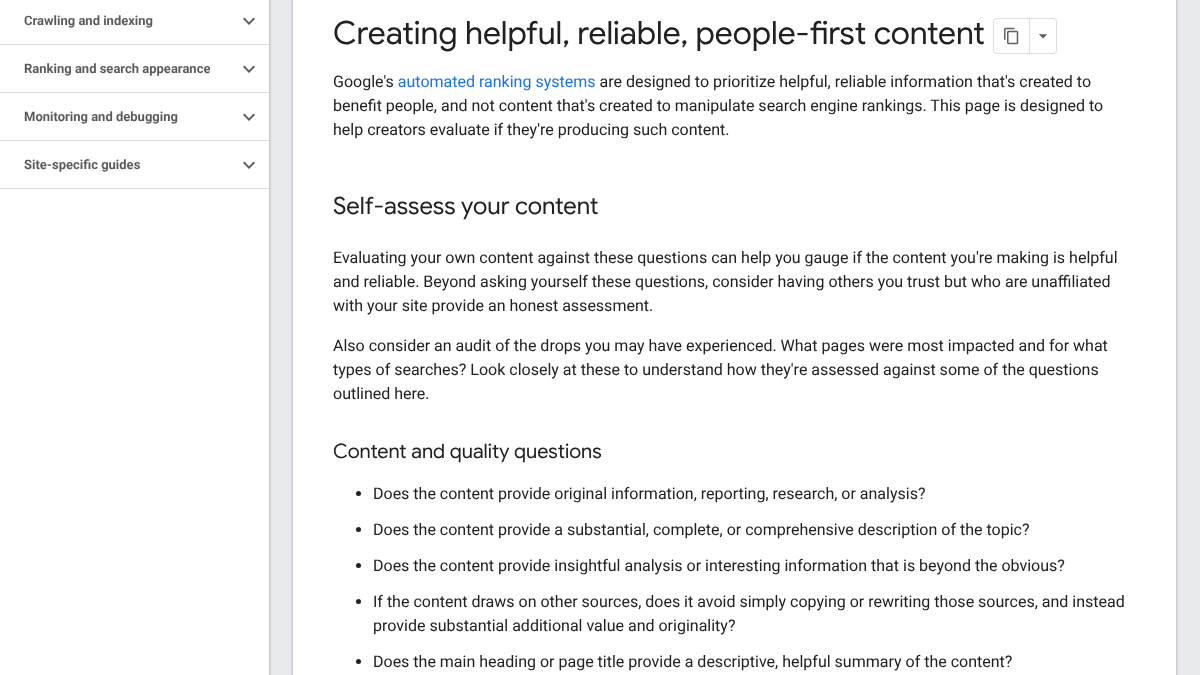
You'll find the same standard in the questions Google gives you for judging your own content. It wants to know whether a page offers "a substantial, complete, or comprehensive description of the topic." It also asks whether content built from other sources adds "substantial additional value and originality" instead of copying them.
Structure and length didn't follow a formula either. Stripe's post ran four H2 headings with no byline or date on show, Chargebee's carried a named author across 27 headings, and a table appeared in only one of the four.
The overlap you can copy comes down to five checks:
- One question per post, phrased in the title the way people search for it.
- The answer at the top in plain sentences, with background after.
- Everything the reader needs to do the task, such as the formula, the steps, sourced numbers or a side-by-side comparison.
- Plain HTML text on the page, with nothing trapped in images or scripts.
- A named author and a real updated date where facts change, the "who, how and why" that Google's helpful content guidance asks about a page.
Original data is still worth publishing if you've got it, because it hands other writers something to cite and link. It just isn't required to get in.
What to stop writing
Posts that answer nothing in particular rarely get cited, and you can stop writing most of them.
The self-promotional best-of list is the plainest case. ChatGPT's search has largely given up citing them, although Perplexity still does, and the figures are in our post on why AI search cites fewer listicles. Generic trend pieces and company news written for search traffic fail the same way, because they carry no formula and no steps, nothing an answer could borrow.
Volume won't bail them out. Google's spam policies treat "using generative AI tools or other similar tools to generate many pages without adding value for users" as scaled content abuse, so 300 thin posts on your blog count against you rather than giving you a head start.
Keep the good posts working
Good reference posts age well, and that helps them get cited. One commenter in an r/content_marketing thread about ChatGPT citing older pages argued that age works like a trust signal for these systems, and that what pays is publishing things people reference quickly rather than publishing more.
The flip side is that stale numbers in a reference post keep getting quoted. When a benchmark moves, a formula changes or a product is renamed, go back through your most-cited posts. Change the content, then the date, because Google's guidance asks directly whether you're "changing the date of pages to make them seem fresh when the content has not substantially changed." A date bump by itself won't pass.
Structure can lift older posts as well. A member of r/Blogging reported that bolting a key takeaways section and an FAQ onto existing posts, with no rewrite, helped their rankings and traffic a lot. That's one person's report, but it agrees with what the cited posts show: make the answer easy to lift out.
Also link your reference posts together so each one can be reached from the questions around it. For the linking structure, see our guide to pillar pages in the AI search era, and for how many to publish and when, our 90-day AEO content calendar.
How often does ChatGPT mention your brand?
Most founders have no idea. The answer might surprise you.

Plan the next ten posts
Your next ten posts are where the checklist earns its keep. Gather the questions buyers ask on sales calls and in support tickets, and keep the ones with an answer you could check, like a how-to, a comparison, a benchmark or a template. Look each one up in Google and note two things: does an AI Overview appear, and does it cite blog posts? Write for the ones where it does, and point the definition questions at a glossary page.
Give it a month, then see which posts turn up in answers on Google and Perplexity, and repeat whatever worked.
Doing it yourself or handing it off
By hand, you're looking at a planning session, ten well-researched posts that take several hours each, and a monthly check on where they get cited. Call it 30 to 50 hours for the first batch, as a rough estimate.
RankControl can take most of this on. Our content engine writes each article against the pages that already rank for its keyword, scores how easily AI engines can quote it with a fix list, and publishes it to your own site. Every week, our AI visibility tracking checks up to 50 buyer questions across seven AI engines and notes which of your pages each answer cited. If you'd like a quick first look, the free AI visibility check is a good place to start.
15 hours a week manually. Or 15 minutes with RankControl.
Track citations, monitor competitors, and fix content gaps across every AI search engine. Automatically.