
If best-of listicles are losing their grip on AI answers, the obvious next question is what to build instead. Most advice stops at "create helpful content," which doesn't tell you which page to write on Monday.
So we looked at what got cited. On September 27, we asked 10 B2B buyer questions in 10 categories we hadn't tested before, from data warehouses to e-learning authoring tools. Each question had real requirements in it, like "integrates with PagerDuty" or "under $200 a month." We ran every one through OpenAI's API with web search on and through Perplexity. For each answer, we checked which of the recommended brand's own pages were cited.
What the recommended brands had in common
| Engine | Winner had one of its own non-list pages cited | Most common own-page type |
|---|---|---|
| OpenAI with web search | 10 of 10 answers | Help docs, then pricing pages |
| Perplexity | 2 of 10 answers | The winner's own best-of list |
On OpenAI's side, the pattern was the same every time. The answer picked a winner and backed it with that brand's own help articles, pricing, feature and integration pages. Across 10 answers, only one cited page was a list.
Perplexity worked differently. In 8 of the 10 answers, the only page of the recommended brand's that it cited was that brand's own "best X" post. We'll come back to what that means for your own list.
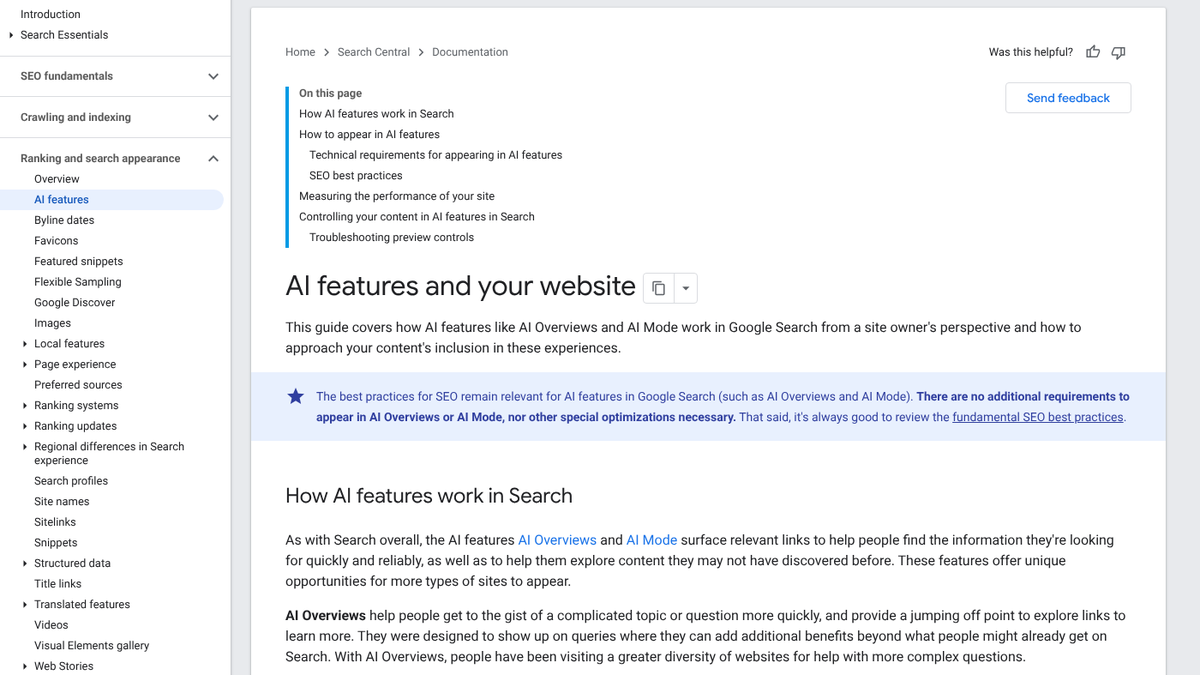
Google's position is the simplest of the three. Its AI features guidance says there are "no additional requirements to appear in AI Overviews or AI Mode, nor other special optimizations necessary." Its May 2025 advice for AI search was to "focus on making unique, non-commodity content," which describes a page only you can write, like your own integration docs.
Why detailed questions reward specific pages
Buyers don't ask AI engines "best status page tool." They ask for a status page tool with private pages for enterprise customers, a PagerDuty integration, and a price under $200 a month. OpenAI's ChatGPT search help page says it rewrites a question like that into "one or more targeted queries," then sends "more specific queries" after reading the first results.
Each narrow search needs a page that answers it. We call these constraint pages: pages that settle one requirement a buyer might set. A best-of list can't settle all of them, because it covers ten tools in a paragraph each. A vendor's integration page settles one completely.
That's what we saw. For the status page question, OpenAI's model picked Instatus and cited its PagerDuty integration page, a help article on private status pages, and another on audience settings. Each page answered exactly one of the buyer's requirements.
The build order
Here's the order we'd build in, based on how often each page type did the work in our test.
1. Constraint pages for integrations and must-have features
These were the most direct wins. FieldPulse was picked for an HVAC company that needed offline scheduling and QuickBooks sync, and the answer cited FieldPulse's own offline mode feature page and its HVAC solutions page. Lokalise was picked for a team localizing through GitHub, with its GitHub integration page cited.
Partner directories count too. For a feedback tool that works with Slack and Linear, the answer cited Linear's own integration directory listings for Featurebase and Productlane. If you integrate with a bigger platform, your listing in its marketplace is a page the engine may read.
Start with the five requirements your sales team hears most. If any of them has no dedicated page, that's your first gap.
2. A pricing page with the numbers in text
Pricing questions came up constantly, because buyers put budgets in their questions. For uptime monitoring under $100 a month, every page OpenAI's model cited was a pricing page, four of them, and it picked Hyperping from those numbers. For procurement software under $1,500 a month, five of the seven pages it cited were pricing pages, and the other two covered NetSuite integration.
One answer went to unusual lengths. isEazy Author listed its plan at €208 a month, so to check it against a $300 budget, the model cited the European Central Bank's exchange rate page. It will do the math if your price is readable. It can't do anything with "contact sales."
Plan explainers help too. Featurebase's pricing was cited through a help article called "Featurebase pricing explained" rather than a pricing grid. If buyers get confused between your plans, an article that walks through which plan fits which team is likely to be the page that gets quoted.
3. Public help docs that answer capability questions
Help centers were the most cited page type overall. BigQuery won the data warehouse question with Google's documentation on JSON data and cost best practices cited. Tyk won the API gateway question with four of its docs pages cited, covering GraphQL federation and per-endpoint rate limits.
If your docs sit behind a login, or render only with JavaScript, the engine can't use them. Check that your core help articles load as plain HTML for a logged-out visitor.
Also check what's still lying around. For Snowflake's credit pricing, the page the model cited was a PDF uploaded to Snowflake's site in 2017. Old files get read when they're the clearest page on a topic, so retire outdated PDFs or replace them with a current page that answers the same question.

Built by the team that got cited in 48 hours.
Content generation, backlink building, AI visibility tracking, and Google rankings. One platform, zero guesswork.
4. Case studies with a number in the headline
This one showed up on Perplexity. For the localization question, Perplexity cited Lokalise's case study on Awin, whose headline gives the result: translations delivered 57% faster.
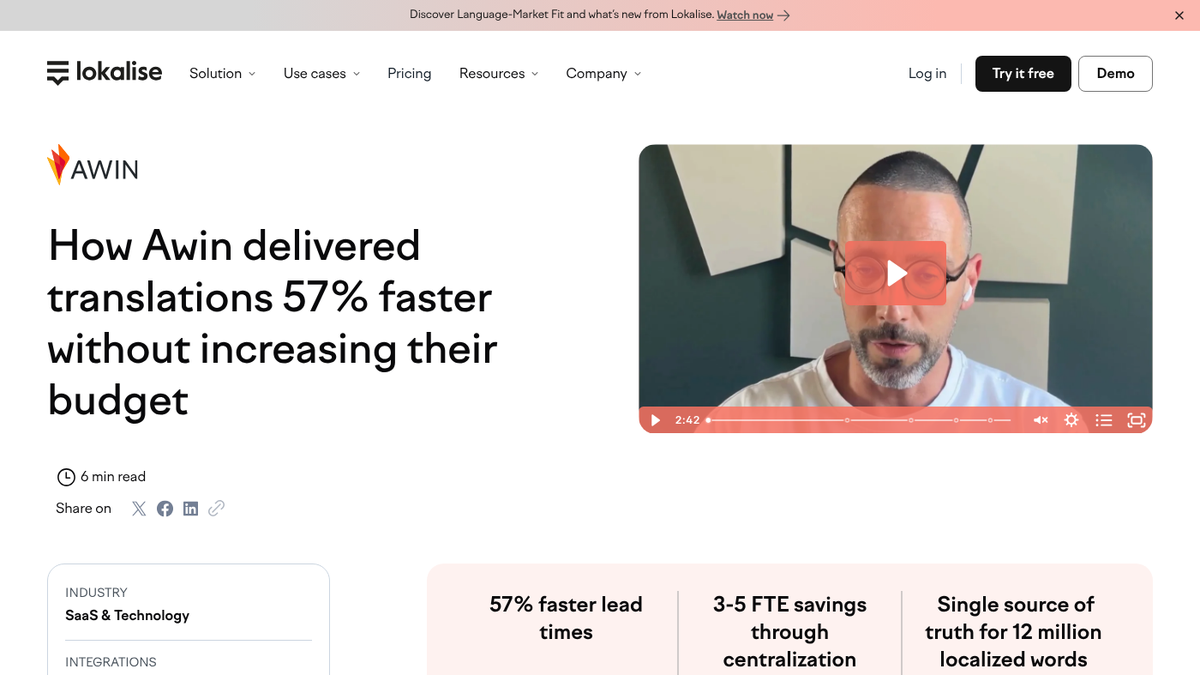
It was one of only two answers where Perplexity cited the winner's own non-list page. A case study with a specific outcome in the headline is quotable in a way that "Customer success story: Awin" isn't.
5. Mentions on the sites engines already read
Your own pages cover ChatGPT's search. Perplexity leans on third-party pages, so the off-site half still matters. For procurement, Perplexity's sources included three Bill.com posts. For data warehouses, it cited ClickHouse's own guide and two other companies' blogs, and none of BigQuery's pages, even though BigQuery won.
The job here is being accurately described where buyers and engines already look: review profiles, integration partners' directories, and independent coverage. A thread in r/SEO asked what drives these recommendations, and practitioners in the replies pointed at third-party mentions far more than on-site tricks.
How do you get your site recommended by ChatGPT and Claude?
People are increasingly asking AI tools things like "suggest the best hotel/resturant near me," and a few businesses keep getting named while everyone else is invisible. For those working on this (GEO/AEO), what's actually driving those rec...
What about your own best-of list?
This is where the Perplexity numbers get awkward for anyone who wants a clean rule. In 8 of 10 answers, the winner's own list was the only page of theirs Perplexity cited. Hyperping's incident management tools post, UptimeRobot's API monitoring roundup, Goldcast's video hosting list and FieldPulse's two HVAC app lists all did that job.
So a list isn't worthless. It's just the last thing to build, not the first. On ChatGPT's search, which picked a winner from product pages in all 10 answers, the list did nothing we could see. Build the constraint pages, pricing and docs first. If you then write a list, make it one a buyer would trust, with rivals described accurately, because Perplexity may quote it straight into an answer.
Our post on why AI search cites fewer listicles has the before-and-after data on lists, and answer engine optimization examples for B2B SaaS shows 10 companies with strong product-shelf pages.
How to tell it's working
Pick your 10 most detailed buyer questions, the ones with requirements in them, and run them on ChatGPT with search on and on Perplexity. For each answer, note which of your pages were cited and which requirement each one answered. The requirements that keep landing on a competitor's page are your build list.
Answers move between runs, so ask each question more than once before you act on a single result. Our guide to checking ChatGPT citations has the full routine.
See your first AI citation report in under 5 minutes.
No setup calls. No onboarding meetings. Connect your domain and see where AI mentions your brand right now.

Building it yourself or handing it off
You can do this with a spreadsheet and a content calendar: list the requirements buyers ask about, map each to a page you have or need, and work through the gaps in the order above.
Or RankControl can take on the writing and the checking. Our content engine writes each article against the pages already ranking for its keyword and scores it for how easily AI engines can quote it, with a fix list, then publishes it on your own site. Our AI visibility tracking checks up to 50 buyer questions every week across seven AI engines and records every source each answer cited. For a quick start, run the free AI visibility check.
Your competitors are building backlinks while you read this.
Organic outreach, social mentions, and citations from Editorial Circle member sites, with managed backlinks available as an add-on. Grow your domain authority without running the campaign yourself.