
On September 26 we asked ChatGPT and Perplexity twelve questions about applicant tracking systems. One of them was specific: an ATS that supports E-Verify, integrates with LinkedIn and Indeed, and costs under $500 a month for a 30-person company. ChatGPT's top pick was ApplicantStack's Bundle plan at $159.99 a month.
ApplicantStack didn't appear in any of the other eleven answers. It won that one question on three narrow pages from its own site: pricing, background checks and an Indeed integration page.
That's the practical answer to showing up in AI software recommendations. Buyers ask in different shapes, and each shape gets answered from a different kind of page. If you only have a homepage and a blog, you're only eligible for some of those shapes.
Buyers really are asking AI
G2's buyer survey, published in July 2026, found that 82% of software buyers had sourced recommendations from an AI chatbot in the previous 24 months. Half of those said AI mattered most when they were narrowing and comparing options, which is exactly when a vendor gets added to or dropped from the list.
The same G2 report found review sites edging out AI chatbots, 38% to 37%, as the top source shaping which vendors make a shortlist. G2 runs a review site, so read that result knowing who published it. Forrester's January numbers point the same way from a different angle, with 94% of B2B buyers now using AI somewhere in the buying process.
Our test: twelve questions in six shapes
We picked applicant tracking software because we hadn't tested it before, and because it has a clear leader (Greenhouse) and a long tail of smaller vendors. Each question went to ChatGPT through GPT-5.5 with web search and to Perplexity through its API. We then ran two follow-up conversations to see what changes on the second turn.
| Shape | Example question we asked |
|---|---|
| Broad best-of | "What is the best applicant tracking system in 2026?" |
| Segment | "What's the best ATS for a healthcare organization hiring nurses and clinical staff?" |
| Alternatives | "What are the best alternatives to Greenhouse ATS?" |
| Head-to-head | "Greenhouse vs Lever: which is better for a mid-size tech company?" |
| Worth it and pricing | "Is Greenhouse ATS worth the cost for a 30-person company?" |
| Constraint-heavy | The E-Verify, LinkedIn, Indeed and under-$500 question above |
Each shape pulls a different kind of page
Here's what each shape cited. We call this the shape map: the page type each kind of buyer question gets answered from.
| Shape | What the engines cited | The page you need |
|---|---|---|
| Broad best-of | Review-site category pages and roundups, including vendors' own "best ATS" posts | A presence on review sites, and an honest roundup of your own |
| Segment | ChatGPT went straight to vendor pricing and product pages | A page per segment you serve |
| Alternatives | Rival vendors' product pages and "alternatives" pages | An alternatives page for the category leader |
| Head-to-head | The vendor's own compare page, plus compare sites | A compare page for each rival buyers weigh you against |
| Worth it and pricing | Pricing pages and pricing-benchmark sites | A pricing page with real numbers in plain HTML |
| Constraint-heavy | Narrow feature, integration and compliance pages | One page per integration or requirement |
A few results are worth a closer look.
Broad questions trusted vendors' own rankings
Perplexity's top pick for "best applicant tracking system in 2026" was Pinpoint, and its main evidence was Pinpoint's own blog post ranking the best ATS tools. Greenhouse, Lever and Gem each publish a "best ATS" list that puts themselves at or near the top, and Perplexity cited those as ordinary sources.
That works today, but we wouldn't build a strategy on it. The engines don't seem to discount a vendor ranking itself yet, and a reader who clicks through can see who wrote the list. If you publish a roundup, make it one a skeptical buyer would still find useful.
Head-to-head answers cited the vendor's own compare page
For "Greenhouse vs Lever," ChatGPT cited Greenhouse's own compare page alongside G2's and Capterra's comparison pages.
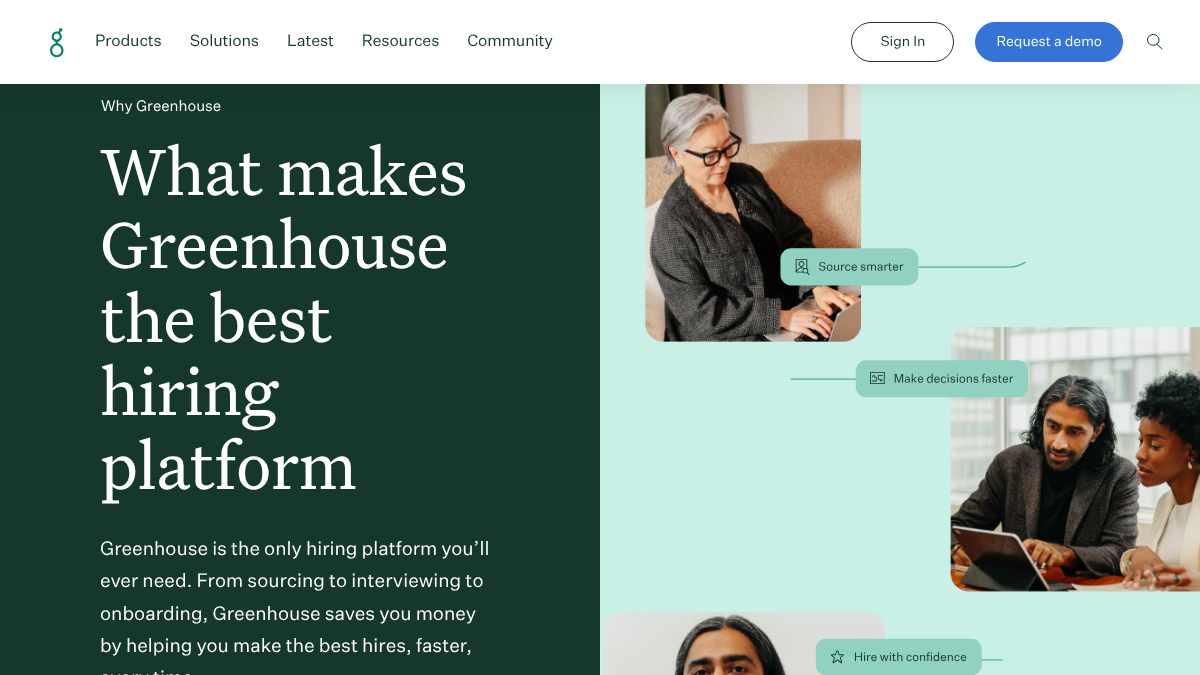
For "Workable vs BambooHR," ChatGPT didn't cite a vendor compare page at all. It built its answer from the two pricing pages and a help-center integration article, with no review or roundup in the mix.
Constraint questions rewarded narrow pages
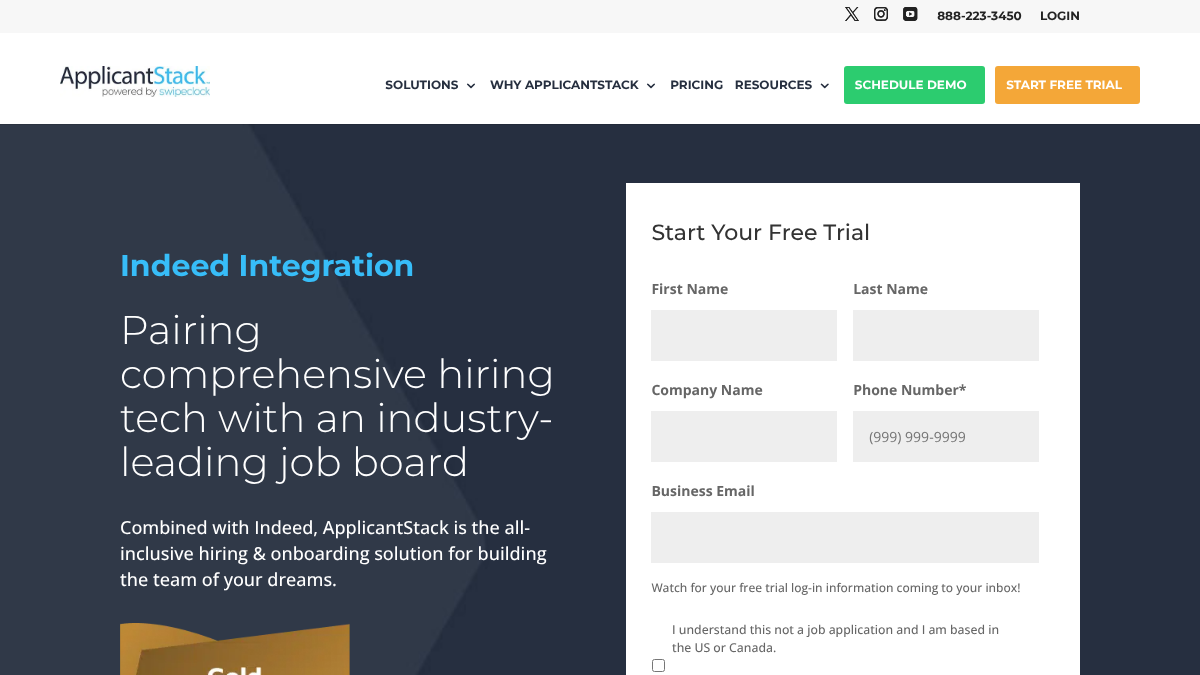
This is where smaller vendors win. ApplicantStack got the E-Verify question because it had pages confirming the requirements, including this Indeed integration page. Our look at why answer engines cite only a few brands found the same pattern in help desk answers.
The same thing happened in healthcare. symplr, an ATS built for healthcare, was ChatGPT's pick for both the nurse-hiring question and a HIPAA question, cited through its security and background-check partner pages. It never showed up anywhere else in the test.
The two engines also disagreed here. For the identical E-Verify question, Perplexity leaned toward CareerPlug and Workstream instead of ApplicantStack. That's a good reason to check more than one engine before you conclude you're missing.
200+ SaaS teams already track their AI citations.
They know exactly when ChatGPT mentions their brand, and when it stops. Do you?
Follow-up questions went to help-center articles
Our first conversation started with a startup hiring its first ten engineers, then asked which of the suggested tools integrates with Slack and has a free trial. The second turn cited help-center and docs articles that confirmed the exact word "Slack," from Workable, Ashby and Greenhouse. That page type never appeared in any single-question answer.
It makes sense once you see it. On a follow-up, the engine searches again for proof of the buyer's new condition, and a help article titled "Slack integration" is the most direct proof there is. Four of the six sources ChatGPT cited on that turn were help or docs articles, and none was a homepage.
Ashby was the one brand that did well across shapes. It was the "closest modern alternative" to Greenhouse and to Lever on both engines, and it made the top three in both conversations, each time through its own product, pricing and docs pages.
Pricing questions surfaced a messy range
We asked whether Greenhouse is worth it for a 30-person company. One Perplexity source put the cost at $6,500 to $10,000 a year. Another put it at $25,000 to $30,000, and the model showed both rather than picking one. When your pricing isn't public, the engine quotes whatever third-party estimate it can find, and you don't get a say in which one.
How to build for the shapes you're missing
Here's the order we'd work in:
- Write down two real buyer questions for each of the six shapes. Sales calls and demo notes are the best source, since buyers type what they say.
- Put your pricing on a plain HTML page with real numbers, including what changes at the next tier.
- Give every integration and compliance claim its own page or help article, titled with the exact name buyers use, such as "Slack integration" or "HIPAA."
- Write a compare page for each rival that buyers name on calls, and be fair about where the rival fits better.
- Publish an alternatives page for your category leader, since that's a question buyers ask the moment they're unhappy with it.
- Add a page for each segment you serve well, by industry or company size, with the details that segment asks about.
- Keep your review-site profiles current, because broad questions still lean on those category pages.
Budget about a day to write the question list and audit which pages exist. Each missing page takes two to four hours to write well, so a typical gap list of eight to ten pages is a few weeks of part-time work. After that, plan an hour or two a month to recheck the questions.
For more on how the engines weigh sources, see how ChatGPT decides which websites to recommend. Our help desk test looked at the reading list behind a single category.
How often does ChatGPT mention your brand?
Most founders have no idea. The answer might surprise you.

Being mentioned isn't the same as being picked
Showing up in the sources doesn't guarantee a recommendation. In the Greenhouse-vs-Lever answers, both engines hedged and named a winner only for a stated priority: Greenhouse for structured hiring, Lever for sourcing. Our post on why mentions don't become recommendations covers how to earn the "best for" label buyers act on.
Small businesses are noticing when it works. A niche service business in r/smallbusiness posted in September that a new client had found them by name through ChatGPT, even though their marketing was, in the owner's words, non-existent. One reply offered the most useful advice in the thread: ask the client exactly what they typed, because it's usually a specific buyer question you can then build pages for.
What we couldn't find was independent proof on X. Nearly every post we found about ChatGPT recommending a product came from a founder or agency promoting themselves, so read social "proof" of AI recommendations as marketing.
Tracking the shapes over time
You can run this check by hand. Keep your twelve questions in a spreadsheet, ask each engine every month, and note which of your pages get cited.
Or RankControl can do the tracking. Its AI visibility tracking checks up to 50 buyer questions every week across seven AI engines and shows which sources each answer cited, so you can see which shapes you win and which pages carry them. The content engine writes the missing pages, from comparisons to use-case pages, against the pages already ranking for each keyword. For a quick first look, run a free AI visibility check.
15 hours a week manually. Or 15 minutes with RankControl.
Track citations, monitor competitors, and fix content gaps across every AI search engine. Automatically.