Mixpanel's docs page on funnels opens with this sentence: "A funnel is a sequence of events done within a defined period of time." When we asked ChatGPT and Perplexity how to set up a funnel analysis in Mixpanel, both of them lifted that line almost word for word into their answers.
That's what answer engine optimization looks like when it works. It's rarely a trick, and it's often a page written so its first line can stand on its own. Below are ten real examples from B2B SaaS companies, all cited for buyer questions on September 27, plus what each page does that made it easy to quote.
How we found these examples
We wrote twelve buyer questions across six software categories we hadn't used in earlier posts: expense management, e-signature, product analytics, customer onboarding, feature flags and email deliverability. Each category got two question shapes, such as a definition plus a comparison, or a pricing question plus an integration question.
Every question went to ChatGPT through GPT-5.5 with web search, and to Perplexity through its API. We kept only pages the answer actually cited, and only pages owned by the software company itself, then read each page to see what the engine used.
One result matters before the examples. ChatGPT didn't search at all for the three pure definition questions or for one general how-to question. It answered from memory, so no page got cited. Perplexity searched every time. Definition content still matters for what models learn, but live citations mostly come from questions that are specific enough to need a fresh source.
Example 1: Mixpanel, a docs page that defines before it explains
Mixpanel's Funnels Quickstart was the most-cited page in the whole test. Both engines cited it several times in a single answer.
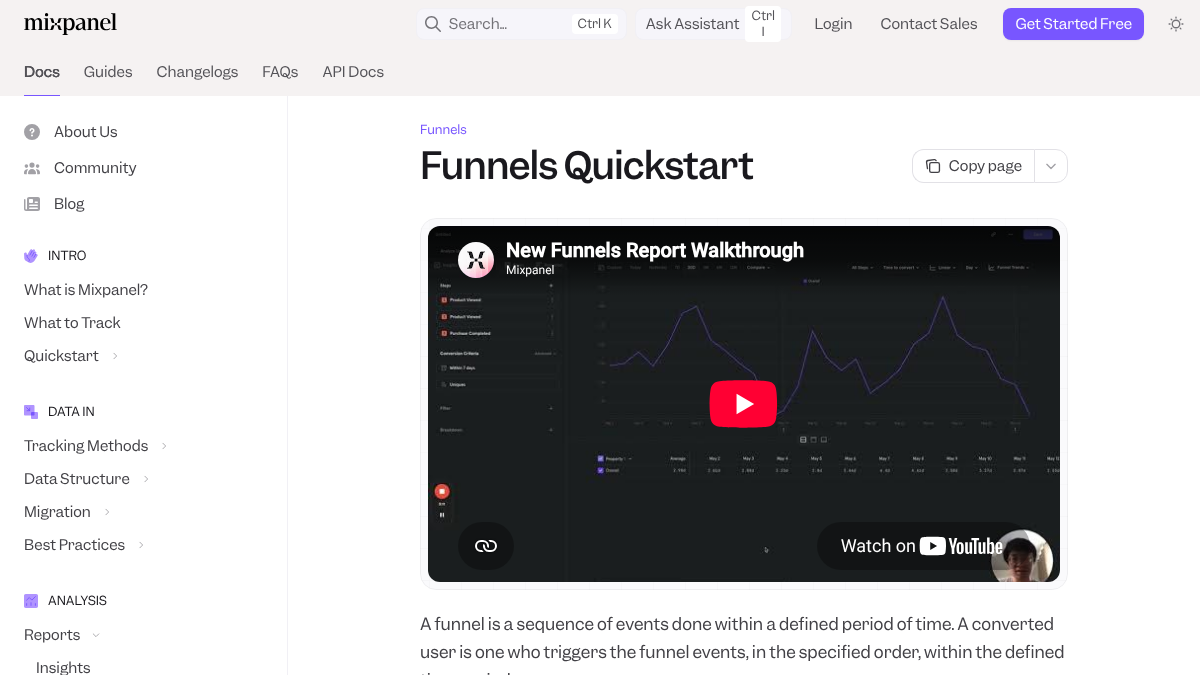
The page does three things. Its first sentence defines the term, its second defines a converted user, and then it walks through five numbered steps. The docs header also has a "Copy page" button and an "Ask Assistant" box, which tells you Mixpanel expects people, and machines, to lift its content.
We'd call this the first-sentence test. If someone read only your page's first sentence under the heading, would they have the answer? Mixpanel's page passes, and so did most of the pages below.
Example 2: DocuSign and Flagsmith, vendors writing their own "vs" page
For "DocuSign vs PandaDoc: which is better for small business contracts?", both engines cited DocuSign's own comparison page. The vendor wrote the head-to-head itself, and the engines used it as a source for the question.
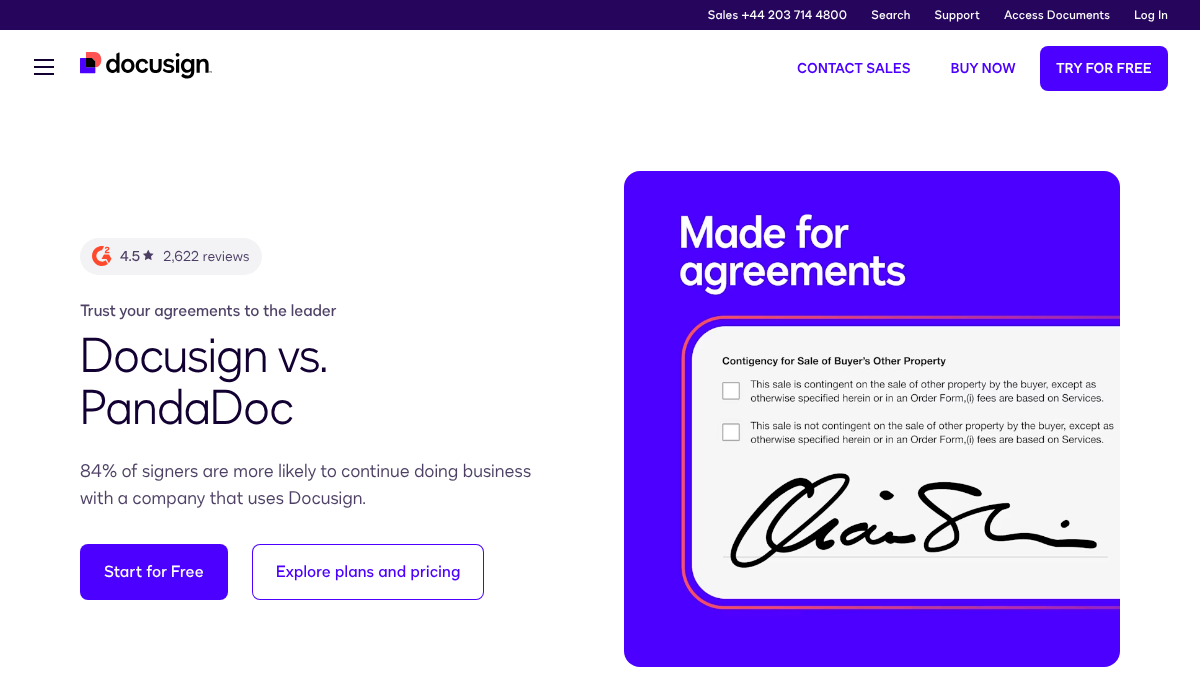
The page has a feature table with a column for each product and a five-question FAQ block. It also puts a specific claim right under the headline: "84% of signers are more likely to continue doing business with a company that uses Docusign." That's DocuSign's own number, not an independent one, but it's the kind of specific line an engine can quote.
Flagsmith did the same thing against LaunchDarkly, the market leader, and won the citation for that matchup. Its page carries a warning worth noticing, though: "Reviews and pricing accurate as of August 2024." Engines still cited it in September 2026. Being cited doesn't mean being current, so if your old comparison page is winning, check that its numbers are still true.
26 content formats. Published on your domain. Matched to your brand.
Guides, comparisons, listicles, case studies, and more. RankControl generates content that gets cited by ChatGPT, Perplexity, Claude, Gemini, Grok, Google AI Mode, and Google AI Overviews.

Example 3: Ramp, Dropbox Sign and PandaDoc, pricing in plain text
For "What's the best expense management tool for a startup with under 50 employees?", ChatGPT didn't cite a single roundup. It cited six vendors' own pricing pages (Ramp, Brex, Expensify, Zoho, Navan and Bill.com) and built the comparison itself.
Ramp's page in that answer was a help-center article rather than a marketing page. It opens with "Our core Ramp card and expense management software is free to use," then lists each fee in plain prose, like $0.59 per standard ACH payment. ChatGPT cited it three times.
Dropbox Sign's pricing page shows its first two plans, $15 a month for one user and $25 per user per month, in plain HTML, with an eight-question FAQ underneath. Only the top tier says "contact sales."
PandaDoc's cited page was a help-center plan comparison, with a feature matrix across four tiers and a visible date of July 22, 2026, the most recent visible date among the pages we checked.
The lesson from all three is uncomfortable if your pricing sits behind a sales call. On a best-for question, your pricing page competes with your rivals' pricing pages, and a page that shows no numbers gives the engine nothing to compare.
Example 4: Amplitude and Postmark, pages that answer the constraint
Constraint questions name a specific requirement, and they reward pages about exactly that requirement. For "Does Amplitude work with a Next.js app without a backend proxy?", both engines cited Amplitude's Next.js installation guide. It opens by scoping itself ("This guide covers installing and setting up Amplitude's Browser SDK in Next.js applications") and has separate client-side and server-side sections with code. ChatGPT's answer reproduced a close copy of the code sample.
Postmark's case is the cleanest. We asked whether Postmark supports sending from a custom subdomain without hurting the main domain's reputation. The first sentence of Postmark's help article answers it directly: "To send a fully authenticated email, each subdomain you want to send from will have to be added to Postmark individually."
Three of the four sources in ChatGPT's answer were Postmark pages, and the fourth was a Gmail help article. The main article's schema carried a modified date of September 23, 2026, four days before our test.
Example 5: Appcues and LaunchDarkly, answers the engine rearranged
Appcues' blog post on product-led onboarding opens with a two-sentence definition, and Perplexity paraphrased it closely for "What is a product-led onboarding flow?" The post has no FAQ block and no original stats. It's a clear definition under a clear heading, which was enough for Perplexity, while ChatGPT didn't search for that question at all.
LaunchDarkly's docs on percentage rollouts show something subtler. The page explains the concept in prose, starting with "Percentage rollouts let you manage the risk of deployment by releasing a feature gradually," and has no numbered steps. Perplexity still turned it into a step-by-step answer. The engine will restructure your content if the facts are clear, so you don't need to force everything into lists.
What the ten pages have in common
| Company | Page type | What made it quotable |
|---|---|---|
| Mixpanel | Product docs | First sentence is a complete definition |
| DocuSign | Own vs page | Feature table, FAQ, a specific claim under the headline |
| Flagsmith | Own vs page | Comparison table and pricing section, though dated 2024 |
| Ramp | Help-center pricing | Every fee written out in plain prose |
| Dropbox Sign | Pricing page | Prices in HTML, FAQ covering buyer questions |
| PandaDoc | Help-center plan comparison | Full feature matrix and a visible recent date |
| Amplitude | Integration docs | Scoped opening, separate setups, working code |
| Postmark | Help article | First sentence answers the exact question |
| Appcues | Blog guide | Clear definition in the first two sentences |
| LaunchDarkly | Product docs | One-sentence definition, clear explanation |
Six of the ten were docs or help-center pages, not marketing pages. That's the part most SaaS teams miss: the pages support writes are doing a lot of the AEO work already, usually without anyone in marketing looking at them.
For the page formats behind this, our post on content formats that still get cited goes deeper, and what answer engine optimization is covers the basics.

Your competitors are getting cited by AI. You're not.
Every day without citation tracking is a day your competitors pull ahead in ChatGPT, Perplexity, and Claude.
Old pages can speak for you
The flip side showed up on Reddit in September. A marketer in r/PublicRelations said an AI answer had recommended their product at a price retired 18 months earlier. Their own site and docs were current, but one unmaintained trade-site roundup still carried the old price, along with a few aggregator pages that had copied it.
That's the Flagsmith lesson from the other side. If an engine can't find a clear, current answer on your pages, it will take one from somewhere else, and outdated third-party pages don't fix themselves.
It also fits the churn data. HasData, which sells search-data tools, re-ran its AI Overviews study in September on a fixed panel of about 1,100 queries. Between two passes a week apart, the median answer kept 60% of its cited domains and swapped out the rest. What gets cited this week isn't guaranteed next week.
How to apply the examples to your site
Here's the order we'd go in:
- Run the first-sentence test on your top pricing, integration and help pages. Rewrite any opening that warms up instead of answering.
- Put your pricing in plain HTML, including the numbers on at least the entry plans.
- Write a vs page for each rival buyers compare you with, with a feature table and a date on it.
- Give each integration and requirement buyers ask about its own doc or help article, titled with the exact name they use.
- Put a visible updated date on help and pricing pages, and keep it honest.
- Search for your brand plus "pricing" and fix or flag any third-party page quoting old numbers.
None of this needs special markup. Google says there are "no additional requirements to appear in AI Overviews or AI Mode", and that you don't need new files or markup. The pages above won with clear writing and current facts.
Budget about an hour per page to audit and rewrite openings on your top 20 pages, then an hour or two a month to check which ones get cited.
Checking which of your pages get cited
You can do this by hand: keep a list of buyer questions, ask ChatGPT and Perplexity each month, and note which of your pages show up. Our guide to showing up in AI software recommendations covers how to pick those questions.
Or RankControl can run it for you. Our AI visibility tracking checks up to 50 buyer questions every week across seven AI engines and shows which sources each answer cited, including your own pages. The content engine writes new articles against the pages already ranking for each keyword and scores each one for how easily AI engines can quote it, with a fix list.
200+ SaaS teams already track their AI citations.
They know exactly when ChatGPT mentions their brand, and when it stops. Do you?