
The pillar page was engineered for a search engine that ranked pages. AI search doesn't rank pages. It shreds them into chunks, scores each chunk against the question, and quotes the winners. Most 6,000-word hub pages, the crown jewels of a decade of content strategy, perform terribly in that pipeline.
Before you mourn, one number reframes everything. Yext analyzed 6.8 million AI citations across ChatGPT, Gemini, and Perplexity and found 86% pointed to brand-owned sources. Founders assume AI answers are built from Reddit threads and press coverage. Mostly, the engines are citing companies' own pages. Your cluster is your citation surface. It's just built for the wrong retrieval system.
This guide is the rebuild.
Key Takeaways
- AI engines retrieve and score chunks, so a long hub page spreads its relevance across many intents and competes with itself.
- Length is nearly irrelevant to citations: Ahrefs found a 0.04 correlation across 174,000 cited pages, with 53% of AI Overview citations going to pages under 1,000 words.
- Factual density is what wins. Surfer's analysis of 57,000 URLs found cited pages cover roughly 62% more key facts than non-cited ones.
- Google's query fan-out rewards complete clusters: appearing across the sub-queries of one question boosts citation odds by 161%.
- Rebuild the pillar as a navigational entity hub, make every spoke section quotable in isolation, and measure visibility at the cluster level.
Pages Ranked. Chunks Get Cited.
The mental model shift is mechanical, so it's worth thirty seconds of plumbing. When an AI engine answers a question, it runs retrieval over passages: self-contained blocks of text, scored independently for relevance. Retrieval research consistently shows quality degrading as context grows, with a practical cliff around 2,500 tokens. The system never sees your page as a whole. It sees fragments, stripped of everything around them.
Now picture the classic pillar page in that pipeline. Twelve subtopics, 6,000 words, each section leaning on the intro for context. Every chunk is diluted by neighbors about something slightly different, and none stands cleanly for a single intent. The page that was "authoritative" to a link graph is mush to a retriever.
The citation data confirms it. Ahrefs analyzed 174,048 pages cited in AI Overviews and found word count correlates with citation at r = 0.04, which is to say not at all. Over half the citations went to pages under 1,000 words. Meanwhile Surfer's study of 57,253 URLs found the variable that does matter: cited pages covered 31% of a topic's key facts versus 24% for non-cited pages, and the always-cited core sources hit 42%. Facts per section, not words per page.
To be fair, the engines don't fully agree with each other: ChatGPT's citation patterns skew toward longer pages while Google's AI Overviews skew short. We'll come back to that tension. The point that survives every dataset is that nothing rewards bulk. Structure and density win everywhere.

Your competitors are getting cited by AI. You're not.
Every day without citation tracking is a day your competitors pull ahead in ChatGPT, Perplexity, and Claude.
Query Fan-Out Is the New Reason Clusters Exist
Here's the twist nobody expected: the same AI shift that broke the pillar page made the cluster around it more valuable than ever.
Google's AI Mode doesn't process "what's the best way to onboard enterprise customers" as one query. It fans out into sub-queries (onboarding timelines, security reviews, training approaches, pricing implications) and retrieves sources for each before composing one answer. A Search Engine Land-covered study measured the effect: appearing across a question's fan-out queries boosts citation odds by 161%. One practitioner framing that stuck with us:
The best way to get traffic from Google AI is no longer a secret. A Google AI Mode system prompt was extracted and published recently. It helps explain why one page targeting one keyword is becoming a weaker way to think about Google visibility. Google AI Mode can take one https://t.co/axleT6DKsk
 Alex Groberman@alexgrobermanJul 3, 2026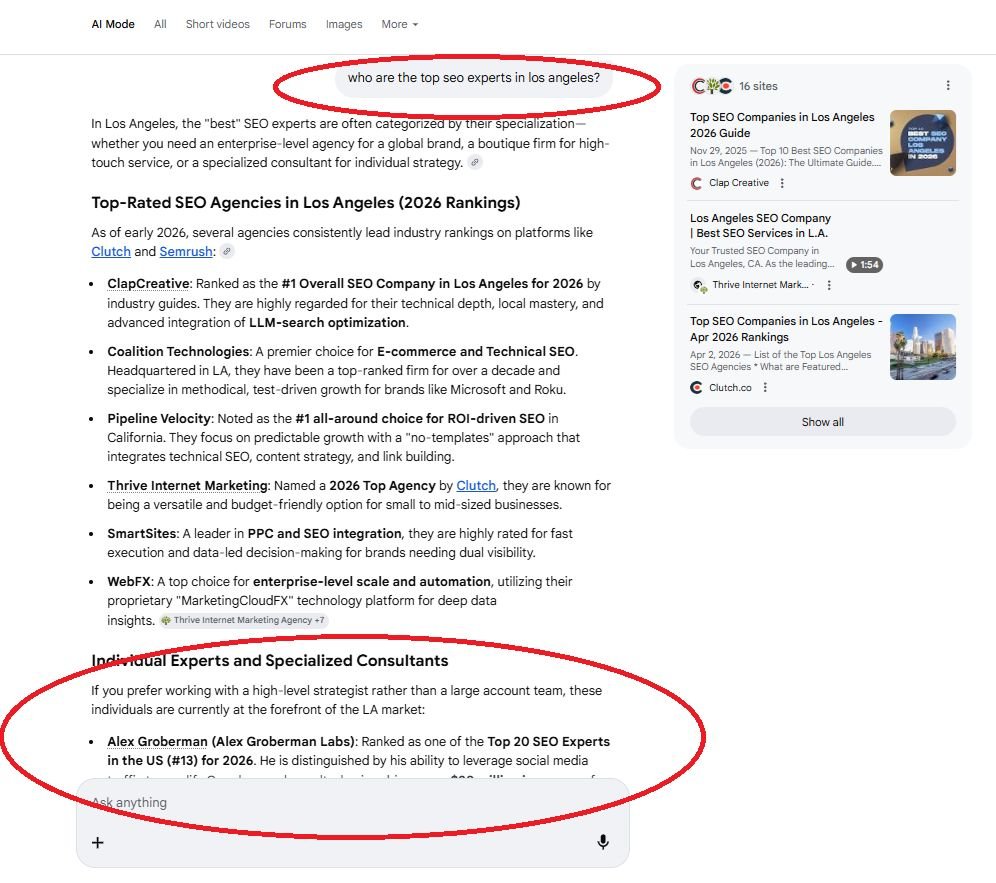
The insight underneath: one page targeting one keyword is a weakening strategy because the engine is asking your category several questions at once, and it composes answers from whoever covers the set. A complete topic cluster is, functionally, fan-out coverage. The brand whose spokes answer eight of the ten sub-queries dominates the composed answer even if no single page "ranks." Our guide to topical authority for AI search shows the pattern in a six-question test, where a site devoted to one subject was cited in half the answers.
This maps directly to how buyer questions actually arrive, which is why we treat cluster design as a query-mapping problem first. It's the logic behind our take that keyword research is dead and prompt research replaced it: you're no longer picking one keyword per page, you're mapping the full question-space of a topic and making sure something extractable exists for each.
The Rebuild: Pillar as Hub, Spokes as Citation Units
The cluster survives. The roles change. Specifically:
The pillar stops being the citation target. Its new job is navigational and semantic: define the topic and its entities plainly, then link every spoke with descriptive anchors so crawlers and models can build a clean map of what your domain covers. Keep it under 2,000 words. It's a lobby, and lobbies don't need to be museums.
Spokes become the extraction surface. The spec, assembled from the citation studies:
- One narrow query per spoke, 1,200-1,800 words, answer-first opening.
- H2 sections of 120-180 words that stand alone. Sections in that range earned 70% more ChatGPT citations than denser ones in PushLeads' 2026 analysis. Every section passes the out-of-context test we detailed in the Key Takeaways tactic.
- Facts in every section. A number, a named source, a date, a benchmark. Pages citing at least one named source in the body get cited 2.1x more, per Digital Applied's study of 1,000 AI Overviews; matching schema pushed citation rates to 2.3x.
- Entity consistency across the cluster. Call your product, category, features, and core concepts the same thing on every page. Entity-dense, consistent pages showed 4.8x higher citation selection in SearchAtlas' research. A cluster that renames its own topic every third spoke reads as three weak sites.
- Interlinking a model can follow. Every spoke links up to the pillar and sideways to two or three sibling spokes, always with descriptive anchors ("enterprise onboarding security reviews," never "learn more"). Descriptive anchors are entity signals; naked ones are noise. Breadcrumb schema on the whole cluster reinforces the hierarchy for crawlers that respect it.
- A refresh cycle. Content updated within 90 days earned 67% more citations in the same analyses. Stale spokes drag the cluster.
One structural note from our own retrofits: the single highest-yield edit on an existing spoke is the answer-first reorder. Move the conclusion into the opening 100 words, expand below it, and change nothing else. We've watched that one reorder decide whether a page gets pulled into an AI response at all.
I'm getting ahead of myself, though, because there's a step zero: audit what exists. Most SaaS blogs already have accidental clusters, thin posts written to fill a content calendar. We've seen 200-post blogs that can't crack five thousand monthly visitors; they had plenty of volume, and the spokes were still thin on facts while the map had gaps. Consolidate the dead weight into fewer, denser spokes before writing anything new.
RankControl automates the map-and-generate part of this loop: the Radar Agent maps the question-space of your topic and finds the gaps, and Forge writes answer-first spokes for them, published through the content engine with schema and interlinking handled. The manual version below still works. It's just Saturdays.
200+ SaaS teams already track their AI citations.
They know exactly when ChatGPT mentions their brand, and when it stops. Do you?

Long Hubs vs Short Spokes: The Honest Scorecard
The unresolved tension deserves a table instead of a dodge:
| Signal | What the data says | Source |
|---|---|---|
| Page length vs citations | r = 0.04, effectively no relationship | Ahrefs, 174K pages |
| Google AI Overviews | 53% of citations under 1,000 words | Ahrefs |
| ChatGPT | Skews toward longer, multi-section pages | Platform citation analyses |
| Factual density | Cited pages cover ~62% more key facts | Surfer, 57K URLs |
| Section size | 120-180 word sections: +70% ChatGPT citations | PushLeads |
So who wins, the long page or the short one? Wrong question. A focused 900-word spoke with 40% fact coverage beats a 5,000-word hub with 24% on both platforms, because ChatGPT's "preference" for long pages is really a preference for pages with many well-scoped sections. Build spokes as stacks of standalone sections and the length debate dissolves: Google lifts the section, ChatGPT appreciates the stack.
Measure the Cluster, Not the Page
The last habit to unlearn from the Google era: page-level scorekeeping. Cluster effects show up collectively. Practitioners who fill topical gaps consistently describe several pages moving up together after a couple of months, rather than one hero page carrying the topic. This r/seodiscovery2026 thread captures the pattern and the debate around it:
Is topical authority becoming more important than backlinks?
I've been spending more time creating content around one topic instead of chasing different keywords. It feels like Google understands websites better when they cover a topic from multiple angles, but I'm curious if others are seeing the sa...
We've seen the same halo across our customer base: complete the question map, and spokes you didn't touch start appearing in answers, because the cluster's collective coverage is what fan-out retrieval rewards.
Look, two things make this genuinely hard to track by hand. First, a large share of AI mentions carry no link at all; practitioner analyses put unlinked brand mentions around 28% of AI answers overall, and inside Google's AI Overviews only a sliver of mentions link out. Click-based analytics undercount your actual visibility badly. Second, the sample sizes needed for a stable read grow with every engine you care about.
Measuring properly means sampling the cluster's whole question set across ChatGPT, Perplexity, Gemini, and Copilot on a schedule, and tracking citation share for the topic rather than any URL. Manual version: twenty questions, four engines, weekly, logged in a sheet. Honest cost: several hours a week, forever, and the forever is the problem, because a model update can drop a cluster from answers overnight and no analytics dashboard will tell you. Weekly AI visibility tracking exists for exactly this: every tracked question checked across six engines each week, so a drop shows up in the next check instead of at the end of the quarter.
How often does ChatGPT mention your brand?
Most founders have no idea. The answer might surprise you.

The Rebuild Order
Start where the payoff is biggest: pick your highest-intent topic, list every question a buyer asks about it, and audit which have an extractable answer on your domain. Consolidate thin posts into dense spokes, cut the pillar down to an entity hub that routes, stamp fresh dates, and start sampling the question set weekly.
You can run that loop yourself, topic by topic, quarter after quarter. Or RankControl's agents can map the questions, generate the spokes, and watch the citations, while you build the product the cluster is supposed to sell.