
Last month I did something mildly humiliating. I pasted one of our oldest guides into ChatGPT and asked it to summarize the post. It quoted section four. Not the opening argument I had spent two hours polishing. Section four, a throwaway subsection where the actual answer happened to sit.
That stung. But it also explains why some pages rack up AEO citations while better-written pages get skipped. AI engines don't read your post top to bottom like a patient newsletter subscriber. They chop it into chunks, grab whatever stands alone as an answer, and throw away the rest.
Which brings me to the single highest-ROI fix we've found: a Key Takeaways section. One block, placed correctly, roughly doubled citation frequency across the pages we track within 60 days. And because it would be ridiculous to publish this post without one, here's ours:
Key Takeaways
- AI engines retrieve content in chunks, so a self-contained summary block near the top gives them a clean unit to quote.
- Place the Key Takeaways section within the first 200 words. Summaries parked at the end of a post get extracted far less often.
- Write 4-5 declarative bullets with numbers in them. Princeton's GEO research measured a 32% visibility lift from adding statistics alone.
- You can retrofit an existing post in about 15 minutes without touching the body copy.
- Measure citations before and after the change, because a tactic you can't measure is a tactic you'll quietly abandon.
The rest of this guide covers why this works, exactly where the block goes, how to write bullets that get lifted, and how to prove it moved the needle.
Why AI Engines Quote Key Takeaways Sections
Here's the mental model that changed how I write: answer engines are quote hunters, not readers.
When ChatGPT or Perplexity builds an answer, it doesn't rank your whole page the way Google ranks a URL. It retrieves passages. Small, self-contained chunks that survive being ripped out of context. If your core claim is buried halfway through a long paragraph, wrapped in setup and hedging, the model either skips it or stitches together a weaker paraphrase from someone else's post.
Practitioners have started calling this quality "liftable," and honestly it's the best word for it. A liftable sentence answers something on its own. No pronouns pointing at previous paragraphs. No "as mentioned above." Just a claim.
A Key Takeaways block is a stack of liftable sentences sitting in a clearly labeled container. You're handing the engine pre-cut quotes.
The data backs this up harder than I expected. Princeton's GEO study, the first large-scale test of generative engine optimization tactics, found that adding statistics to content improved AI search visibility by 32%, and quotable statements by 41%. When the researchers validated on live Perplexity results, the statistics tactic held at a 37% improvement. Meanwhile keyword stuffing, the old reflex, actually dropped visibility by 8.6%.
Two findings from our own tracking make the case sharper:
- Answer engines typically cite only 2 to 7 sources per response. That's a much steeper winner-take-all game than ten blue links.
- Pages whose best claims sit inside the first screen of content win citations over deeper pages with objectively better information. We've watched thinner competitors take the citation purely on placement.
The competition is small and the extraction is mechanical. Format for the machine and you jump the queue.
See your first AI citation report in under 5 minutes.
No setup calls. No onboarding meetings. Connect your domain and see where AI mentions your brand right now.

Where the Block Goes (Placement Matters More Than You Think)
Top of the post. Within the first 200 words, right after your hook. That's the answer.
I know some sites tuck their summary at the end as a recap. Fine for human readers who made it that far, mostly invisible to a retrieval system that weights early chunks and often truncates long pages. Here's how the three common placements shake out:
| Placement | Human value | Citation value |
|---|---|---|
| Top, first 200 words | Scanners get the gist instantly | Highest. First chunks get retrieved most |
| End of each H2 section | Nice for long reference pieces | Moderate. Works for chapter-style hubs |
| Conclusion recap | Rewards finishers | Lowest. Often outside retrieved chunks |
One more placement-adjacent point, and it's a big one: freshness. Semrush research found that 95% of ChatGPT citations go to content published or updated within the last 10 months, and pages showing a visible updated date earn 1.8x more citations. So when you add a takeaways block to a post, update the modified date. You're stacking two signals in one edit.
For what it's worth, we treat the block as part of the page template now, the same way you'd treat a title or a meta description. Our content engine puts the direct answer in the opening paragraph of every article it writes, because leaving it to authorial memory meant it showed up about half the time.
How to Write Bullets an AI Will Actually Lift
Wait, I should back up first, because the label matters more than I originally thought. Call the section "Key Takeaways." Across the top-ranking pages we analyzed, that exact label was the consistent winner. "TL;DR" works for developer audiences. Nobody serious uses plain "Summary." The label acts as a semantic marker that says: extractable answers live here.
Now the bullets. The format that keeps winning citations for us:
- Four to five bullets. Two feels thin, seven starts to blur. Every extra bullet dilutes the strongest one.
- Declarative sentences only. "Ranking number one on Google produces surprisingly few AI citations." Never a question, never a teaser like "find out why placement matters."
- At least two bullets carry a number. A percentage, a timeframe, a count, a dollar figure. Statistics were the single strongest lever in the Princeton data, and they're what makes a bullet quotable rather than generic.
- Each bullet passes the standalone test. Read it out of context. If it still makes a complete claim, it survives. If it leans on the post around it, rewrite it.
- No brand pitching inside the block. Engines lift neutral facts. A sales line poisons the chunk.
Here's a template you can steal for a SaaS post:
**Key Takeaways**

- [Core claim of the post as one standalone sentence]
- [Most surprising stat, with the number and source name]
- [The practical action, phrased as "do X in Y minutes/steps"]
- [The mistake to avoid, phrased as a flat statement]
- [The measurable outcome readers can expect, with a timeframe]
Fifteen minutes of work, most of which is fighting the urge to write clever bullets instead of clear ones. Clever doesn't get cited. If you want the deeper version of this writing style, we broke down the full approach in our playbook on writing content AI agents cite.
Your competitors are building backlinks while you read this.
Organic outreach, social mentions, and link exchanges, with managed backlinks available as an add-on. Grow your domain authority without running the campaign yourself.

The Retrofit Play: Your Back Catalog Is Free Citations
You don't need new content for this. That's the part I'd tattoo on every founder's forearm.
We've seen the pattern across the industry: teams that retrofit summary blocks onto existing libraries see LLM referral traffic move without rewriting a single body paragraph. One agency workflow we studied added takeaways blocks to over 700 ecommerce blog posts in a week using an export-summarize-upload pipeline, and referral traffic from AI engines climbed. The body copy never changed.
The math for a typical SaaS blog:
- 40 existing posts x 15 minutes each = about 10 hours of work
- Add the two-week baseline measurement and a monthly spot check, and you're at roughly 12-14 hours for the first pass, then 2-3 hours a month to keep summaries current as posts get updated
Do the oldest high-traffic posts first. They have the authority to get cited and usually the worst structure, since most of us wrote them before anyone cared about answer engines. Prioritizing by traffic also gives you a readable before-and-after, which matters for the measurement section coming up.
Full disclosure: RankControl doesn't edit the posts you already have, so this retrofit stays a manual job. What it does is write every new article with the direct answer up top, so the back catalog stops growing.
What This Tactic Won't Do
Let's be real for a section, because the skeptics on Reddit have a point.
A takeaways block summarizes what's on the page. If the page never actually answers anything, you've written a beautiful summary of nothing, and no engine will cite it. The block works because it concentrates real substance into liftable form. It can't manufacture substance.
Same warning for schema markup. FAQ schema is a label. The Key Takeaways block is the thing a label points at. We've watched sites bolt structured data onto mediocre answers and get zero movement, then earn their first citation the week they wrote a 60-word summary that stood alone. If you're deciding where structured data fits in the stack, our schema blueprint for AI search covers what markup actually contributes.
And keep expectations calibrated: "doubles" means doubling your citation rate on queries where your content already deserves consideration. Doubling zero is zero.
How to Measure the Citation Lift
This is where most teams fumble. AI answers change between runs, so checking once proves nothing in either direction. You need sampling.
The manual protocol we recommend:
- List 10-20 buyer queries your post should answer. Real prompts, the way customers phrase them.
- Run each query across ChatGPT, Perplexity, Gemini, and Copilot several times over two weeks. Log every citation. That's your baseline.
- Add the Key Takeaways block, update the modified date, request reindexing.
- Keep sampling for 60 days and compare citation frequency, per query and per engine.
Tedious? Extremely. A single weekly check across four engines and twenty queries is 80 manual runs, call it 3-4 hours, every week. Which is why I'll say the quiet part: the real problem isn't adding the block once. It's knowing when a model update quietly drops you three months later. Weekly AI visibility tracking exists because citation positions decay without telling you.
However you track it, track it. In the studies above, the takeaways retrofit is the tactic with the best lift per hour, and the teams who see it in their own numbers are the ones who keep doing it.
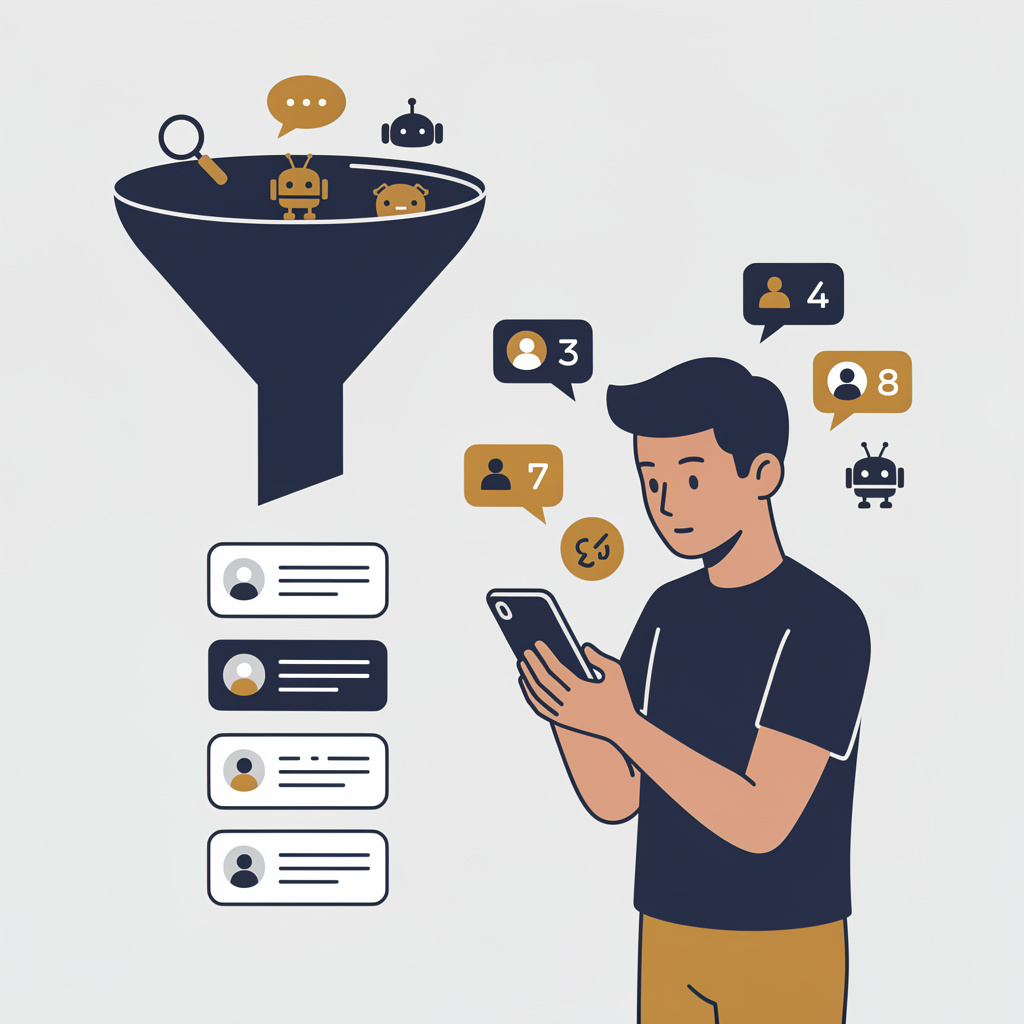
You're getting AI traffic. But do you know where it comes from?
RankControl credits every visit to the assistant that sent it: ChatGPT, Perplexity, Claude, Gemini, Copilot, or Grok. Full source attribution, next to your Google traffic.
Ship One This Week
Don't overthink the rollout. Pick your highest-traffic post, write five standalone bullets with numbers in them, drop the block under the intro, update the date. Fifteen minutes. Then put a calendar note 30 days out to check whether your brand shows up for the queries that post targets. If you want a fuller diagnostic while you're in there, the AEO audit playbook grades your whole site in half an hour.
You can do all of this by hand, post by post, month after month. Or RankControl's agents can write new articles with the answer built in and watch the citations every week while you build your product.