
A marketer posted in r/MarketingAutomation in September that their team kept adding tools, one for reporting, one for automation, one for creative. None of the tools were bad. But someone on the team was spending a silly amount of time checking whether data moved between them. One reply put it well. The team had become the integration layer.
One marketing platform or a stack of tools?
We kept adding tools because every new one fixed something like one for reporting, another for automation, another for creative then a couple more sitting between everything so none of them were bad on their own which is what made it kind o...
So this list is short on purpose. It covers ten content marketing tools, each doing one job on the path to search traffic. They are Semrush, Ahrefs, RankControl, HubSpot Content Hub, Surfer, Google Search Console with Google Analytics 4, Canva, Grammarly, Buffer and Mailchimp. Every price was checked on October 19, 2026 against each vendor's pricing page.
We started somewhere new this time, by asking the AI engines themselves.
What ChatGPT and AI Mode recommend
On October 19, we asked ChatGPT and Google AI Mode eight versions of the question, like "best content marketing tools," "content marketing tools for seo" and "what tools do I need for content marketing." Here's how often each tool came up across the 16 answers.
| Tool | Answers that named it (of 16) |
|---|---|
| Semrush | 16 |
| Ahrefs | 14 |
| ChatGPT | 12 |
| Google Analytics | 11 |
| Canva | 10 |
| HubSpot | 9 |
| Surfer | 9 |
| Google Search Console | 9 |
| Buffer | 8 |
| Grammarly, Mailchimp, Clearscope | 7 each |
The engines agreed on research. Semrush was in every answer and Ahrefs in nearly every one. They were thin on the step that actually produces search traffic, which is getting good pages written and published. Few named anything that publishes, and RankControl didn't come up at all.
Our list follows the AI consensus where it holds up, and fills that gap.
Where ChatGPT and AI Mode disagreed
The two engines agreed on the research tools and split on almost everything else. ChatGPT named itself in all eight of its answers, and AI Mode named ChatGPT in four. ChatGPT also leaned on all-in-one workspaces, naming Notion four times, while AI Mode never named it.
AI Mode leaned toward older content marketing staples. It named Hootsuite in five answers to ChatGPT's one, Clearscope in five to ChatGPT's two, and it was the only engine to name AnswerThePublic and Contently, three times each. ChatGPT named Google Search Console in seven answers and AI Mode in only two.
The practical lesson is that "what AI recommends" depends on which AI you ask. If you sell a content tool yourself, check both, because a buyer asking ChatGPT and a buyer asking Google may get different shortlists. Our guide to how ChatGPT searches the web explains why the engines pull from different pages.

Built by the team that got cited in 48 hours.
Content generation, backlink building, AI visibility tracking, and Google rankings. One platform, zero guesswork.
The quick comparison
| Tool | Job | Starts at | Free plan or trial | How it helps search traffic |
|---|---|---|---|---|
| Semrush | Research | $139/mo | Free plan, 7-day trial | Finds keywords and competitor gaps |
| Ahrefs | Research | $129/mo (Lite) | Limited free tier | Finds link and competitor gaps |
| RankControl | Plan, write, publish, track | $400/mo | 7-day trial, $0 today | Publishes articles and tracks AI answers |
| HubSpot Content Hub | CMS, blog, content | Free; Pro $500/mo | Free for 2 users | Hosts and manages the content |
| Surfer | Optimize drafts | $49/mo yearly | Not listed | Scores drafts against top pages |
| Search Console and GA4 | Measure | Free | Free | Shows what content earns |
| Canva | Design | US$144/yr | Free plan | Images for posts and social |
| Grammarly | Edit | $12/member/mo yearly | Free plan | Cleaner drafts |
| Buffer | Social | $5/channel/mo yearly | Free for 3 channels | Shares each post |
| Mailchimp | $13/mo | Free plan | Brings readers back |
Which tool fits which job
For keyword and competitor research, the best pick is Semrush, because it was the one tool every AI answer agreed on and it covers the most research jobs in one place.
For backlink research, the best pick is Ahrefs, because its link data is where it's strongest.
For teams short on writing time, the best pick is RankControl, because it plans, writes and publishes the articles and then tracks whether AI engines name you.
For teams already on HubSpot's CRM, the best pick is HubSpot Content Hub. For free measurement, it's Search Console with GA4. For design, editing, social and email, it's Canva, Grammarly, Buffer and Mailchimp.
1. Semrush
Semrush bundles keyword research, competitor data, site audits and AI visibility tracking on one pricing page, which is probably why every AI answer named it.
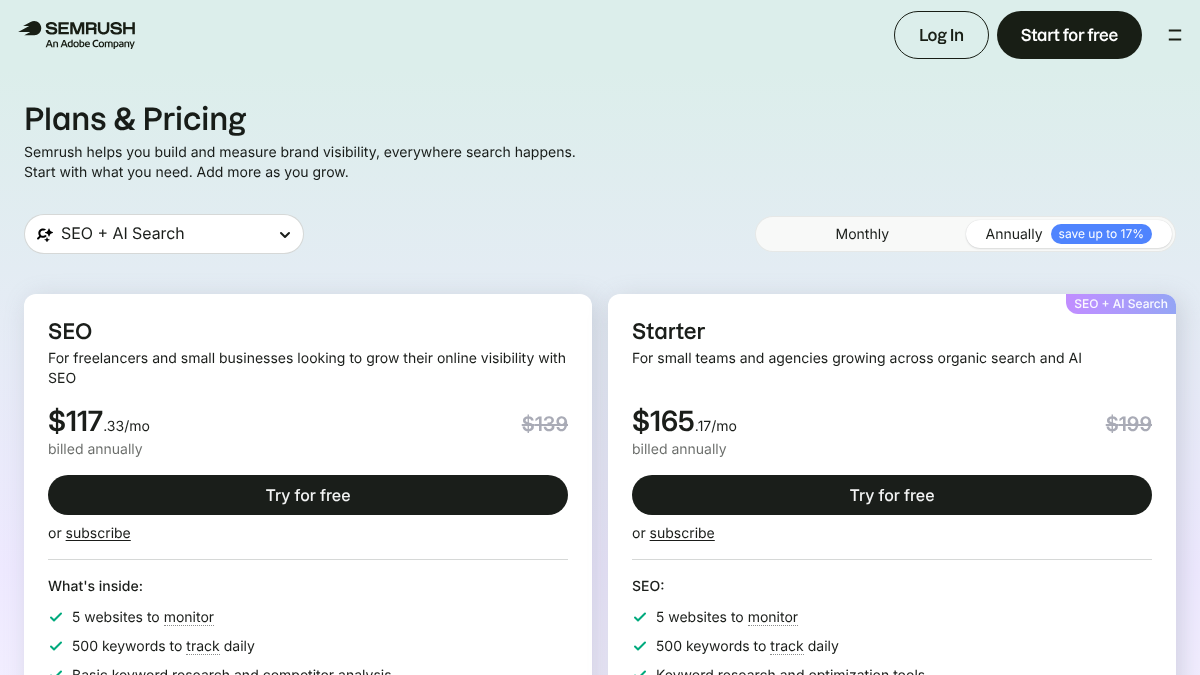
The SEO plan costs $139 a month, or $117.33 billed yearly, and there's a free plan with 10 reports a day and a 7-day trial. Its Content Toolkit, with briefs and AI drafts, is a separate $60 a month billed yearly. The catch is that it's a lot of tool for a small team, and AI prompt tracking starts on the higher Starter plan.
2. Ahrefs
Ahrefs is strongest on backlinks and competitors, and its keyword tools are close to Semrush's. Every plan now includes some tracked AI prompts.
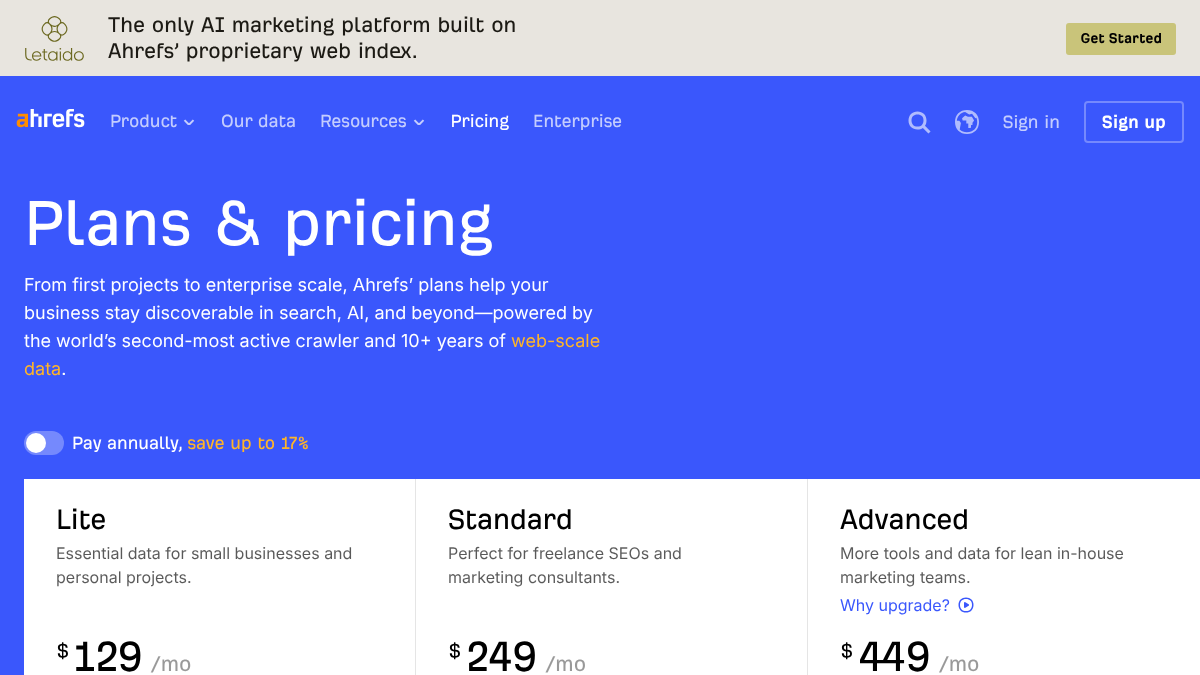
Lite costs $129 a month, with 750 tracked keywords and 5 tracked AI prompts. Standard is $249 and Advanced $449. There's a limited free tier but no free trial. Our roundup of SEO tools for small marketing teams compares the research suites in more depth.
3. RankControl
RankControl covers the part the AI answers skipped. It finds the questions your buyers ask, plans titles onto a calendar, writes articles in 26 formats and publishes them as native posts on your site, after your approval, to WordPress, Webflow, Shopify, Ghost, Notion, Wix, Framer, a webhook or a headless site. Then it checks 50 of your buyer questions every week on ChatGPT, Perplexity, Claude, Gemini, Grok, Google AI Mode and Google AI Overviews.
It costs $400 a month or $4,000 a year, with up to 100 articles a month, five seats and a 7-day trial at $0 today. The catch is that it doesn't replace a research suite like Semrush or Ahrefs if your team lives in keyword data every day. Our content engine page shows how the writing works.
4. HubSpot Content Hub
HubSpot Content Hub puts the website, blog and content tools on the same platform as HubSpot's CRM, so leads from content land in the same place as your sales data.
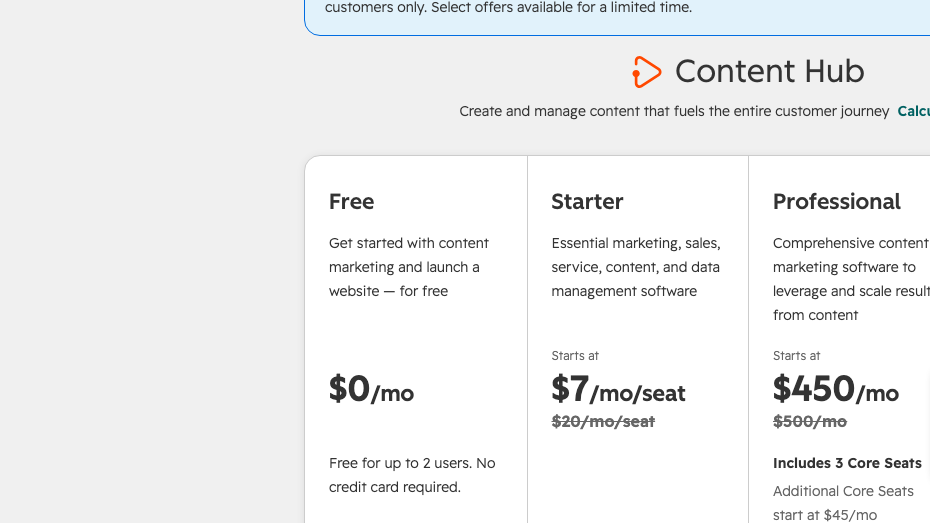
The free plan covers up to two users. Starter lists from $20 a seat a month, with a discount for new customers when we checked. Professional lists from $500 a month with three core seats, and extra seats start at $45 a month. The catch is the jump in price between Starter and Professional, and that it pays off most for teams already using HubSpot.
5. Surfer
Surfer is for the writer who wants guidance while they type. Its content score compares a draft with pages that rank, and an AI Search Score grades how ready the draft is for AI answers.
Plans run from $49 to $299 a month billed yearly, or $59 to $359 monthly. The catch is that a score is a guide, not a ranking. Our list of SEO content tools covers Surfer and its rivals side by side.
6. Google Search Console and Google Analytics 4
These two are free. Google Analytics came up in 11 of our 16 AI answers and Search Console in 9. Search Console shows the searches your pages appear for, and Google's guide to its AI features points to a Search Console report for generative AI performance. GA4 shows what visitors do after they arrive, including visits from AI assistants. The catch is setup time, and GA4 takes work to read well.
7. Canva
Canva handles blog headers, social images and simple charts without a designer. It came up in 10 of the 16 AI answers.
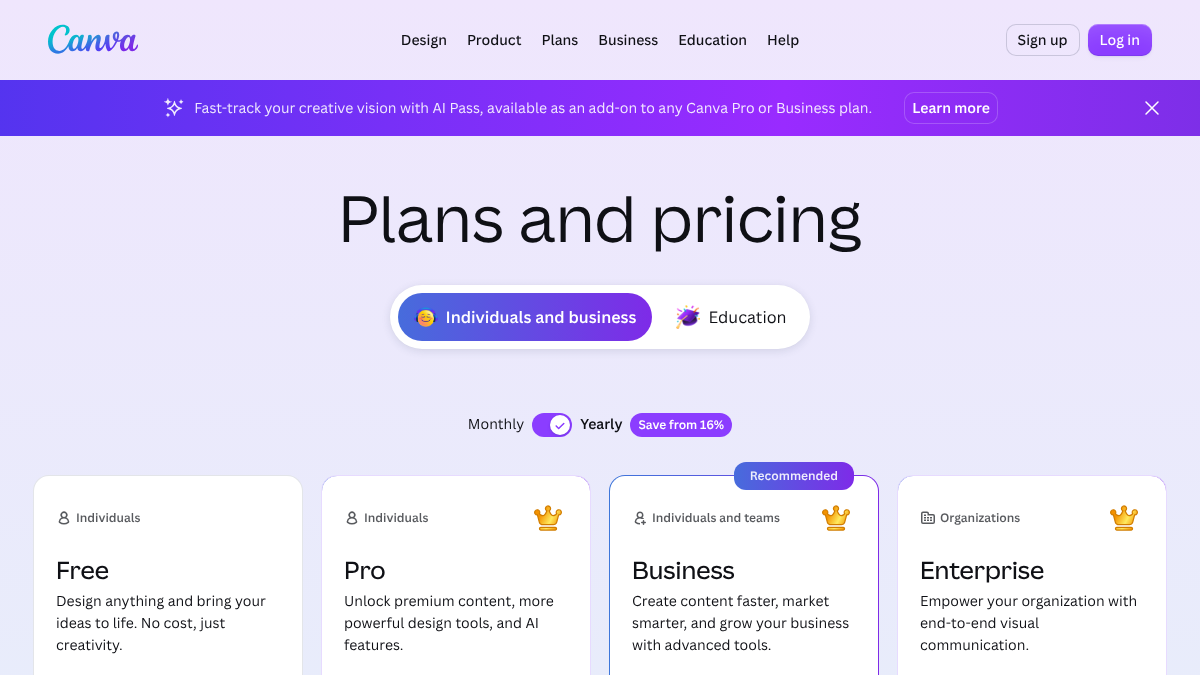
The free plan is enough for many teams, and Pro costs US$144 a year. The catch is that templates are easy to spot, so customize them.
8. Grammarly
Grammarly checks grammar, tone and clarity in most editors and adds AI rewrites.
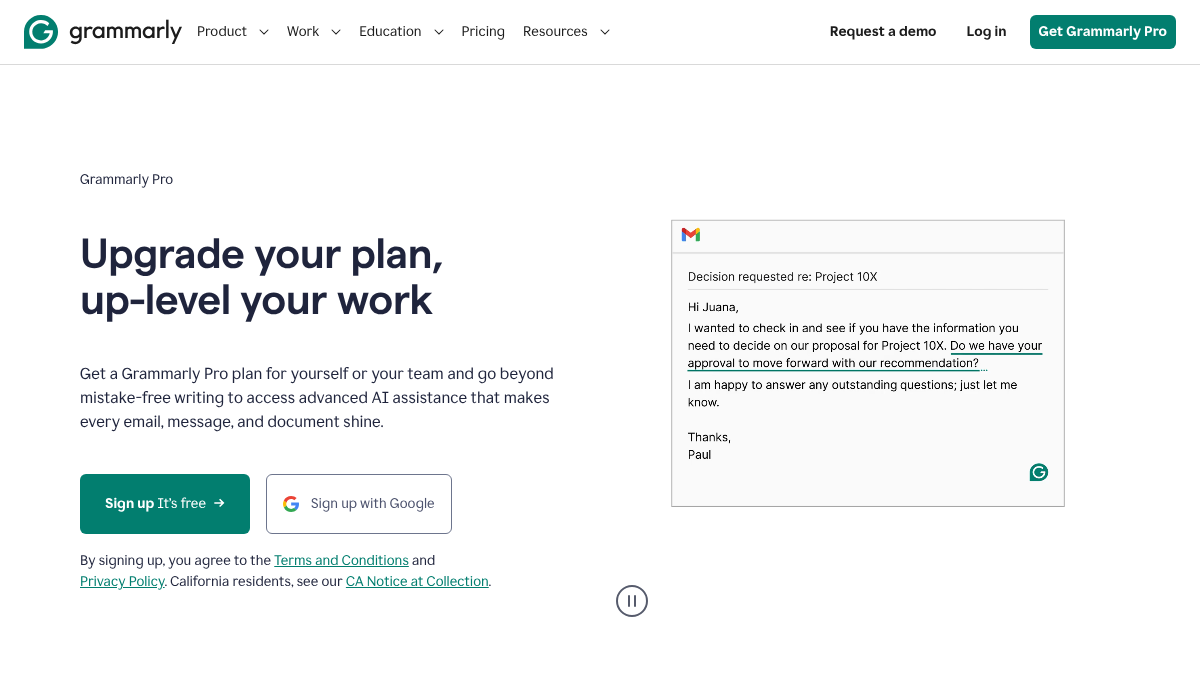
There's a free plan, and Pro costs $12 a member a month billed yearly, with 2,000 AI prompts a month. The catch is that it polishes sentences, not ideas.
9. Buffer
Buffer schedules posts to social channels and prices by channel instead of by seat.
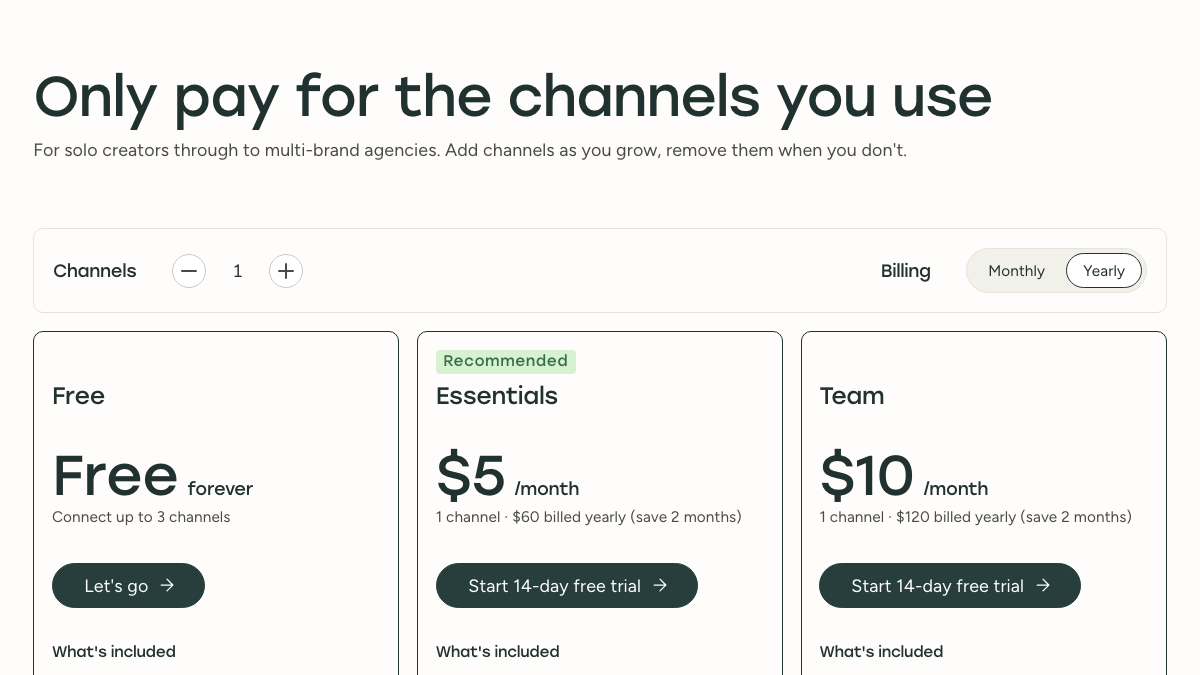
The free plan connects three channels with 10 scheduled posts each. Essentials is $5 a channel a month billed yearly and Team is $10, both with a 14-day trial. The catch is that social posts rarely drive search traffic directly, so treat it as distribution.
10. Mailchimp
Mailchimp sends the newsletter that brings readers back to new posts, which search alone can't do.
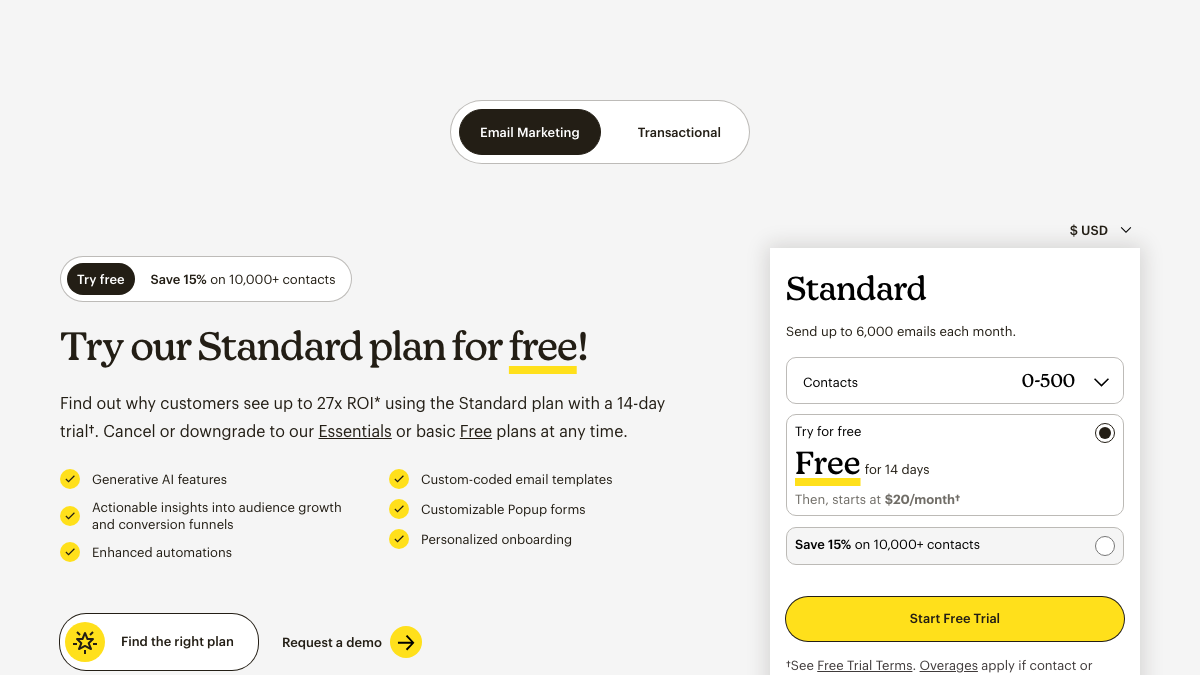
There's a free plan, Essentials starts at $13 a month and Standard at $20 a month after a 14-day trial. Premium starts at $350 a month. The catch is that prices rise with your contact count.
See your first AI citation report in under 5 minutes.
No setup calls. No onboarding meetings. Connect your domain and see where AI mentions your brand right now.

What a stack costs
Here's what three common setups cost per month, using the prices above.
| Setup | Tools | About per month |
|---|---|---|
| Lean | Search Console, GA4, and the free plans of Canva, Grammarly, Buffer and Mailchimp | $0 |
| Research-led | The lean stack plus Semrush or Ahrefs | $130 to $140 |
| Done for you | RankControl, plus a CMS, Search Console and GA4 | $400, plus the CMS |
The research-led stack still needs someone to write. At four articles a month, that's 16 to 24 hours of writing alone, by our estimate, before editing and publishing.
How to pick
Start with the job that's missing, not the longest list. A r/ContentCreators thread this month asked how many tools people use to make one piece of content. The top reply said less is more, and that extra tools often end up being procrastination in disguise.
How many different tools do you use to make one piece of content?
I started counting mine recently and honestly… it was kind of ridiculous 🥀 For one video, I might use: One place for ideas/planning Another for writing/scripts An AI tool for improving things (chatgpt, gemini.. etc) A thumbnail previewer A...
If you have research but no writing time, add writing. If you have writers but no idea what's working, set up Search Console and GA4 first. If your posts get read once and forgotten, add email. Our list of content marketing automation tools covers tools that connect the steps.
Limits of our check
We asked eight questions once each, on one day, through a data provider's US feed, and counted brand names in the answers. AI answers change from one ask to the next. Prices came from public pricing pages on October 19, 2026, and some showed limited-time discounts.
Doing it yourself or handing it off
You can run all of this yourself with the free tools and one research suite. Or RankControl's agents can handle the planning, writing, publishing and AI answer tracking every month while you focus on your product. It tracks 50 buyer questions every week on seven AI engines through its AI visibility tracking, and publishes on your own site after your approval.
Your competitors are building backlinks while you read this.
Organic outreach, social mentions, and citations from Editorial Circle member sites, with managed backlinks available as an add-on. Grow your domain authority without running the campaign yourself.