
A content score used to be the whole product. In 2026 it's one of five jobs an SEO content tool can do, and most of the tools on this list have quietly grown into the other four.
Someone in r/WebsiteSEO ran into that in April. They'd left Surfer years earlier and wondered whether to go back. Underneath sat a better question. When their rankings climbed back then, was it the content score, or was it that they'd finally written the page properly? Most of the replies were harsh about scores and a few people swore by them. Nobody could say for sure.
Is Surfer SEO worth it, or content score trap?
I’m torn on going back to Surfer, Neuronwriter etc. I get the value of a structured content brief, but I’ve also seen people “optimize” a page into unreadable keyword soup. I was an early user years ago when Mathew Woodward was pushing it h...
So this list sorts the tools by the jobs they cover. You plan what to write and draft it. You score it against what ranks and publish it to your CMS. Then you track whether AI answers use it. We compared Semrush Content Toolkit, RankControl, Ahrefs AI Content Helper, Surfer, Clearscope, Frase, NeuronWriter, MarketMuse and Yoast SEO. Everything here comes from each vendor's pricing page and docs, checked on October 19, 2026.
SEO content tools compared
| Tool | Starting price | Plans topics | Writes drafts | Scores pages | Publishes to CMS | Tracks AI answers | Free trial |
|---|---|---|---|---|---|---|---|
| Semrush Content Toolkit | $60/mo | Yes | Yes | Yes | WordPress | Separate toolkit | 7 days |
| RankControl | $400/mo | Yes | Yes | Yes | 9 destinations | 7 engines | 7 days |
| Ahrefs AI Content Helper | $99/mo add-on | Partly | Yes | Yes | No | Separate product | Not listed |
| Surfer | $49/mo yearly | Pro plan | Yes | Yes | Export and integrations | From Standard | Not listed |
| Clearscope | $129/mo | Yes | 20 a month | Yes | Export and share links | ChatGPT, Gemini | 14 days |
| Frase | $39/mo yearly | Yes | Yes | Yes | WordPress, Webflow, Wix, Sanity | Yes | 7 days |
| NeuronWriter | $19/mo yearly | Yes | Yes | Yes | WordPress | Yes | 7 days |
| MarketMuse | Demo only | Yes | Yes | Yes | No | No | Via sales |
| Yoast SEO | Free, $118.80/yr | No | Partly | Yes | Inside WordPress | No | Free plugin |
The biggest change since last year sits in the drafting and AI columns. Nearly every optimizer now writes, and half of them track AI answers. Scoring was once the whole product, and now it's the cheapest thing on the list.
The short answer
If you only have a minute, here's who each tool suits best.
- For teams already in Semrush, the best pick is Semrush Content Toolkit, because $60 a month covers topics, drafts, scoring and WordPress publishing.
- For teams that want the content done rather than a tool to run, the best pick is RankControl, because one flat price covers planning, writing, publishing and tracking.
- For editors who want the cleanest score while they write, the best pick is Clearscope, because its report is simple and the trial runs 14 days.
- For the lowest price, the best pick is NeuronWriter, at $19 a month billed yearly.
- For WordPress sites with no budget, the best pick is Yoast SEO, because the free plugin covers the on-page basics.
We'll show you exactly where your brand stands in AI search.
No commitment. $0 due today, cancel anytime. See how ChatGPT, Perplexity, Claude, Gemini, Grok, Google AI Mode, and Google AI Overviews talk about your brand today.

1. Semrush Content Toolkit
If you already use Semrush, or plan to, this is the strongest all-round pick. Semrush's help page puts it at $60 a month with a 7-day free trial. For that you get unlimited standard articles and five "SEO-boosted" articles a month, and 10 more boosted articles cost $30 a month.
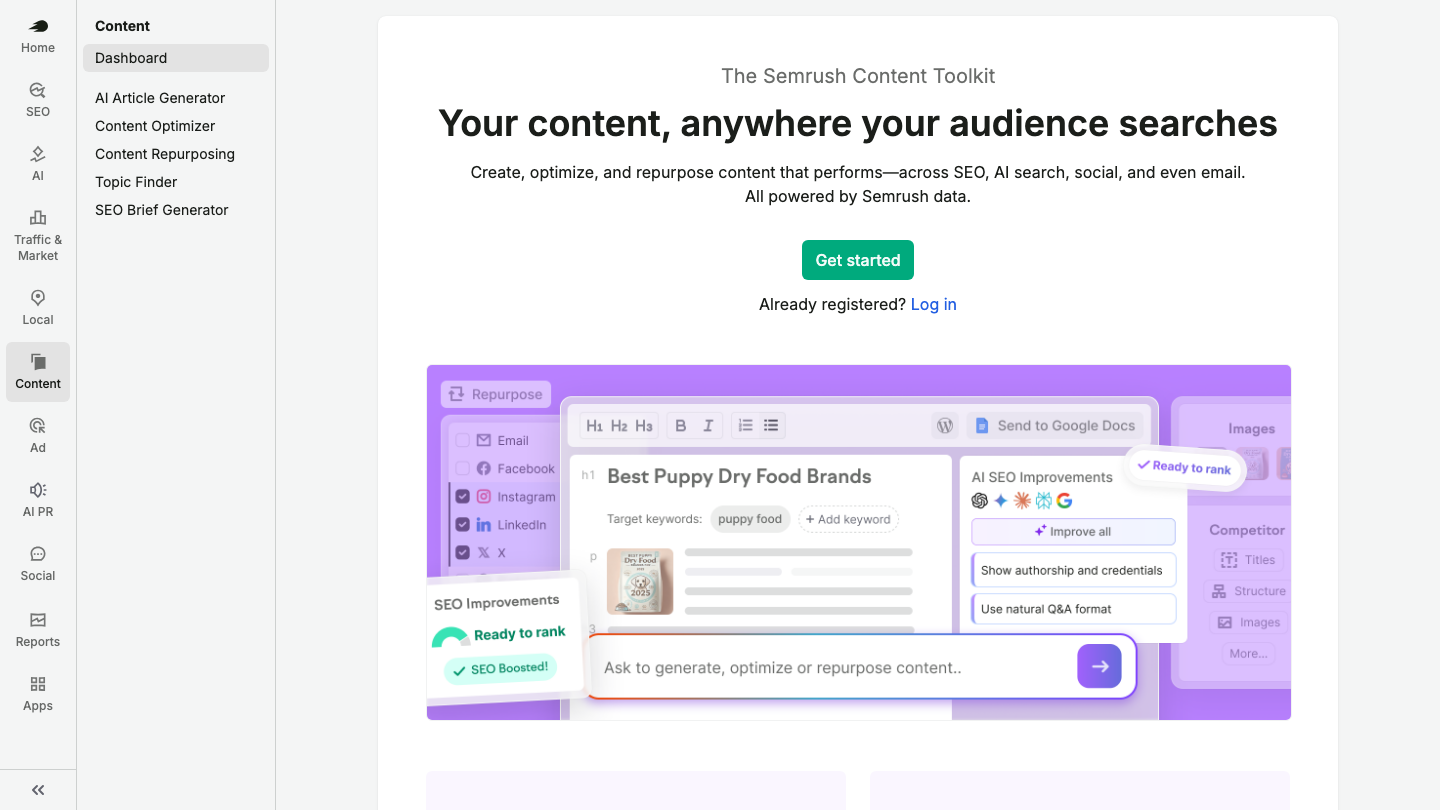
Four of the five jobs live in one place here. Topic Finder suggests what to write and the generator drafts it. Scoring happens in the optimizer, and the WordPress integration can publish to up to 100 connected sites. The job it leaves out is tracking AI answers, which Semrush sells as its separate AI Visibility Toolkit.
The catch is the boosted-article limit. Five a month is enough for a small blog. Anyone publishing more will end up buying extra credits.
2. RankControl
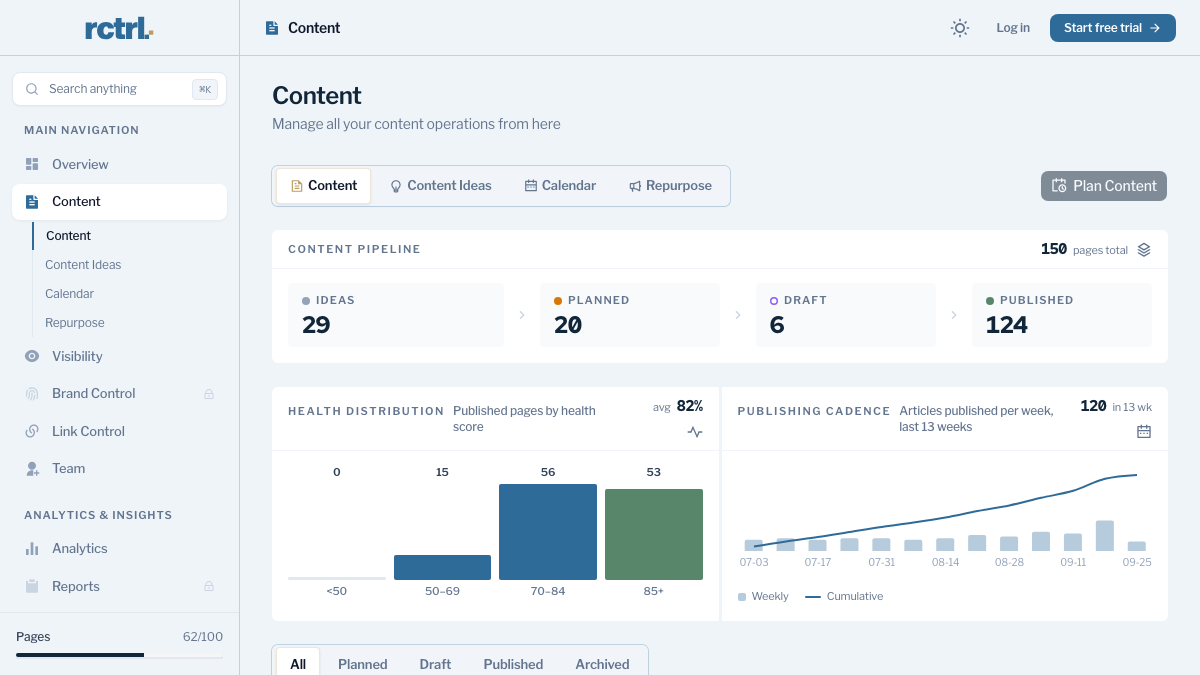
RankControl is for teams that would rather review finished articles than drive a tool. We plan a monthly content calendar from your brand profile and the questions your buyers ask. Each article is written against what already ranks, published as a native post on your own site, and then checked for how it does in Google and in AI answers.
| Plan detail | What you get |
|---|---|
| Price | $400 a month or $4,000 a year |
| Free trial | 7 days |
| Pages | Up to 100 a month |
| AI tracking | 50 tracked queries, checked weekly across ChatGPT, Perplexity, Claude, Gemini, Grok, Google AI Mode and Google AI Overviews |
| Publishing | WordPress, Webflow, Shopify, Ghost, Notion, Wix, Framer and headless sites |
| Auto-publish | Off by default |
RankControl is the most expensive entry here, and isn't a live editor that scores your typing. If your team writes every word and wants a grade while it types, one of the optimizers below fits that habit better. RankControl's content engine is built for the team that wants the work done.
3. Ahrefs AI Content Helper
Ahrefs lists its Content Kit from $99 a month, and that's on top of a main plan starting at $129 a month. Put together, you're at about $228 a month before any AI tracking. So this one makes sense mainly for teams already deep in Ahrefs data.
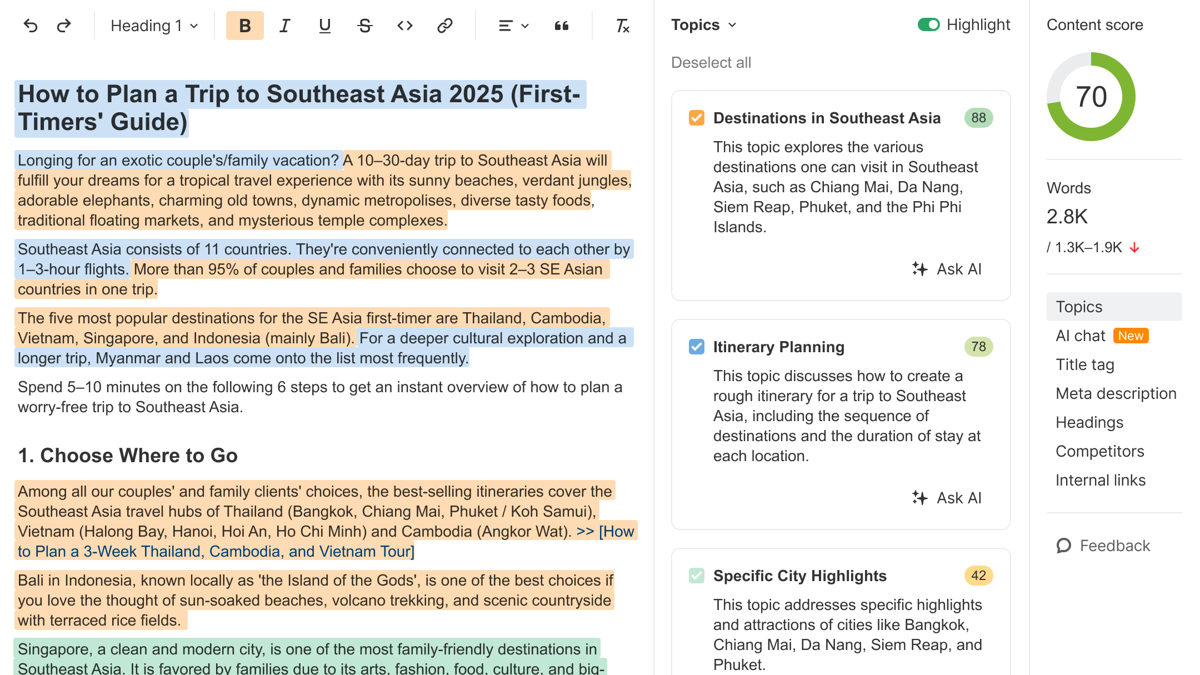
What sets it apart is that it works on topics rather than keyword counts. The editor highlights the topics your draft covers and scores each one, and you can ask AI to fill the gaps. The kit also includes an AI Content Grader and an AI Content Inventory. It doesn't publish to your CMS, though, and AI answer tracking lives in Ahrefs' separate Brand Radar product.
4. Surfer
When people hear "content score", Surfer is usually the tool they picture. It has grown well past that, and its pricing page now lists four plans, all billed yearly.
| Plan | Price a month, billed yearly |
|---|---|
| Discovery | $49 |
| Standard | $99 |
| Pro | $182 |
| Peace of Mind | $299 |
AI tracking starts on Standard, which checks 25 AI prompts weekly and covers 360 documents. Pro moves to 50 prompts checked daily and adds content ideas and internal linking. The editor exports to WordPress and Google Docs.
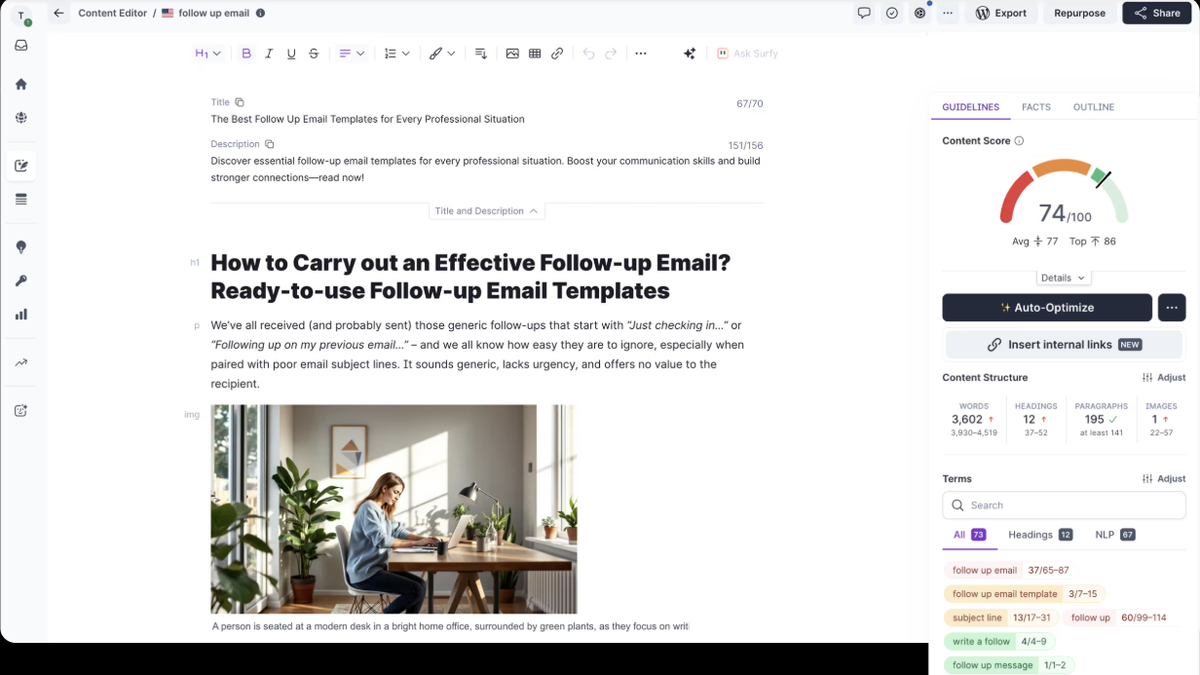
That r/WebsiteSEO thread is the fair warning. The poster had seen people "optimize" pages into keyword soup, and one reply said Surfer tends to stuff terms without understanding search intent. I'd use the score as a checklist for gaps, where it's useful. Chasing it as a target can make a page worse. Our Surfer comparison goes into more depth.
Know exactly what AI says about your competitors.
RankControl's Recon Agent monitors competitor citations across ChatGPT, Perplexity, Claude, Gemini, Grok, Google AI Mode, and Google AI Overviews. See where they show up and you don't.

5. Clearscope
Clearscope's 20-draft limit tells you who it's for. It expects people to do the writing, and it helps them write better.
Of the pure optimizers, it's the cleanest. Here's what the Essentials plan includes.
| Essentials plan | Included |
|---|---|
| Price | $129 a month |
| Tracked queries | 50 |
| Pages | 50 |
| Topic explorations | 20 a month |
| Drafts | 20 a month |
Business is $399 a month, and there's a 14-day free trial with no contract.
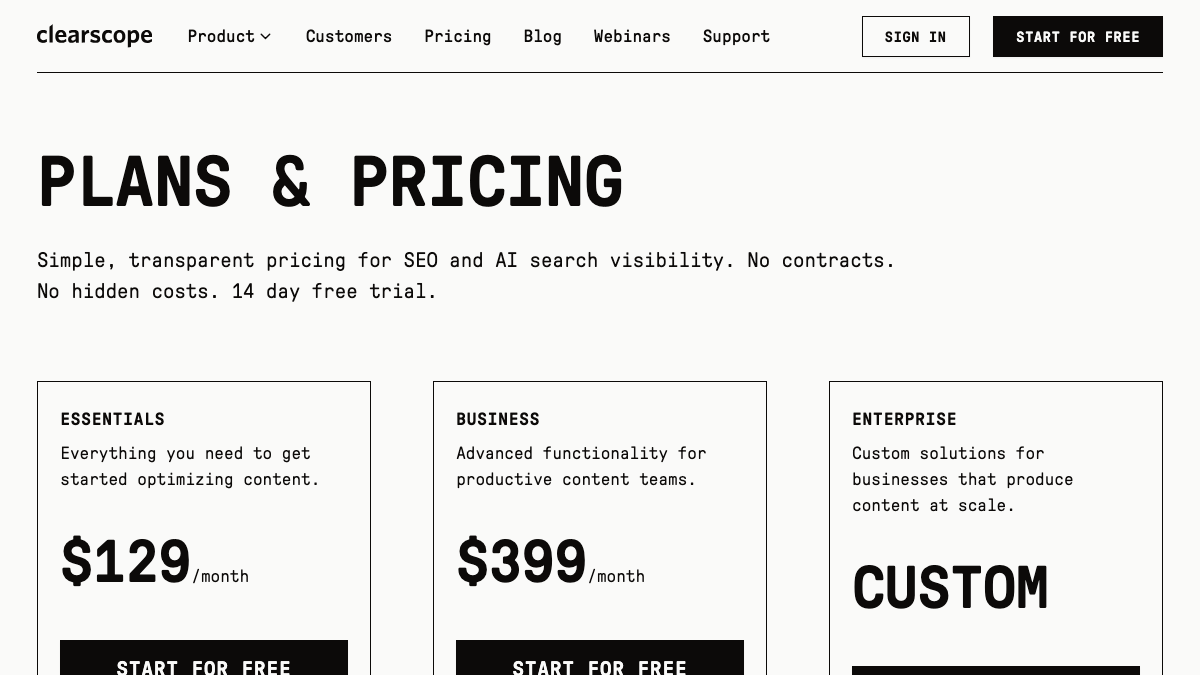
Writers like it because the report is simple and the grade doesn't nudge you toward stuffing terms. It also tracks queries in ChatGPT and Gemini now, so you can see when your brand gets mentioned. The pricing page says you share work by link or export it, which means it won't publish for you.
6. Frase
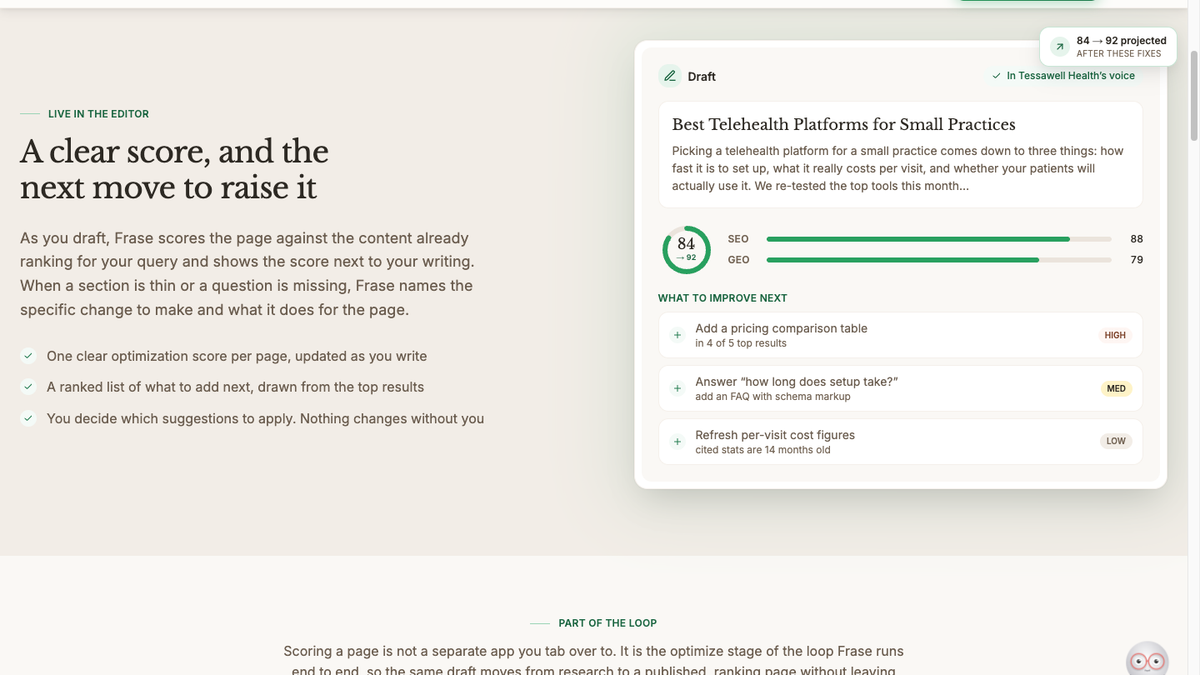
No tool here changed more this year. Frase now pitches itself as an agent that runs the whole loop, from research and drafting through scoring and publishing, and then watches your pages for decay.
| Plan | Price | Articles a month |
|---|---|---|
| Starter | $39 billed yearly, or $49 month to month | 10, with one seat, one site and 50 audit pages |
| Professional | $103 billed yearly | 40 |
| Scale | $239 | 100 |
Every plan comes with a 7-day free trial, and you don't need a card. Frase publishes to WordPress, Webflow, Sanity or Wix, or it can host the blog on its own FraseCMS. Its AI Visibility covers ChatGPT and Google AI, and higher plans add Perplexity, Claude and Gemini. If you're a solo marketer who wants something closer to RankControl's scope for less money, Frase is the one I'd look at. Our Frase comparison lays out the differences.
7. NeuronWriter
At $19 a month billed yearly, or $23 month to month, NeuronWriter is the budget optimizer. It covers more than that price suggests. Plans go up to $117 a month, and the tiers mostly differ in AI credits and how many analyses you can run. The higher ones add the Content Designer for one-click articles.
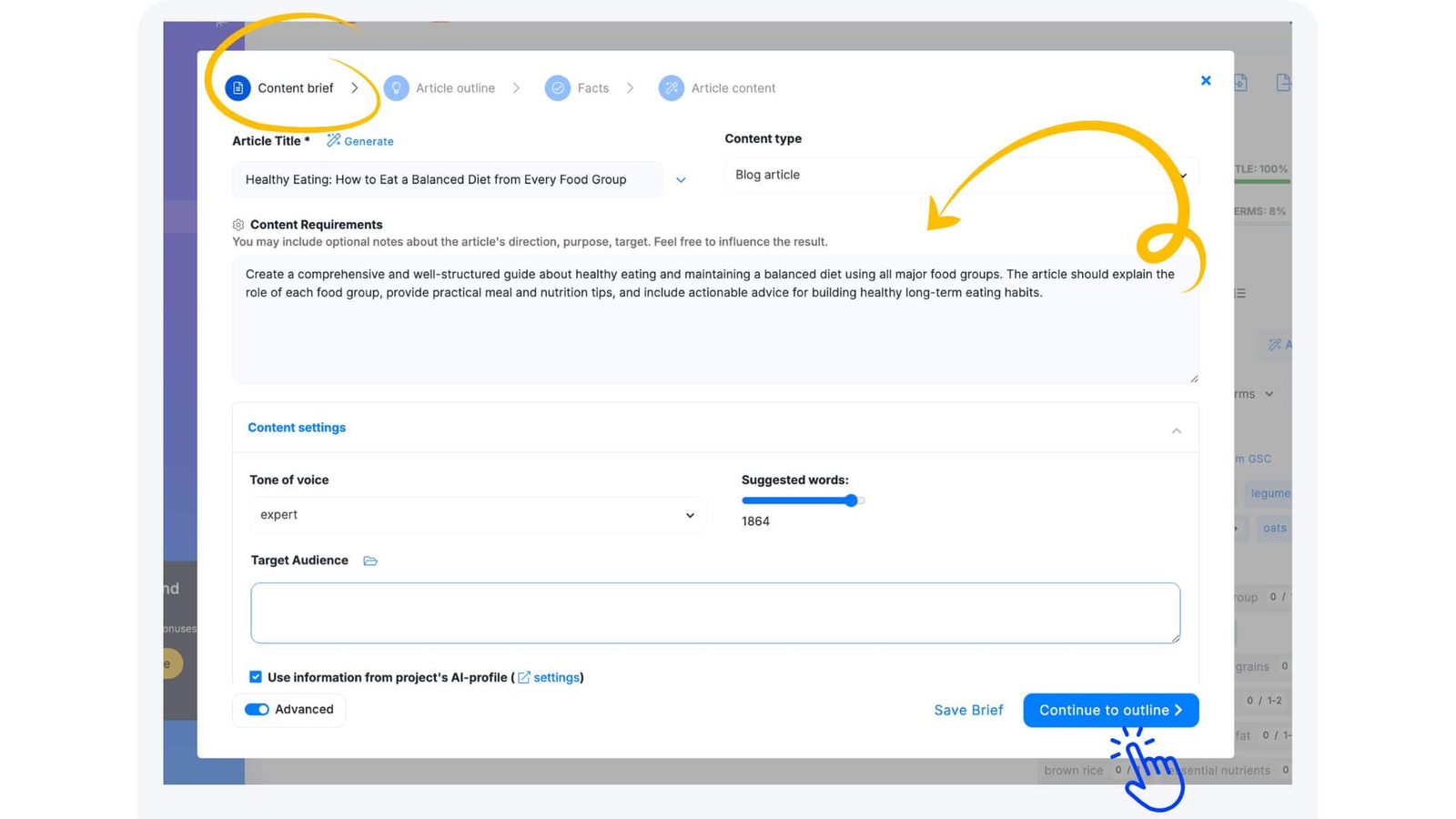
You get an AI Visibility tracker and a WordPress integration as well. The free trial lasts seven days on the Gold plan's terms, and NeuronWriter will refund your first plan within 30 days.
Polish is the trade-off. The interface is dense and built for people who like tuning settings, so it suits freelancers and SEO specialists more than a busy marketing generalist.
8. MarketMuse
When we checked in September, MarketMuse's self-serve signup page said signup was disabled and sent visitors to sales. Its pricing page lists Free, Optimize, Research and Strategy tiers, and every paid one ends at a "Book a demo" button.
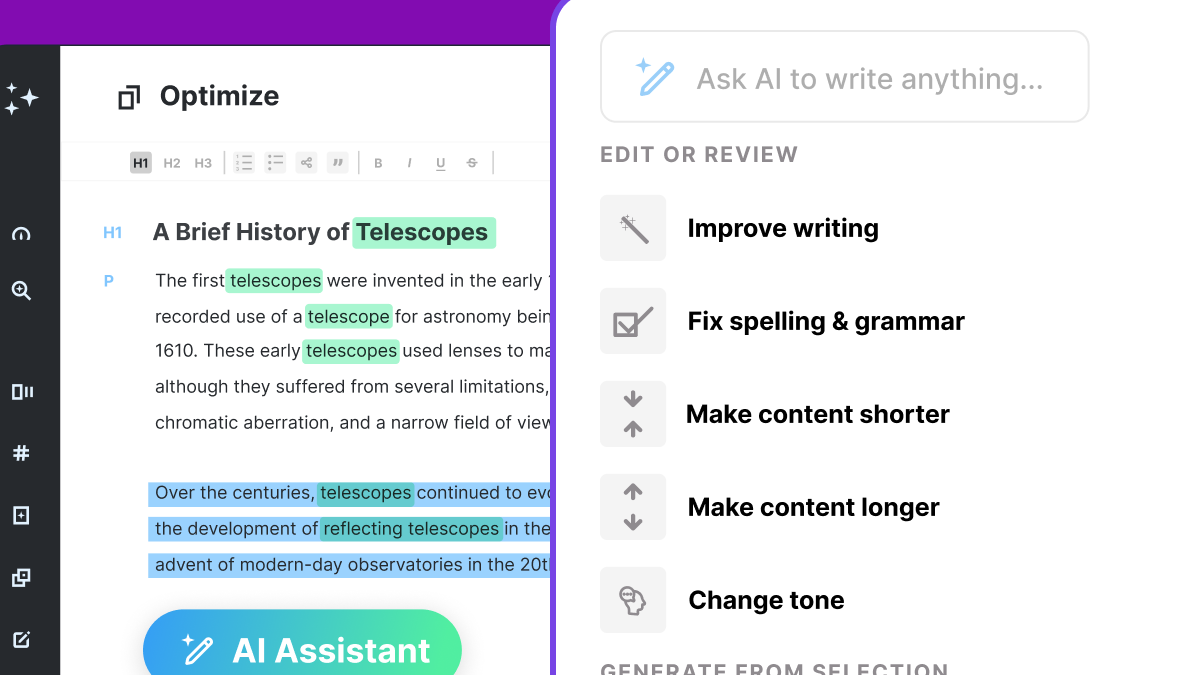
That keeps it out of reach for most small teams. MarketMuse is the content strategy tool on this list, best known for topic models and content inventories that show which pages to create or improve, and it's now part of Siteimprove. Larger content teams with big sites still get real value from the inventory. Our MarketMuse comparison covers the details.
9. Yoast SEO
Every WordPress site should run something like Yoast, whatever else it uses from this list. It's the free baseline, and the cheapest tool here by a wide margin. The free plugin checks your titles, meta descriptions and readability as you write.
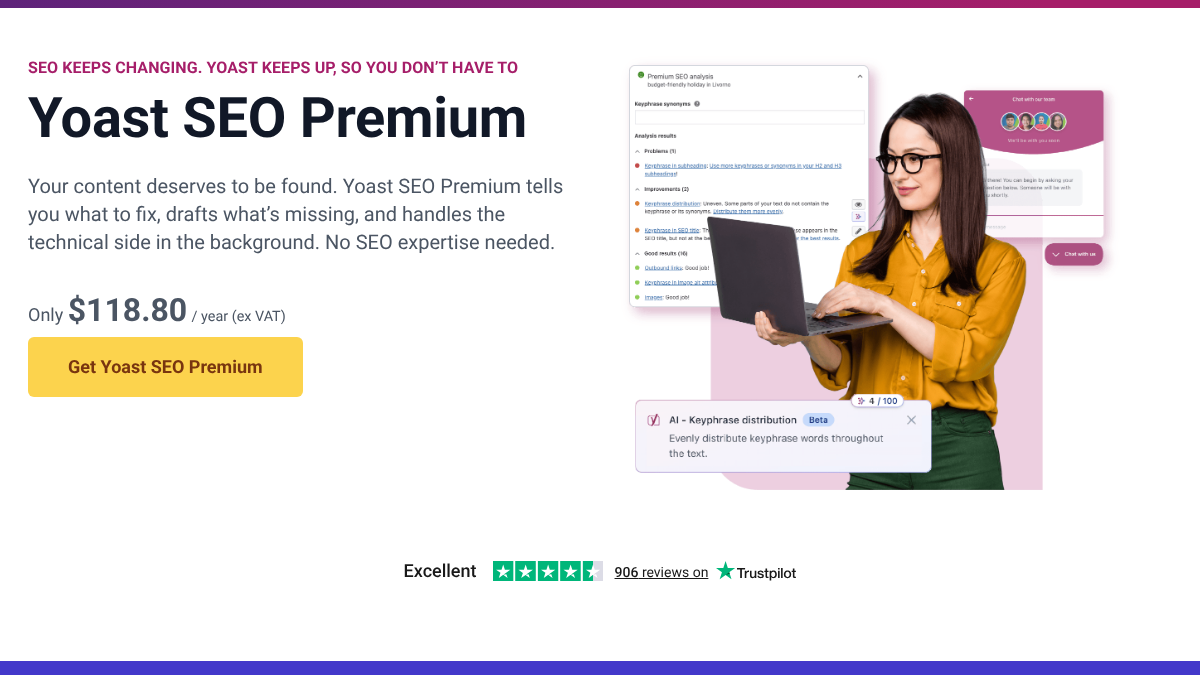
Premium costs $118.80 a year. It adds a deeper content analysis and AI help with missing pieces, plus crawl settings and a Google Docs add-on. Yoast won't plan topics or draft full articles, and it doesn't track AI answers.
What content scores can and can't tell you
A page that reads well at 70 will usually do better than one stuffed to 95. That's my answer to the r/WebsiteSEO question, and it comes from what a score actually measures.
A content score compares your page with the pages already ranking for one query. It counts terms, headings and length, and it shows you what the top results include that you don't. For spotting a missing section, that's useful. What it can't tell you is whether your page answers the question better than those results do, and that's what decides rankings and AI citations. One commenter in an r/SEO thread about Surfer and Semrush scores made the same point, saying the tools focus on one query rather than on whether the whole topic is covered.
So use the score to catch gaps, then stop. Our post on why AI SEO content gets no traffic covers the other reasons pages stall.
How to pick by the job you need done
Go back to the five jobs in the table and ask which ones you'd really use.
| What you need | Where to look |
|---|---|
| Scoring only | Clearscope or NeuronWriter, or Yoast for the free basics |
| Drafts and publishing too | Semrush Content Toolkit, Frase or Surfer's higher plans |
| All five, without running a tool every day | RankControl |
The last row is the job RankControl was built for. Our list of AI content writers for SEO goes deeper on drafting, and our content marketing tools list covers the wider stack.
What this costs to do by hand
Four to six hours a page is what a content optimizer still leaves you with. That covers researching the topic, writing a 2,000-word article, scoring and fixing it, and then formatting and publishing it. At eight articles a month you're at 30 to 50 hours, and nobody has checked yet how the pages do in Google or AI answers.
You can do all of this manually with any of the tools above. Or RankControl's agents can do it for you every month, planning, writing, publishing and tracking each page while you focus on your product.
26 content formats. Published on your domain. Matched to your brand.
Guides, comparisons, listicles, case studies, and more. RankControl generates content that gets cited by ChatGPT, Perplexity, Claude, Gemini, Grok, Google AI Mode, and Google AI Overviews.