
MarketMuse is unusually clear about where it stops. Its Optimize FAQ says the app has a generative AI component "to help you create content faster, but we do not write content for our customers." Another FAQ answer says MarketMuse doesn't "act like or replace a CMS."
We respect that honesty, and it frames the whole RankControl vs MarketMuse question. MarketMuse tells your team what to write and how thoroughly. RankControl writes it, publishes it on your domain, and then checks whether ChatGPT, Perplexity and Google's AI features cite it. The MarketMuse details below come from its site, help center and terms, checked on September 26, 2026.
RankControl vs MarketMuse: the short answer
MarketMuse is a research and planning tool. Topic Navigator maps what a topic covers, and SERP X-Ray breaks down the pages that rank for it. Content Briefs turn that research into instructions for a writer, and Optimize scores the draft. It's been part of Siteimprove since 2024, sells through demos, and none of its pages mention AI search engines.
RankControl is a pipeline. We keep a scored backlog of content ideas under your pillar topics and write each article in your brand's voice, then publish it to your CMS. We check 50 queries every week across seven AI engines and draft backlink outreach, all for $400 a month.
If the goal is getting cited in AI answers, we'd pick RankControl. A plan and a brief are necessary, but the citation comes from a published page, and MarketMuse leaves that to you.
Side by side
| MarketMuse | RankControl | |
|---|---|---|
| What it is | Content research, briefs and draft scoring | Pipeline for AI search visibility and Google rankings |
| Price | Not published; every tier leads to a demo | $400/mo or $4,000/yr, one plan |
| Getting started | Self-serve signup disabled; contact sales | 7-day free trial, $0 today |
| Writes articles | No ("we do not write content for our customers") | Yes, 100 pages/mo across 26 formats |
| Publishes to your CMS | No; Copy for Publishing, one article at a time | Native posts on 9 destinations |
| AI search tracking | Not offered | 50 queries weekly on 7 AI engines |
| Google and Bing rankings | Not a rank tracker | Weekly positions, plus AI Overview presence |
| Planning | Topic models, briefs, inventory, 10,000 tracked topics on Strategy | Up to 20 pillar topics, scored idea backlog, calendar |
| Backlink outreach | Not offered | Drafted from your own mailbox |
| Terms | One-month default term; fees non-refundable | Monthly or annual; cancel at period end |
What MarketMuse does well
MarketMuse built its reputation on research depth, and it still has it. Topic Navigator shows the related topics, questions and keywords a subject needs. Personalized Difficulty scores how hard a topic is for your site specifically, not for an average site. The Strategy tier covers up to 10,000 tracked topics with nine brief types, plus Heatmap and Connect for site-level coverage and internal linking.
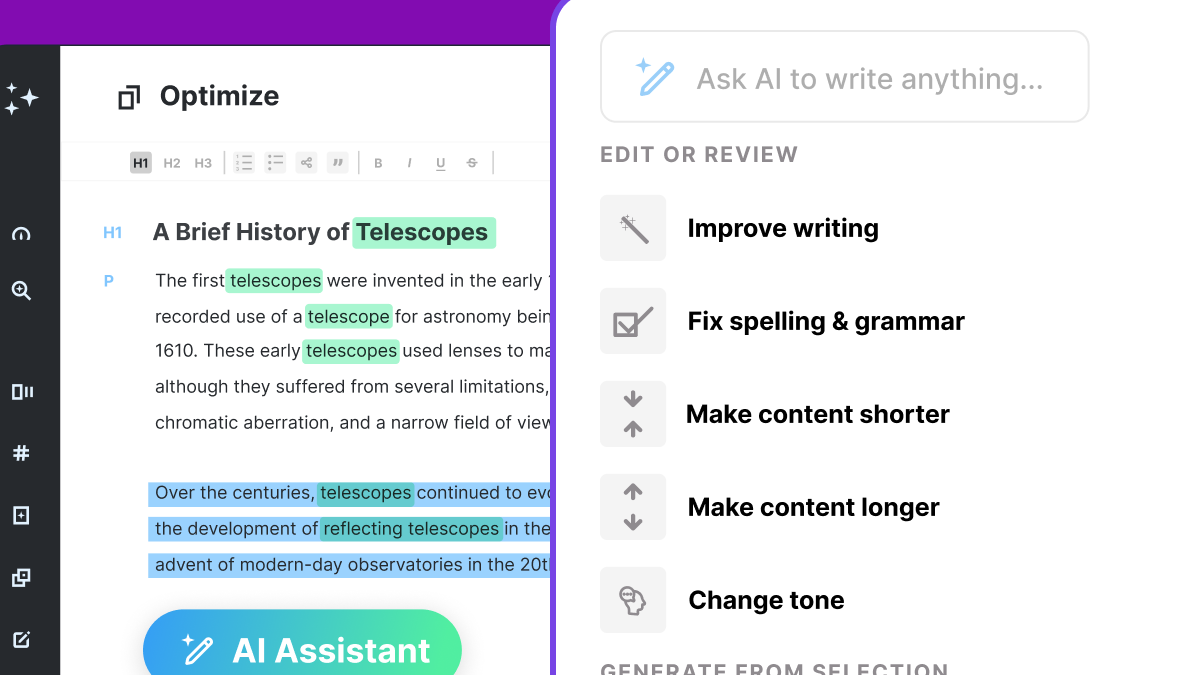
That's the one area where MarketMuse goes further than we do. It analyzes your whole site's content inventory, while we work only on the articles we write, so we won't audit or score the pages you already have.
26 content formats. Published on your domain. Matched to your brand.
Guides, comparisons, listicles, case studies, and more. RankControl generates content that gets cited by ChatGPT, Perplexity, Claude, Gemini, Grok, Google AI Mode, and Google AI Overviews.

From brief to citation: the part MarketMuse leaves to you
A MarketMuse brief is a good document. It sets out the audience, the content groupings, the questions to answer and the linking suggestions. Then someone has to turn it into a page.
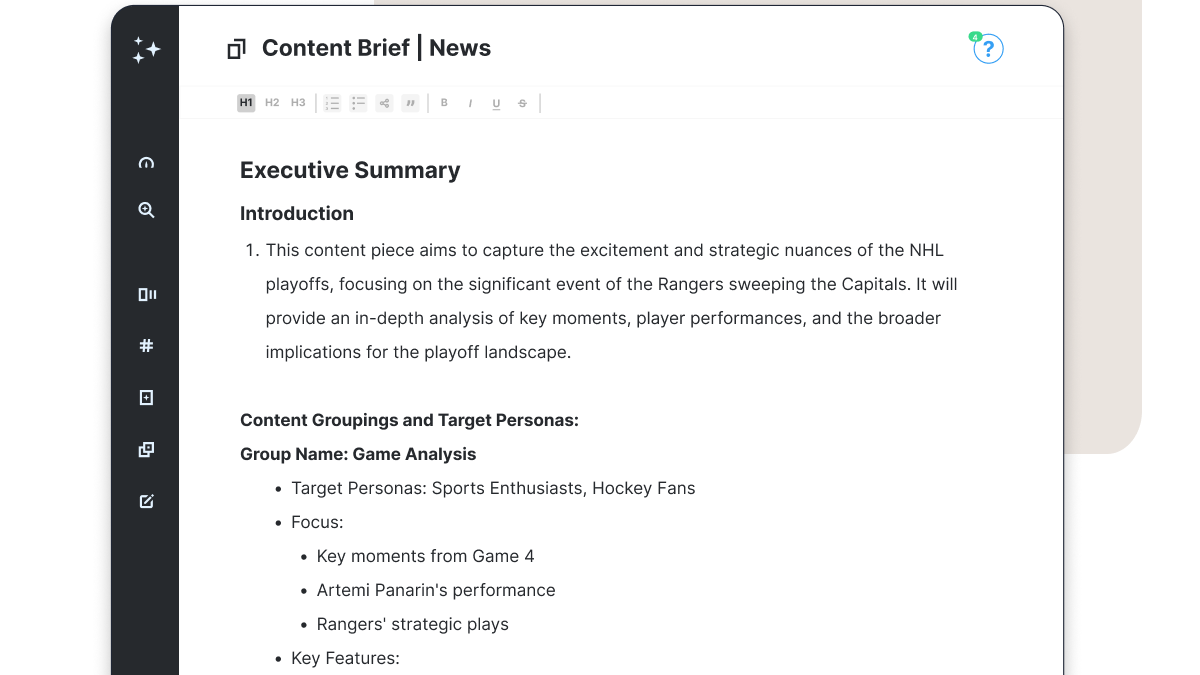
Here's what that takes per article when the brief is the last thing the tool hands over:
- Write the draft from the brief: three to four hours.
- Score it in Optimize, then revise toward the topic model: about an hour.
- Click Copy for Publishing and paste it into your CMS, then add images and meta tags: 30 to 45 minutes.
- Pitch a few relevant sites for a link: two to three hours.
- Check whether ChatGPT, Perplexity and Google's AI answers cite the page, week after week: another tool, or a spreadsheet.
Call it seven to nine hours per article before the checking starts. At eight articles a month, that's 55 to 75 hours of work the subscription doesn't cover. These are our estimates, and your team may be faster, but the checking step never goes away.
The checking matters more now because a ranking doesn't guarantee a visit. Pew Research Center tracked 900 US adults' searches and found people clicked a regular result on 8% of visits when an AI summary appeared, against 15% when none did. A page that ranks well under an AI summary can end up with about half the clicks it would otherwise get.
RankControl's content engine handles the writing, working against the pages already ranking for the keyword. Each article gets a score for how easily AI engines can quote it, with a fix list, and goes out as a native post through the destination you connect. Link Control drafts outreach from your own mailbox. Auto-publish is off by default, so every article waits for your approval until you change that.
Planning in each tool
The planning styles differ, and it's worth being precise about how.
MarketMuse plans from topic models. It shows the subtopics a subject needs, how well your inventory covers them and how hard each one is for your site. The output is a strategy document or a brief that someone acts on.
RankControl plans from the questions your buyers search. You name up to 20 pillar topics, we keep a scored backlog of ideas under them, and titles go onto a calendar you approve. Each title becomes a written, published article without a handoff, and the brand profile we build from your site keeps the voice consistent across all of them.
The scoreboard differs too. MarketMuse scores content against a topic model. RankControl measures the answers themselves: AI visibility tracking checks 50 queries every week across ChatGPT, Perplexity, Claude, Gemini, Grok, Google AI Mode and Google AI Overviews. The weekly rankings check records Google and Bing positions and whether an AI Overview showed and cited you.
Kevin Indig's analysis of 1.2 million ChatGPT responses found the top 30 domains take 67% of the citations for a given topic. A topic model can tell you what a winning page should cover. RankControl's weekly checks are how you find out whether your page is among the 30 that get cited.

Your competitors are getting cited by AI. You're not.
Every day without citation tracking is a day your competitors pull ahead in ChatGPT, Perplexity, and Claude.
One topic, two paths
Take a single topic, say customer onboarding for a B2B software company, and follow it through each tool.
In MarketMuse, Topic Navigator lays out the subtopics: onboarding checklists, time to value, handoff from sales, welcome email sequences. Personalized Difficulty tells you which ones your site can realistically win. You build a brief for the most promising one, hand it to a writer, score the draft in Optimize, and paste it into your CMS with Copy for Publishing. The page goes live, and MarketMuse's part is done.
In RankControl, customer onboarding becomes one of your pillar topics. The idea backlog fills with the questions buyers search under it, like "onboarding checklist for SaaS" or "how to shorten time to value", and you approve titles onto the calendar. Each article is written, linked into your existing pages and published to your CMS on schedule. If "best onboarding checklist for B2B SaaS" is a tracked query, the weekly check shows which engines cite you for it, and a notification lands the week one starts.
Both paths start with good research. Only one of them ends with a published page and a weekly reading of the answers, and the second path doesn't need a writer on your side.
What the Siteimprove era changes
MarketMuse's site now carries the "MarketMuse by Siteimprove" name, and its About page timeline marks the October 2024 acquisition. The practical changes show up in the fine print rather than the product.
The June 2026 agreement replaced the MarketMuse terms customers originally signed, and it says customers didn't need to sign or click anything for the change to apply: continued use counts as acceptance. Most of the help center articles we read were last updated in 2025. The brief export still lists Microsoft Word as "coming soon."
None of that makes MarketMuse a bad tool. It does mean the product you'd buy today looks much like the one from two years ago, while the questions buyers ask have moved into ChatGPT, Perplexity and Google's AI answers.
Buying each one
The buying experience is the starkest difference. MarketMuse's pricing page lists Free, Optimize, Research and Strategy, and every tier leads to a Book a demo button without a price. When we tried to sign up on September 26, the app answered: "Sign up is disabled. Please contact Sales if you are interested in signing up."
Its terms changed this summer too. Since June 30, 2026, MarketMuse subscriptions run under a Siteimprove Subscription Services Agreement. The default term is one month unless your order says otherwise, fees are non-refundable, and a full cancellation goes through support chat rather than a button. The agreement also makes exporting your data your job before the term ends.
| MarketMuse | RankControl | |
|---|---|---|
| Public price | None | $400/mo or $4,000/yr |
| Start | Sales conversation | 7-day free trial, card up front, $0 today |
| Seats | 1 to 5 by tier | 5 |
| Cancel | Contact support; downgrade to Free is self-serve | Self-serve, access runs to period end |
What people say about MarketMuse
Not much, publicly. We searched Reddit and X for MarketMuse reviews, cancellations and switching stories and found almost nothing recent. The name mostly shows up in older posts, such as a well-known SEO consultant's public toolbox lists from 2023 and 2024, where it sat next to Ahrefs and Semrush.
The most useful recent take came from a Reddit roundup of alternatives this year. Its author called MarketMuse great for topical authority strategy but overkill for small teams that only need page-level scoring, and said its depth takes an experienced SEO to get the value out. The same post guessed the price at $99 a month, a number MarketMuse's own site doesn't confirm or deny, because it shows no prices at all.
Already on MarketMuse?
Keep your research. Topic models, SERP X-Ray analyses and Heatmap views export to Excel, and briefs export to Google Docs, which makes them good inputs for picking pillar topics and tracked questions. Our step-by-step guide to switching from MarketMuse covers every module, and if you're still comparing tools, the MarketMuse alternatives roundup covers seven options.
Which wins AI search visibility?
For AI search visibility, the verdict is RankControl.
MarketMuse is a thoughtful research tool with a long track record. But it tells you what to write and stops there. It doesn't write the article, publish it or tell you whether an AI engine ever quoted it, and it now takes a sales call to find out what it costs.
RankControl runs the whole loop for one job. We plan from the questions your buyers search, write and publish the articles, draft the outreach, and check seven engines every week. In the first month you get a calendar of titles, articles going live on your schedule and four weekly readings of where you stand.
You can keep doing it the MarketMuse way, with a brief for every page and your team doing the writing, publishing, pitching and checking by hand. Or RankControl's agents can do all of it every month while you focus on your product.
Want a baseline first? Run a free check of your brand in AI answers.
200+ SaaS teams already track their AI citations.
They know exactly when ChatGPT mentions their brand, and when it stops. Do you?