
We typed "online keyword research tools" into Google on October 19, 2026, and an AI Overview took the top spot. Below it, almost every organic result was a vendor's own free keyword tool page: Semrush, Moz, Ahrefs, WordStream, Neil Patel's app, Wordtracker. Only Zapier's roundup broke the pattern of a tool recommending itself.
So we built the roundup Google wasn't giving us. Ten tools, compared on what each does for Google, what it does for AI search, what it costs and who it actually suits. Every price below comes straight from each vendor's own pricing page, checked on October 19, 2026. We haven't run these tools ourselves; the facts come from the vendor pages and from public user reviews.
What a keyword tool needs to do now
| Job | What it means |
|---|---|
| Volume | Roughly how often a term is searched |
| Difficulty | How hard it would be to rank |
| Ideas | Related terms and questions you haven't thought of |
| Competitor terms | What competitors rank for that you don't |
| AI search | Whether an AI Overview shows, and whether AI answers mention you |
Call that last row the second-screen check. A term can have solid volume and an easy difficulty score, and still send you fewer clicks than it should, because an AI Overview already answered it at the top of the page. Our guide to choosing keywords covers how to weigh that against the other four.
The list at a glance
| Tool | Starts at | AI search features | Best for |
|---|---|---|---|
| Semrush | $139/mo | AI visibility from $199 plan | One SEO suite |
| Ahrefs | $129/mo | 5 AI prompts on Lite | Competitor research |
| RankControl | $400/mo | Tracks 50 questions on 7 engines | Done-for-you articles |
| Google Keyword Planner | Free | None | Budget volume checks |
| Google Search Console | Free | AI-related reporting | Near-miss queries |
| Moz Pro | $99/mo | AI Overviews and prompts | Mid-priced suite |
| Mangools | $30.50/mo | AI search add-on | Small budgets |
| Ubersuggest | $12/mo | AI keyword ideas | Lowest paid price |
| AnswerThePublic | $10/mo | Prompt suggestions | Question research |
| LowFruits | $29.90/mo | None listed | Easy-win keywords |
26 content formats. Published on your domain. Matched to your brand.
Guides, comparisons, listicles, case studies, and more. RankControl generates content that gets cited by ChatGPT, Perplexity, Claude, Gemini, Grok, Google AI Mode, and Google AI Overviews.

1. Semrush
Semrush carries one of the largest keyword databases on the market, wrapped in the broadest set of tools around it, from the keyword research itself to rank tracking and competitor analysis.
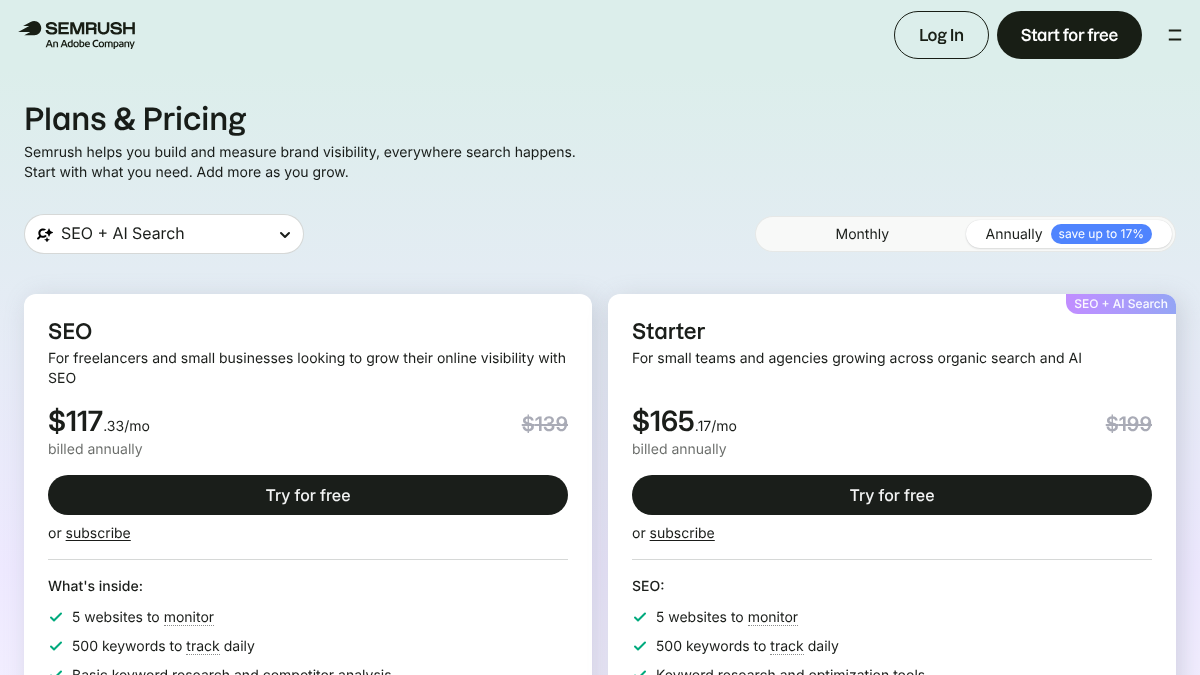
A free account gets you 10 reports a day. Once you're paying, the SEO plan runs $139 a month, Starter is $199 and Pro+ is $299, with Advanced priced by quote, and every paid plan carries a 7-day free trial. AI tracking only unlocks from that $199 Starter tier up, where Semrush tracks 50 prompts a day across Google, ChatGPT, Perplexity and Gemini. The catch is that AI tracking sits on the pricier plans, and the bill climbs fast once you start adding users and tracked keywords.
2. Ahrefs
Ahrefs is the other heavyweight here, and it's known especially for competitor research. Its Keywords Explorer shows volume, difficulty and the pages already ranking for any term you throw at it.
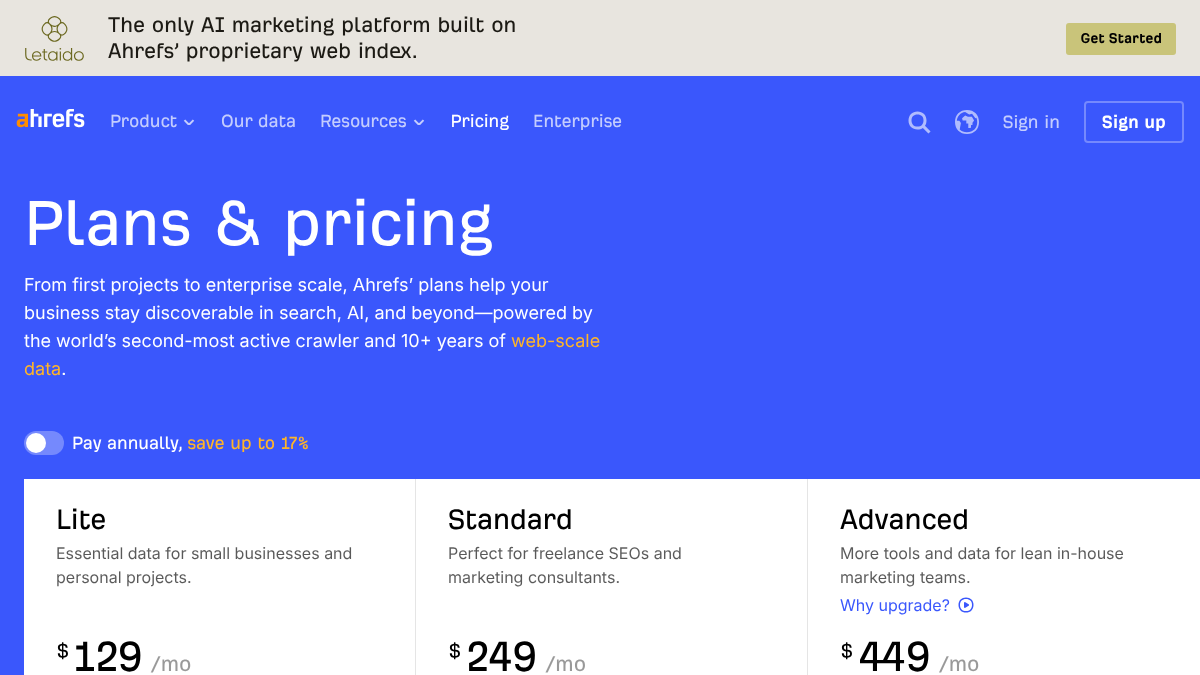
| Plan | Price | AI prompts tracked |
|---|---|---|
| Starter | $29/mo | None |
| Lite | $129/mo | 5 |
| Standard | $249/mo | 10 |
| Advanced | $449/mo | 20 |
None of those plans come with a free trial. Ahrefs also sells a separate Brand Radar AI add-on from $199 a month, built on what it describes as "485 million+ organic prompts."
Users in a r/SEO thread about affordable Ahrefs alternatives had a workaround worth knowing: start with Search Console, since it's free and it's your own site's real data, then add a cheaper tool once you specifically need competitor numbers.
Affordable Ahrefs alternatives for keyword research and competitor rank checking?
I'm taking my first website rebuild/SEO side gig and I'm used to working with agency/company tool subscriptions, but now I need something of my own. I'm comfortable with Google Keyword Planner but it doesn't cover what I need. Mainly I want...
3. RankControl
RankControl doesn't work like anything else on this list, because there's no box to type a keyword into. Instead, we find the questions your buyers already search on Google, using People Also Ask, related searches and real search volume, then plan article titles around them straight onto a content calendar.
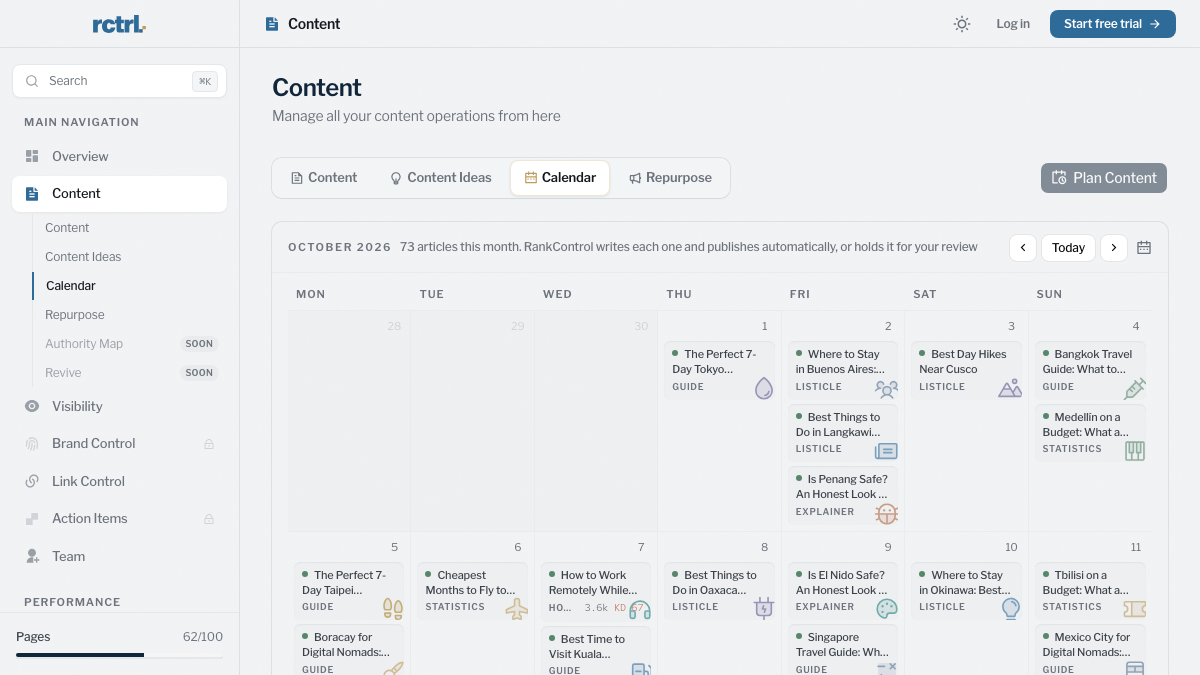
One plan covers everything: $400 a month or $4,000 a year, with a 7-day trial and up to 100 pages a month included. For AI search, RankControl checks up to 50 buyer questions every week across seven engines, ChatGPT, Perplexity, Claude, Gemini, Grok, Google AI Mode and Google AI Overviews, and logs whether each answer mentions or cites you.

Your competitors are getting cited by AI. You're not.
Every day without citation tracking is a day your competitors pull ahead in ChatGPT, Perplexity, and Claude.
What it won't do is let you look up volume for a random keyword on a whim. It's built for teams who want the research turned directly into published articles, not for running your own lookups.
4. Google Keyword Planner
Google Keyword Planner is free with a Google Ads account, and the volume it shows comes straight from Google itself.
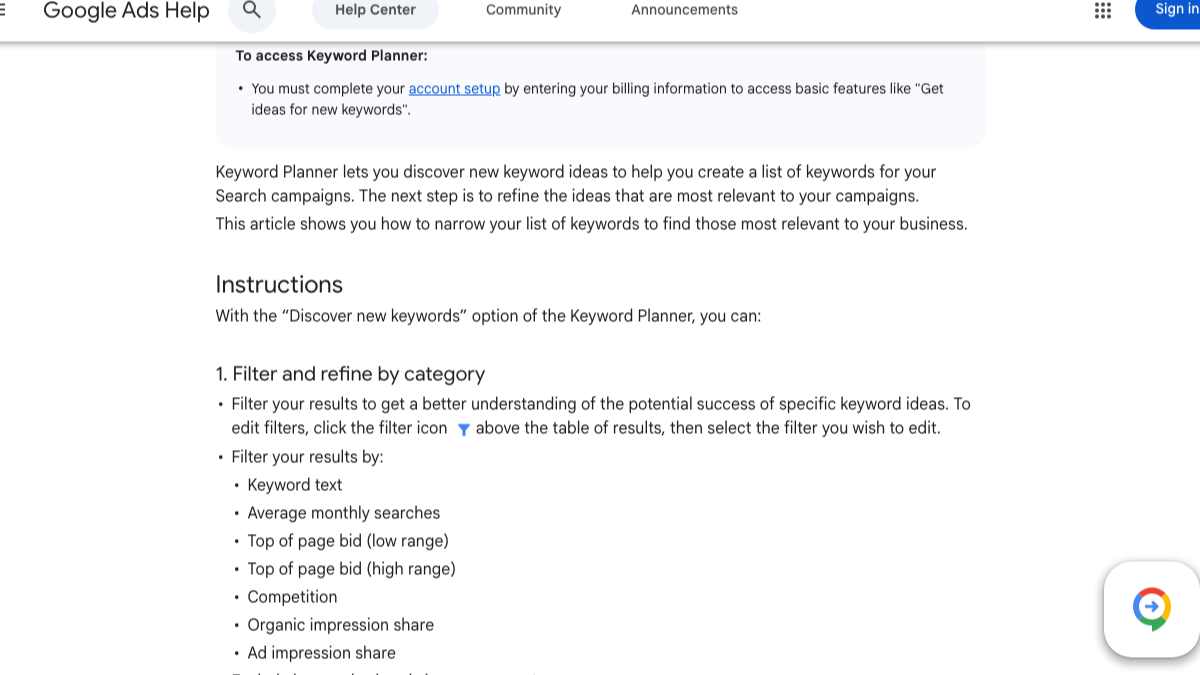
Free doesn't mean frictionless. Google's own help page says "You must complete your account setup by entering your billing information to access basic features," even though you're never required to actually run ads. And without active ad spend, you get volume ranges, like 1K to 10K, instead of an exact number.
A busy r/SEO thread asking for a free volume tool landed on exactly this trade-off. The top replies pointed to Keyword Planner, Search Console and Bing Webmaster Tools, and one commenter made the range point directly, adding that every free number is an estimate anyway.
free tool for keyword volume research
Hi! I was wondering if there is any free tool to conduct keyword volume research? I used SEO Nanny in the past, but it looks like it has been put down :/ thanks! edit: I don't have a website (yet).
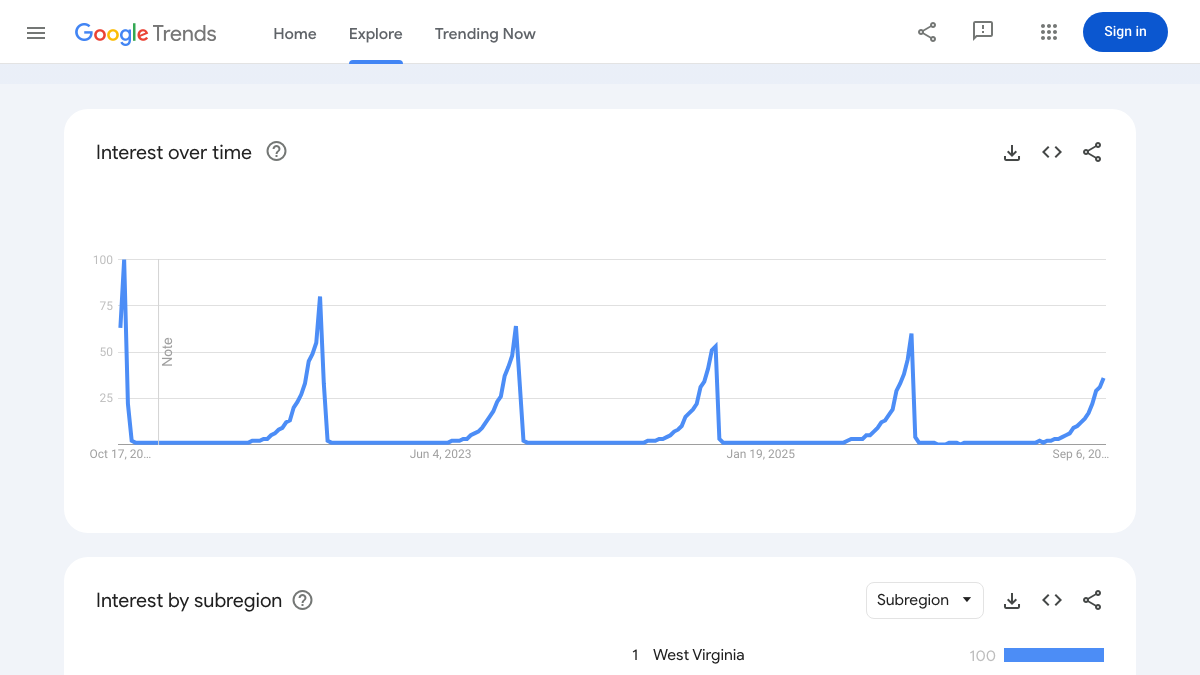
Google Trends is worth pairing with it, and it's free too. It won't give you volume, but on a 0 to 100 scale it shows whether interest in a term is climbing or fading, which is handy for spotting seasonal topics before you waste a page on one.
5. Google Search Console
Search Console shows the queries your site is already appearing for, right down to clicks, impressions and average position. It won't help you discover topics for a brand-new site, but for an existing one, it's the most accurate data on this entire list.
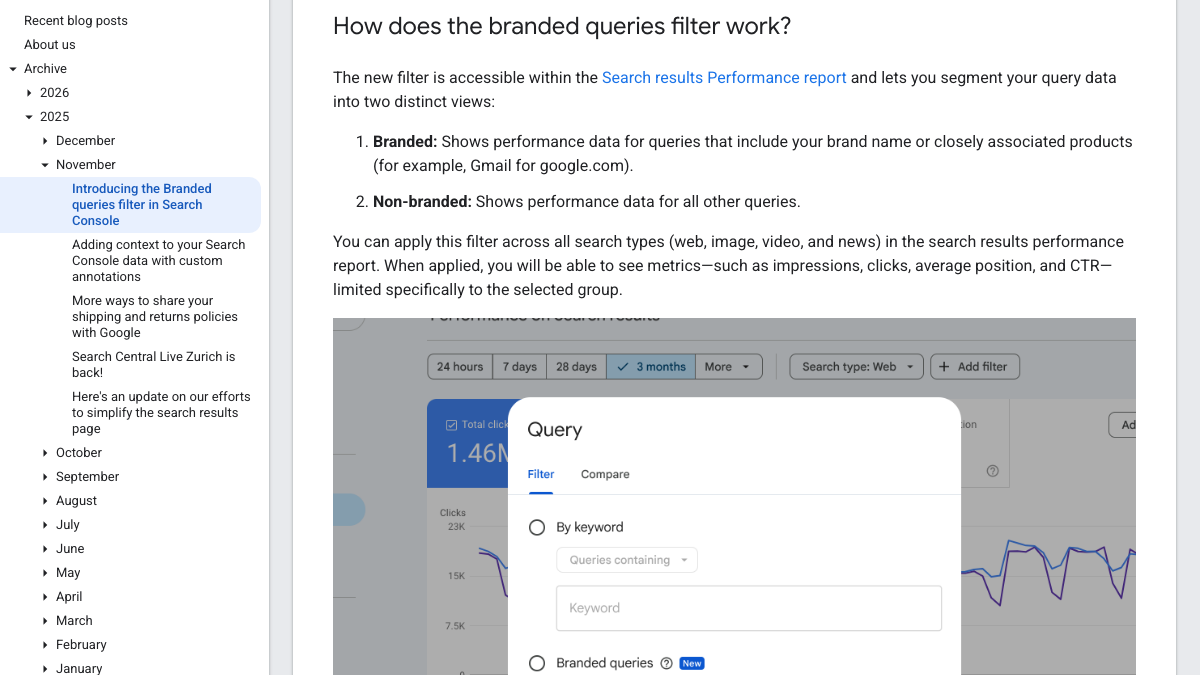
It's free for any site you've verified, and Google now folds AI Overview and AI Mode clicks and impressions straight into the regular Performance report. The limitation is just as plain: it only sees your own site, and only the queries you already rank for somewhere. Filter for an average position between roughly 8 and 20, and you'll find the pages sitting closest to page one.
6. Moz Pro
Moz Pro's Keyword Explorer covers volume, difficulty and idea generation, and lately its plans pack in a surprising amount of AI tracking for the price.
| Plan | Monthly | Billed yearly |
|---|---|---|
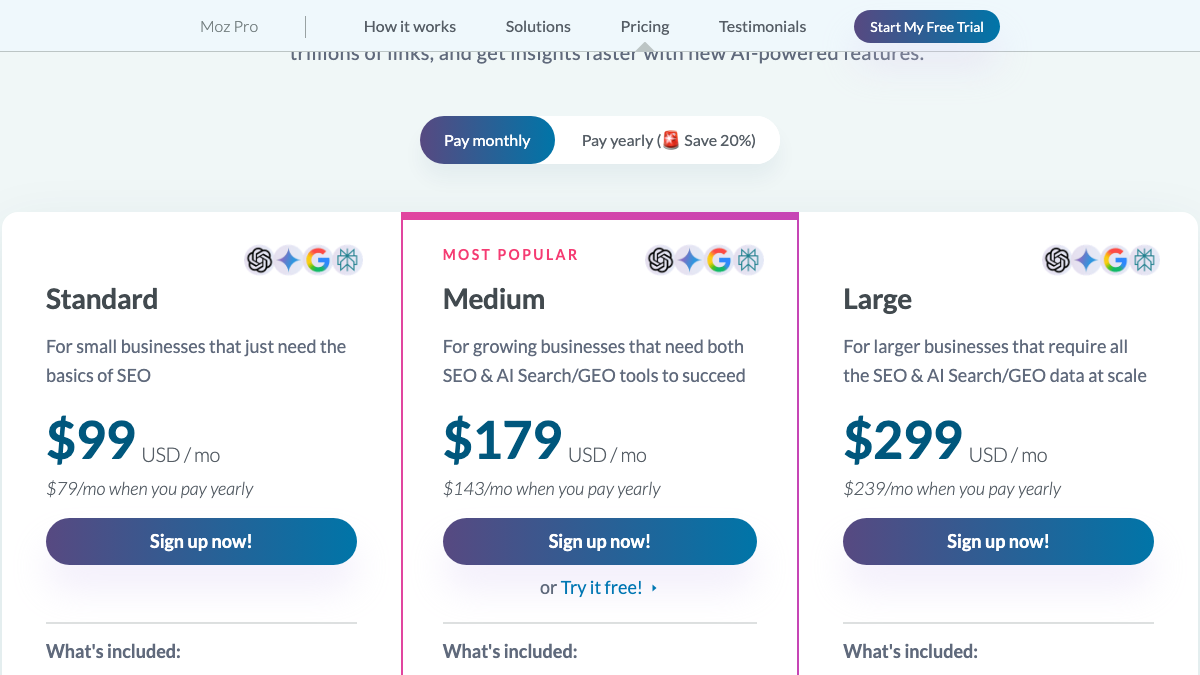
| Standard | $99/mo | $79/mo |
| Medium | $179/mo | $143/mo |
| Large | $299/mo | $239/mo |
Standard already includes "AI Overviews by Keyword," an AI visibility dashboard and 150 tracked prompts spread across four AI models, checked weekly. Where it pinches is the keyword cap. Standard tops out at 300 tracked keywords a month, so bigger sites end up needing Medium or Large anyway.
7. Mangools
Mangools bundles its keyword tool, KWFinder, together with four others: LinkMiner, SERPChecker, SiteProfiler and SERPWatcher.
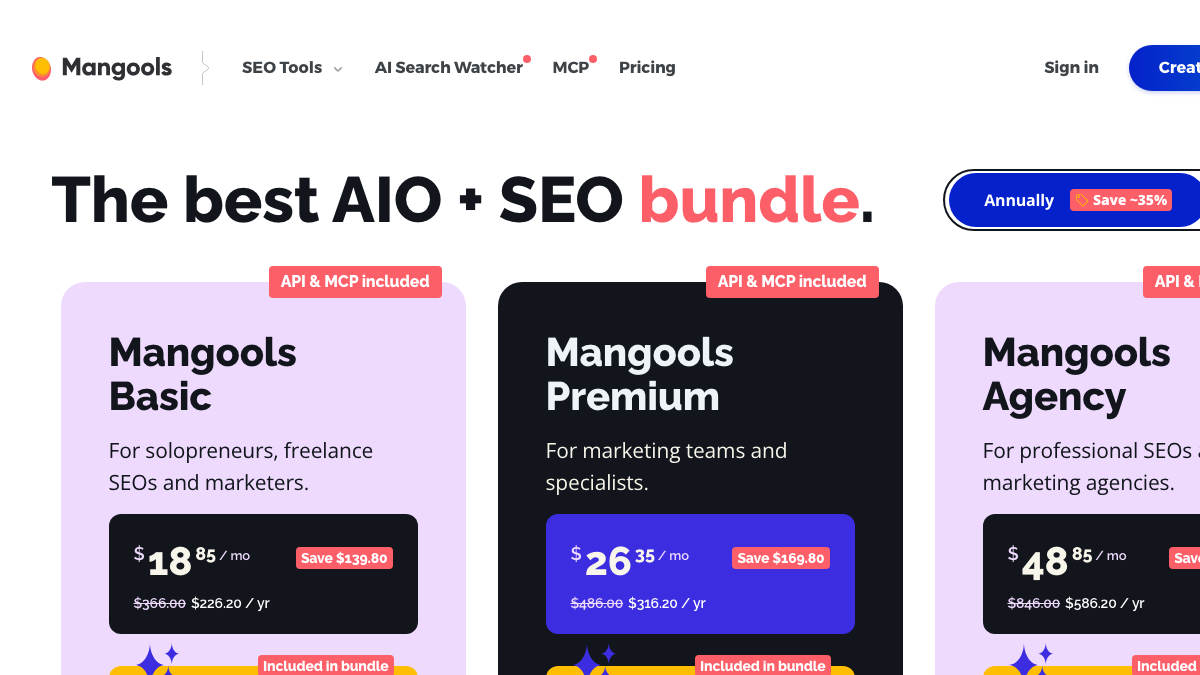
Basic runs $30.50 a month, Premium $40.50 and Agency $70.50, or $18.85, $26.35 and $48.85 a month if you pay yearly. There's a free account with limited lookups and a 48-hour money-back guarantee if you upgrade and change your mind fast. An AI Search Watcher add-on monitors prompts across AI models on top of that.
Lookups are metered, though, and that catches people off guard. One local SEO on Reddit said they burned through an entire plan's limit in about half an hour of heavy research.
8. Ubersuggest
Ubersuggest, from Neil Patel's company NP Digital, is one of the cheapest paid tools in this list. It covers keyword ideas, volume, difficulty and competitor lookups.
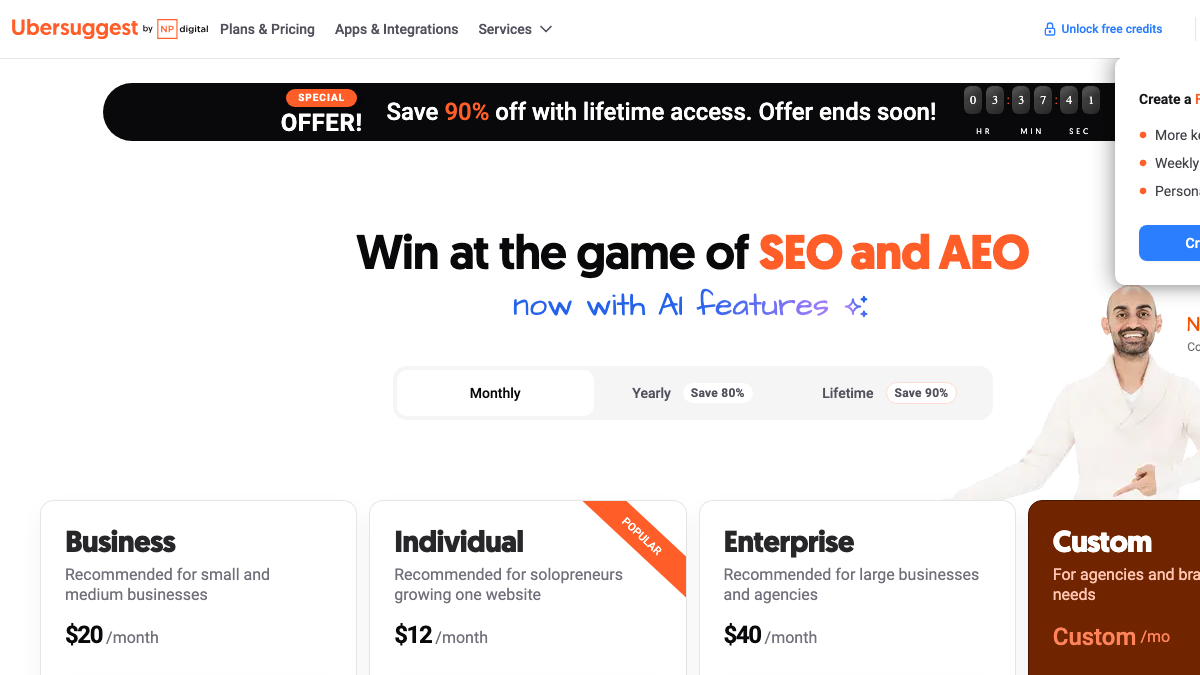
Individual is $12 a month, Business is $20 and Enterprise is $40, and there's a one-time 7-day free trial on monthly plans. AI keyword suggestions run through ChatGPT and Gemini, and Enterprise subscribers get Google AI Overview data on top. A commenter in the same Ahrefs alternatives thread mentioned above said it handles competitor lookups and volume checks fine on a tight budget, just with noticeably less depth than Ahrefs.
9. AnswerThePublic
AnswerThePublic, also from NP Digital, turns a single topic into the questions and phrases people actually search around it. It's built specifically for finding questions, which is exactly what makes it useful for planning content.
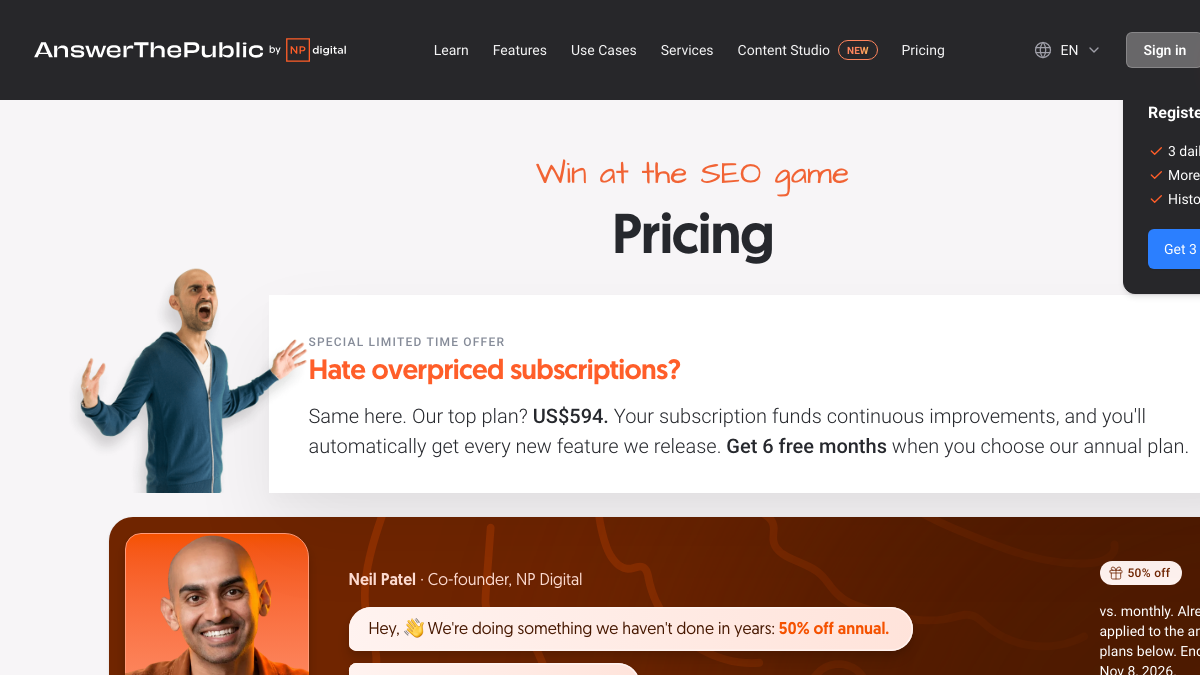
Starter is $10 a month, Growth is $49 and Business is $99, each with a 7-day free trial. Monthly prompt suggestions range from 1,000 up to 3,000 depending on the plan. The searches themselves are capped too, anywhere from 100 to 300 a month, and since it shares a parent company with Ubersuggest, the two aren't really independent options to weigh against each other.
10. LowFruits
LowFruits, now run by AIOSEO, hunts for keywords where only weak sites currently rank, the theory being that a newer site could realistically compete for those.
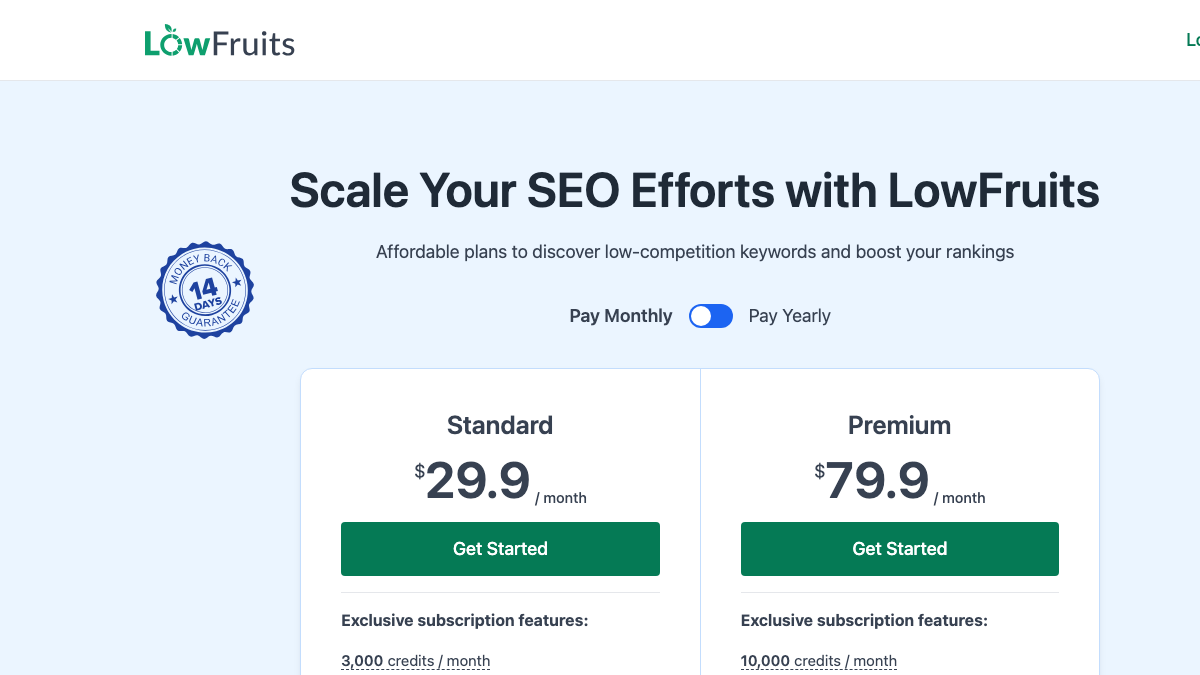
Standard is $29.90 a month and Premium is $79.90, or $20.75 and $62.45 a month billed yearly. There's no free trial, but there is a 14-day money-back guarantee if you've used fewer than 100 credits. Nothing is listed on its pricing page for AI search. It's credit-based too, so heavy research sessions can burn through a plan faster than you'd expect.
A free-first workflow
Before you pay for any of this, the free tools alone can take you pretty far.
- Start in Search Console. Export the queries your site already appears for, sorted by impressions. Those are real searches with real data behind them.
- Check ranges in Keyword Planner. Drop in your best candidates to see rough demand. A range is enough to tell 50 searches apart from 5,000.
- Check the trend in Google Trends. Drop anything that's fading, and time the seasonal ones properly.
- Search each term yourself. Note whether an AI Overview shows up, what the People Also Ask box asks and what kind of pages rank. That's the second-screen check, and it costs nothing.
- Pay once you need competitors. The free tools only ever see your own site. Finding what competitors rank for is the job the paid tools earn their money doing.
Most small sites can run steps 1 through 4 every month for free. Once the list of questions worth writing about grows longer than the time you actually have to write them, the bottleneck has quietly moved from research to writing.
How to choose
| If this is you | Go with |
|---|---|
| You want one tool for everything | Semrush or Ahrefs |
| You're mostly researching competitors | Ahrefs |
| You have no budget | Keyword Planner, Search Console and Google Trends |
| You want AI tracking at a mid price | Moz Pro |
| You want the cheapest paid tool | Ubersuggest or Mangools |
| You need questions for content | AnswerThePublic |
| You have a new site | LowFruits for easy wins, plus Search Console once you have data |
| You want the research turned into articles | RankControl |
Whichever you pick, compare keywords inside one tool rather than across several. Volume numbers differ between tools, so mixing them together makes any comparison meaningless. Our post on prompt volume data covers why the AI-side numbers need even more caution.
Keyword research for AI search
No keyword tool can see exactly what people type into ChatGPT, as our post on why prompt research matters explains. What these tools can do instead is show which Google searches already trigger an AI Overview, and track a set of prompts you choose yourself.
So the practical move is to use keyword tools to find the questions buyers search on Google first, then track the important ones in AI answers as a second step. For the rest of a small team's toolkit, see our list of SEO tools for small marketing teams, and for the full writing stack, our list of blogging tools.
Doing it yourself or handing it off
Keyword research is the easy step, honestly. Writing an article for each keyword worth targeting, publishing it and then watching what happens is the part that actually takes the time.
RankControl handles that longer part. We find the questions your buyers search, write each article against the pages already ranking for it and publish it as a native post on your site. Our AI visibility tracking checks up to 50 buyer questions every week across seven AI engines. Expect traffic from Google first, with AI citations following more slowly as links and mentions build up.
200+ SaaS teams already track their AI citations.
They know exactly when ChatGPT mentions their brand, and when it stops. Do you?