
The sale happens on the product page, and most product pages say less than the shopper standing in front of them actually needs. Plenty reuse the manufacturer's description word for word, skip the questions buyers are actually asking, and leave the reviews to do all the persuading by themselves.
This guide is about the content side of product page SEO: what to write, what to show, and what Google and AI shopping actually read off the page. The technical side, crawling, structured data rules, feeds, lives in our ecommerce SEO audit.
What Google asks for
Google's own ecommerce documentation names the content that helps a store surface across Search.
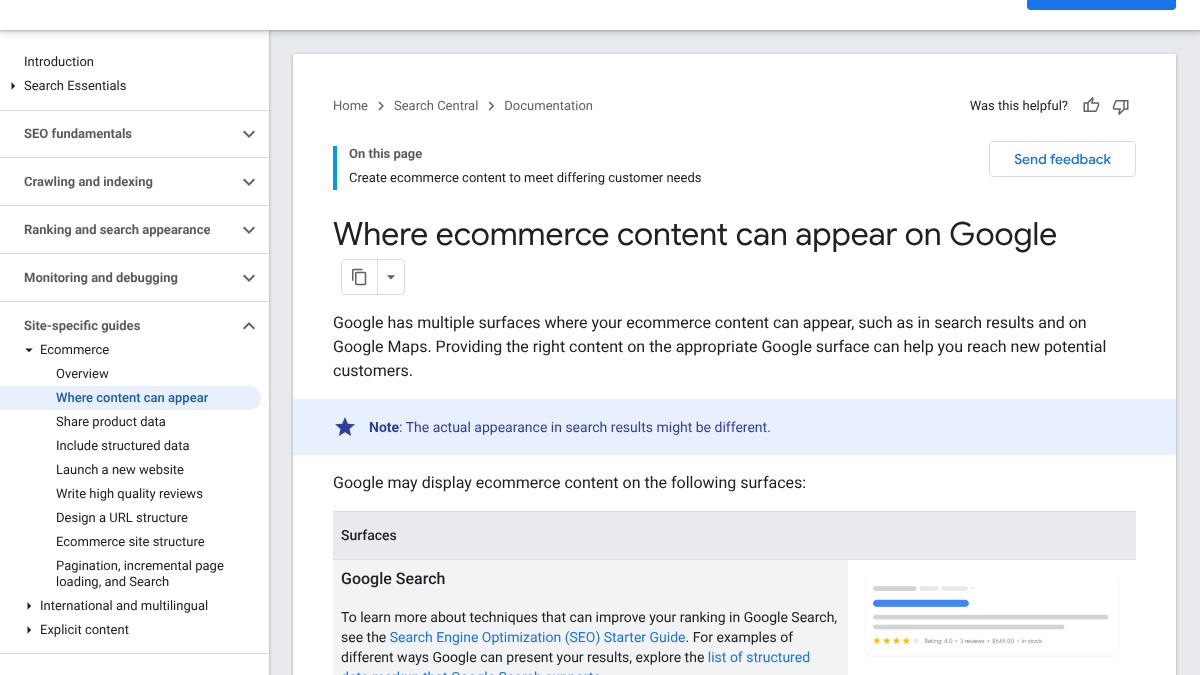
For the catalog itself, it asks stores to "provide informative product descriptions that match search terms used by shoppers when they're searching for the product." On reviews, it suggests you "consider accepting ratings and reviews from customers to help new shoppers better understand your products."
Both pieces of advice point the same direction. Write toward the words shoppers actually use, and give them what they need in order to decide.
What AI shopping reads
AI shopping draws on the same raw material. OpenAI said in its September 2025 announcement of shopping in ChatGPT that "product results are organic and unsponsored, ranked purely on relevance to the user."
Relevance needs something concrete to match against. A page that names who the product suits, what it's made of, how it stacks up against alternatives and what buyers tend to ask gives an AI answer far more to work with than two lines of marketing copy ever could.
Call it the second-store test. If a shopper could read your product page and learn nothing they couldn't get from any other store selling the exact same item, neither Google nor an AI assistant has much reason to send anyone your way.
26 content formats. Published on your domain. Matched to your brand.
Guides, comparisons, listicles, case studies, and more. RankControl generates content that gets cited by ChatGPT, Perplexity, Claude, Gemini, Grok, Google AI Mode, and Google AI Overviews.

The product page content checklist
| Element | What to include | Why |
|---|---|---|
| Title | Product name, key attribute, variant | Matches how shoppers search |
| Description | Your own words, who it's for, how it's used | Unique text Google and AI can match |
| Specs | Size, materials, dimensions, compatibility | Answers exact-match questions |
| Buyer questions | Sizing, care, returns, comparisons | Covers what shoppers ask before buying |
| Reviews | Real customer reviews with names | Trust, and fresh text in buyers' words |
| Images | Descriptive file names and alt text | Image search and accessibility |
| Comparisons | How it differs from similar products | Matches "X vs Y" questions |
Title
Lead with the product name, then whichever attribute matters most to the buyer, size, material or model. "Merino Wool Crew Sock, Cushioned" tells a shopper something; "The Everyday" tells them nothing. Keep it on the shorter side too, since Google truncates long titles wherever they show up in results.
Description
Most stores lose the sale right here. The manufacturer's description usually sits on dozens of other sites, word for word, with nothing to tell them apart.
Starting from it is fine. Stopping there isn't. Four things turn a copied description into one worth ranking: who it suits ("best for runners with wide feet"), how it's actually used in real situations rather than adjectives, what it's compared against among your own products or common alternatives, and what customers ask, pulled straight from support emails and reviews. Our guide to ecommerce keyword research covers finding the exact words shoppers use for that last part.
Here's what the difference looks like on a made-up product.
| Version | Description |
|---|---|
| Manufacturer copy | Premium merino wool crew sock. Breathable, soft and durable. Machine washable. |
| Rewritten | A cushioned merino crew sock for long walking days and cool mornings. It runs true to size, with a reinforced heel that holds up to daily wear. Customers often compare it with our lightweight sock, which suits warmer weather and dress shoes better. Machine wash cool and lay flat to dry, and it keeps its shape. |
That second version answers four questions in one pass: who it's for, how it fits, what it's up against and how to care for it. It also borrows the plain words a buyer would actually type, "walking," "true to size," "warmer weather."
Buyer questions
Every product draws the same handful of questions. Does it run small? Will it fit my device? How do I wash it? Can I send it back?
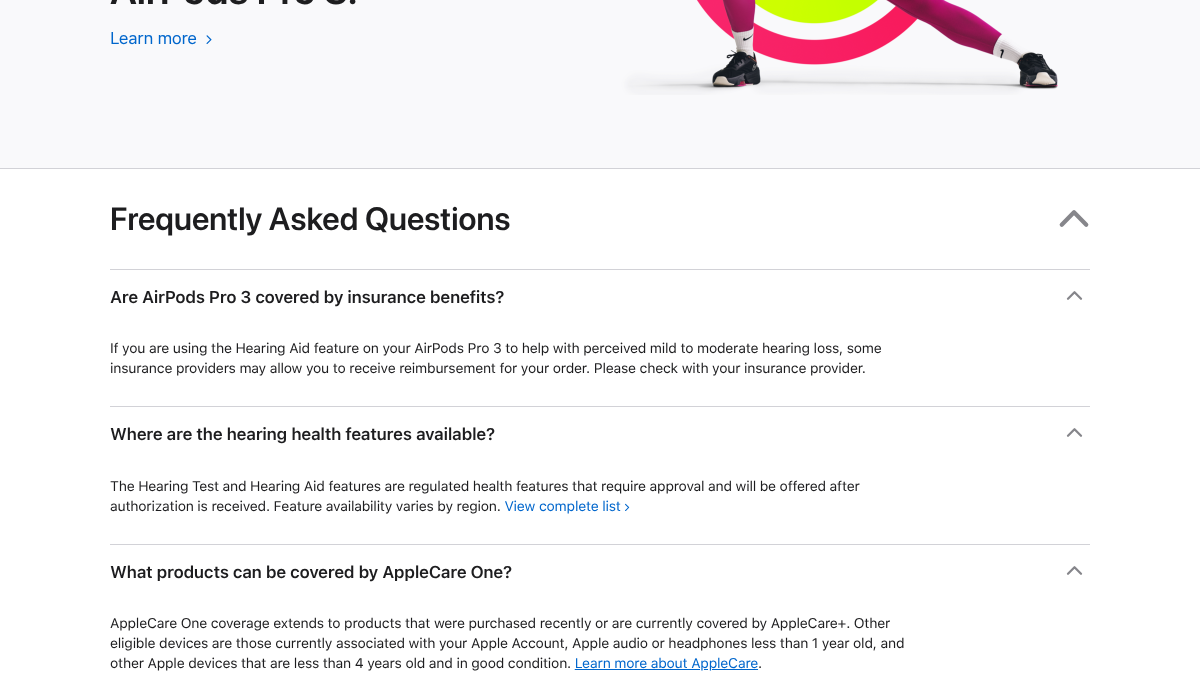
Answer them right on the page, in plain sentences. A well-aimed FAQ section does this well. Apple's own AirPods Pro page, for one, carries a Frequently Asked Questions section covering insurance, feature availability and coverage plans.
Reviews
Reviews help a shopper decide, and they hand you fresh text written in your buyers' own words, which you didn't have to write yourself.
One point trips people up constantly. Google's reviews system, the one that rewards in-depth review articles, "does not evaluate third-party reviews, such as those posted by users in the reviews section of a product or services page." So those stars on your product page aren't feeding that particular ranking system. They still matter for shoppers, for review-star eligibility, and for the text AI answers can draw from.
A marketer on r/shopify_growth described a related quirk inside Google Shopping itself. They reported that a product carrying just five reviews on its own store showed around 1,900 ratings once it synced with Google, because ratings get pooled across every seller of the same item.
How I "piggy backed" 2000 reviews on a product with only 5 reviews
Okay I found out a big cheat code that I believe not many stores are aware of, but could get you thousands of reviews on Google Shopping listings for free. This is legal btw. Essentially my client collects reviews on their website, but wasn...
That's one store's own report, not something Google documents, but it does explain why accurate product identifiers like barcodes carry real weight.
Images
Name every image file for what it actually shows, write alt text that describes the product and keep images sitting near the text they relate to. merino-crew-sock-charcoal.jpg beats IMG_4471.jpg on every count that matters.

Your competitors are getting cited by AI. You're not.
Every day without citation tracking is a day your competitors pull ahead in ChatGPT, Perplexity, and Claude.
What we found on nine live product pages
We went and looked at what real product pages actually carry, on October 19, 2026.
First, the same product shown two different ways. Apple's own AirPods Pro page carried marketing copy, a product overview, a "What's in the Box" section and an FAQ. The Amazon listing for AirPods Pro 2, meanwhile, reused Apple's marketing bullets as its description, skipped the FAQ entirely, and leaned on its review count instead: 4.6 stars from 46,982 ratings.
Then we checked the structured data sitting on product pages from seven direct-to-consumer Shopify brands, since that's what Google and AI shopping tools read most reliably.
| What the markup carried | Pages (of 7) |
|---|---|
| Product data in the initial page | 6 |
| A rating with review count | 4 |
| A product barcode (GTIN) | 3 |
| FAQ markup | 0 |
| Description length in the markup | 18 to 161 words, most under 65 |
Every one of those brands had a genuinely good page for shoppers. The description buried in their structured data told a different story, though, usually a short blurb under 40 words, and not one of the seven marked up an FAQ. Ratings showed up on four of the seven, with review counts ranging from 4 to 3,618.
None of that means these brands are getting it wrong. It means even well-run stores leave a lot of their real product detail somewhere a machine reading the markup never sees it, and the detail sitting right there on the page carries more weight than most teams assume.
Writing at catalog scale
Rewriting hundreds of products at once is a genuinely large job, so prioritize. Start with best sellers and high-margin products, since they pay back the fastest, then move to whatever already shows search demand in Search Console.
Use templates for structure only, never for the words themselves; a consistent order of sections works fine as long as each one carries unique content. Pull answers from your own support inbox, since the questions your team already answers by email belong on the page too, and refresh pages with new questions as customers raise them.
Our guide to ecommerce content marketing covers the content that surrounds product pages, buying guides and comparisons, and sends shoppers toward them in the first place.
How long it takes
| Task | Time per product |
|---|---|
| Rewriting the description | 20 to 40 minutes |
| Adding specs and buyer questions | 15 to 30 minutes |
| Images, file names and alt text | 10 to 20 minutes |
| Checking product data and markup | 10 minutes |
That lands at roughly an hour per product. A 200-product catalog is close to 200 hours of work, start to finish.
Mistakes to avoid
Copying the manufacturer's text everywhere gives nobody a reason to rank you over the next store doing the exact same thing. Hiding answers inside images is nearly as costly, since text baked into a picture is much harder for search engines or AI to read.
Faking reviews breaks Google's own rules against fake or undisclosed incentivized reviews outright. Deleting sold-out products instead of marking them out of stock throws away pages that were already earning their place. And ignoring comparisons misses how often shoppers ask AI "X vs Y" questions these days.
Our ecommerce SEO guide covers how product and category pages fit together as a whole.
Doing it yourself or handing it off
Product pages carry the sale, but the questions that actually bring shoppers to them usually get asked somewhere else first, inside comparisons, buying guides and "best for" searches.
RankControl handles that earlier content. We find the questions your shoppers search, write each article against the pages already ranking for it, link to your product pages, and publish it to your store, Shopify included. Our AI visibility tracking checks up to 50 buyer questions every week across seven AI engines. Expect traffic from Google first, with AI citations following more slowly as links and mentions build up.
200+ SaaS teams already track their AI citations.
They know exactly when ChatGPT mentions their brand, and when it stops. Do you?