
Every page should have one job. The primary keyword is the search that describes that job. Secondary keywords are the related searches the same page can answer along the way.
Getting this right sounds simple, but it's where a lot of sites go wrong. Pages try to rank for five unrelated terms, or two pages on the same site fight over one search. This guide covers how to pick the primary keyword for a page, how to choose secondary keywords that support it, and where each one goes, using Google's own documentation.
Primary vs secondary keywords
| Primary keyword | Secondary keywords | |
|---|---|---|
| How many per page | One | Several |
| What it does | Defines the page's main topic and intent | Covers variants, subtopics and questions |
| Example | how to choose a crm | crm for small business, crm pricing, crm vs spreadsheet |
| Where it goes | Title, main heading, intro, URL | Subheadings and body text |
| Can another page target it? | No, one page per primary keyword | Yes, if it's secondary there too |
We call this the one-job rule. If you can't describe what a page is for in one search phrase, the page is probably trying to do two jobs and should be split.
Step 1: write down the page's job
Start with the reader, not a keyword tool. What question does this page answer, or what does it help someone do? Write it in plain words.
- "Help a small business owner pick a CRM"
- "Explain what an emergency plumber in Austin costs"
- "Compare two project management tools"
Each of these points to a different kind of search. Getting the job clear first stops you from choosing a keyword that sounds right but brings the wrong visitors.
Step 2: find the phrase people actually search
Turn the job into the words searchers use. Three free sources help.
- Google autocomplete. Type the start of the phrase and note what's suggested.
- Search Console. If the site already ranks nearby, the Queries report shows the real wording.
- People Also Ask. It shows the questions around the topic, which often become secondary keywords.
Paid tools add volume estimates. Our list of keyword research tools compares them. Volumes are rough, so use them to compare options, not to decide alone.
15 hours a week manually. Or 15 minutes with RankControl.
Track citations, monitor competitors, and fix content gaps across every AI search engine. Automatically.

Step 3: check the search results match your intent
Search the phrase and look at the top results. Are they the same kind of page you plan to write?
If you're writing a how-to guide and the results are all product pages, Google reads the search as shopping. Your guide will struggle. If the results are a mix, the search may cover two intents, and you may need to pick the narrower phrase.
Our guide to types of keywords covers intent in more depth.
Step 4: check your own site first
Before you commit, search your own site for a page that already covers the topic. Two pages targeting the same primary keyword can end up competing with each other. This is usually called keyword cannibalization.
The simplest check is Search Console. In the Performance report, filter to the query and switch to the Pages tab. If two or more of your pages show impressions for it, look closer.
Google's John Mueller has said not to panic over every overlap. Quoted by Search Engine Journal in September 2025, Mueller said, "If you have 3 different pages appearing in the same search result, that doesn't seem problematic to me just because it's 'more than 1'. You need to look at the details, you need to know your site, and your potential users."
The problem is when two pages swap places and neither ranks well. On r/SEO, a marketer shared what they'd learned about cannibalization, describing it as a site competing against itself.
Here's what I have learnt about keyword cannibalization (feedback appreciated)
I've been going down the cannibalization rabbit hole lately, and wanted to write up what I've learned so far. This is a mix of things I've tested myself and stuff I picked up from posts here. Happy to be corrected on anything because I'm st...
One reply described the pattern in practice. After the commenter added a second page using a synonym for the same term, the two pages started rotating in the results every few days. That meant it could take a week just to tell what was happening.
If you find real overlap, you have three options. Merge the two pages into one and redirect the weaker URL. Re-angle one page to a different primary keyword. Or, if both deserve to exist, link clearly from the secondary page to the main one.
Step 5: choose by fit first, then volume
When you have a few candidates, pick the one that best matches the page's job and the buyer you want. A phrase with lower volume and the right intent beats a bigger phrase with the wrong one.
Our keyword scorecard walks through weighing relevance, intent, difficulty and value.
Step 6: gather secondary keywords
Secondary keywords come from the same research. Look for three kinds.
| Kind | Example for "how to choose a crm" |
|---|---|
| Variants | choosing a crm, best way to pick a crm |
| Subtopics | crm pricing, crm features, crm integrations |
| Questions | do i need a crm, how much does a crm cost |
Keep only the ones that share the primary keyword's intent. "Best crm software" sounds close but usually wants a ranked list, so it may deserve its own page.
There's no need to chase every variant. Google's SEO Starter Guide said it plainly. "If you are varying the words (writing naturally to not be repetitive), you have more chances to show up in Search simply because you are using more keywords."
AI search traffic grew 835% this year. Is your content ready?
RankControl generates 26 content formats optimized for ChatGPT, Claude, and Perplexity. Published on your domain, matched to your brand.

Step 7: place each keyword
Here's where each one goes, and what Google's documentation says.
| Spot | What to put there | What Google says |
|---|---|---|
| Title | The primary keyword, near the start | Titles should be "unique to the page, clear and concise" |
| Main heading | The primary keyword or a close variant | Google uses headings among its title sources |
| First paragraph | The primary keyword, answered early | No rule, but readers and AI answers look here first |
| URL | A short, readable version | "Use readable words rather than long ID numbers" |
| Meta description | A plain summary, not a keyword list | Keyword strings are "less likely to be displayed as a snippet" |
| Subheadings | Secondary keywords and questions | Order doesn't matter to Google, per its starter guide |
| Body | Natural variants | No keyword density rule |
According to Google's title link documentation, the title element is only one source Google uses for the title shown in results. It also pulls from the main visual title, headings and other text on the page.
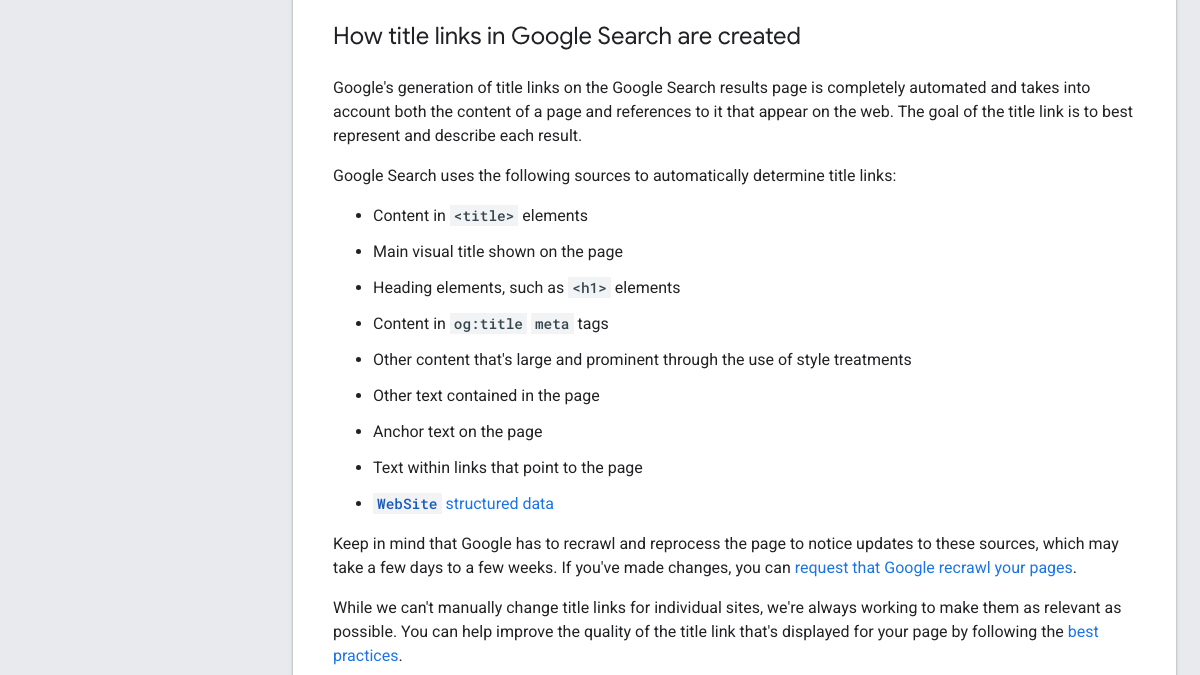
So keep the title and main heading consistent. If they say very different things, Google may write its own title link.
The same documentation said there's no need to repeat yourself. "It's sometimes helpful to have a few descriptive terms in the title element, but there's no reason to have the same words or phrases appear multiple times."
Go further and you hit Google's spam policies. According to Google, keyword stuffing is "filling a web page with keywords or numbers in an attempt to manipulate rankings."
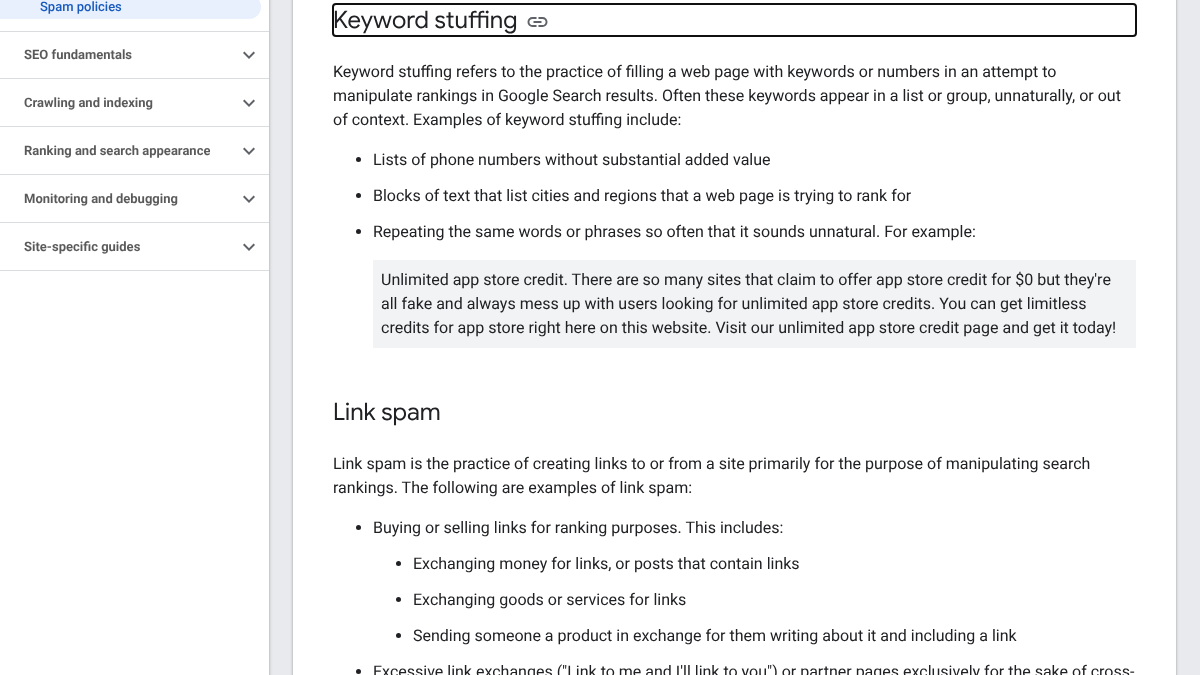
Our post on keyword density covers why there's no magic percentage.
What we found on 15 ranking pages
Checklists on X often say the primary keyword must appear in the title, main heading and URL. One SEO checklist that circulated in October, for example, listed exactly that.
Run this AI SEO checklist before you publish your content for disgustingly good rankings: ☐ Answer the main question in the first 2 sentences ☐ One clear primary keyword in the title, H1 and URL ☐ Title under 60 characters, written for clicks, not robots ☐ Meta description
 Suraj Sharma@suraj_sharma14Oct 10, 2026
We wanted to see how strictly ranking pages follow it. On October 19, 2026, we pulled the top five Google results in the US for three searches about primary keywords, then checked each page's title, main heading and URL.
| Measure | Pages with the exact phrase "primary keyword" |
|---|---|
| In the title | 3 of 15 |
| In the URL | 2 of 15 |
| In the main heading | 1 of 15 confirmed |
Six pages blocked our request, so the true counts may be a little higher. But even allowing for that, most pages ranking for these searches didn't use the exact phrase. Several ranked while being about secondary keywords, or used wording like "how many SEO keywords should I use."
That doesn't mean placement is useless. It means matching the intent clearly matters more than repeating an exact string. Google understands variants, and the pages that win say what they're about in plain words.
How this works for AI answers
AI answers work at the level of passages, not whole pages. A page with one clear focus and well-labeled sections for each subtopic gives AI engines clean passages to pull from.
That's where secondary keywords earn their keep. A subheading like "How much does a CRM cost?" followed by a direct answer is easy for both Google and AI engines to match to a question.
You don't need to write differently for AI. Google's guide to its generative AI features said "AI systems can understand synonyms and general meanings of what someone is seeking," so there's no need to cover every possible wording.
Mistakes to avoid
- Two primary keywords on one page. Split it, or pick one.
- Two pages with the same primary keyword. Merge, redirect or re-angle.
- Choosing by volume alone. The right intent beats a bigger number.
- Repeating the keyword in the title. Once is enough.
- Ignoring Search Console. It shows the real searches your pages already get.
For more on what Search Console shows, see our guide to organic keywords.
Doing it yourself or handing it off
Picking a primary keyword takes a few minutes per page. Doing it well across a whole content plan, without two pages competing, takes a system.
RankControl handles that. We find the questions your buyers search, plan each article around one of them without repeating topics you've already covered, and write each article against the pages already ranking for it. We track your Google and Bing rankings, plus up to 50 buyer questions every week across seven AI engines. Expect traffic from Google first, with AI citations following more slowly as links and mentions build up.

Built by the team that got cited in 48 hours.
Content generation, backlink building, AI visibility tracking, and Google rankings. One platform, zero guesswork.