
A founder in r/Agentic_SEO described a rough couple of months this year. A script wrote and published more than 140 AI articles, and when the dust settled, Google had indexed nine of them. The rest sat in Search Console tagged "crawled, currently not indexed," which is Google's way of saying it read the page and chose not to keep it.
The second run on the same domain used the same model and nearly the same prompts, and that time it worked. The difference wasn't the writing software at all. It was everything around it, the context fed into each draft, the internal links, the site structure the piece dropped into.
I think that's the right question to ask before you pick an AI content writer. What does the tool actually know before it types the first word? Call it the blank-page test.
This list runs RankControl, Semrush Content Toolkit, Jasper, Surfer, Frase, Writesonic, Koala AI, Byword and SEOWriting.ai through that test, and checks what one article actually costs on each. Every price below came off the vendor's own pricing page or help docs on October 18, 2026.
The blank-page test, side by side
Lined up on the same columns, the nine look pretty different once you get past the sticker price. "Reads what ranks" is shorthand for whether the tool checks the current search results before it drafts, going by how it describes itself.
| Writer | Entry price (monthly) | Articles on that plan | About per article | Reads what ranks | Your brand voice | Publishes to your CMS |
|---|---|---|---|---|---|---|
| RankControl | $400 | Up to 100 | $4 | Yes | Built from your site | 9 destinations |
| Semrush Content Toolkit | $60 | 5 SEO-boosted, plus standard | $12 per boosted | Yes | Yes | WordPress |
| Jasper | $69 per seat | Not counted | Seat-based | Not its focus | Yes, the core feature | Through integrations |
| Surfer | $119 | 360 documents | Not counted | Yes, scores against it | Templates and custom voices on Pro | WordPress |
| Frase | $49 | 10 | $4.90 | Yes | Brand context | WordPress, Webflow, Sanity, Wix |
| Writesonic | $99 | 15 | $6.60 | Partly | Yes | Exports to several CMSs |
| Koala AI | $25 | 45,000 words | About $1 | Real-time data | Brand DNA | WordPress, Shopify, Webflow, Ghost |
| Byword | $99 | 25 | $3.96 | Yes | Yes | WordPress and webhooks |
| SEOWriting.ai | $19 | Up to 50 | $0.38 | Real-time SERP | 1 brand voice | WordPress, Shopify app |
Three things jump out of that table. RankControl is the only one here that plans the calendar and then checks the result afterward, which suits a team that wants the whole run, from topic to published page. Anyone already paying for Semrush will find the Content Toolkit the easiest add, since the keyword data it needs is already sitting there. And if price per article is the whole decision, SEOWriting.ai wins by a wide margin, at well under a dollar a piece.

You're getting AI traffic. But do you know where it comes from?
RankControl credits every visit to the assistant that sent it: ChatGPT, Perplexity, Claude, Gemini, Copilot, or Grok. Full source attribution, next to your Google traffic.
The 9 best AI content writers for SEO
1. RankControl
RankControl doesn't start from a blank prompt. Before we write anything, we find the questions buyers in your market are searching, plan titles onto a calendar, and draft each article against the pages that already rank for its keyword. The voice comes from a brand profile built by reading your own site, and once a draft is done, it gets scored for how easily AI engines can quote it, with a list of fixes attached.
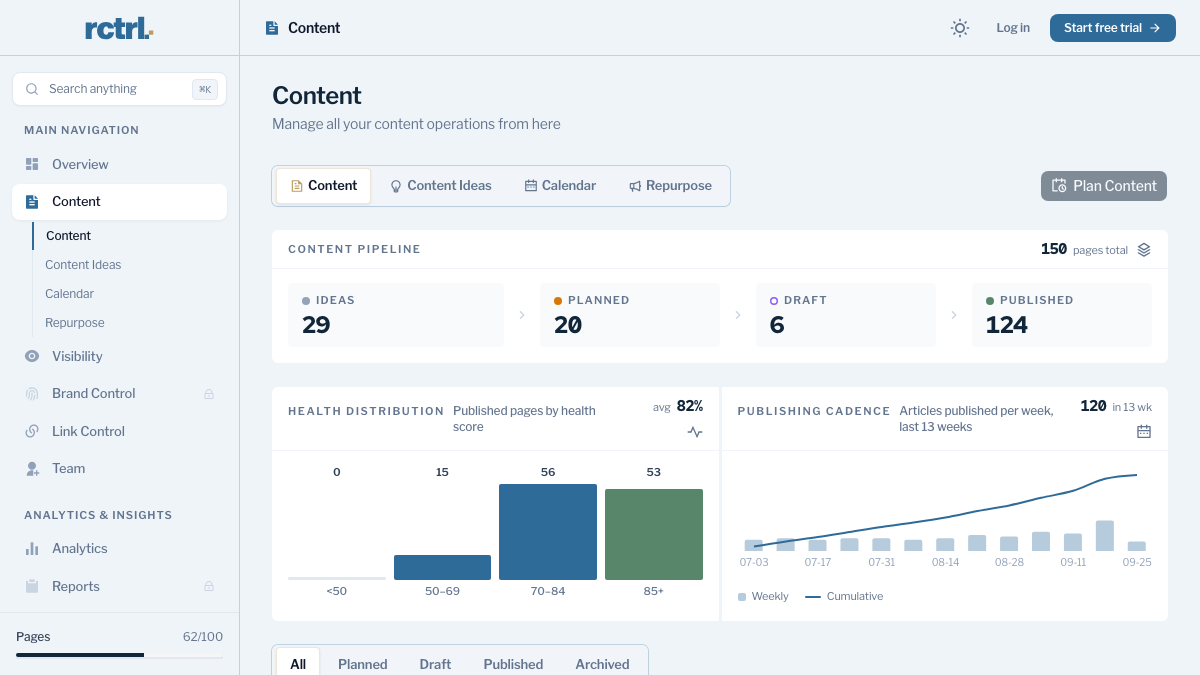
Once you approve a draft, the content engine publishes it across nine kinds of destination, from WordPress to a fully headless site. The plan runs $400 a month for up to 100 pages, which lands near $4 an article, and that same price covers weekly AI search tracking across seven engines. There's a 7-day free trial if you want to try us before paying anything.
2. Semrush Content Toolkit
Semrush's toolkit runs $60 a month with a 7-day trial, according to its help docs. Standard articles are unlimited. SEO-boosted ones, the kind built on Semrush's own keyword and SERP analysis, cap out at five a month, with ten more available for $30.
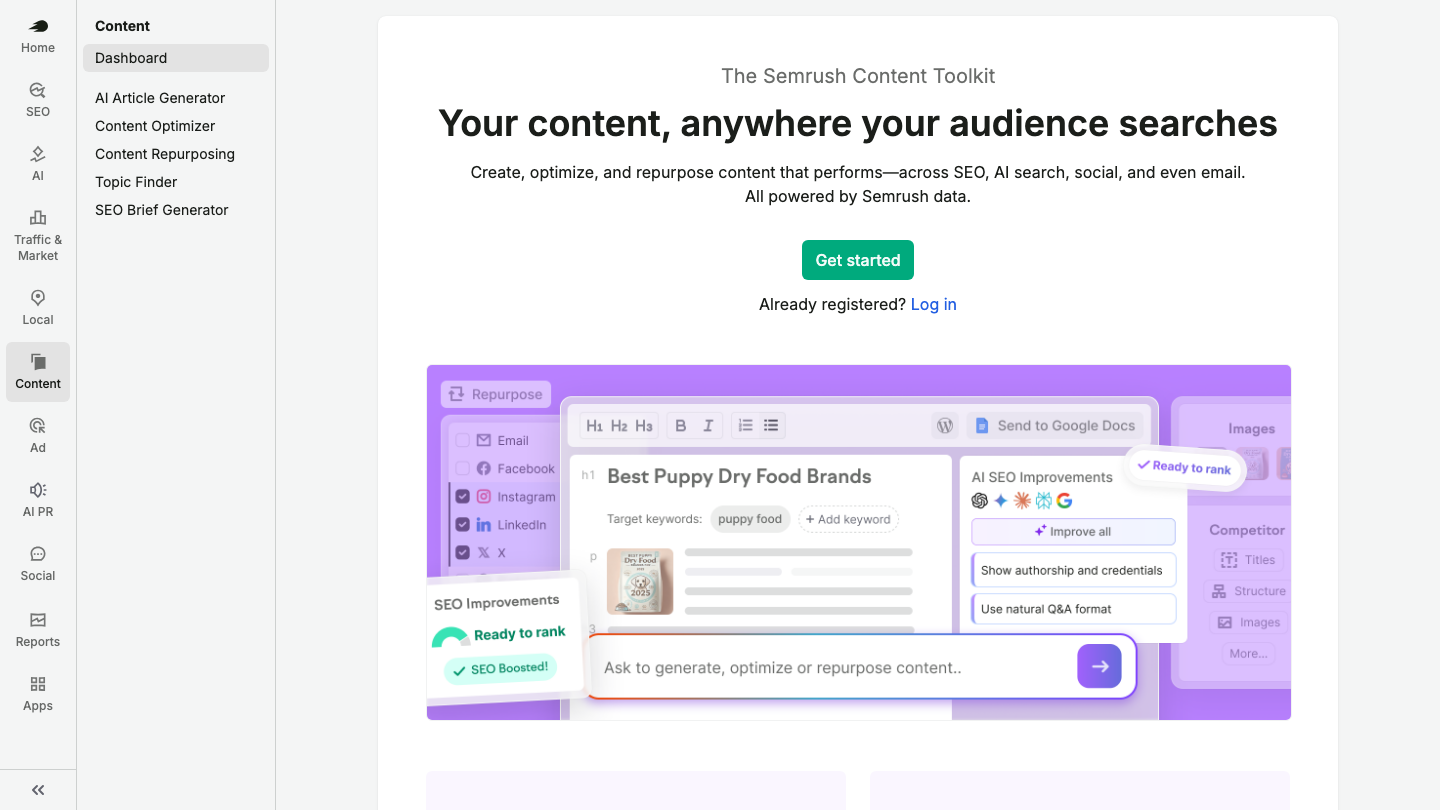
It writes in your brand voice and ships through WordPress. That five-article cap on boosted content is the number worth planning around, since those are the only ones with real search data behind them. Our RankControl vs ContentShake comparison gets into where the two diverge.
3. Jasper
Jasper reads less like an SEO writer and more like a marketing platform that happens to write blog posts too. Pro costs $69 a month per seat, or $59 if you pay yearly, and that gets you two brand voices, five knowledge assets, three audiences and a set of agents built for everyday marketing tasks.
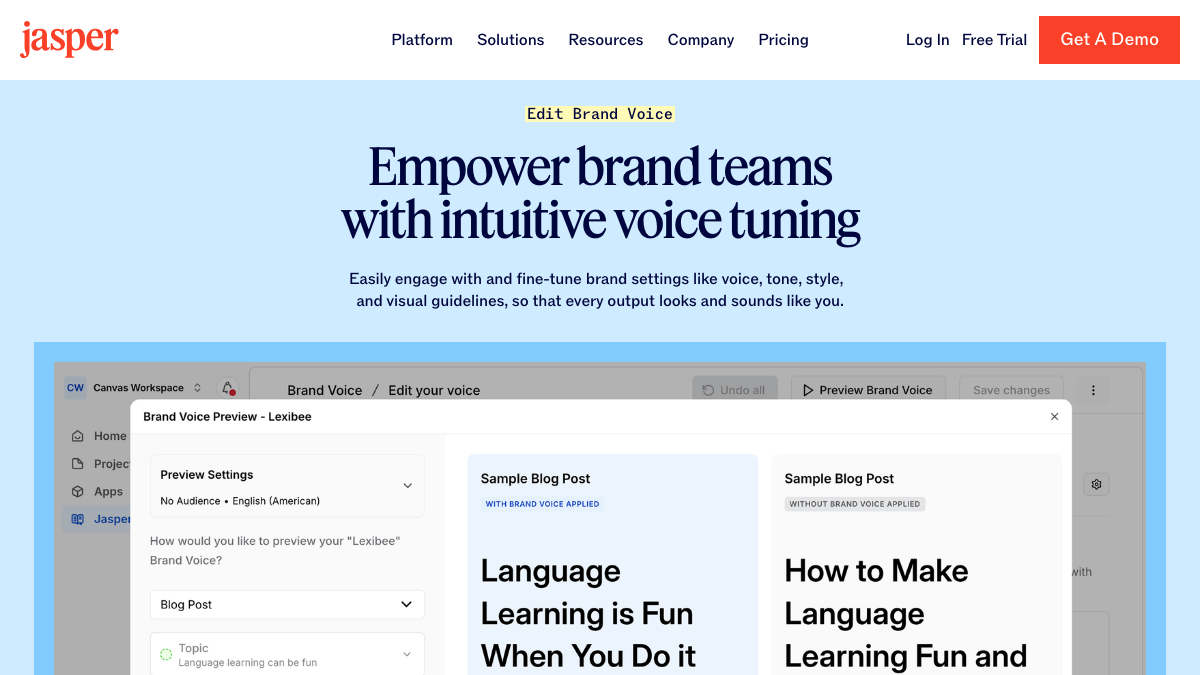
That focus makes it genuinely good at sounding like you, and weaker on the search half of the blank-page test. Reading the current results isn't presented as part of how it drafts, so the keyword research stays your job. Our Jasper alternatives roundup lists who else might fit better there.
4. Surfer
Surfer, which now sells under the Positive brand, is built around a content editor that scores your draft against whatever's ranking for the keyword. Standard runs $119 a month for 360 documents, and Pro at $219 adds templates, custom voices and one-click internal linking.
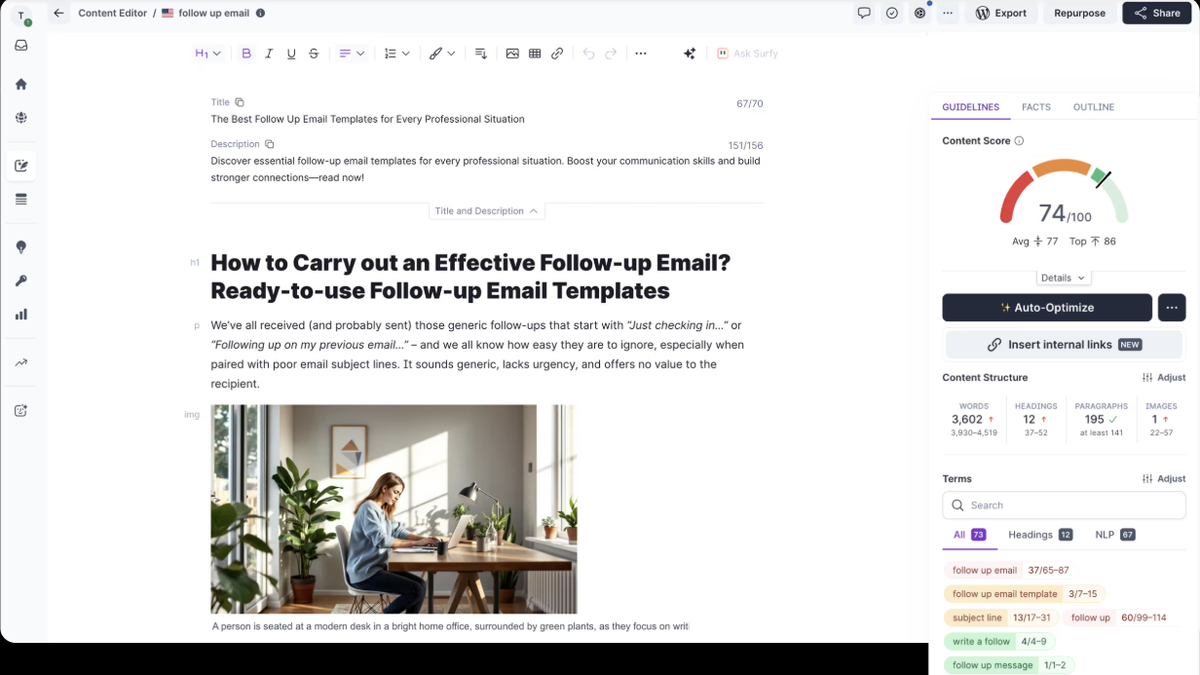
At this price, nothing else here passes the search half of the test as well. It's built for editing to a score, though, so the topic choice and the actual publishing are still on you. Our list of SEO content tools compares it against the other optimizers, job by job.
5. Frase
| Frase Starter | |
|---|---|
| Price | $49 a month, or $39 billed yearly |
| Articles | 10 a month |
| Publishes to | WordPress, Webflow, Sanity, Wix |
| Trial | 7 days, no card |
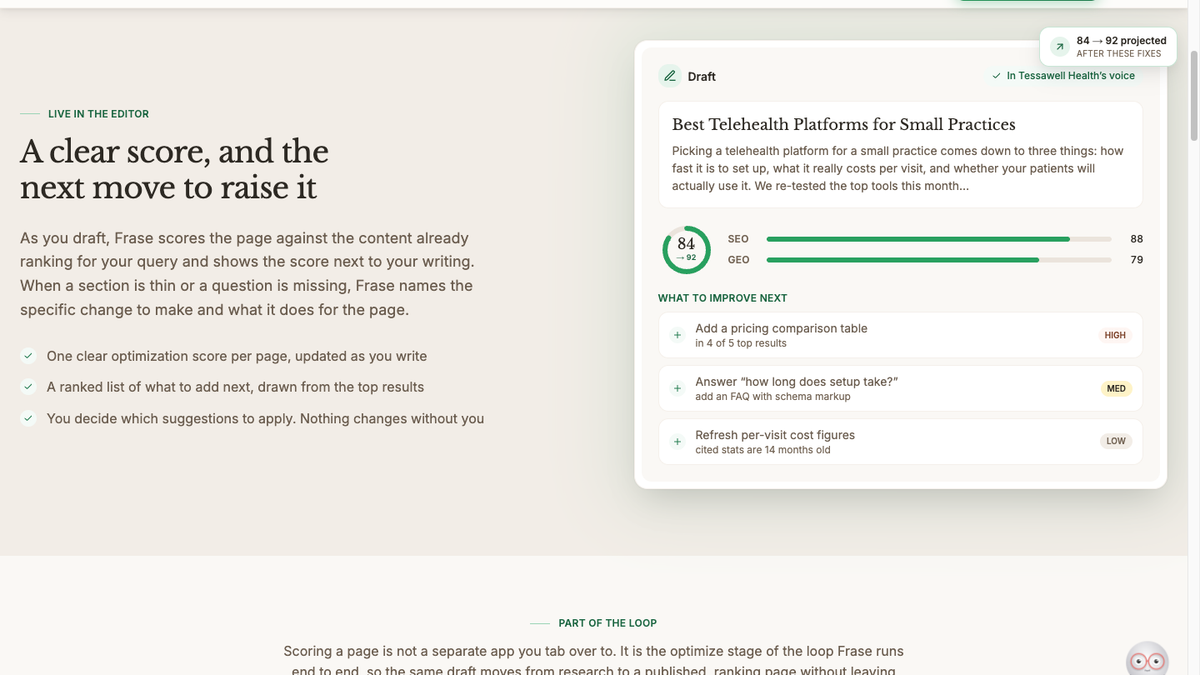
Frase handles the whole loop, research what's ranking, draft, score and publish. Its agent will even publish on its own once you switch that on. Ten articles a month fits a team putting out a couple of posts a week, not much more than that.
We'll show you exactly where your brand stands in AI search.
No commitment. $0 due today, cancel anytime. See how ChatGPT, Perplexity, Claude, Gemini, Grok, Google AI Mode, and Google AI Overviews talk about your brand today.

6. Writesonic
Writesonic has quietly shifted its pitch. AI visibility tracking leads now, with the writer along for the ride. Starter costs $99 a month, or $79 billed yearly, and includes 15 AI articles plus 10 site audits, which works out to about $6.60 an article if you're only counting the writing.
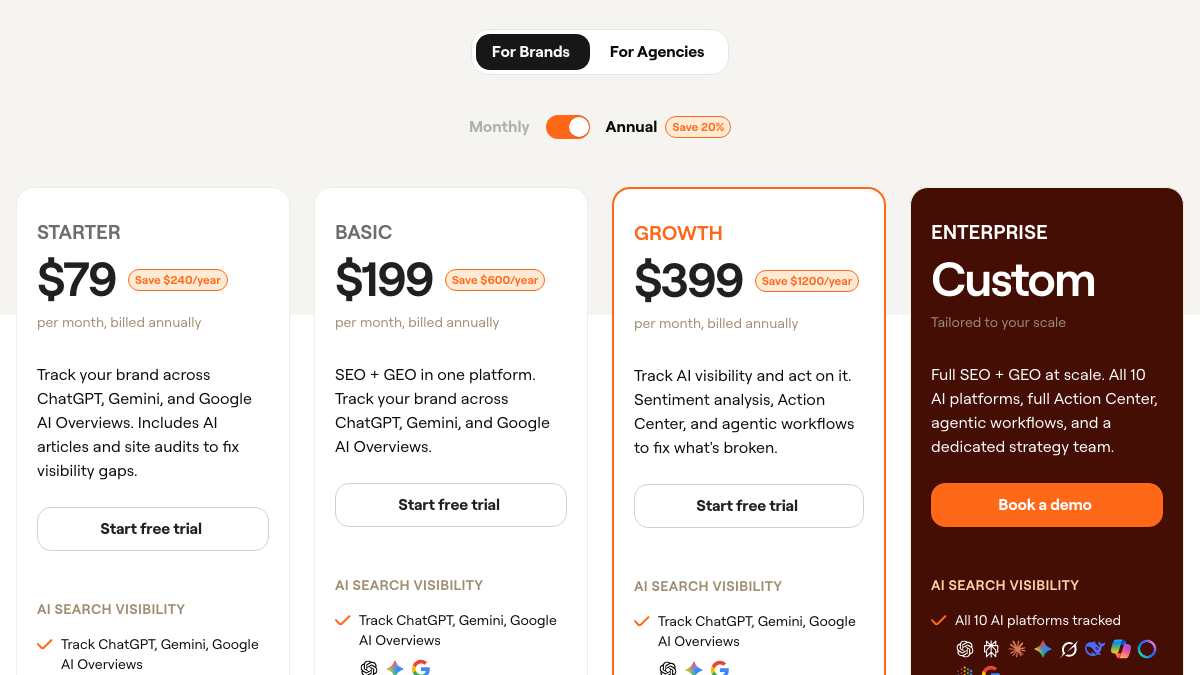
That bundle makes sense if you want daily tracking and a writer under one login. It makes less sense if writing is the actual job you're hiring for.
7. Koala AI
Koala counts words, not articles, which changes the math a little. Starter is $25 a month for 45,000 words, roughly 20 pieces at 2,000 words each, and that plan also adds real-time factual data plus publishing to WordPress, Shopify, Webflow and Ghost. It's a favorite among affiliate sites, partly because it pulls live Amazon data straight into product articles.
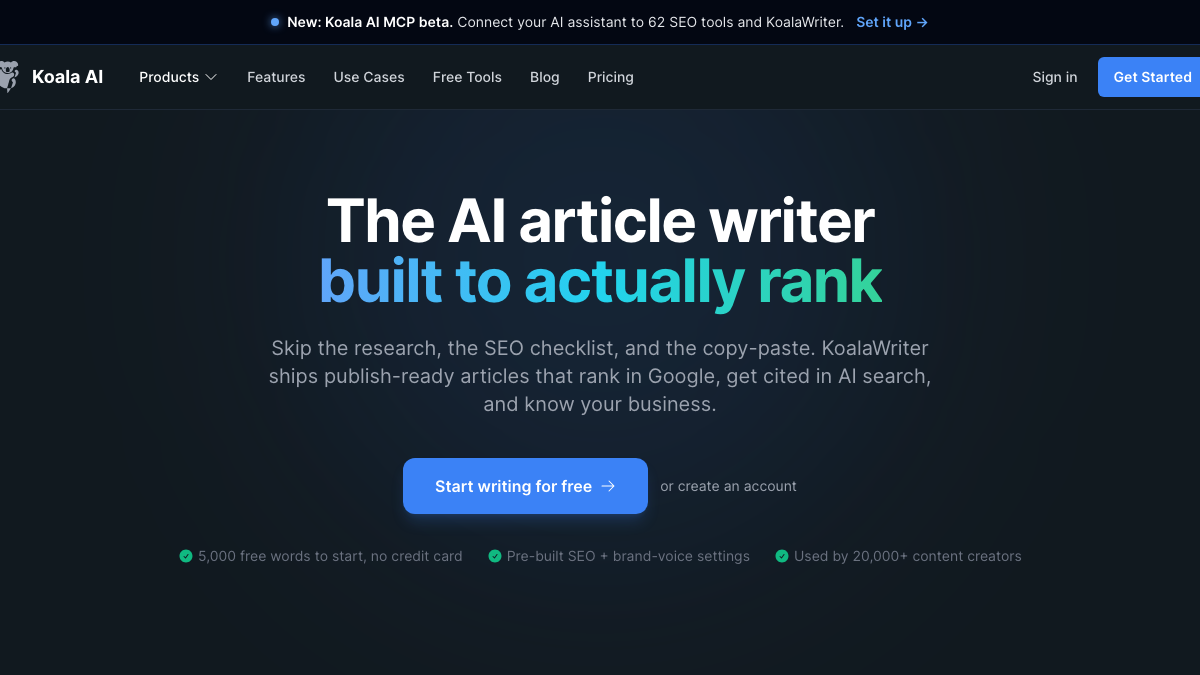
Work it out and you land near a dollar an article, which makes it one of the cheapest options here that still feels like a serious tool. See RankControl vs Koala AI for where the two part ways.
8. Byword
Volume is the whole point of Byword. Starter runs $99 a month for 25 articles, about $3.96 each, with extras priced at $3.50. Climb to Scale at $999 and the per-article price drops under $3.40 across 300 articles a month. Publishing goes out through WordPress and webhooks, and every new account starts with five free articles to test.
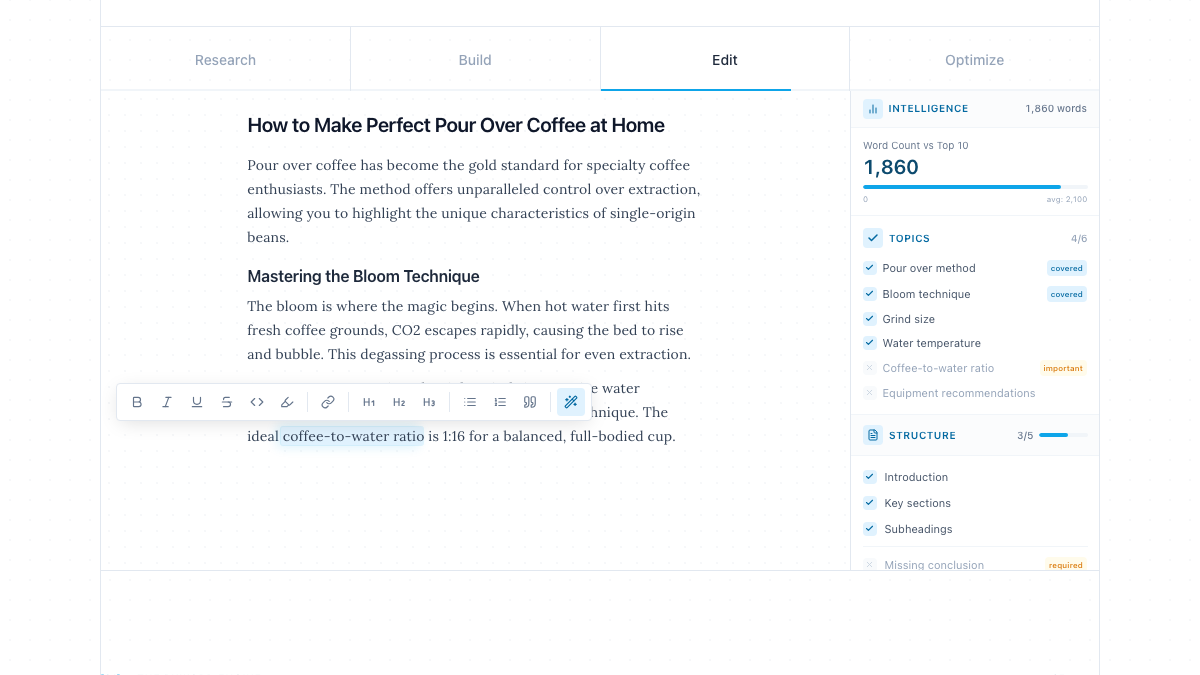
That shape, a keyword list and a template, fits programmatic runs better than one-off posts. Our RankControl vs Byword comparison has the rest of the detail.
9. SEOWriting.ai
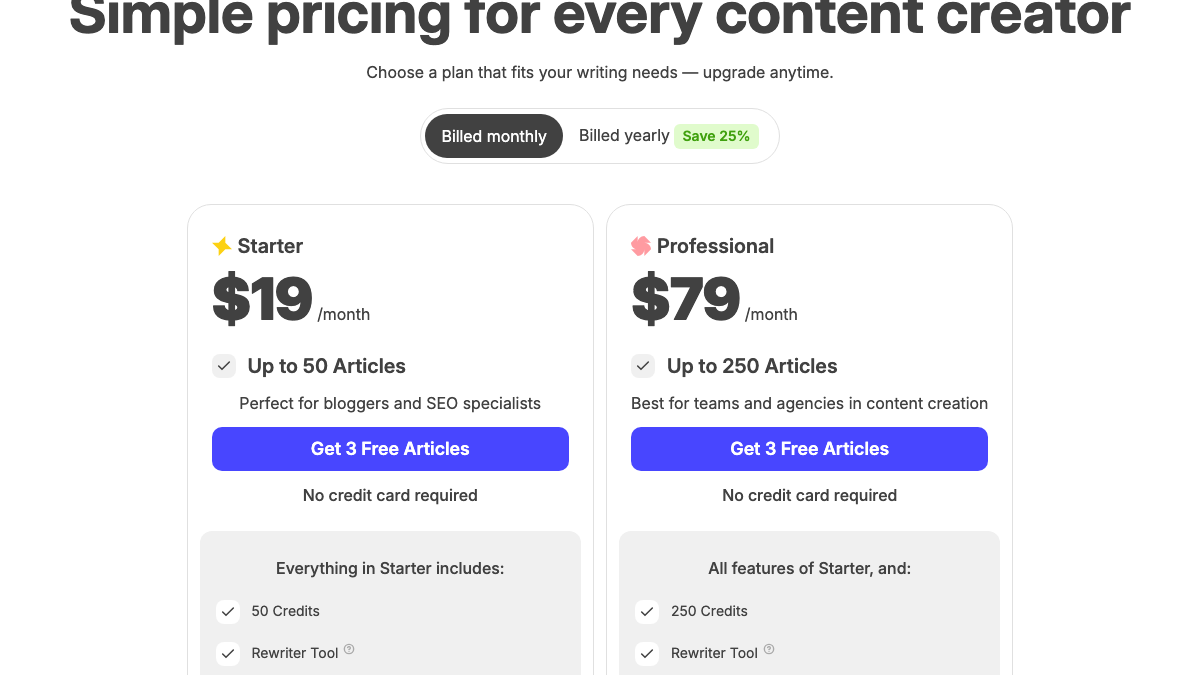
If price is the whole story, this is where it ends. SEOWriting.ai's Starter plan is $19 a month for up to 50 articles, somewhere near 38 cents each, with real-time SERP data, one brand voice and a straight line to WordPress. A Shopify app is in there too.
Cheap only stays cheap if the articles actually get indexed. The next section is worth reading before you commit to 50 a month.
What to give any AI writer before it starts
Whichever tool you land on, you can run your own version of the blank-page test by handing it five things before it drafts. None take long to put together, and together they're usually the difference between a page Google keeps and one it reads once and drops.
- The top five results for the keyword, with a short note on what each one is missing. That gap is your reason to publish.
- Your own facts, current prices, real numbers pulled from your business, and the date you checked them. When we ran 10 buyer questions through ChatGPT search in October, it added the current year to 8 of them and asked for official pricing on 5, so that's the kind of specific, dated detail AI answers go looking for.
- Two or three pages written in your voice already, so the new one doesn't read like a stranger wrote it.
- The pages on your own site this article should point to, and the ones that should point back at it.
- One named source worth citing, a study, a survey, a public document, whatever fits.
Our guide to LLM SEO strategies covers what else that ChatGPT run turned up about the pages that get cited. And if you publish across more than one site, check your writer's CMS support before buying. Only a handful of tools on this list go past WordPress, and RankControl's publishing destinations page lists all nine.
Why cheap articles stall
Google's own guidance on AI-generated content is fairly forgiving. It rewards helpful content made however it's made. Its spam policies are less forgiving, naming scaled content abuse specifically, meaning pages made mainly to rank. Most AI articles fall between those two lines, and the r/Agentic_SEO founder from the top of this post found out which side theirs landed on.
A reply in an r/WebsiteSEO thread about whether AI content hurts rankings put the test about as plainly as it can be put. If a tool can spit the article out in 20 seconds, that reply argued, it's commodity content, and Google has no reason to index a fiftieth copy of it.
Does AI-written content hurt SEO rankings?
If I write an article with AI, then edit it, fact-check it, and optimize it properly, can it still rank well? Would love to hear your real experiences, especially if you’ve tested this on your own websites.
So before you settle on a writer, check what it's actually adding that the top five results don't already cover. A real number pulled from your own business, a named source, a process you actually run or a price you actually charge will do more for getting indexed than any amount of extra word count.
What publishing with AI really costs
The subscription is the smallest line in this budget. Editing an AI draft properly, adding your own facts, images and links, takes something like an hour or two per article, and publishing and linking it up adds another half hour on top of that.
Checking whether it actually ranks or gets cited in AI answers only takes a few minutes a week per page, but it adds up fast across dozens of pages. Run the math on 20 articles a month and that's 30 to 50 hours of someone's time on top of whatever the subscription costs. The writer matters less than everything built around it.
Which AI content writer fits your team
| If you... | The best pick is |
|---|---|
| Want articles planned, written and published | RankControl |
| Already pay for Semrush | Semrush Content Toolkit |
| Care most about brand voice across channels | Jasper |
| Edit drafts to a score | Surfer |
| Write a few articles a week yourselves | Frase |
| Want tracking and writing in one login | Writesonic |
| Run an affiliate or niche site | Koala AI |
| Run programmatic pages from a keyword list | Byword |
| Need the lowest price per article | SEOWriting.ai |
If your team already drafts inside ChatGPT, Claude or Gemini rather than a dedicated tool, our list of AI content creation tools for SEO teams compares those seat plans too.
The pick
If you've already got an editor and a strategy in place, a cheaper writer paired with your own judgment goes a long way. Surfer or Frase will keep drafts close to what's ranking, and SEOWriting.ai or Koala will keep the bill small.
If nobody on your team has time to plan topics, edit, publish and check results, the writer itself is only one of five steps. You can run every one by hand. Or RankControl's agents can take the whole thing on each month, from picking the question through publishing the page to tracking whether AI engines cite it, while you get back to your product.
Know exactly what AI says about your competitors.
RankControl's Recon Agent monitors competitor citations across ChatGPT, Perplexity, Claude, Gemini, Grok, Google AI Mode, and Google AI Overviews. See where they show up and you don't.