
Say a parent is reading a clinic's page on a child's fever and deciding whether it can wait until morning. Chest pain and a new rash work the same way. People act on what health pages tell them. Google treats those pages with extra care, and so do the AI engines that now answer health questions directly.
Google's Search Quality Rater Guidelines, dated September 11, 2025, state the standard outright. "Medical search results should be high quality, authoritative, and trustworthy."
I wrote this for independent clinics and small health brands that are starting a content program from scratch. You'll get Google's bar for a health page and a review routine a small team can run. You'll also get the HIPAA and FTC rules that govern patient stories and reviews, plus a list of pages worth publishing. None of it is medical or legal advice, so take anything specific to your own compliance contact.
Why health content is different
Take the flu example in Google's guidelines. A page on how long the flu lasts gets a low rating. The stated reason is "There is no evidence that the author has medical expertise." Everything on that page could be right. If nothing shows that a medical expert wrote or checked it, raters score it down anyway, and that's the example that matters most for a clinic.
Raters work from a long set of guidelines, and health sits in a category called Your Money or Your Life, or YMYL. The guidelines define it as topics that "could significantly impact the health, financial stability, or safety of people." Raters are told that "pages on clear YMYL topics require the most scrutiny for Page Quality rating." Trust carries the most weight of all. The guidelines say flatly that "The most important member at the center of the E-E-A-T family is Trust." On accuracy they go further. "Informational pages on clear YMYL topics must be accurate to prevent harm to people and society."
Two other medical examples from the guidelines sit at the top of the scale, and the table puts all three side by side.
| Rating | Example from Google's guidelines | Why |
|---|---|---|
| Highest | A BMI calculator on a National Institutes of Health site | An institute with "an extremely good reputation" and medical expertise |
| Highest | A meningitis page from a nonprofit medical research group | "One of the best web resources for medical information" |
| Low | A page on how long the flu lasts | "There is no evidence that the author has medical expertise" |
Our guide to Google E-E-A-T covers the full framework behind those ratings.
Know exactly what AI says about your competitors.
RankControl's Recon Agent monitors competitor citations across ChatGPT, Perplexity, Claude, Gemini, Grok, Google AI Mode, and Google AI Overviews. See where they show up and you don't.

The four things every health page needs
If a page makes a medical claim, I'd want four things on it before it goes live. A small clinic can supply all of them without a compliance department.
| On the page | What it looks like |
|---|---|
| Named author | A real person with a real role, linked to a bio page |
| Medical reviewer | The clinician who checked the medical claims, with credentials |
| Sources | Links to the studies, guidelines or official pages the claims rest on |
| Dates | When the page was written, and when it was last reviewed |
The reviewer is the one that gets forgotten. Give it a single sentence near the top, in this form. "Medically reviewed by Dr. Jane Smith, MD, family physician, on October 2, 2026." We call it the reviewer line, and it tells readers, raters and AI engines who stands behind the page.
To make the names on a page count, see our guides to author pages for AI search, expert bylines and author schema.
A review step a small team can run
A hospital sends each page past a committee for medical, legal and regulatory review. A small clinic has a writer, an editor, a practice manager and a clinician, so the routine below gives each of them one narrow job.
| Step | Who | What they check | Time |
|---|---|---|---|
| 1. Draft | Writer or marketer | Answers the patient's question in plain language | Varies |
| 2. Medical review | A clinician on staff | Every medical claim is accurate and current | 15 to 30 minutes |
| 3. Source check | Editor | Each claim links to a credible source | 10 minutes |
| 4. Compliance check | Practice manager | No patient details, testimonials meet the rules below | 10 minutes |
| 5. Publish and date | Editor | Reviewer line and review date added | 5 minutes |
The clinician's check takes 15 to 30 minutes, and nobody else on the list can make it. The source and compliance checks run about 10 minutes each, and adding the reviewer line and date takes 5.
Put a reminder on the calendar to re-review each page once a year, or sooner if guidelines change. A larger organization with a formal review process should read our guide to HIPAA-safe AEO for healthcare instead.
Patient stories and HIPAA
Someone found out their clinic had shared their diagnosis with a third-party sales company. The post about it on r/legal collected more than 2,000 upvotes. The top replies explained why using identifiable medical information that way, with no written release from the patient, is a HIPAA problem.
My clinic shared my medical diagnosis with a third-party sales company. Isn't this an outright HIPAA violation?
Location: North Carolina. About six weeks ago, I visited a private pulmonary specialty clinic for severe chronic sleep issues. After an overnight study, I was formally diagnosed with obstructive sleep apnea. When filling out the intake pape...
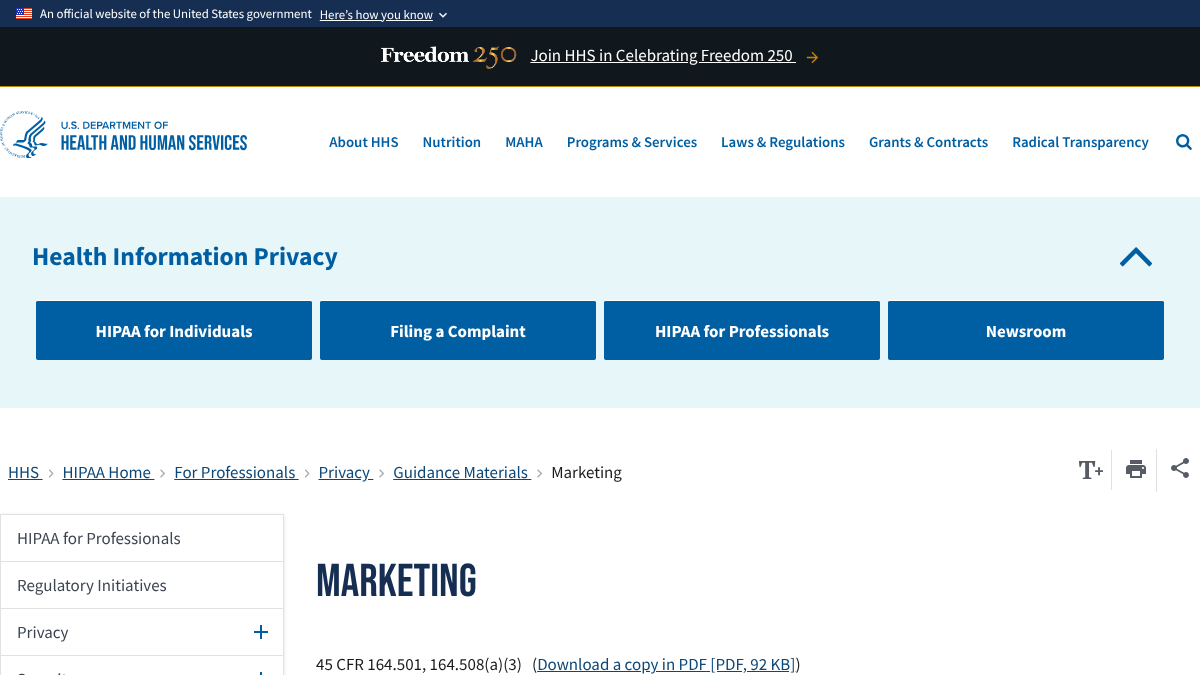
Patients notice when a clinic gets this wrong. Stories still persuade better than most things a clinic can publish, so keep writing them and learn the rule. If your practice is covered by HIPAA, HHS spelled it out in its guidance on marketing. "With limited exceptions, the Rule requires an individual's written authorization before a use or disclosure of his or her protected health information can be made for marketing."
That leaves small clinics with three workable routes. Some get the patient's written authorization on a proper HIPAA form before they tell the story. Others de-identify it fully, so no detail could point back to a real person. The rest build a composite from common experiences and label it as one.
26 content formats. Published on your domain. Matched to your brand.
Guides, comparisons, listicles, case studies, and more. RankControl generates content that gets cited by ChatGPT, Perplexity, Claude, Gemini, Grok, Google AI Mode, and Google AI Overviews.

Reviews, testimonials and the FTC
Here's the FTC's line on testimonials. "Testimonials that report results more dramatic than users can generally expect are likely to be deceptive." It comes from the Health Products Compliance Guidance, published in December 2022, which also reported that testimonials can't make claims you couldn't back up yourself.
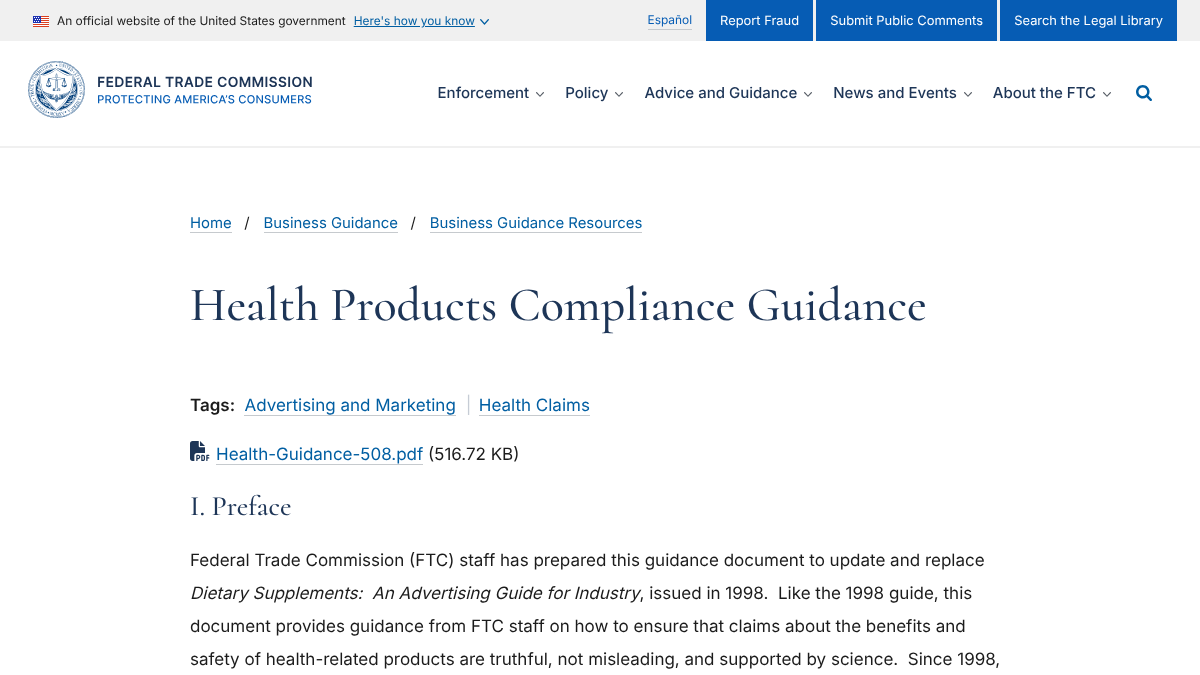
A disclaimer won't save you. The agency wrote that "attempts to disclaim dramatic results with statements like 'Results not typical' don't cure the deception." What it asks for is "a clear and conspicuous disclosure of the results a typical consumer can actually expect." So when a patient's review describes a big result, the typical result goes right beside it.
The FTC's endorsement rules add a second point. Suppose a reviewer has a connection to your practice that readers wouldn't expect, such as a free treatment in exchange for a review. Say so clearly.
Never edit a review to make a claim the patient didn't make. Show typical results along with the best ones, and disclose any free service or payment tied to a review.
What to publish
Start with the pages that answer a patient's question outright. This table sorts the types that tend to work for clinics and small health brands.
| Content type | What it answers | Example |
|---|---|---|
| Condition explainers | What is it, and when to see someone | "When is a headache a reason to see a doctor?" |
| What-to-expect pages | What happens at a visit or procedure | "What happens at your first physical therapy visit" |
| Cost and insurance pages | What it costs and what's covered | "Does insurance cover allergy testing?" |
| Provider bios | Who will treat me | A page per clinician with credentials |
| Local pages | Where and when | Hours, location, parking, services |
| FAQs | The questions patients ask at the front desk | "Do I need a referral?" |
Every one of these should explain and inform, then point readers to a clinician for decisions about their own care. A line like "talk to your doctor about whether this applies to you" belongs on a health page. It marks where your content stops and their care starts.
Health content and AI search
In July 2025, SEO Lily Ray pointed out on X that ChatGPT's most-cited pages for health insurance questions included at least one that looked spammy beside the trusted brands.
People ask AI chatbots about their health now. The engines lean on sources they judge trustworthy, but they aren't perfect judges, and they can be fooled for a while. Over time the winners are pages with named experts, clear sources and consistent details about who you are. For a local clinic that includes accurate listings everywhere, which our guide to local citations covers.
How to tell if it's working
Give it a few months, then check three places. Search Console shows whether impressions and clicks are rising on your condition, cost and what-to-expect pages. Your phone log and booking system show calls and appointment requests from people who read those pages first. And the AI engines show whether your clinic or its content comes up when you put your patients' questions to ChatGPT, Perplexity and Gemini.
Six months is a fair first checkpoint, since health content builds slowly.
Doing it yourself or handing it off
Clinicians are busy treating patients, and first drafts take time they don't have. The review routine keeps the output safe, but someone still has to write what gets reviewed.
RankControl can write those drafts. We plan articles around the questions patients search, write each one against the pages already ranking and publish to your site. Auto-publish is off by default, so a clinician can review every article before it goes live. Our AI visibility tracking then checks up to 50 patient questions every week across seven AI engines. Expect traffic from Google first, with AI citations following more slowly as links and mentions build up.

Your competitors are getting cited by AI. You're not.
Every day without citation tracking is a day your competitors pull ahead in ChatGPT, Perplexity, and Claude.