
Almost every marketing team says it has a content strategy. In CMI and MarketingProfs' latest B2B survey, published in October 2025, 97% of marketers said so. But only 13% of those said their strategy had significantly improved, with clear growth in results and ROI.
That gap is the problem. A strategy that lives in someone's head, or in a 40-page deck nobody opens, doesn't guide what gets written next week. And many strategies were written before buyers started asking AI chatbots for recommendations.
This guide covers how to write a digital content strategy that fits on one page and plans for Google and AI search together. Each section of the page gets a short note on what AI search changes, and there's a fill-in template at the end.
What the top results leave out
When we pulled Google's US results for "digital content strategy" on October 19, 2026, an AI Overview sat at the top. Below it, not one of the nine organic results mentioned AI, AI search or ChatGPT in its title. Every one treated content strategy as a classic marketing topic, with steps, frameworks and calendars.
So Google already answers this question with AI, while the guides ranking for it don't plan for AI at all. That's the gap this page is meant to fill.
Why one page
Strategy and planning get confused. A strategy decides what you're trying to achieve and how. A calendar decides what ships on which day. A brief decides what goes in one article.
When those get mixed, the strategy grows into a document nobody reads. The fix is a hard limit. We call it the quarter page: one page, reviewed every quarter, that decides everything the calendar and the briefs depend on.
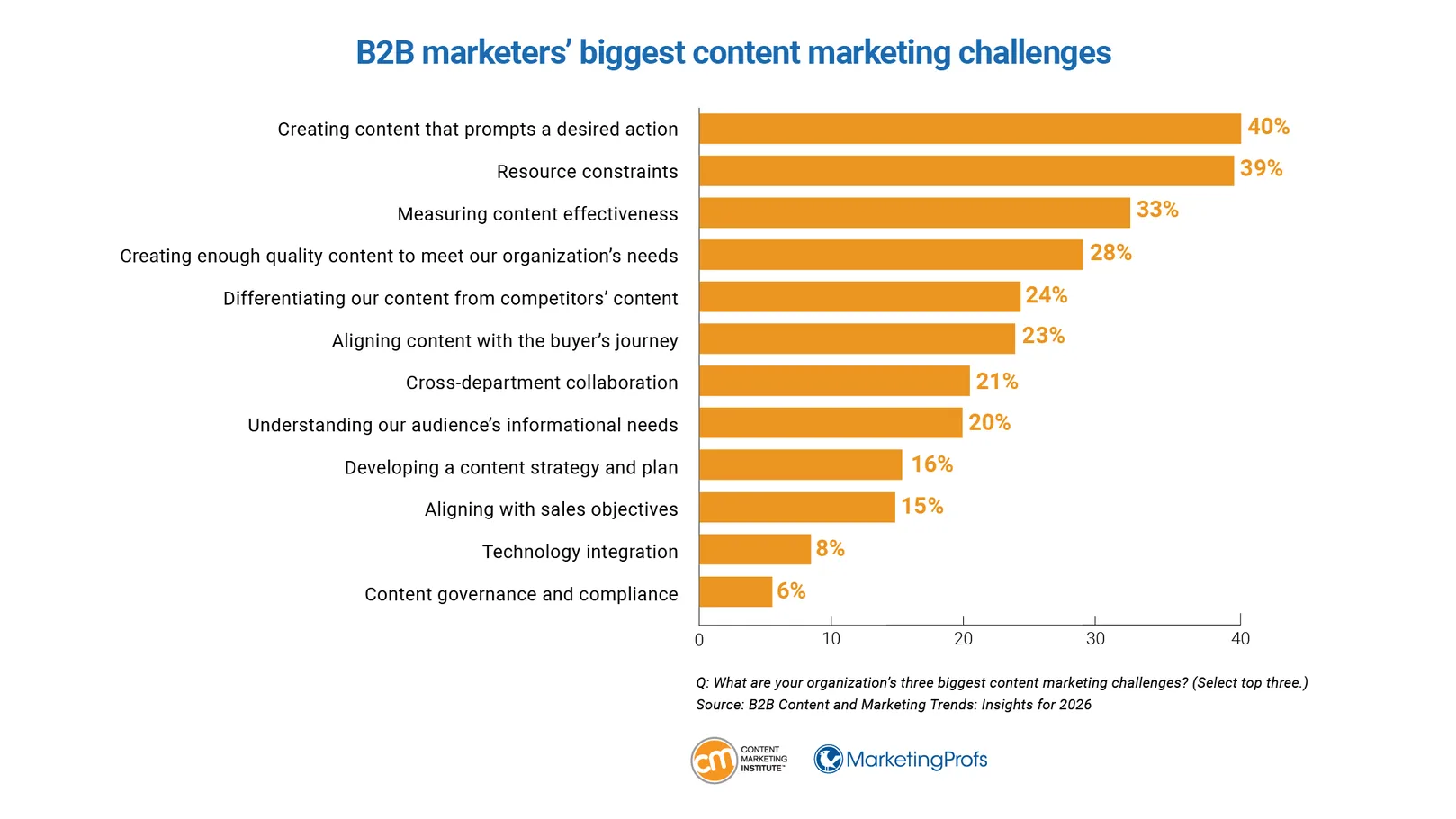
CMI's research hints at why this matters. In its 2026 report, 16% of B2B marketers named "developing a content strategy and plan" as a top challenge, and 33% named measuring content effectiveness.
AI search traffic grew 835% this year. Is your content ready?
RankControl generates 26 content formats optimized for ChatGPT, Claude, and Perplexity. Published on your domain, matched to your brand.

Section 1: goals
Write one or two goals, tied to the business. Not "publish more" or "grow the blog." Something like "get 30 demo requests a month from organic and AI search by June."
Then write the one number you'll use to judge it. If the goal is demos, the number is demos from content, not page views.
What AI search changes: add a second, softer signal. AI mentions and branded search tend to rise before revenue does, so track them alongside the hard number. Our guide to measuring SEO ROI covers how to keep the two separate.
Section 2: audience questions
List who you're writing for, then the questions they ask on the way to buying. Aim for 20 to 30 real questions, in their words. Pull them from sales calls, support tickets, Search Console and People Also Ask.
Group them by stage: learning about the problem, comparing options, choosing a provider.
What AI search changes: buyers ask AI chatbots longer, more specific questions than they type into Google, often with their situation built in. Write some questions the way a buyer would ask ChatGPT, like "what's a good CRM for a 10-person agency that already uses Gmail?" Those become strong article topics.
A thread on r/digital_keda asked how people's SEO strategy had changed since AI search became common. The top reply said the biggest change was putting off-site work on equal footing with on-site work. They now spend as much time getting mentioned and described accurately on review sites, community threads and third-party coverage as on their own pages.
How Has Your SEO Strategy Changed Since AI Search Became More Common?
AI search is changing how people discover information, and traditional rankings are no longer the only thing SEOs pay attention to. Have you changed the way you approach content, keyword research, authority building, internal linking, brand...
Section 3: topics
Turn the questions into three to five topic areas, sometimes called pillars. Each one should be something you sell into and can speak to with authority.
Then pick the first topics to write inside each area. Our guide to choosing keywords for SEO has a scorecard for deciding which come first.
What AI search changes: depth inside a topic matters more than breadth across many. A site that covers one topic thoroughly gives AI engines more reasons to treat it as a source on that topic. Five strong pieces in one area usually beat one piece each in five areas.
Section 4: formats
Decide which formats you'll use and what each is for. Guides for how-to questions. Comparisons and lists for choosing. Case studies and data for proof.
What AI search changes: AI answers lift passages that answer a question directly, so every format should put the answer near the top. Our analysis of which content formats get cited breaks down which formats win which kinds of question, and our guide to blog post formats covers how to structure each one.

Built by the team that got cited in 48 hours.
Content generation, backlink building, AI visibility tracking, and Google rankings. One platform, zero guesswork.
Section 5: cadence
Pick a pace you can keep for a whole quarter. Two good articles a week beat five rushed ones that stop after a month.
Write down who does each step: research, writing, review and publishing. If one person does it all, the cadence should reflect that.
What AI search changes: less than you might think. Consistency still matters, because Google and AI engines both need time to find and trust new pages. What changes is the review step. AI drafting makes it easy to publish more, which makes the quality check more important. HubSpot's 2026 State of Marketing page found that 80% of marketers use AI for content creation. HubSpot's Kieran Flanagan put the risk plainly: "Today, more content is generated by AI than by humans. But it's mostly average."
Section 6: distribution
List where each piece goes after it's published. Your email list, the social channels where your buyers are, communities, partners and outreach for links.
What AI search changes: distribution now feeds AI visibility as well as traffic. Mentions on other sites, discussions in communities and links from trusted pages are what AI engines see when they decide who to name. Our guide to building social content from your blog covers the social side.
Section 7: measurement
Write down what you'll check, how often and where.
| What | How often | Where |
|---|---|---|
| Clicks and impressions by page | Monthly | Search Console |
| Conversions from content | Monthly | GA4 |
| AI referral visits | Monthly | GA4 |
| AI mentions for your top questions | Weekly or monthly | By hand, or a tracking tool |
| Rankings for target keywords | Monthly | Search Console or a rank tracker |
What AI search changes: add the AI rows. Many content dashboards don't have them yet. Without them, you can't see whether the work is changing what AI engines say about you.
The template
Copy this and fill it in. If any section runs past three or four lines, it's too detailed for the strategy.
| Section | Your answer |
|---|---|
| Goal | |
| The one number | |
| Who we write for | |
| Top 20 to 30 buyer questions | (list separately) |
| Topic areas | |
| Formats and what each is for | |
| Cadence and who does what | |
| Where each piece goes after publishing | |
| What we measure, and how often | |
| Next review date |
Then set a date three months out to review it. When the review comes, look at what each topic area produced, drop what didn't work and add what the questions list says you've missed. When older pages start slipping, our content audit template helps decide what to keep, update or cut.
Common mistakes
- Goals with no number. "Build thought leadership" can't be checked. "Twenty demo requests a month from content" can.
- Topics chosen by volume alone. A big keyword nobody buys from fills the calendar and empties the budget.
- No owner for each step. If nobody owns review or publishing, drafts pile up.
- Measuring only Google. Without the AI rows, you can't see half of what's changing.
- Never reviewing it. A strategy from last year is a guess about this year.
How long this takes
Writing the first version takes an afternoon. Collecting the buyer questions is the slowest part, often a few hours on its own. The quarterly review takes an hour or two.
That's the easy part. The hard part is the execution: researching, writing, reviewing and publishing two or more articles a week, every week, for a whole quarter.
Doing it yourself or handing it off
You can run the plan yourself, with a writer, an editor and someone to publish and promote each piece.
Or RankControl can handle the execution. We find the questions your buyers search, plan titles around them and write each article against the pages already ranking for its keyword, scored for how easily AI engines can quote it. We publish to your site, and our AI visibility tracking fills in the AI rows of your measurement table, checking up to 50 buyer questions every week across seven AI engines. Expect traffic from Google first, with AI citations following more slowly as links and mentions build up.
See your first AI citation report in under 5 minutes.
No setup calls. No onboarding meetings. Connect your domain and see where AI mentions your brand right now.