Nearly every B2B marketing team now uses AI somewhere in its content. In CMI and MarketingProfs' survey of 1,015 B2B marketers, published October 8, 2025, 95% said their organizations use AI-powered applications. Of the marketers who said their content strategy had improved that year, the most common reason wasn't new technology. It was "strategy refinement," cited by 74%, against 51% who credited new tools.
So AI has changed how content gets made. It hasn't removed the need for someone to decide what's worth making. This guide splits an AI content strategy into the two halves: what AI does well now, and what still needs a strategist.
What the top results say
When we searched "ai content strategy" in Google's US results on October 19, 2026, the top nine were vendor blog posts and course listings. Most framed AI as the one doing the work. One result described a new category of "AI content strategist" tools. None asked what a human strategist is still for.
That's the question this page answers.
The split, task by task
| Task | Who does it best now | Why |
|---|---|---|
| Research and question gathering | AI, checked by a person | Fast at collecting questions, slow to know which matter |
| Grouping topics into clusters | AI | Pattern-matching across hundreds of terms |
| First drafts | AI | Quick, structured, consistent |
| Repurposing into other formats | AI | Same facts, new shape |
| Positioning | Strategist | Deciding what the company should be known for |
| Choosing what not to write | Strategist | Saying no takes context AI doesn't have |
| First-hand expertise | Strategist and experts | Real experience can't be generated |
| Final review | Strategist | Someone has to be accountable for what's published |
We call the second half the not-list. Most of the strategist's value sits in decisions about what to leave out, which topics, claims, angles and pages, and AI has no reason to leave anything out.

Your competitors are getting cited by AI. You're not.
Every day without citation tracking is a day your competitors pull ahead in ChatGPT, Perplexity, and Claude.
Where AI helps
Research
AI tools are good at gathering the raw material: the questions people search, the subtopics competitors cover and the phrasing buyers use. CMI found that 35% of B2B marketers using AI tools use market research and insight tools, and 41% use AI-powered SEO tools.
The catch is judgment. AI will hand you two hundred questions with equal confidence. A person has to decide which ten your buyers actually ask before buying.
Clustering
Grouping a long list of keywords or questions into topics is pattern-matching, which AI does well. It can turn a messy list into clean clusters in minutes, a job that used to take an afternoon in a spreadsheet.
Drafting
This is where most teams use AI first. In CMI's survey, 89% of marketers using AI tools used them to create or optimize written content. HubSpot's 2026 State of Marketing page puts AI use for content creation at 80% of marketers.
Drafts are faster. Whether they're better is less clear. CMI found 87% reported better productivity from AI, but only 58% reported better content quality, and 12% said quality got worse.
Repurposing
Turning a published article into social posts, an email or a short video script is one of AI's most reliable jobs, because the facts already exist and have been checked. The work is changing the shape, not inventing the substance.
Where a strategist still matters
Positioning
AI can describe your product. It can't decide what your company should be known for, or which fights to pick with competitors. That depends on your market, your strengths and where you want to be in two years. Every topic choice flows from it.
Choosing what not to write
This is the core of the job. Not every keyword with volume deserves a page. Some topics bring traffic that never buys. Some invite comparisons you'll lose. Some would repeat a page you already have.
Google's spam policies give a reason to be careful. They describe scaled content abuse as "when many pages are generated for the primary purpose of manipulating search rankings and not helping users," and name "using generative AI tools or other similar tools to generate many pages without adding value for users" as an example. AI makes it easy to publish a lot. A strategist decides what's worth publishing.
200+ SaaS teams already track their AI citations.
They know exactly when ChatGPT mentions their brand, and when it stops. Do you?

First-hand expertise
AI can't supply experience it doesn't have. It doesn't know what your customers complain about, what your support team hears every week or what happened when you tried something.
A thread on r/freelanceWriters about whether content writers have a future showed where this holds up. One medical writer said their field was holding up and would likely be the last to go, because the stakes are too high to trust AI with all of it. That's true of any topic where a wrong claim costs a customer money or trust.
Is there any hope for content writers with AI taking over, or should I pivot now?
I've been a content writer for about 2 years now (blog posts, landing pages, email copy, some social media). Freelance as well. Made decent money. I'm not delusional - I know AI writes faster and cheaper than me. I've tried positioning myse...
Another reply in the same thread told a story that sums up the risk. Their agency let its writing team go in favor of AI at the end of 2024, then asked some of them back weeks later, to fix what the AI had produced and write some posts from scratch.
Review
Someone has to read every page before it goes out and be accountable for it. AI drafts can be confidently wrong about your product, your prices or a statistic. A review step catches that.
Google's own guidance is direct about where AI fits. In its February 2023 post on AI-generated content, Google wrote: "Using AI doesn't give content any special gains. It's just content. If it is useful, helpful, original, and satisfies aspects of E-E-A-T, it might do well in Search. If it doesn't, it might not."
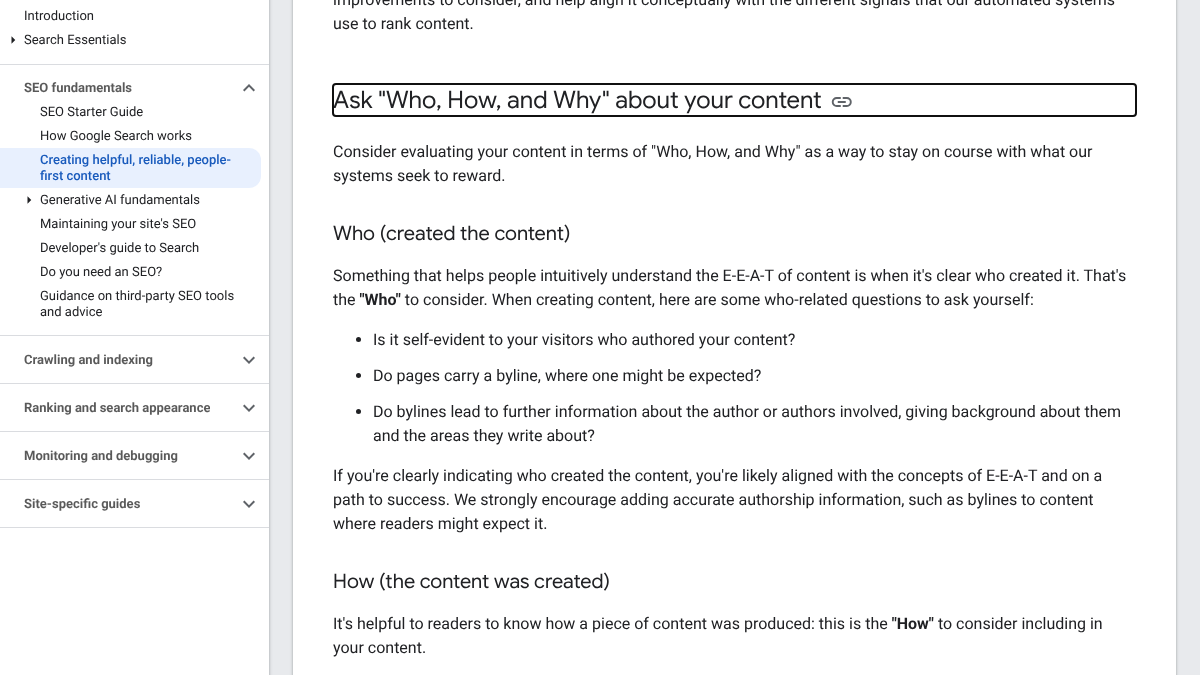
Google's helpful content page suggests asking "Who, How, and Why" about each page, including how it was made. A strategist is the person who can answer those questions honestly.
What AI writing sounds like without a strategist
On r/copywriting, a thread asked whether AI had killed the dream of being a content writer. One commenter said they'd used nearly every AI tool and found the output flat. It brought nothing new to the table, and at its best was a fact machine.
Did AI kill the content writer dream?
HubSpot's Kieran Flanagan made a similar point on HubSpot's 2026 State of Marketing page. "Today, more content is generated by AI than by humans. But it's mostly average."
Average is what you get when nobody decides what's distinctive. The fix isn't avoiding AI. It's giving the drafts something worth saying: a position, a real example, a number from your own data. Our guide to better AI content through context, not prompts covers how.
Signs the strategy has drifted to the AI
It's easy to hand over more than you meant to. Watch for these.
- The calendar fills itself. Topics come straight from a tool's suggestions, and nobody can say why each one is on the list.
- Every post sounds the same. Same structure, same openings, no examples only your company could give.
- Nobody says no. The not-list is empty, and every keyword with volume gets a page.
- Claims go unchecked. Prices, features and statistics in drafts aren't verified before publishing.
- Output rises, results don't. More pages a month, but traffic and leads stay flat.
Any one of these is fixable. The fix is usually the same: put a person back in charge of the frame and the final read.
A simple way to divide the work
- The strategist sets the frame. Positioning, audience, three to five topic areas, and the not-list.
- AI gathers and groups. Questions, subtopics and clusters inside those areas.
- The strategist picks. The questions worth a page this quarter.
- AI drafts. Against a brief that includes your facts, examples and claims.
- Experts add what AI can't. Real experience, data and opinions.
- The strategist reviews. Every page, before publishing.
- AI repurposes. Published pages into other formats.
That keeps the judgment where it belongs and gives AI the jobs it's actually good at. For the planning page that sits above all of this, see our one-page digital content strategy. For the production side, our guide to what to automate and what to keep human goes deeper.
Doing it yourself or handing it off
The strategist's half is yours. The research, drafting and publishing half is the part that eats hours.
RankControl handles that half. We find the questions your buyers search, plan titles around the topics you set, write each article against the pages already ranking for it and repurpose published articles into social drafts. Auto-publish is off by default, so every article waits for your review. Our AI visibility tracking checks up to 50 buyer questions every week across seven AI engines. Expect traffic from Google first, with AI citations following more slowly as links and mentions build up.
How often does ChatGPT mention your brand?
Most founders have no idea. The answer might surprise you.