
The formula for SEO ROI is simple. Take what organic search earned, subtract what it cost, divide by what it cost and multiply by 100. Any spreadsheet can do it.
The hard part is the two numbers you plug in. Many teams undercount the cost, because they leave out their own time. And they can't agree on the return, because a buyer who read three of your articles and then searched your name doesn't arrive tagged as "SEO."
AI search makes both harder. Some buyers now meet you in a ChatGPT answer, never click and show up a week later typing your URL. Cyrus Shepard summed up the mood on X after Orbit Media's latest blogging survey: the number of marketers saying they don't know if their blog delivers results hit an all-time high.
Pretty blown away by these two findings from Andy @crestodina's new study 1. Attribution is a BIG problem. The number of folks saying "I don't know if the blog delivers results" jumped to an all-time high We hear this from marketing teams all the time - what's the ROI of our https://t.co/nFmAt9JR27
 Cyrus SEO@CyrusShepardSep 15, 2026

This guide walks through how to measure the ROI of SEO and AI search visibility, one input at a time. It ends with a worked example you can copy.
Step 1: count the real cost
Start with the cost, because it's the number you control. Include everything.
- Content. Writers, editors, freelancers or a content tool.
- Tools. SEO tools, analytics, rank or AI visibility tracking.
- People. The hours your own team spends planning, writing, editing, publishing and promoting.
- Links. Outreach time, or what you pay someone to do it.
Time is the cost most people leave out. Orbit Media's 2026 survey of 1,042 content marketers put the average time to write one post at 3 hours and 20 minutes, before editing, images and promotion.
If you buy content instead, we checked three vendors' pricing pages on October 19, 2026 to see what a 1,500-word article costs.
| Vendor and tier | Rate | 1,500 words |
|---|---|---|
| WriterAccess, suggested baseline | $0.04 per word | $60 |
| WriterAccess, Basic | $0.05 per word | $75 |
| Verblio, AI + Human | $0.06 per word, plus $49.50 a month | $90 plus the fee |
| Verblio, 100% Human | $0.16 per word | $240 |
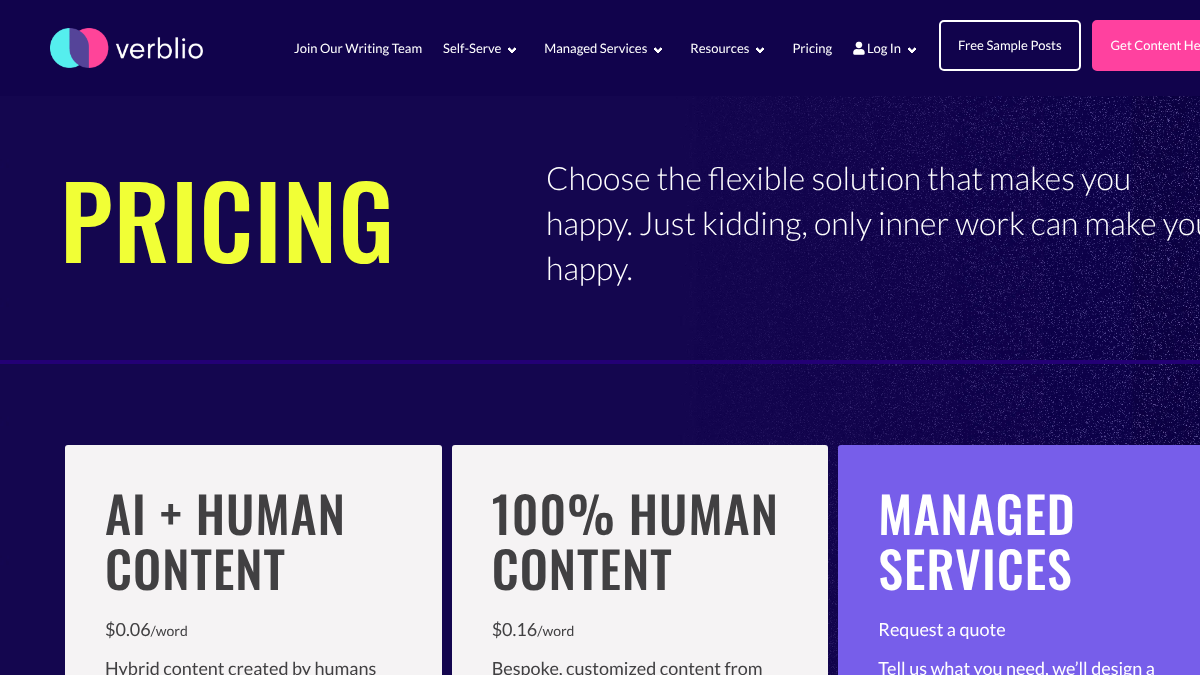
So outsourced articles ran from about $60 to $240 each at that length, before anyone edits or publishes them. Add your team's hours at their real hourly cost, and you have the denominator.

Your competitors are getting cited by AI. You're not.
Every day without citation tracking is a day your competitors pull ahead in ChatGPT, Perplexity, and Claude.
Step 2: decide what a conversion is worth
ROI needs a return in money. So pick the actions that matter and give each one a value.
In GA4, mark the actions that matter as key events. That could be a demo request, a trial signup, a purchase or a contact form. For an online store, GA4 records purchase revenue directly. For a B2B business, work out a value per lead from your own numbers. If one in ten demo requests becomes a $5,000 customer, each demo request is worth about $500.
Keep the list short. Three key events you trust are better than fifteen you don't.
Step 3: count organic and AI search conversions
Now count the conversions that came from search. In GA4, organic search is its own channel. Since May 13, 2026, GA4 also has a native AI Assistant channel, but it only covers some engines, and plenty of AI visits still land under Referral or Direct.
So add a custom channel that catches ChatGPT, Perplexity, Gemini, Claude and Copilot, and put it next to organic search in your reports. Our GA4 guide to AI referral tracking has the setup, and our breakdown of AI referral traffic by engine shows which engines tend to send the most.
This gives you the last-click number: conversions where search was the final step before the buyer converted. It's the most conservative return you can claim, so it's a good floor.
Step 4: add the assists
Last click undercounts content. Plenty of buyers read an article, leave and come back later through a different channel.
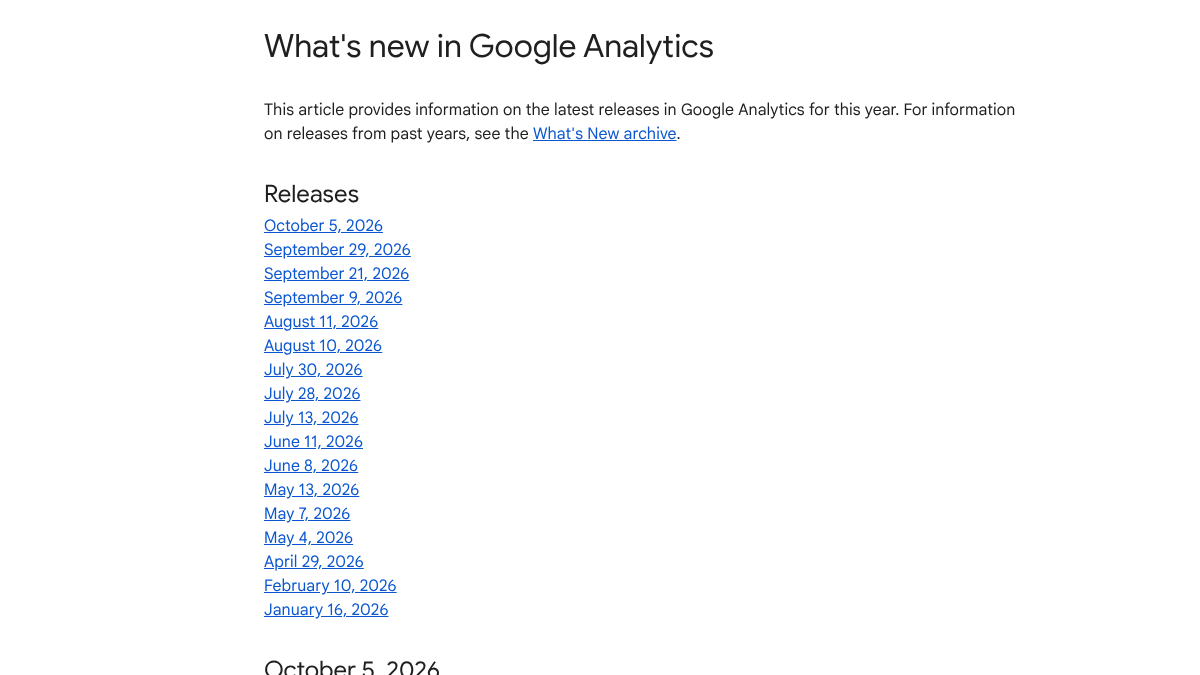
GA4 now shows this more clearly. On January 16, 2026, Google added a Conversion Attribution Analysis report to the advertising workspace. Google's release note says it lets customers "uncover the full value of their marketing channels across the entire customer journey." It includes an assisted conversions view, which shows "touchpoints that engaged customers early in their journey but weren't the final click."
Two things to know before you lean on it. First, GA4 retired the first-click, linear, time-decay and position-based attribution models in November 2023, so you're working with data-driven or last-click attribution. Second, data-driven attribution can show fractional conversions, like 0.4 of a sale, because it splits credit between channels.
Use assists as a second number, beside last click. Don't swap one for the other.
200+ SaaS teams already track their AI citations.
They know exactly when ChatGPT mentions their brand, and when it stops. Do you?

Step 5: track the signals that come before revenue
Some of what SEO and AI search do never shows up as a click. Buyers see your name in an AI answer, remember it and come back later. You can't put that in the ROI formula, but you can watch for it.
Three signals are worth tracking.
- Branded search. Search Console shows how many people search your brand name. A steady rise can mean articles and AI answers are working. It has many causes, so it's a clue, not proof. Our post on AI recommendations and branded search lift covers what the data does and doesn't show.
- AI visibility. How often AI engines mention or cite you for the questions your buyers ask, compared with competitors.
- Rankings and impressions. Pages climbing toward page one usually come before the traffic does.
People are already stitching these together by hand. In a thread on r/seogrowth about measuring visibility in AI search, one commenter said they run the same 50 or so buyer prompts through ChatGPT, Perplexity and AI Overviews every couple of weeks. They log mentions and citations against competitors, then look at GA4's AI referral traffic beside it.
How are you measuring SEO visibility in AI search?
Traditional rankings don’t show everything anymore. What are you actually tracking?
We call this the two-column rule. Keep hard returns, the conversions you can count, in one column. Keep signals like branded search and AI mentions in another. Report both, but never add the second column into the ROI number. Our guide to AI visibility dashboard metrics covers which signals to track.
Step 6: run the math
Here's a made-up example for a B2B software company, measured over one quarter.
| Input | Amount |
|---|---|
| Content, 24 articles at $240 | $5,760 |
| Editing and publishing, 24 hours at $60 | $1,440 |
| Tools | $600 |
| Total cost | $7,800 |
| Demo requests from organic and AI search, last click | 18 |
| Value per demo request | $500 |
| Last-click return | $9,000 |
| Assisted demo requests from GA4 | 8 |
| Return with assists | $13,000 |
Last-click ROI is ($9,000 − $7,800) ÷ $7,800 × 100, which is about 15%. With assists, it's ($13,000 − $7,800) ÷ $7,800 × 100, which is about 67%.
Report both. The last-click figure is the one nobody can argue with. The assisted one is closer to what really happened.
In the second column, note what moved. Maybe branded searches rose 20% over the quarter, and you went from being named in 4 of 50 AI answers to 11. Those numbers don't go into the ROI, but they tell you whether next quarter's return is likely to grow.
Give it enough time
SEO ROI is almost always negative at first. You pay for articles in month one, and they rank in month four, six or later. Our SEO timeline study found the median first-page result was about 2.2 years old. Measure one quarter against the same quarter a year before, and look at the trend over six to twelve months.
Articles also keep working after you've paid for them. An article that cost $240 in January can still bring in demo requests in December. So ROI on a body of content tends to rise each quarter, as long as you keep publishing.
If you're still making the case to your boss, our guide to justifying time spent on AI search visibility covers the business case side.
A monthly ROI checklist
- Add up every cost, including hours.
- Check your key events and values are still right.
- Pull organic and AI search conversions, last click.
- Pull assists from GA4's attribution report.
- Note branded searches, AI mentions and rankings in a separate column.
- Compare with the same month last year.
That's about an hour a month once it's set up.
Doing it yourself or handing it off
Measuring SEO ROI is something every team should do itself. The numbers are yours, and so is the judgment about what a lead is worth.
What RankControl changes is the cost side and the signal side. It's one flat $400 a month, covering up to 100 pages a month written against what already ranks, published to your site, with link prospects and outreach drafts from your own mailbox. That makes the denominator easy to count. Its AI visibility tracking checks up to 50 buyer questions every week across seven AI engines, plus your Google and Bing rankings, so the second column fills itself in. Expect traffic from Google first, with AI citations following more slowly as links and mentions build up.
How often does ChatGPT mention your brand?
Most founders have no idea. The answer might surprise you.