
On October 10, two University of Toronto researchers posted a paper that should change how you shop for content tools. Mahe Chen and Nick Koudas tracked 158,099 AI answers with 468,037 citations over 90 days. When they compared pages on the same site, FAQ blocks, schema markup, summary boxes and author boxes showed no reliable effect on citations.
That's awkward, because those are the features a lot of tools to write content for AI search lead with. So this list judges them on narrower questions. Does the tool help you write a page that matches what people ask, and does it score coverage? Does it help with FAQ and schema? Does it check whether AI engines cite the result, and does it publish? And is that checking included, or sold on the side?
The nine tools are Semrush (Content Toolkit plus AI Visibility Toolkit), RankControl, Frase, Surfer, Writesonic, Clearscope, AirOps, Jasper and MarketMuse. I read every vendor's pricing page and docs on October 19, 2026. If you want the general SEO view of these tools instead, our SEO content tools list sorts them by job.
What the Toronto paper says a writing tool should do
The finding that matters most is simple. Within a site, pages whose title and best paragraph matched the questions people ask got cited more, about 14% to 16% more per step of better match, as the paper measures it. That held on all five of its robustness tests. FAQ blocks and the rest weren't significant once the site was held fixed.
Across sites, the same FAQ block looked great, with 18.1% more citations. The authors explain why. Popular sites use FAQ blocks more, and popular sites get cited more for other reasons. A tool that sells you FAQ schema as a citation lever is reading that across-site number.
Two more results shape how I'd judge a tool. The pages ChatGPT's own search pulled up explained 32% of the citation spread within a site, against 2.8% for every page feature combined. And the best-matching paragraph sat at a median of 45% of the way down the page, so engines found it wherever it was.
The paper has limits. The answers came through the engines' APIs on small models (GPT-5.4 nano, Gemini 3.1 Flash Lite and Perplexity Sonar), the questions were US English, and the data came from a monitoring platform the authors run. That matters when it concludes that citations need watching over time.
So the test I used is what I'd call the receipt test. A writing tool can promise a page built for AI answers, but only a tool that checks the answers afterward hands you a receipt. Our playbook on writing content AI agents cite covers the writing side, and this list covers who gives you the receipt.
Tools to write content for AI search, side by side
Checked on October 19, 2026 against each vendor's pricing page and docs.
| Tool | Price as published | Drafts for the question | Coverage scoring | FAQ and schema help | Checks AI answers | Tracking included? | Publishes to |
|---|---|---|---|---|---|---|---|
| Semrush Content Toolkit + AI Visibility Toolkit | $60/mo (7-day trial) + $99/mo (no trial) | AI Article Generator | "Entity signals" in its AI search check | Not listed | ChatGPT, Gemini, AI Overviews, AI Mode, Perplexity | Sold separately | WordPress, up to 100 sites |
| RankControl | $400/mo, 7-day trial | Writes each article against what ranks | Scores how easily AI can quote it, with a fix list | Schema on WordPress and headless sites | 7 engines weekly, plus Google and Bing ranks | Included | 9 destination types |
| Frase | $39/mo yearly, $49 monthly, 7-day trial | AI agent drafts full pieces | SEO and GEO scores | "Structured data and llms.txt" listed | ChatGPT, Google AI; 5 engines on Scale | Included, engines by plan | WordPress, Webflow, Sanity, Wix, FraseCMS |
| Surfer | $49/mo yearly | Surfy writing assistant | Live Content Score | Not listed | 5 models, no Claude or Grok | From Standard, or an $82/mo tracking plan | WordPress, Google Docs |
| Writesonic | $79/mo yearly, no-card trial | Article writer, 15 a month on Starter | Site audits | Not listed | ChatGPT, Gemini, AI Overviews, daily | Included | WordPress |
| Clearscope | $129/mo, 14-day trial | 20 drafts a month | Content grade | Not listed | ChatGPT, Gemini | Included | No CMS listed |
| AirOps | Not published, 14-day trial | Workflows and Brand Kits | Not listed | Not listed | ChatGPT on Solo; 7+ engines on Pro | Included, engines by plan | Webflow, WordPress, Contentful, Sanity and more |
| Jasper | $69/seat monthly, $59 yearly, 7-day trial | Canvas with brand voice | Not listed | Not listed | GEO Hub, Business plan only | Business only, 12-month minimum | Webflow integration |
| MarketMuse | Not published, demo only | Content briefs | Topic models and content score | Not listed | None listed | No | No CMS listed |
Read the "Tracking included?" column first. Only five of the nine check AI answers on their entry plan without a second product.
The short answer by team
- For teams already in Semrush, the best pick is Semrush, because its two toolkits cover drafting and prompt tracking for $159 a month.
- For teams that want pages written, published and checked without running a tool, the best pick is RankControl, because one plan does all of it.
- For a solo marketer who writes, the best pick is Frase, because $39 a month buys drafting, a GEO score and tracking.
- For editors who want a grade while they type, the best pick is Surfer, because its score updates live.
- For teams that want daily numbers, the best pick is Writesonic, because every paid plan checks daily.
200+ SaaS teams already track their AI citations.
They know exactly when ChatGPT mentions their brand, and when it stops. Do you?

The 9 best tools for content that AI cites
1. Semrush Content Toolkit and AI Visibility Toolkit
Semrush splits this job into two products, and you need both to pass the receipt test. The Content Toolkit costs $60 a month after a 7-day trial. Its help docs describe an AI search check that looks at your draft for "structure, clarity, and entity signals" before you publish, and it pushes to up to 100 WordPress sites.
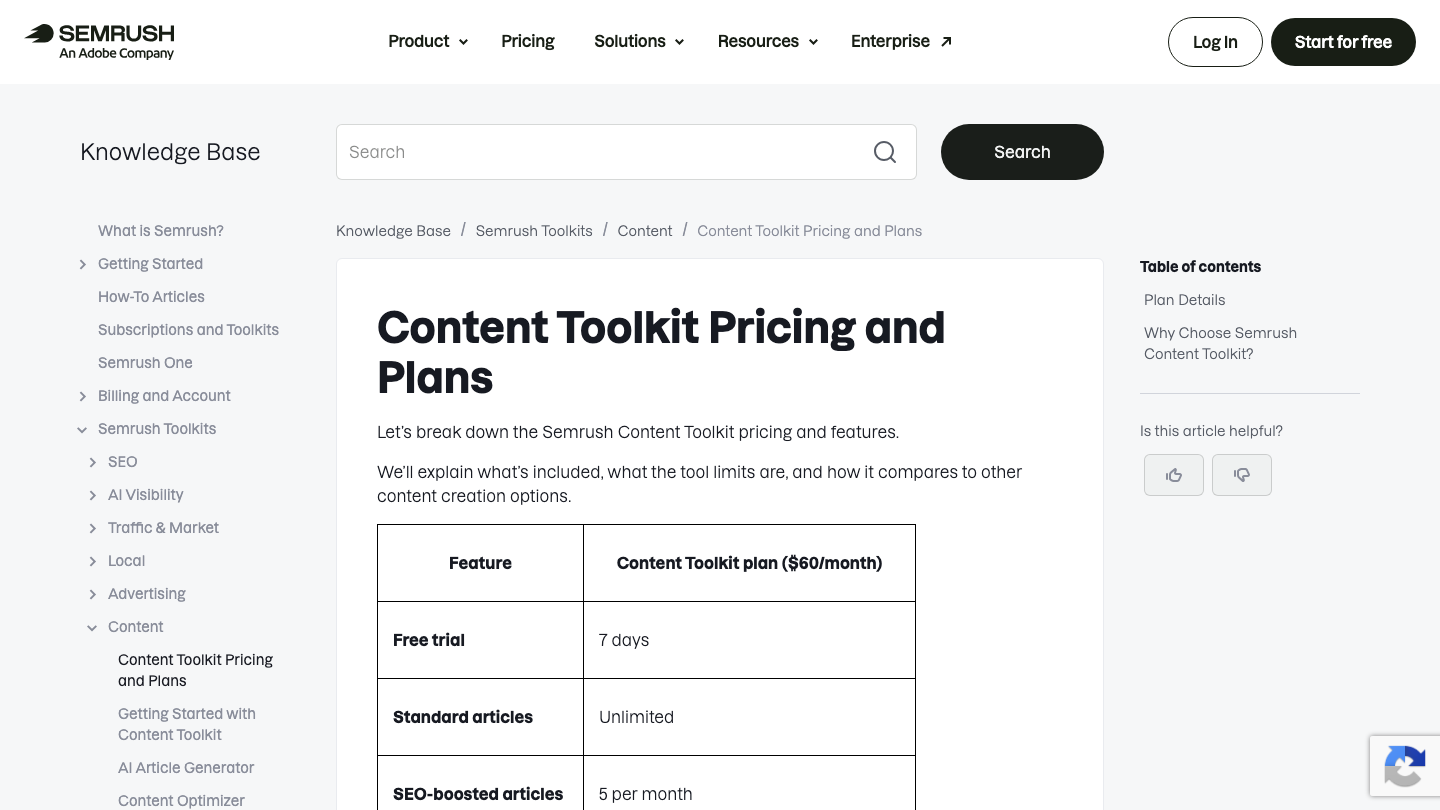
The checking lives in the AI Visibility Toolkit, $99 a month with no free trial and 25 tracked prompts. Its docs name ChatGPT, Gemini, Google AI Overviews and AI Mode, with Perplexity in its brand reports. Claude and Grok aren't listed. Five SEO-boosted articles a month is the limit to watch, and we compare it with RankControl in RankControl vs ContentShake AI.
2. RankControl
RankControl is for teams that would rather review finished pages than run a tool. We write each article against the pages already ranking for its keyword, score every article for how easily AI engines can quote it, and hand you a fix list. The plan covers up to 100 pages a month in 26 formats.
RankControl publishes as native posts through nine destination types, including WordPress, Webflow, Shopify and headless sites, and auto-publish is off by default. Then AI visibility tracking checks 50 queries every week on ChatGPT, Perplexity, Claude, Gemini, Grok, Google AI Mode and Google AI Overviews, next to your Google and Bing rankings. All of that sits in one plan at $400 a month with a 7-day trial.
We're not a live editor that grades you as you type. If your team writes every word itself, a scoring tool below suits that habit better.
3. Frase
Frase packs the most citation features into a low price. Its editor shows two scores side by side, one for SEO and one for GEO, and its AI agent drafts whole pieces. Its pricing page also lists "structured data and llms.txt on every page," and no other rival pricing page here names schema.
Starter is $39 a month billed yearly, or $49 month to month, with a 7-day trial and no card. AI checks cover ChatGPT and Google AI on Starter and Professional, and Claude, Gemini and Perplexity only join on Scale at $239 a month billed yearly. It publishes to WordPress, Webflow, Sanity or Wix. Our Frase comparison goes plan by plan.
4. Surfer
Surfer is the tool people mean when they say "content score." Every plan includes the Content Score and what Surfer calls AI SEO Optimization Guidelines, and the score moves while you write. That live score is what Surfer built its name on.
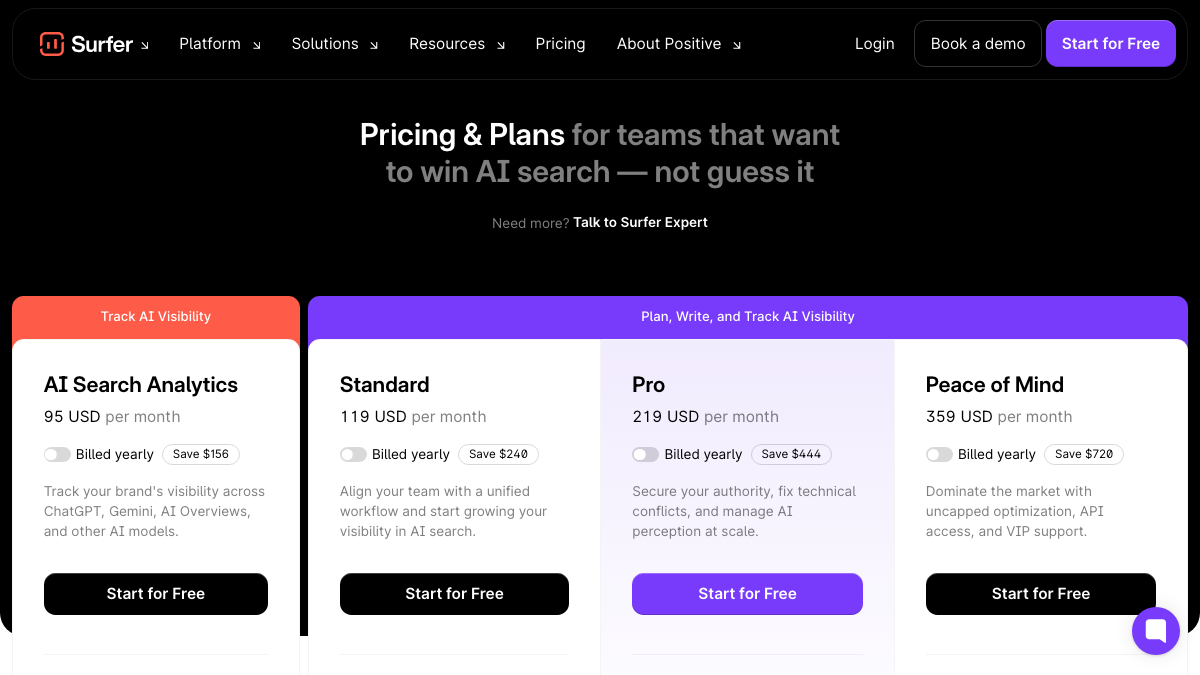
Tracking depends on the plan. Discovery, at $49 a month billed yearly, tracks no prompts. Standard at $99 yearly checks 25 prompts weekly, and Pro moves to 50 prompts daily. There's also a tracking-only AI Search Analytics plan at $82 billed yearly. Surfer's tracker skips Claude and Grok. The Surfer comparison has the rest.
5. Writesonic
Writesonic rebuilt itself around AI search, and the plan cards show it. Starter is $79 a month billed yearly and tracks ChatGPT, Gemini and Google AI Overviews daily for 50 prompts, with 15 articles a month.
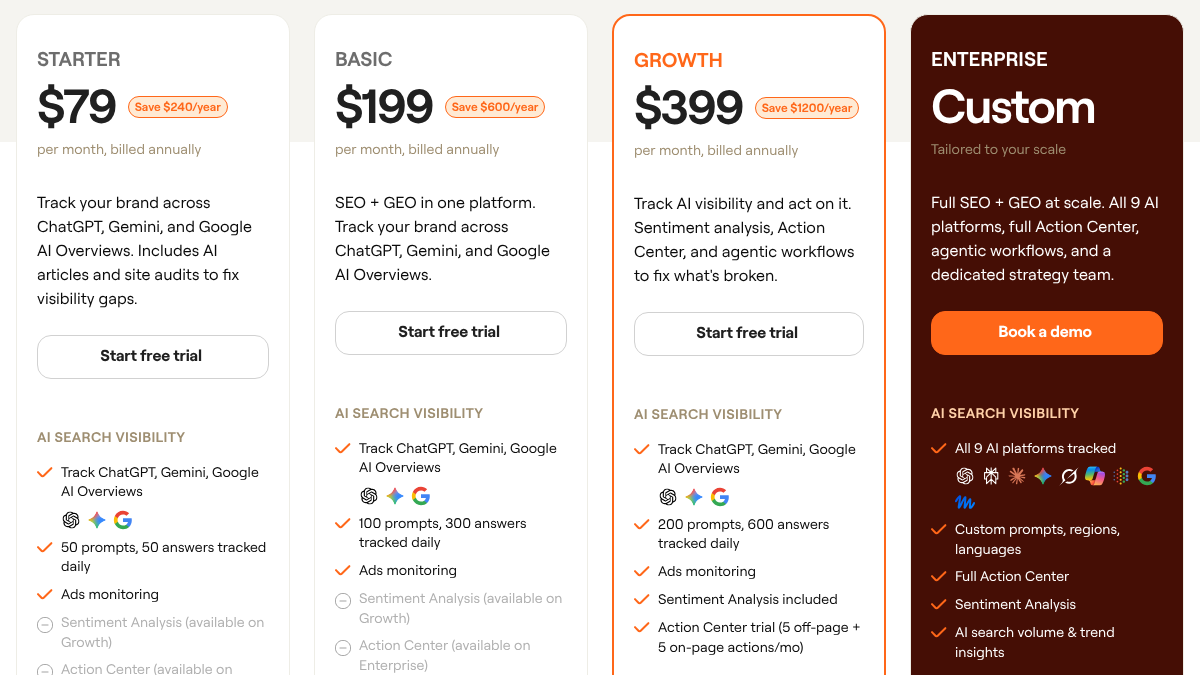
Daily checks are its real edge, since most tools here check weekly. The catch is reach. Below Enterprise it's three AI surfaces, and the Action Center that turns gaps into fixes is a trial of five off-page and five on-page actions a month on Growth, and full only on Enterprise. Publishing goes to WordPress. We lay it out in RankControl vs Writesonic.
6. Clearscope
| Clearscope | Details |
|---|---|
| Price | $129/mo Essentials, $399/mo Business |
| Limits on Essentials | 50 tracked queries, 50 pages, 20 drafts a month |
| AI checks | ChatGPT and Gemini |
| Trial | 14 days, no contract |
Clearscope is the pure grader. Its report grades a draft against the pages that already rank, and that's most of what it does. Query tracking in ChatGPT and Gemini is included, but that's the narrowest engine list in the set.
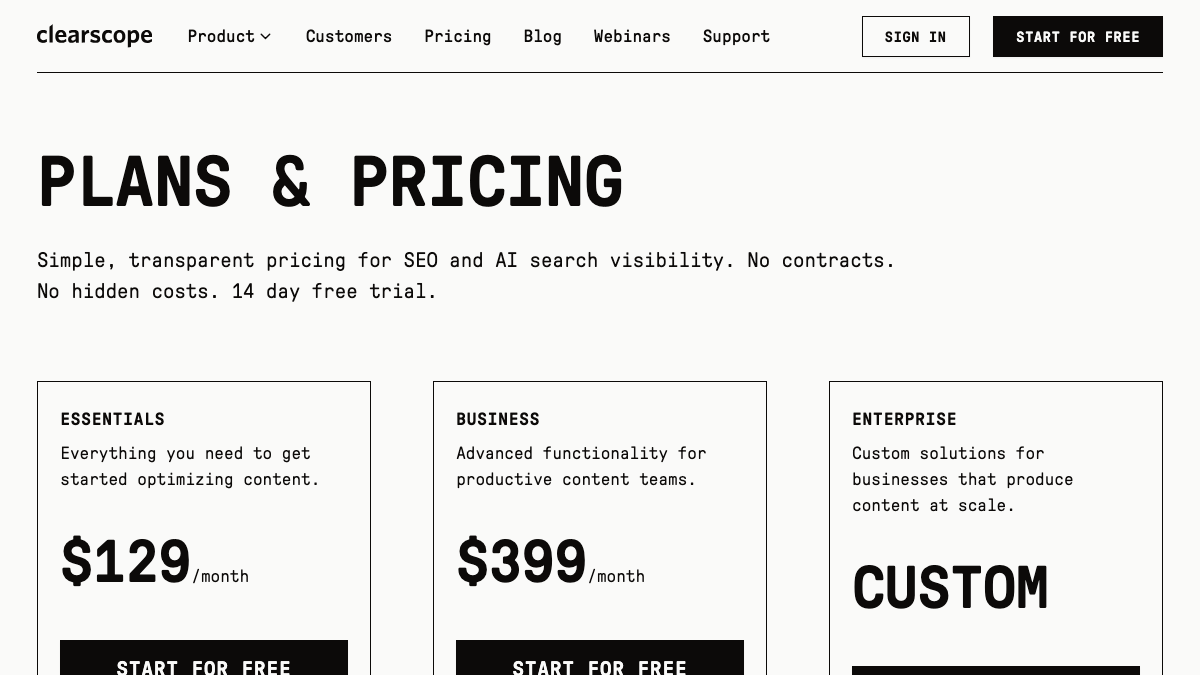
Its pricing page names no CMS integration, so you'll copy finished work into your CMS yourself.
7. AirOps
AirOps doesn't publish a monthly price. Solo and Pro both say "Start for free," Enterprise says "Work with us," and there's a 14-day trial. What you get is a workflow builder for drafting and refreshing content at volume, with Brand Kits for voice.
Its Insights module is where it scores on the receipt test. Solo checks ChatGPT only. Pro covers 7+ answer engines, Claude, Copilot and Grok among them, which is the widest list here. Its pricing page lists CMS connections from Webflow and WordPress to Contentful and Sanity. See RankControl vs AirOps for the trade-offs.
8. Jasper
Jasper is a brand-voice writer first. Pro costs $69 per seat a month, or $59 billed yearly, with a 7-day trial. Canvas and Brand Voices keep drafts on-brand, which matters more for a marketing team than for an SEO one.
The GEO Hub, Jasper's AI visibility part, sits on the Business plan only. That plan is custom-priced with a 12-month minimum. So a Pro buyer writes for AI search with no way to check the result inside Jasper. More in RankControl vs Jasper.
9. MarketMuse
MarketMuse publishes no price at all. Free, Optimize, Research and Strategy all lead to "Book a demo," and the free tier gives one user 10 queries a month.
Its strength is topic models, which compare your coverage with competing pages and score both. That measures topics against rival pages, though, not against the questions people ask. Its pricing page names no AI answer checks and no publishing. Our MarketMuse comparison covers the details.
How often does ChatGPT mention your brand?
Most founders have no idea. The answer might surprise you.

What Reddit users say about scores and single checks
The loudest complaint is price. In an r/SEO thread asking for Surfer alternatives, several users said Surfer had emailed them about legacy plans going up, by three times for one person and six times for another. A third said the bill would rise 20% now and double in November.
The same thread had real doubt about content scores. The top reply called on-page score tools snake oil and said dropping Surfer had no effect on rankings. The Toronto data backs a softer version. Matching the question helps, but page features explained only a small share of the citation spread.
The tracking thread was the most useful. In an r/SEO thread on tracking citations in AI Overviews, one user saw a page cited for one query and missing for one a single word away. Another said to run the same query 15 to 20 times, because one check is noise. Several kept a spreadsheet next to their paid tool.
The paper found the same drift. Of ChatGPT's citation pattern that repeated within a two-week window, 40% still held two weeks later and only 14% ten weeks later.
How to pick the right one
Start with who writes. If a person on your team writes every word, buy a grader and add tracking. Surfer or Clearscope fit that, and Frase does both for less.
If you're already paying for Semrush, adding its two toolkits keeps everything in one login. You'll still be the one turning drafts into published pages.
If nobody has time to write, the grader is the wrong purchase. You need something that writes, publishes and checks on a schedule, and among the tools here that's RankControl or a heavy AirOps setup that someone has to build.
What the receipt test costs by hand
Say you track 50 queries on seven engines. That's 350 answers to read every week, and the Reddit advice to repeat each query makes it worse. At two minutes an answer, it's nearly twelve hours a week before you've written a page.
You can run that loop with a spreadsheet and a lot of browser tabs. Or RankControl's agents can write the pages, publish them and check all seven engines every week while you focus on your product.
15 hours a week manually. Or 15 minutes with RankControl.
Track citations, monitor competitors, and fix content gaps across every AI search engine. Automatically.