
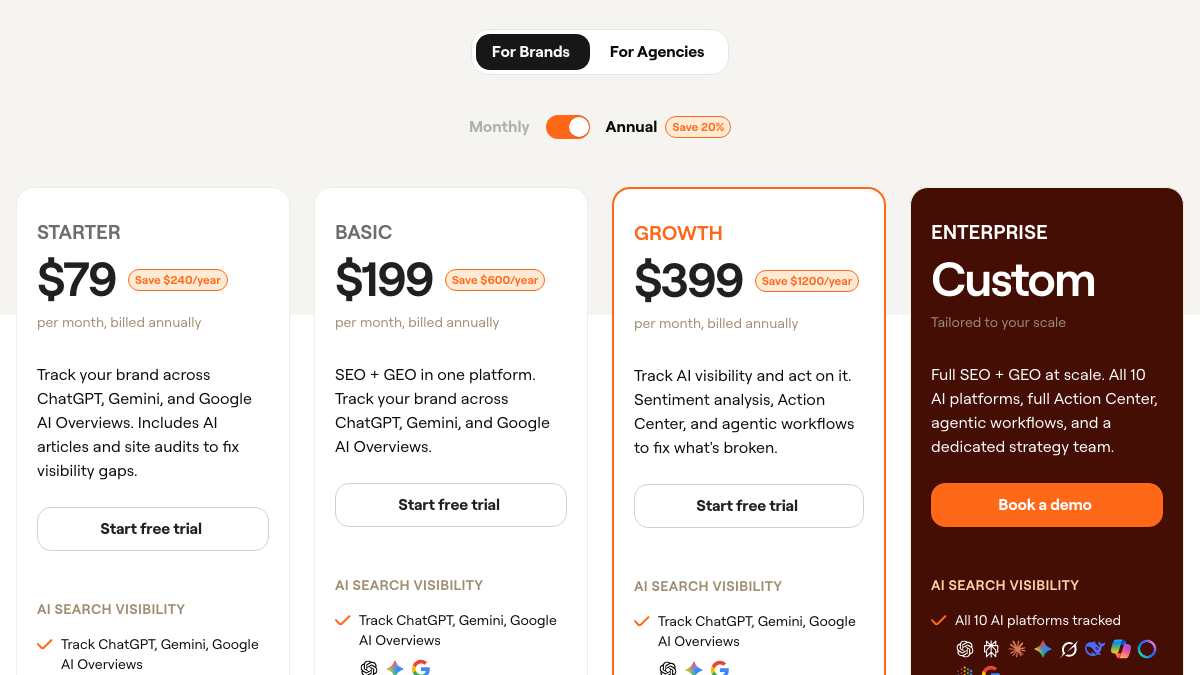
Writesonic's pricing page opens with a promise: "Find which prompts recommend your competitors instead of you. Fix it with AI agents." Read the plan cards underneath and the two halves of that sentence sit on different tiers. Every plan tracks prompts daily, but the Action Center that ships fixes is a trial on the $399 Growth plan and arrives in full only on Enterprise. The engines work the same way: ChatGPT, Gemini and Google AI Overviews on the priced plans, and "all 10 AI platforms" on custom pricing.
Call it the tier gap: the features in the headline live a plan or two above the one most teams buy. That gap is the usual reason people start looking. This list covers seven alternatives, which engines each one covers on the plan you'd actually pay for, whether it writes and publishes, and who it suits. Every price was checked on the vendors' own pages between September 25 and 26, 2026.
The short list
| Tool | Best for | Starting price | Writes and publishes? | AI engines on entry plan |
|---|---|---|---|---|
| RankControl | Teams that want the work done | $400/mo flat | Yes, native posts on nine kinds of destination | Seven, weekly |
| Semrush toolkits | Teams already on Semrush | $60 + $99/mo | AI articles; WordPress publishing | Five in weekly reports |
| Profound | Large brands | Custom | Agents on Enterprise credits | Up to nine on Enterprise |
| Frase | Writers who want an editor | $49/mo | Yes, four CMSs | Two |
| Search Atlas | Technical SEO plus AI tracking | $199/mo for AI tracking | Yes, any CMS | Three on Growth |
| Scalenut | Small budgets | $24/mo on promo | Yes, WordPress and Shopify from Plus | Two |
| Peec AI | Measurement only | $95/mo | No | Three of your choice |
Why teams look for Writesonic alternatives
Writesonic changed shape over the last year. It began as an AI writer and now sells itself as an AI search visibility platform, with daily tracking, sentiment and an article writer that produces 15 to 50 articles a month depending on the plan. For a team that only wanted the writer, the entry price is now $79 a month billed annually. For a team that wanted the platform, the parts that act on the data sit behind the tier gap.
The Growth plan shows how narrow the acting part is below Enterprise. Its Action Center trial allows five off-page and five on-page actions a month. Off-page actions are the ones Writesonic describes as surfacing Reddit threads, YouTube videos and listicles that cite competitors, then drafting the outreach, so a $399 plan acts on five of those gaps in a month.
Coverage is the second reason. Claude, Perplexity and Grok aren't tracked on any priced plan, and each draws on different sources, so a brand can look healthy on three engines and be missing from the rest. A citation study Wellows published this year put a number on how different the engines are: across 22.7 million citations, Perplexity never cited 89.1% of the sites ChatGPT cited for the same questions.
The third reason is harder to fix with any single tool. A marketer in r/GEO_optimization who had tested several platforms said most of them were reasonably good at telling you whether you show up in AI answers. What none of them answered well was whether that visibility drove any business.
Most GEO tools track citations. Which ones track business impact?
Anyone else finding that AI visibility measurement is still kind of a mess? Over the past few months, I've been testing a few GEO/AEO platforms to see how they measure brand visibility across ChatGPT, Gemini, Claude, Perplexity, Google AI O...
That question pushes the choice toward what a tool does after the check. Some alternatives below only measure, some write drafts, and a few publish the page.
We'll show you exactly where your brand stands in AI search.
No commitment. $0 due today, cancel anytime. See how ChatGPT, Perplexity, Claude, Gemini, Grok, Google AI Mode, and Google AI Overviews talk about your brand today.

The 7 best Writesonic alternatives for AI search visibility
1. RankControl
RankControl skips the dashboard-first approach and runs the work. We mine the questions your buyers ask and plan titles onto a calendar, then write each article against the pages already ranking for its keyword. Each one is scored for how easily AI engines can quote it and publishes as a native post on your own site, whether that's WordPress, Webflow, Shopify or a headless setup.
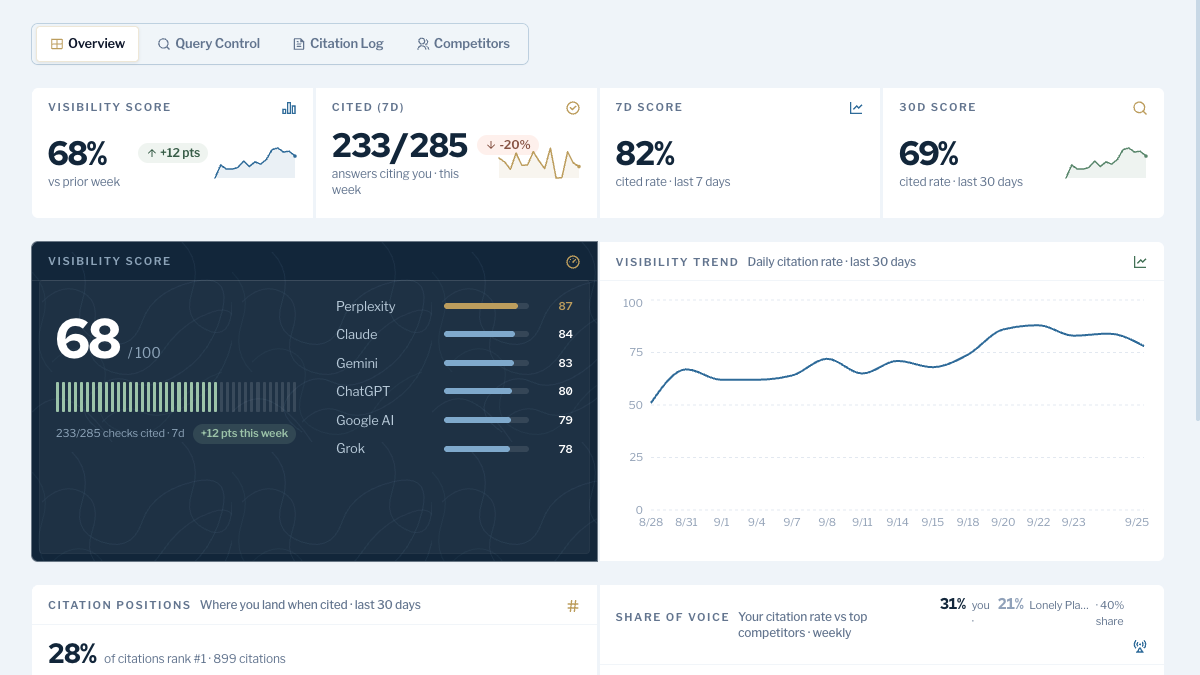
AI visibility tracking checks 50 of your buyer questions every week on seven engines, with Claude and Grok on the same plan as ChatGPT. Backlinks drafts outreach from your own mailbox for each article, and the Social agent finds Reddit and X threads your articles answer and drafts replies for you to post.
RankControl is $400 a month or $4,000 a year for 100 pages a month, with a 7-day trial. Auto-publish is off by default, so you approve each article until you trust the output.
Best for: founders and small marketing teams who want published articles and seven-engine tracking on one plan.
2. Semrush Content and AI Visibility Toolkits
Semrush splits Writesonic's two halves across two toolkits. The AI Visibility Toolkit costs $99 a month for 25 tracked prompts on one domain, and Semrush's weekly Brand Performance reports cover five engines, Perplexity and Gemini among them. The Content Toolkit costs $60 a month after a 7-day trial and adds a brief generator, an optimizer and five SEO-boosted AI articles a month, published through WordPress.
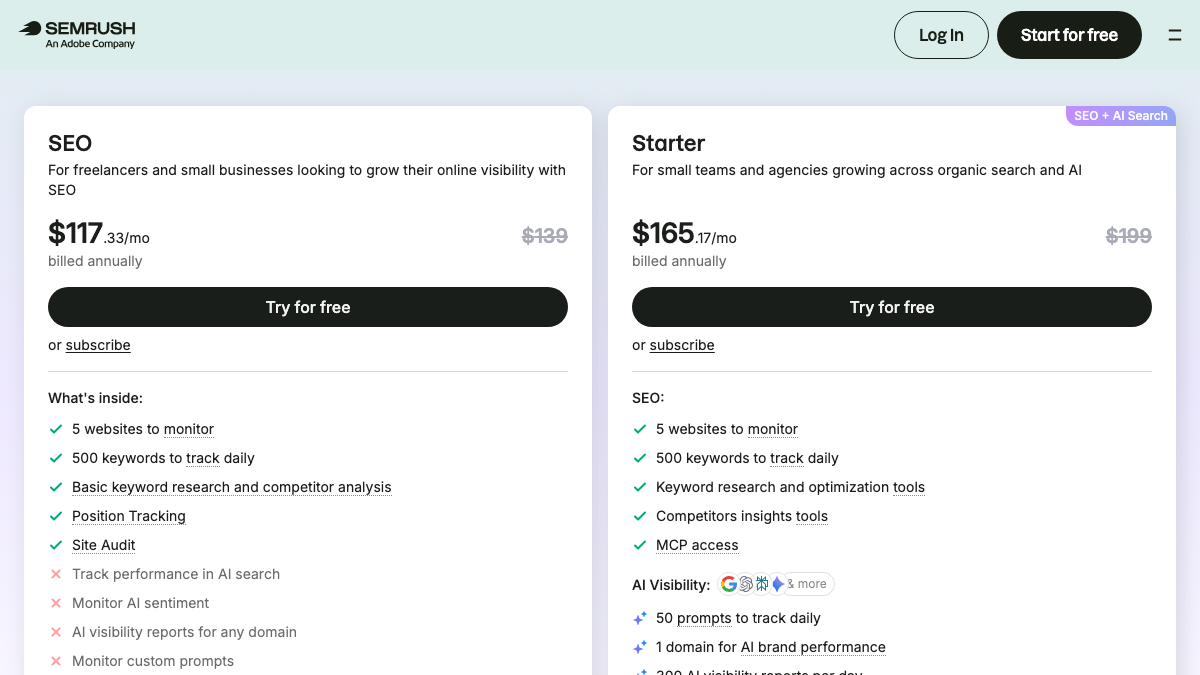
Together they come to $159 a month, next to the keyword and backlink data a Semrush team already uses. Claude and Grok aren't in the reports.
Best for: teams that already work in Semrush and want AI tracking without another login.
3. Profound
Profound is the enterprise option. Its Enterprise plan tracks prompts daily on up to nine answer engines, and its credit-based Agents can draft pages and publish approved ones to your CMS. The free 7-day trial runs 50 prompts daily on ChatGPT, Gemini and Google AI Overviews.
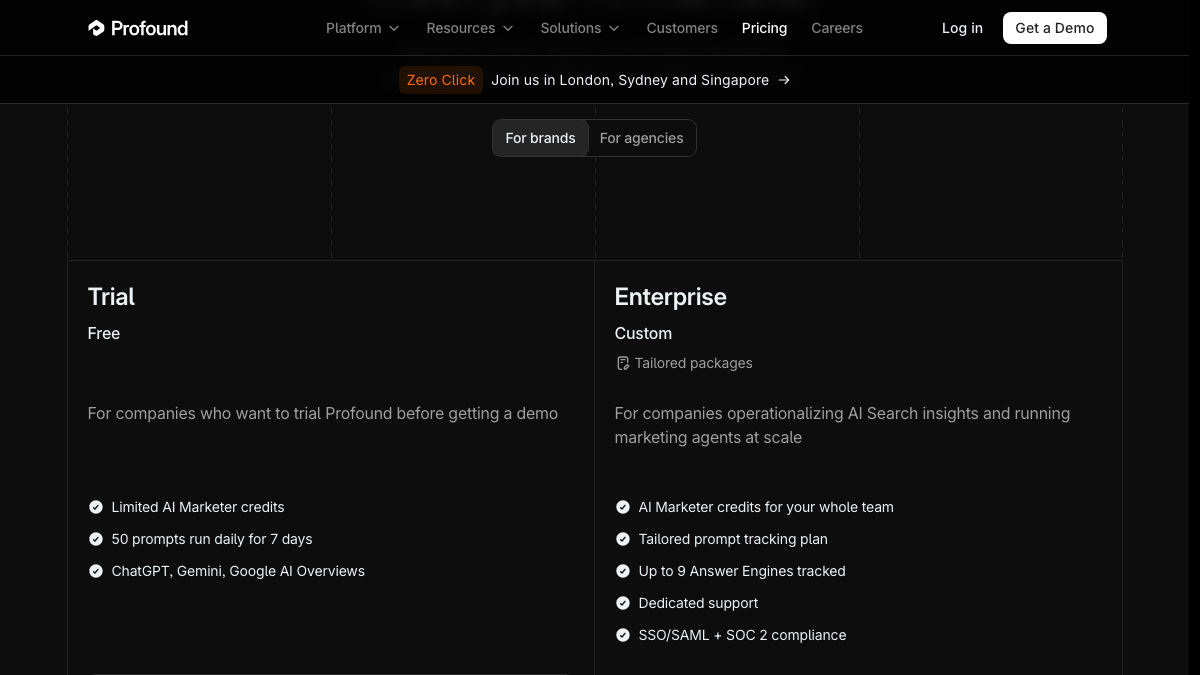
Pricing after the trial is custom, and agencies pay $399 a month per client workspace. Our RankControl vs Profound comparison goes through the differences.
Best for: large brands that want enterprise tracking and content agents under one contract.
4. Frase
Frase is the closest match for teams that came to Writesonic for writing. It researches the pages that rank, builds a brief and draft, scores the draft, and publishes to WordPress, Webflow, Sanity and Wix. Starter costs $49 a month on monthly billing with 10 articles, Professional includes 40 and Scale includes 100.
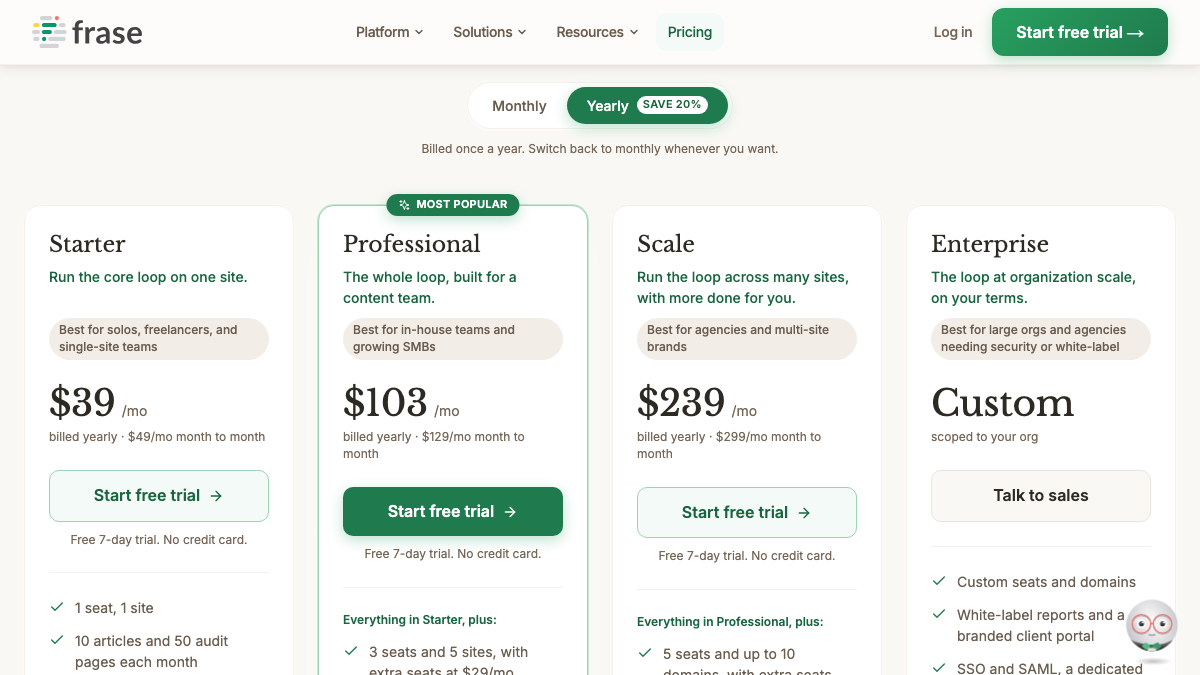
Its AI Visibility module tracks ChatGPT and Google AI on Starter and adds Perplexity on Professional. Claude and Gemini arrive only on Scale, at $299 a month, and no plan lists Grok.
Best for: writing teams that want a guided editor with publishing built in.
Know exactly what AI says about your competitors.
RankControl's Recon Agent monitors competitor citations across ChatGPT, Perplexity, Claude, Gemini, Grok, Google AI Mode, and Google AI Overviews. See where they show up and you don't.

5. Search Atlas
Search Atlas is a technical SEO suite with AI tracking added. OTTO applies fixes automatically, and Content Genius writes articles that publish to any CMS. LLM Visibility starts on the Growth plan at $199 a month, covering ChatGPT, Gemini and Google AI Mode for 100 queries, and the $399 Pro plan adds Copilot and Perplexity.
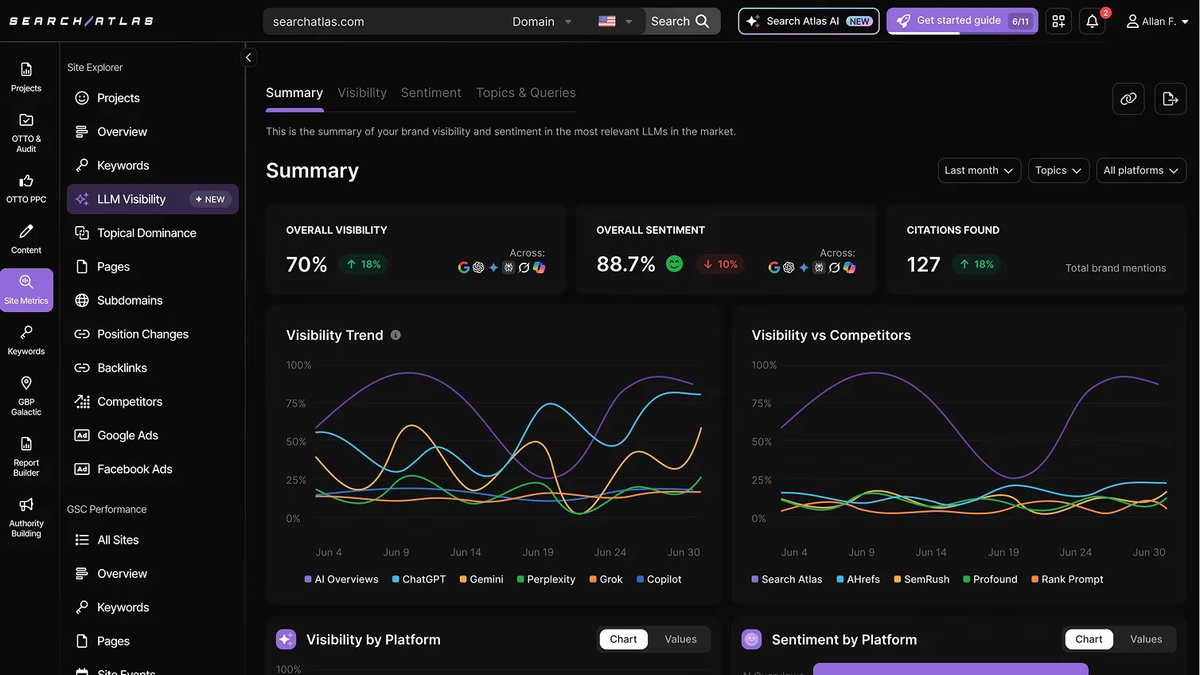
The Starter plan at $99 a month includes no LLM Visibility at all, which is the same tier gap Writesonic has, one plan lower.
Best for: in-house SEO teams that want technical fixes first and AI tracking alongside.
6. Scalenut
Scalenut is the budget pick for teams that want writing and tracking together. Its pricing page showed a 60% limited-time offer when we checked, bringing Starter from $59 to $24 a month, Plus from $89 to $36 and Professional from $199 to $80. Starter tracks 10 prompts weekly on ChatGPT and Google AI Overviews, and Professional adds Perplexity for 100 prompts.
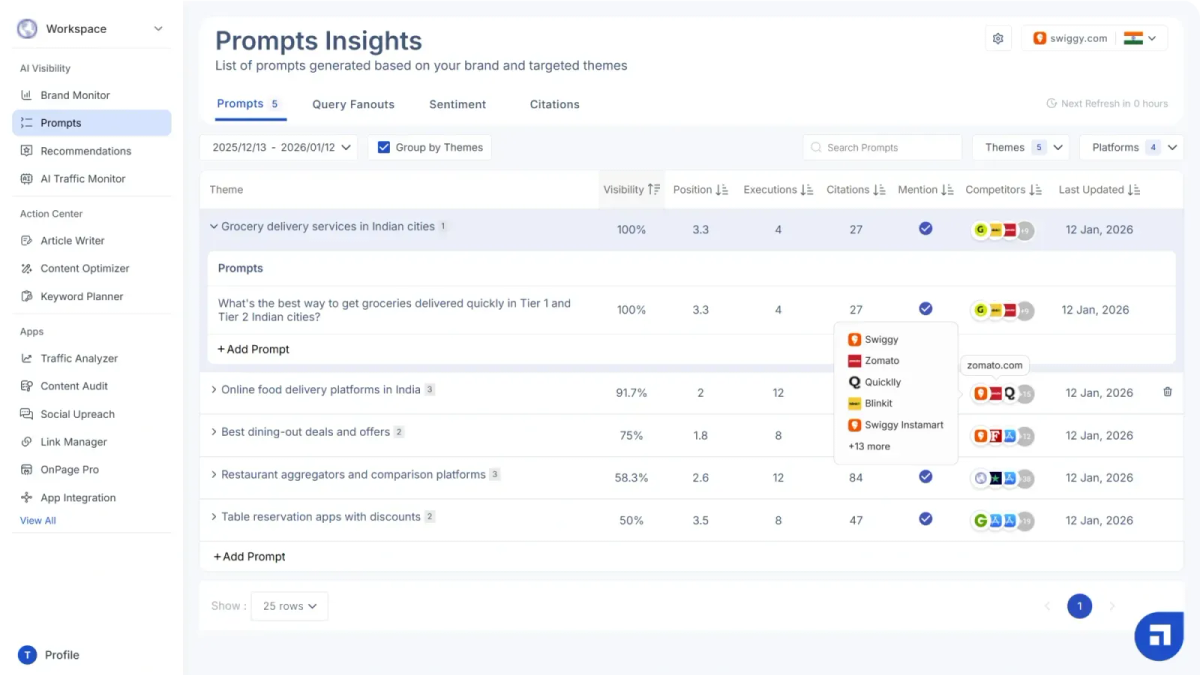
Plus adds auto-publishing to WordPress and Shopify. See our RankControl vs Scalenut comparison for how the two stack up.
Best for: small teams on a tight budget that want articles plus a light tracker.
7. Peec AI
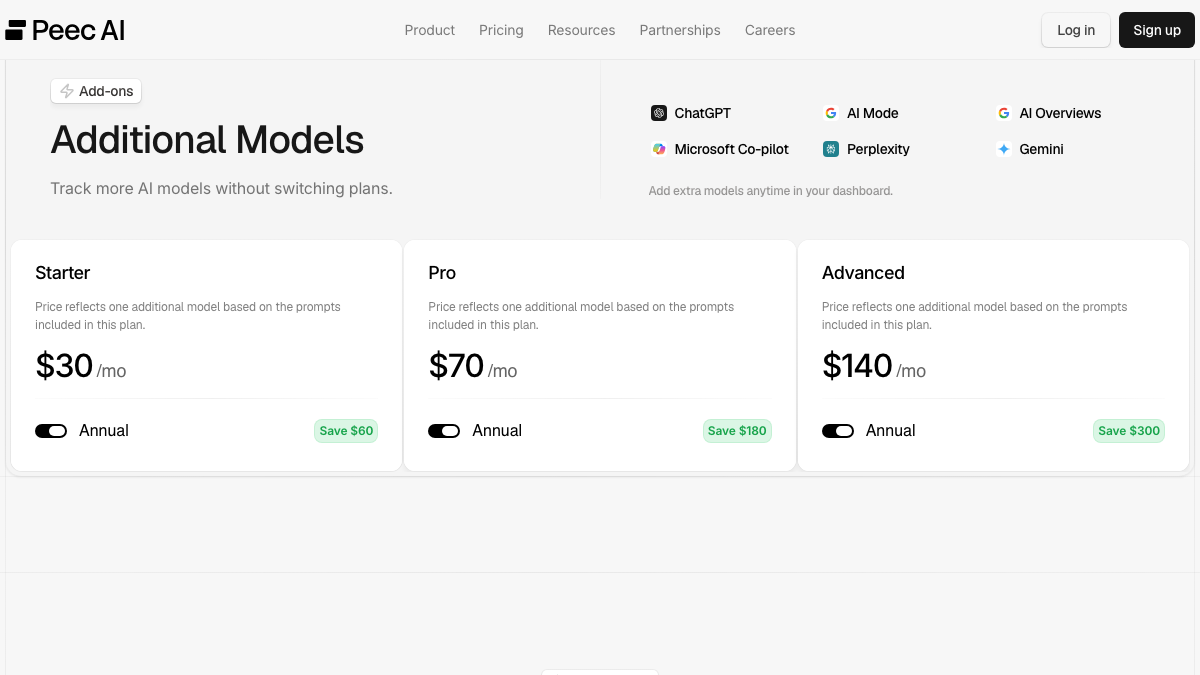
Peec AI is pure measurement. Starter costs $95 a month for 50 prompts run daily on three models you choose, with source and competitor analytics. Extra models cost $30 a month each on Starter, and it doesn't write or publish content.
Best for: teams that already have writers and only need clean daily analytics.
Daily data or weekly action
Writesonic, Profound and Peec check prompts every day, and that sounds like a clear win until you look at what changes daily. A single AI answer shifts from run to run, so daily data is mostly useful as an average. What moves the average is a new or better page that engines can cite, and pages don't appear daily.
That's why the more useful comparison is between tools that measure and tools that produce. Five of the seven here can produce drafts, most of those can push them to a CMS, and Peec doesn't write at all. RankControl runs the whole month, from planned titles to published posts, and checks the result weekly on seven engines.
Doing the production half by hand is where the time goes. Researching, writing, linking and publishing 20 articles takes 40 to 60 hours a month, and checking 50 questions across seven engines without a tool takes about six hours a week. Those are rough estimates, and every dashboard-only tool leaves both jobs on your desk.
What to ask before you switch
A site owner in r/GEO_optimization asked what tools people use to track AI visibility and what they wished those tools did. The top reply pointed out that most tools run a prompt set, count mentions and stop, even though the engines behave differently from each other.
What kind of tools does everyone use for GEO, AEO, SEO? And what sort of tools do you wish you had, but isn't available?
I am just trying to figure out what tools would be good to track my websites AI Visibility. I want to see if my website is detectable or not. I know about Ahrefs and SEMRush, but I was looking to see if there are any specific AI tracking so...
Four questions sort the options faster than a feature grid:
- Which engines does the plan you'd buy cover, as opposed to the top tier?
- Who publishes the page: you, the tool, or nobody?
- Is the price fixed, or does it grow with prompts, credits or articles?
- Can you export your tracking history if you leave?
Our guide to switching from Writesonic covers the exports and the 30-day window.
Which Writesonic alternative fits your team?
| If your situation is... | Look at |
|---|---|
| You want articles written, published and tracked on seven engines | RankControl |
| You already pay for Semrush | Semrush Content and AI Visibility Toolkits |
| An enterprise brand with a sales-led budget | Profound |
| Writers who want a guided editor with CMS publishing | Frase |
| You want technical SEO fixes and AI tracking in one suite | Search Atlas |
| A tight budget that still wants articles and tracking | Scalenut |
| You only need daily measurement | Peec AI |
The pick for AI search visibility
If you liked Writesonic for its dashboard, several tools here will give you a similar one, some for less. If you came to it wanting fewer tasks on your plate, the question is who plans, writes and publishes the pages the engines cite, and who checks every week whether it worked.
RankControl is the Writesonic alternative built for that job. We cover seven engines on one public plan, Claude and Grok included, and publish to your site every month. You can keep assembling the loop from tools, or RankControl's agents can run it while your team approves the pages.
26 content formats. Published on your domain. Matched to your brand.
Guides, comparisons, listicles, case studies, and more. RankControl generates content that gets cited by ChatGPT, Perplexity, Claude, Gemini, Grok, Google AI Mode, and Google AI Overviews.