
You open Search Console, sort by clicks lost, and find a post from last spring that has slid off page one. That part is easy to spot. The harder question is whether ChatGPT and Perplexity still quote it, because Search Console can't see them, and most content refresh tools can't either.
I went through the roundups that rank for "content refresh tools" this month, a 7-tool list and a 12-tool list among them. Every one scores tools on Google traffic only, and one opens with AI Overview stats it never applies to a single pick. This list scores each tool twice.
The nine tools are Semrush, RankControl, Ahrefs, Google Search Console, Frase, Surfer, Clearscope, MarketMuse and Animalz Revive. Prices and plans were checked on October 19, 2026 against each vendor's pricing page and docs.
The short list
| Tool | Price checked Oct 19, 2026 | Google decay | AI citation decay | Posts you wrote elsewhere |
|---|---|---|---|---|
| Semrush | $60/mo for the Content Toolkit, 7-day trial | Content Audit finds weak and outdated pages | AI prompts in the editor, tracking sold separately | Yes |
| RankControl | $400/mo flat, 7-day trial | Google and Bing rankings, weekly | Seven engines, weekly | No, only articles we wrote |
| Ahrefs | $129/mo Lite | Top Pages "Declining" filter | Brand Radar prompt checks on paid plans | Yes |
| Google Search Console | Free | Clicks and position by page and query | Google's AI features only | Yes |
| Frase | $39/mo yearly, $49 monthly | Content Audit, 50 pages/mo on Starter | Names ChatGPT and Google AI on Starter | Yes |
| Surfer | $99/mo Standard | Content Audit scores live pages | AI Search Score is a readiness score | Yes |
| Clearscope | $129/mo Essentials | Query tracking per page | Not named on the plans | Yes |
| MarketMuse | Demo only for paid plans | Optimize scores pages against rivals | Not named | Yes |
| Animalz Revive | Free | GA4 traffic, ranked by impact | None | Yes |
Why content refresh tools need two scores
A post can decay on two clocks at once, and they don't tick at the same speed. I call it the two-clock problem. The Google clock is slow and shows up as lost clicks. The AI clock is fast and mostly invisible unless you check the answers yourself.
The numbers back that up. An analysis of 3.5 million citation events found a citation loses half its visibility in about four to five weeks, with ChatGPT quickest at about 3.4 weeks and Perplexity slowest at about 5.8. A post can drop out of ChatGPT's answers while its Google rank holds steady, and a traffic-only tool will call it healthy.
Freshness also counts for more on the AI side. Ryan Law of Ahrefs looked at 16.975 million cited URLs in a July 2025 study and found AI-cited pages ran 25.7% fresher than Google's organic results. ChatGPT's picks were about 458 days newer. The study also found AI Overviews were the least swayed by freshness, so "AI engines" don't all act alike.
Google is pickier about when new matters. Its ranking systems guide says freshness systems favor newer pages only "for queries where it would be expected." Our guide to content freshness in Google and ChatGPT covers what each one rewards.

Built by the team that got cited in 48 hours.
Content generation, backlink building, AI visibility tracking, and Google rankings. One platform, zero guesswork.
The 9 best content refresh tools, scored on both clocks
Semrush comes first, then RankControl, Ahrefs and the free baseline, then the content editors and a free finder.
1. Semrush
Semrush sells its refresh tools as the Content Toolkit, priced at $60 a month with a 7-day trial on its own Knowledge Base page. That's the toolkit price, separate from the core SEO plans, which run higher. Its Content Audit finds pages that are weak or out of date, and the same editor offers "AI SEO Improvements" prompts when you rewrite.
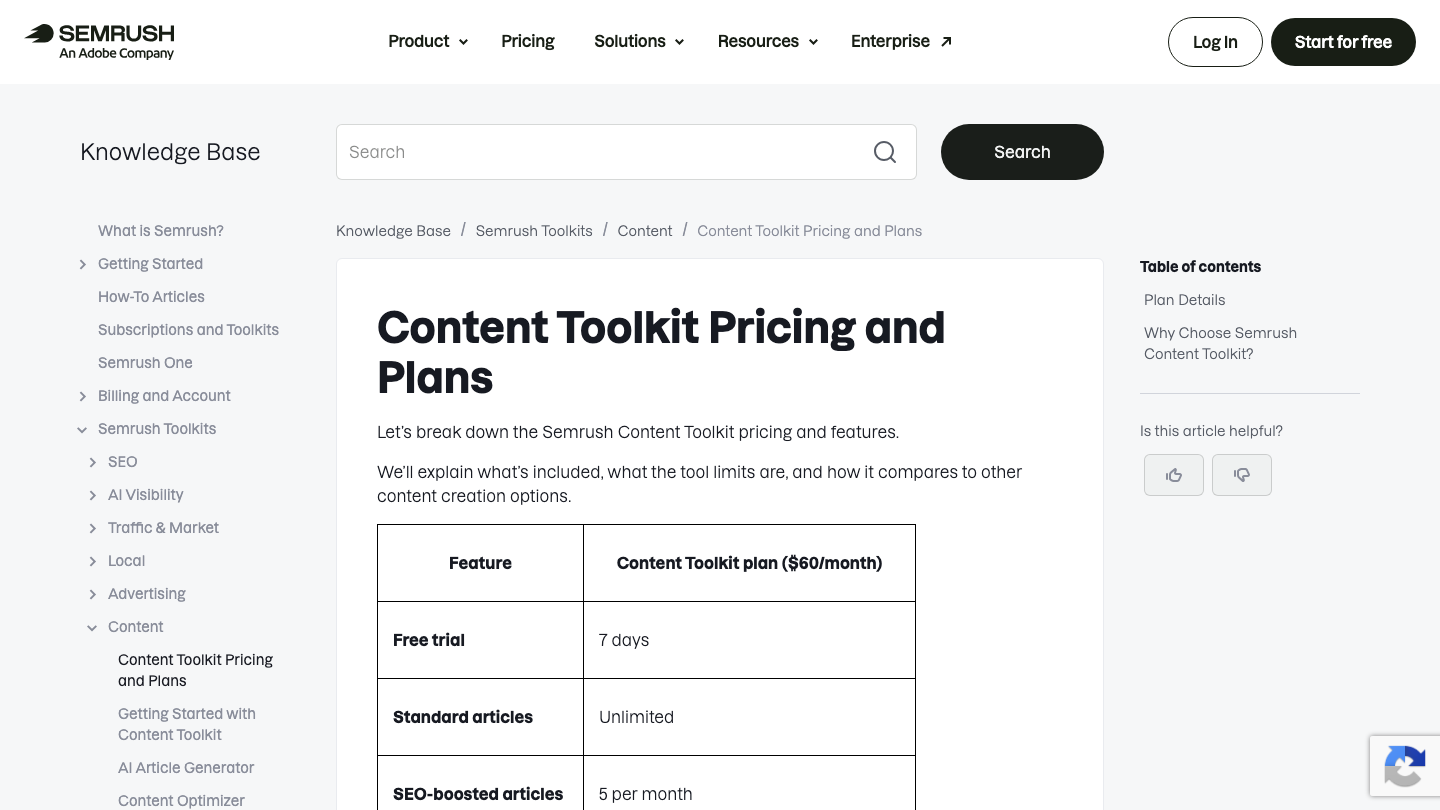
On the Google clock it's strong. On the AI clock it's split, because citation tracking lives in a separate AI Visibility toolkit, so you buy two products to see both clocks.
2. RankControl
RankControl works from the other end. There's no audit of your back catalog. We watch the articles we write and publish for you, and when one of them slips in rankings or citations, that shows in your dashboard. There's no alert for a loss, so the dashboard is where you'll see it. When you approve, the article gets rewritten.
The checks run weekly. AI visibility tracking covers seven engines (ChatGPT, Perplexity, Claude, Gemini, Grok, Google AI Mode and Google AI Overviews), and Google and Bing rankings are tracked too. That puts both clocks on one screen for every article RankControl wrote.
Know one limit before you buy. RankControl doesn't audit or refresh older posts you wrote somewhere else. If your problem is 400 old posts from past writers, pair Semrush or Ahrefs with Search Console. We offer one flat plan at $400 a month with a 7-day free trial.
3. Ahrefs
Ahrefs is the one big vendor whose own advice keeps the two clocks apart. Its content decay guide, updated in March 2026, starts in Site Explorer with the Top Pages report and its "Declining" filter. It then uses Content Changes to see what moved, and checks Brand Radar after a refresh to see if AI citations came back, separately from Google.
Lite costs $129 a month and covers the Declining filter plus basic Brand Radar prompt checks. The AI Content Helper is a separate $99 add-on, and you can only buy it on Advanced at $449 or Enterprise. In a busy r/SEO thread on audit tools, one person who pays for both suites said they prefer Ahrefs.
4. Google Search Console
Almost every workflow in the Reddit threads I read starts here, and that's the right call. Google Search Console is free and splits clicks, impressions and position by page and query, which is all you need to spot a slide on the Google clock.
It now sees part of the AI clock too. The Performance report has a Generative AI (Beta) view, per Google's Search Console help, with impressions and clicks for queries where AI Overviews or AI Mode showed up.
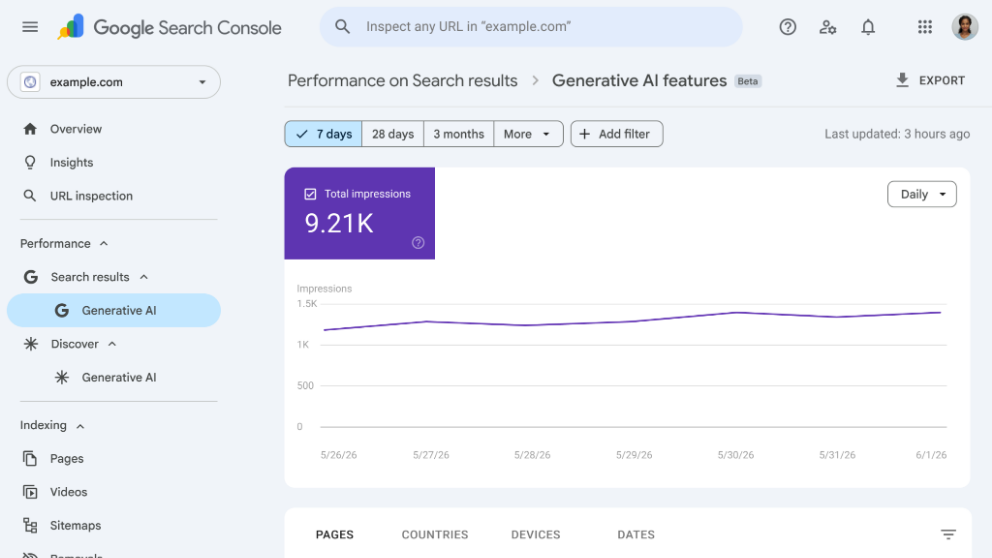
It's Google only. It can't tell you what ChatGPT, Perplexity or Claude did, and it won't rewrite anything. Our walkthrough of the Search Console AI performance report shows what to track in it.
See your first AI citation report in under 5 minutes.
No setup calls. No onboarding meetings. Connect your domain and see where AI mentions your brand right now.

5. Frase
Frase scores best on the AI clock among the content editors. Its pricing page names engines by plan. AI Visibility checks ChatGPT and Google AI on Starter, adds Perplexity on Professional, and adds Claude and Gemini on Scale. Starter is $39 a month billed yearly, or $49 month to month, and its Content Audit covers 50 pages a month.
That's a lot of refresh tooling for under $50. The catch is that you still do the rewriting yourself in the editor. Our RankControl vs Frase comparison covers where the two split.
6. Surfer
| What | Detail |
|---|---|
| Content Audit | Standard, $99/mo |
| Discovery, $49/mo | Content creation only, no audit |
| AI tracking | Separate AI Search Analytics plan, $82/mo |
| Scores on live pages | SEO Score and AI Search Score |
Surfer puts Content Audit on Standard at $99 a month, and Pro runs $182. The AI Search Score grades two things, Facts Coverage and Upfront Intent Alignment.
That score tells you if a page is easy to quote. It doesn't tell you whether anyone is quoting it. In an r/seogrowth thread on AI audit tools, at least two people made the same point, that a "likely to be cited" percentage invents the half nobody can measure. See RankControl vs Surfer for the full side by side.
7. Clearscope
Clearscope keeps a content inventory with query tracking for each page, plus search intent tips for the rewrite. Essentials is $129 a month for 50 tracked queries and 50 pages. Business is $399, and Enterprise is custom.
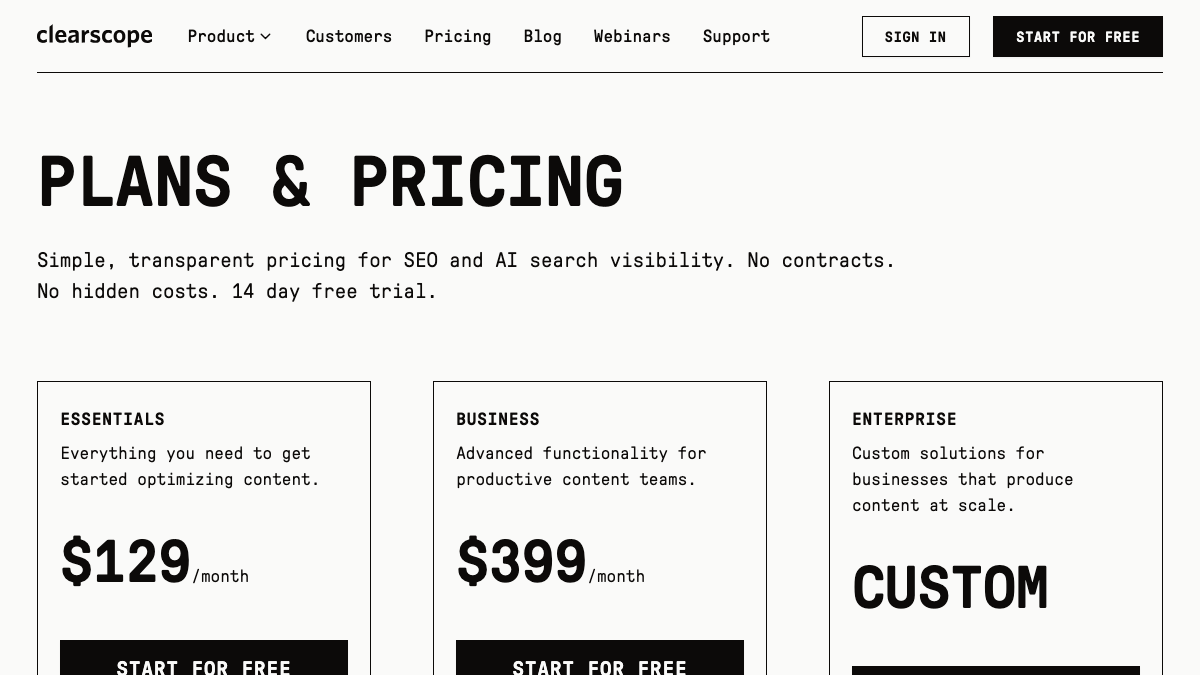
Its pricing page pitches it for SEO and AI search visibility, but the plan cards name no AI engines and no decay alert. It's a good fit for a short list of posts you care a lot about.
8. MarketMuse
MarketMuse scores and monitors existing content against competing pages in its Optimize app. A free tier gives you 10 queries a month. Every paid tier, Optimize, Research and Strategy, shows "Book a demo" instead of a price, and the editor's own sign-up screen says sign-up is disabled and points you to sales.
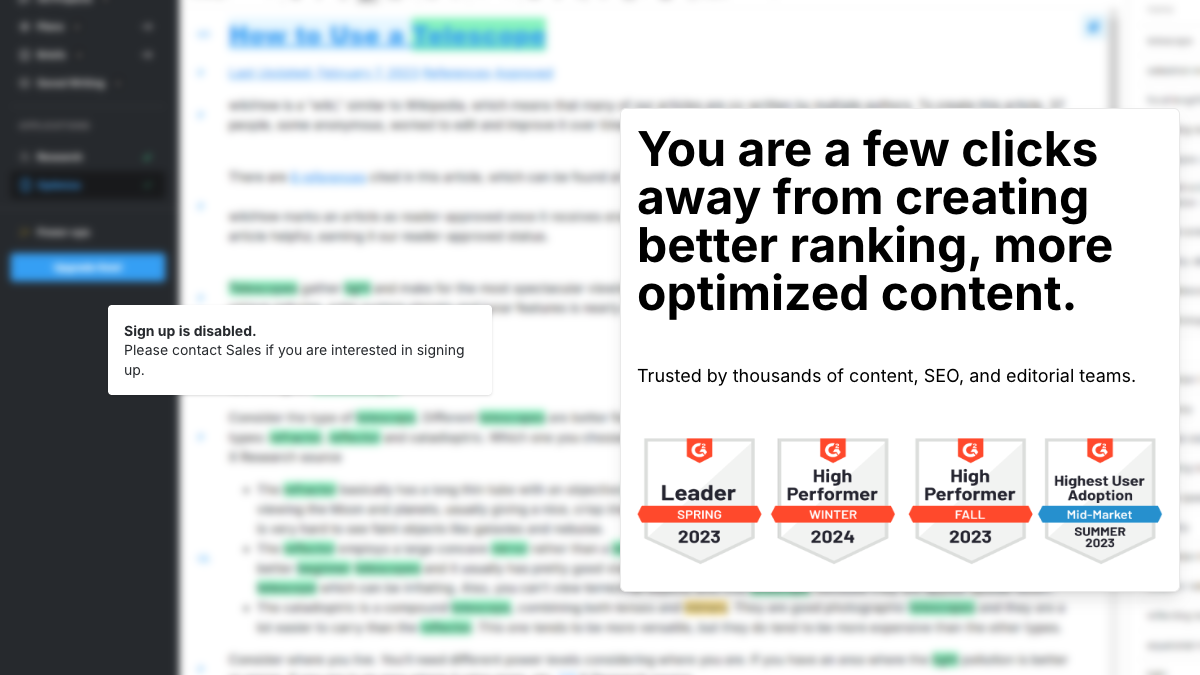
Nothing on the pricing page speaks to AI citations. Our RankControl vs MarketMuse post has the details.
9. Animalz Revive
Animalz Revive is free, connects to GA4, and lists the posts most worth refreshing, ranked by potential impact. It finds candidates and stops there, with no editor and no AI angle. It now lives on its own subdomain, and the old link on the Animalz site returns a 404.
Triage before you buy anything
None of the Reddit threads I read treated "pick a tool" as step one. In an r/Wordpress thread about a 7,000-post site, the top reply sorted posts into four buckets first. High-traffic posts get a careful refresh, declining ones get updated, and relevant posts with no traffic get merged. Posts with no traffic and no value get a noindex or get deleted.
Two other habits came up again and again. People in an r/DigitalMarketing thread on zero-traffic posts warned against deleting too fast, and said to redirect or merge when the topic still matters. They also flagged cannibalization, two of your posts chasing the same term, which no tool on this list fixes for you.
Then change real facts. Google's helpful content guidance lists changing a page's date "to make them seem fresh when the content has not substantially changed" as a warning sign. An r/Blogging thread on AEO said the same thing in plainer words. Update the facts and give the engines a sentence worth quoting.
What to fix on the AI side
The same r/seogrowth thread had a useful list for the AI clock, and it costs nothing to run. First, check that AI crawlers can fetch the page, since a robots.txt rule or a CDN setting can block them. Then make sure the main text is in the HTML the server sends, so a crawler that skips JavaScript still sees it.
After that, look for a visible author, a real date and schema where your CMS supports it. Last, find the sentence an engine would quote. If the post has no plain line that answers the query, write one near the top.
Our content decay funnel walks through the six checks in order. Once you've picked a page, the re-indexing guide covers how fast each engine notices the change.
Which content refresh tool fits your team
For a team with no budget, the best pick is Google Search Console, because it's free and covers the Google clock plus Google's AI features. For a team that refreshes posts by hand and wants both clocks, the best pick is Ahrefs, because its Declining filter and Brand Radar check each one separately.
For a content team already paying for Semrush, the best pick is the Content Toolkit, because $60 adds an audit to tools you know. For writers who want AI engines named in their editor, the best pick is Frase, because it's the only editor here that lists them plan by plan.
For teams that want new articles written, published and watched on both clocks for them, the best pick is RankControl, which checks seven engines and Google every week and rewrites what slips once you approve. For a big back catalog written by people, start with Ahrefs and Search Console, since RankControl doesn't cover posts written elsewhere.
Whichever you pick, check whether refreshing pays off on your site first. Our look at controlled refresh tests ranks the evidence from split tests down to single-post claims.
The real cost is the watching
A refresh is one afternoon of work. Knowing when the post starts to slip again is the job that never ends. Say you watch 20 priority posts on seven engines. That's 140 answers to read every week, before you open Search Console or rewrite a line.
You can run that loop yourself with Search Console, a sheet and a lot of tabs. If citations drop, our AI citation drop checklist tells you what to look at first. Or RankControl can write your next articles, check them every week on both clocks, and bring you the ones that need a rewrite while you work on your product.
Your competitors are building backlinks while you read this.
Organic outreach, social mentions, and citations from Editorial Circle member sites, with managed backlinks available as an add-on. Grow your domain authority without running the campaign yourself.