In June we watched a SaaS team refresh their best comparison page and get two completely different verdicts. Within five days, ChatGPT was citing the updated version. Six weeks later, Google's AI Overview for the same query still quoted the old numbers from a competitor. Same page, same refresh, opposite outcomes.
That gap is mechanics, not luck. Every AI surface re-indexes on its own clock, with its own definition of "fresh," and most refresh advice treats them as one machine. This guide maps which signals actually trigger re-indexing on each surface and which are cosmetic, plus how to decide which pages deserve a refresh at all.
Key Takeaways
- AI surfaces re-index on different clocks: ChatGPT and Copilot follow Bing (roughly 72 hours, faster with IndexNow), Perplexity crawls independently, AI Overviews follow Google, and Claude has no re-index lever at all.
- Freshness bias is measurable: AI-cited pages run about 25.7% fresher than classic search results, and 85% of AI Overview citations point to past-year content.
- Date bumps without substantive changes are cosmetic. Google's documentation requires lastmod to be "consistently and verifiably accurate," and crawlers learn to ignore dishonest dates.
- ChatGPT can re-cite a refreshed page that doesn't rank on Google, thanks to query fan-out. AI Overviews almost never will. You are playing two refresh games at once.
- Triage refreshes by citation decay, not traffic decline. Citations drop months before traffic does.
You Are Playing Two Refresh Games at Once
The comparison-page story has a structural explanation worth internalizing before touching a single page.
AI Overviews and Gemini cite almost exclusively from pages Google already ranks. If your page sits outside the top 20 for the query, a refresh changes nothing on that surface, because the retrieval pool never included you. Freshness is a tiebreaker among pages that already qualify.
ChatGPT plays differently. When it searches, it fans a prompt out into multiple sub-queries and pulls candidates from Bing for each one. AirOps' retrieval fan-out study measured what that means in practice: pages ranking #1 on Google earned about 3.5x more ChatGPT citations, but 32.9% of cited pages were retrieved only through fan-out queries, never through the head term. A refreshed page that answers an oblique sub-question can win a ChatGPT citation while remaining invisible in classic rankings.
Almost 50% of ChatGPT citations came from pages ranking #1 on Google. The citation rate is 3.5 times higher than for pages ranking beyond Google’s top 20 results. What does this mean for your website? Let's break it down: AirOps recently published data that explains why so https://t.co/Eps7PoCZFB
 Alex Groberman@alexgrobermanJul 10, 2026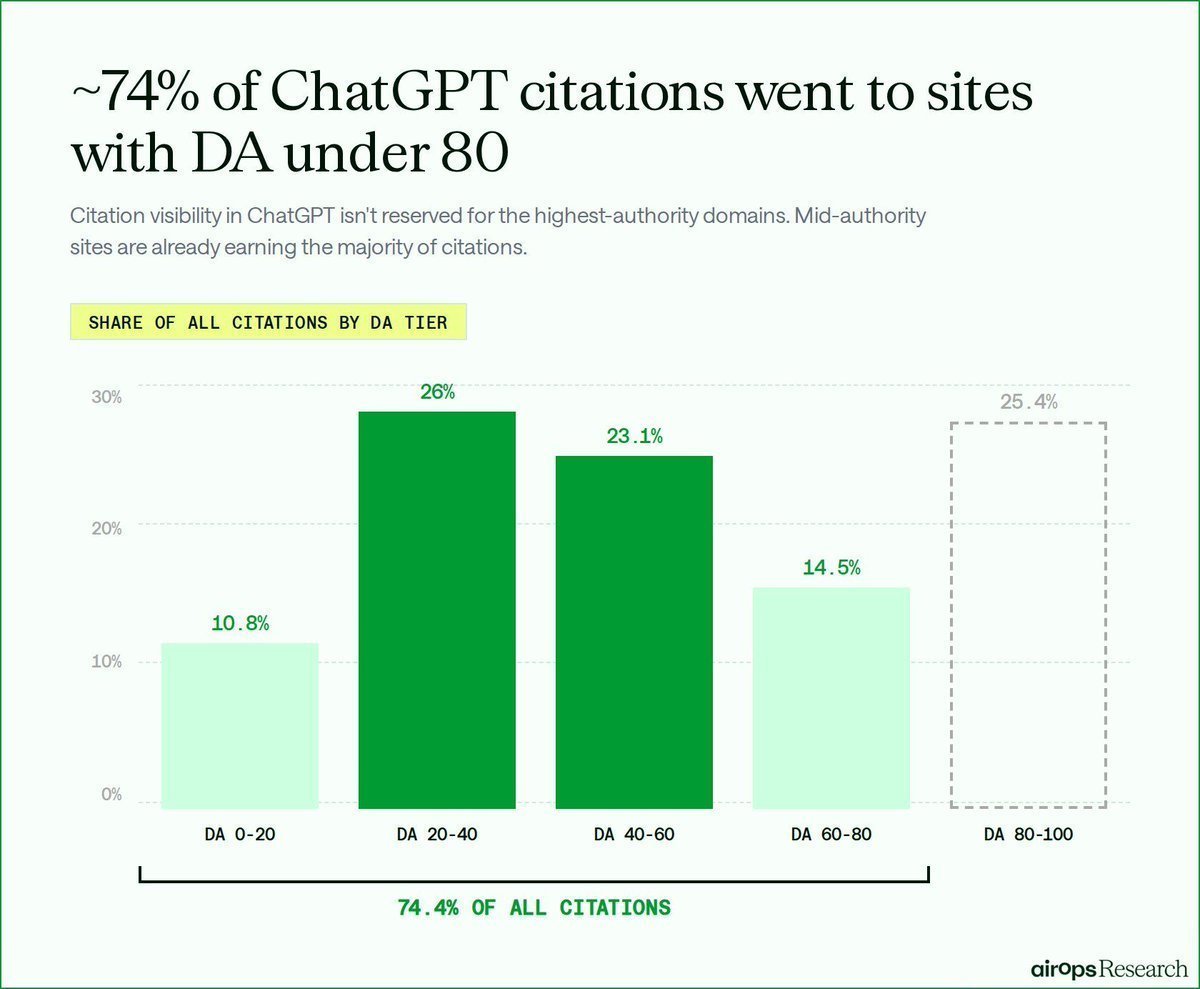
The paraphrase, so the point survives the embed: top Google rankings still multiply your ChatGPT citation odds several times over, and pretending AI search is fully divorced from classic SEO is wishful thinking. But the fan-out lane is real, and it's the lane where a refresh pays off fastest.
So one refresh serves two games. On Bing-fed surfaces you're refreshing to win retrieval. On Google-fed surfaces you're refreshing to win the tiebreak among pages that already rank. Knowing which game a given page is in tells you what "success" should look like and when to check for it.
26 content formats. Published on your domain. Matched to your brand.
Guides, comparisons, listicles, case studies, and more. RankControl generates content that gets cited by ChatGPT, Perplexity, Claude, Gemini, Grok, and Google AI Mode.

How Each Surface Actually Re-Indexes
Here is the mechanical map, surface by surface:
| Surface | Index it reads | Typical re-index lag | Your lever |
|---|---|---|---|
| ChatGPT (search mode) | Bing's index | ~72 hours for indexed sites | IndexNow ping, Bing Webmaster Tools |
| Microsoft Copilot | Bing's index | Same as above | Same as above |
| Perplexity | Own crawler (PerplexityBot) | Hours to ~7 days | Allow PerplexityBot, accurate sitemaps |
| Google AI Overviews | Google's index | Days to weeks | Standard Google indexing, plus ranking top 20 |
| Gemini | Google's index | Days to weeks | Same as AI Overviews |
| Claude | Live web search (Brave-backed) plus Claude-SearchBot's index | Days to weeks | Allow Claude-SearchBot and Claude-User |
Two of these rows deserve elaboration.
The Bing rows are the most controllable. IndexNow lets you push a change notification the moment you publish an update instead of waiting for a crawl, and Bing, which feeds both ChatGPT and Copilot, honors it. That's the difference between your update entering answers this week versus whenever the crawler wanders back, and it's a one-time integration most stacks can ship in an afternoon. The single highest-return technical task on this list.
The Claude row is the honest one. Claude's product answers lean on training data with a knowledge cutoff, which means there is no refresh signal you can send it. Your content enters Claude when a future training run ingests the web, on Anthropic's schedule. Plan your refresh program around the four surfaces with live retrieval and treat Claude visibility as a slow dividend of the same work.
One prerequisite gates all of it: the bots have to be able to fetch you. We've seen a month-old site out-cite established competitors purely because its robots.txt welcomed AI crawlers that rivals blocked. Our 90-day llms.txt experiment covers the access layer in detail; nothing in this guide works for pages the crawlers can't reach.
The Freshness Bias Is Real, and Bigger Than Expected
Refreshing only matters if the engines actually reward recency. They do, and the effect size surprised us.
Ahrefs analyzed millions of AI citations against classic search results in their fresh content study and found AI-cited pages were 25.7% fresher on average than pages ranking for the same queries. ChatGPT showed the strongest appetite: its citations ran roughly 400 days newer than the top organic results. That is not a subtle preference. That is a different selection function.
Seer Interactive's log-file analysis approached it from the crawler side and found 65% of AI bot requests targeted content published or updated within the past year. Per surface, the bias splits exactly the way the mechanics predict: 85% of AI Overview citations pointed to past-year content, versus 71% for ChatGPT. The Google-fed surface, which only picks among rankers, leans hardest on recency as its tiebreak.
Your content is either showing up in AI search results or it isn't. And most marketing teams have no idea which one it is. I run SEO and GEO across 6 businesses. TrioSEO alone has 30+ clients. The shift I've watched over the last 12 months is massive. Buyers don't just Google https://t.co/sjassWBXpj
 Connor Gillivan@ConnorGillivanMay 13, 2026
The practitioner version of the same finding, preserved in paraphrase: AI engines pull from recently updated sources, and if your page reads stale, they skip you for someone current. Blunt, but consistent with both datasets.
There's a subtler implication in the Seer numbers. "Published or updated" is the operative phrase. The engines are not measuring the age of your URL; they're measuring the age of your content's last substantive change. A 2022 page with a genuine 2026 revision competes in the fresh bucket. Which raises the obvious question every SEO has been asked by every founder: can we just change the date?
The Date-Bump Question, Answered Honestly
No controlled study exists on cosmetic date bumps for AI surfaces. Nobody has published an experiment isolating "changed the date, touched nothing else" against AI citation outcomes, so anyone claiming certainty here is selling something. What we have instead is Google's stated policy plus consistent practitioner experience, and both point the same direction.
Google's sitemap documentation is unusually direct: the lastmod value must be "consistently and verifiably accurate", and trivial edits don't qualify as modification. Google has also said publicly that when a site's lastmod dates prove unreliable, it stops trusting them sitewide. The date is a claim. The diff is the evidence. File a false claim often enough and the court stops hearing your motions.
Actually, let's sharpen that framing, because "don't fake dates" undersells what's happening. Retrieval systems can compare the version they fetch today against the version they stored last time. A bumped date on an unchanged page is a detectable inconsistency attached to your domain. The signal that triggers re-evaluation is the changed content itself: new numbers, new sections, revised claims, updated schema with an honest dateModified. The date merely annotates it.
My clients now fact-check my SEO work in ChatGPT before they believe it
The thread's consensus, kept in paraphrase for permanence: marketers who fact-check and substantively update old posts see them re-enter AI answers, while date-only bumps do nothing measurable. One detail from our client work matches the thread: a structural refresh, reformatting a page for extractability without changing a single data point, improved its citations anyway. Clearer headings and a summary block up top. The engines re-read the page and found it easier to quote. Refresh, it turns out, includes making old facts liftable, a mechanic we unpacked in the Key Takeaways tactic.

Your competitors are getting cited by AI. You're not.
Every day without citation tracking is a day your competitors pull ahead in ChatGPT, Perplexity, and Claude.
Triage by Citation Decay, Not Traffic Decline
Most teams pick refresh candidates from a Google Analytics report: traffic fell, so update the page. For AI search, that's the wrong sensor, because it fires late.
A page loses its ChatGPT citation the week a competitor publishes something fresher or a model update reshuffles sources. The traffic consequence arrives months later, diluted across queries and channels. By the time the analytics chart sags, you've been absent from the answer for a quarter. The leading indicator is citation share: which pages the engines actually cite for the prompts you care about, sampled week over week.
That reframing changes the queue. Forget the oldest page and the biggest traffic loser; the priority is the page whose citation share is decaying while the underlying question still gets asked. Decay with sustained demand means the engines found a fresher source; that's a refresh. Decay with fading demand means the question died; let the page rest. A stable citation on an aging page means don't touch it, which happens more than the freshness data suggests: on low-competition queries, an old page stays the best answer for years.
Catching decay requires repeated measurement, which is exactly what weekly AI visibility tracking is for: RankControl's Sentinel Agent checks citation share per tracked query every week, and each article's citability score in the content engine shows which of the pages we wrote to fix first, instead of waiting for a human to notice a traffic chart. The same triage works manually with a spreadsheet and a recurring calendar block; the agent just deletes the calendar block.
Prove the Refresh Worked
A refresh without a measurement window is a superstition. The verification loop is short:
- Log the refresh date and the diff. What changed, and which prompts it targets. Future you needs this to attribute movement.
- Ping the fast lanes. IndexNow for Bing, plus sitemap lastmod and schema dateModified updated honestly.
- Sample on each surface's clock. Bing-fed surfaces within a week, Perplexity within days, AI Overviews on Google's slower cycle. Checking AIO three days after a refresh tells you nothing except your own impatience.
- Call it at 30 days. If citation share for the target prompts hasn't moved on the surfaces that were mechanically able to re-index you, the refresh missed. Diagnose the miss (an access problem, or a competitor's stronger page) before spending another cycle.
Score movement per surface, not in aggregate. A refresh that wins ChatGPT but not AI Overviews is data: the page has a fan-out story but no ranking story, which makes the next move a classic SEO push rather than another rewrite. Teams recovering from AI Overview losses in particular need that separation, as the recovery cases in our AI Overviews playbook show.
200+ SaaS teams already track their AI citations.
They know exactly when ChatGPT mentions their brand, and when it stops. Do you?

Refresh Less, Trigger More
The uncomfortable summary: most refresh programs do too much editing and too little signaling. They rewrite pages nobody asked about, skip IndexNow, bump dates on cosmetic edits, and then check results on the wrong surface's timeline.
Run it the other way. Wire up the access and notification layer once. Let citation decay, not page age, pick your candidates. Make every refresh a real diff with an honest date. Then verify on each engine's clock and let 30-day citation share decide whether the next hour goes into another refresh or into ranking the page that already got fresh.
You can run that loop by hand with a prompt spreadsheet and a weekly sampling habit. Or Sentinel can flag the pages whose citations slip, Forge can rewrite them on your approval, and the tracking can show which engines cite the new version, while your team spends its judgment on the one question the machines can't answer: which pages are worth keeping fresh at all.