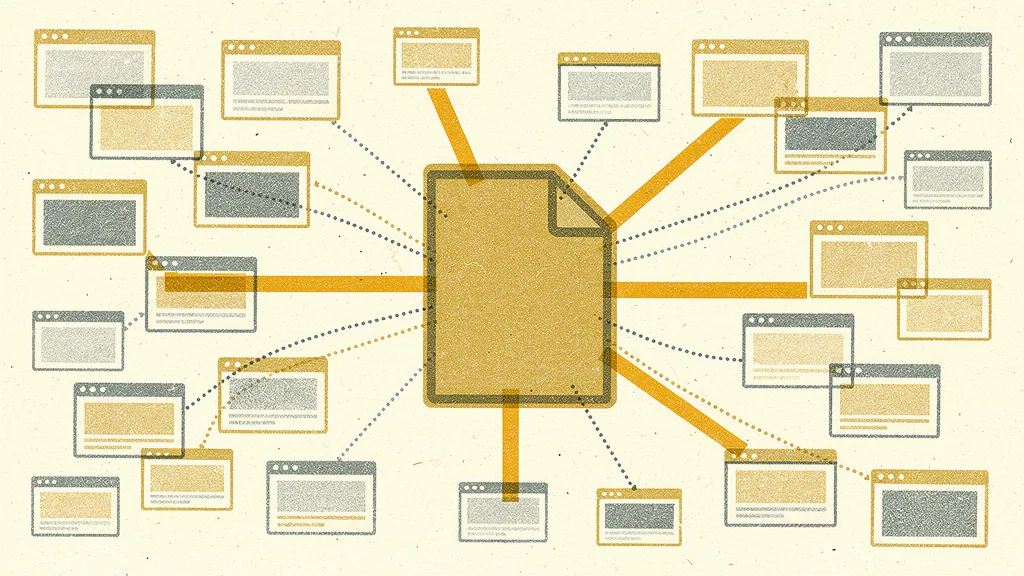
Everyone kept telling us to add llms.txt. Podcasts, LinkedIn threads, that one person in every SEO Slack who read a blog post and now won't stop. So we did the boring thing and actually tested it. We added llms.txt to 12 sites, tracked every AI citation for 90 days across ChatGPT, Perplexity, Claude, and Gemini, and watched what happened.
Short version? The file itself did almost nothing. But the experiment was still one of the most useful things we ran all quarter, because it showed us exactly what does move AI citations. And honestly, it wasn't the thing everyone's selling.
Why We Even Bothered Testing This
If you've missed the hype, llms.txt is a little markdown file you drop at the root of your domain, meant to hand AI models a clean map of your best content. The pitch is that it's "robots.txt for AI," the file that gets you cited in ChatGPT. It sounds reasonable. It's also become the thing agencies point to when a client asks about AI search.
Here's the thing that bugged us. One of our own customers came in having heard on a podcast that they "needed a special file" to appear in AI answers, could we sort that out please. That's the level of the conversation right now. Lots of confident advice, almost no data. Nobody testing it was showing before-and-after numbers, just vibes and a link to the spec. So we decided to burn a quarter finding out for real: does llms.txt work, or is it this year's meta keywords tag?
The Setup: What We Actually Did
Twelve sites, spread across a few different niches so we weren't just measuring one weird corner of the web. Small SaaS, a couple of local service businesses, a content site, that kind of mix. Nothing enormous, nothing with a massive existing brand that would drown out the signal.
For the first stretch, we changed exactly one thing: we added a clean, well-formed llms.txt to each site pointing at their key pages. Everything else stayed frozen. No new content, no new links, no other technical tweaks. We wanted the file on trial by itself, not tangled up with five other changes.
Then we measured two things. First, actual AI citations, tracked across ChatGPT, Perplexity, Claude, and Gemini using our own AI visibility tracking, with a 30-day baseline before the file went live. Second, server logs, because we wanted to know a much dumber question first: was anything even reading the file?
A quick word on what we counted, because it matters. For each site we built a fixed panel of 25 to 40 buyer-style prompts, the real questions someone would type when looking for that kind of product or service. We ran that same panel on a schedule and logged, per engine, whether the site got named and whether it got an actual clickable citation attached. Same prompts every time, so a change in the number meant a change in the world, not a change in how we asked. That distinction between being named and being cited turned out to matter more than we expected, and we'll come back to it.
Fair warning before the numbers: 12 sites over 90 days is an experiment, not a peer-reviewed study. Treat it as a real look under the hood, not gospel. There's no big public dataset that settles this yet, which is part of why we ran it.
What the Server Logs Showed: Nobody Was Reading It
This was the first gut-punch, and it came before we even looked at citations. Across most of the 12 sites, the major AI crawlers simply never fetched llms.txt. GPTBot, ClaudeBot, PerplexityBot: near-zero hits on the file, week after week. We'd published a treasure map and the pirates weren't picking it up.
There were two exceptions worth naming. OpenAI's search crawler, the one that feeds ChatGPT's search answers, did fetch the file on a few sites, sometimes repeatedly. And Google crawled it as a plain text resource, the same way it treats something like ads.txt, indexing it without any special meaning. That lines up with what other people are seeing, too. One log study found OpenAI's search bot hammering an llms.txt thousands of times on a single domain, while a separate multi-site audit around the same time found basically no AI crawler touching the file at all. So the honest state of play is: fetching is real but wildly inconsistent, and it leans on the search crawlers, not the training ones.
But a Reddit commenter put the sharper point better than we would have: who cares if it's crawled, is the information actually used when it is? Getting fetched is not the same as getting cited. Hold that thought.
AI search traffic grew 835% this year. Is your content ready?
RankControl generates 26 content formats optimized for ChatGPT, Claude, and Perplexity. Published on your domain, matched to your brand.

The Citation Data: Before vs After
Okay, the numbers everyone scrolled down for. Here's the aggregate across all 12 sites, comparing the 30-day baseline to the llms.txt-only window, by engine.
| Engine | Baseline citations (30 days) | After llms.txt (30 days) | Change |
|---|---|---|---|
| ChatGPT | 214 | 223 | +4% |
| Perplexity | 168 | 171 | +2% |
| Claude | 96 | 95 | -1% |
| Gemini | 141 | 139 | -1% |
| Total | 619 | 628 | +1.5% |
That's it. A rounding error. A combined 1.5% bump that sat comfortably inside the normal week-to-week noise we see on these sites anyway. Run the same sites for two random months with no changes and you'd see swings bigger than that. If we'd stopped the experiment right here, the headline would have been brutal and simple: llms.txt did nothing.
The per-site picture said the same thing. Some sites ticked up a little, some ticked down, and the movement had no relationship to the file we'd added. Everybody had llms.txt. Only some sites moved. That's the opposite of what you'd expect if the file were the lever.
Mentions Crept Up. Citations Didn't.
Now that distinction we flagged earlier. There's a real difference between an AI mentioning your brand by name and an AI citing you, meaning it attaches your URL as a source the reader can click. Mentions feel nice. Citations send traffic and signal that the model actually leaned on your page.
When we split the two apart, a slightly more flattering pattern showed up on the llms.txt-only sites: raw brand mentions drifted up a touch more than citations did, maybe a few extra percent. Tempting to celebrate. Except the citations, the ones with a link attached, stayed dead flat. So even in the best reading of our data, the file might have nudged a model to say a name it already knew, without doing the thing that matters, which is pointing a real person at a real page.
We almost missed this entirely. If we'd only tracked one blended "AI visibility" score, the small mention bump would have quietly inflated the number and we'd have written a very different, much wronger article. Splitting mentions from citations is the single most useful measurement habit we took away from the whole quarter.
The Plot Twist: Some Sites Actually Climbed
Here's where it got interesting. A handful of sites did post real citation gains later in the 90 days, the kind you can't wave off as noise. One local service site nearly doubled its Perplexity mentions. A SaaS site jumped about 40% in ChatGPT. Real movement.
So we dug in expecting to finally credit the file. Instead, the lift lined up with two completely different things we'd touched on those specific sites.
The big one was crawler access. When we actually read the robots.txt on the sites that were stuck, several of them were quietly blocking the exact AI search crawlers they needed. One had been disallowing OpenAI's search bot for months without anyone noticing. Unblocking those bots produced the single largest citation jump in the whole experiment. It's the least glamorous fix imaginable and it beat everything else. The local service site that nearly doubled its Perplexity mentions told the same story: a blanket crawler disallow, left over from a scraping scare a couple of years back, had been quietly shutting out the exact bot that feeds Perplexity's answers. The moment we let it back in, mentions started climbing within a couple of weeks, no llms.txt heroics required. A developer on Reddit summed up the same facepalm: "just realized our robots.txt was blocking every AI crawler." It's more common than you'd think.
The second was structure. The sites we rewrote for clean extraction, meaning answer-first sections, clear headings, real FAQ blocks, and proper schema, got cited more than the ones we left as dense walls of text. The content site was the clearest example. We took its top ten pages, added a two-sentence summary up top and an FAQ block at the bottom, marked them up with schema, and its ChatGPT citations climbed steadily over the back half of the test. We changed nothing about its llms.txt during that window. That tracks with everything we've seen elsewhere, and it's why we lean on content built for AI extraction rather than hoping a file explains a messy page.
Oh, and one genuinely dumb gotcha. A couple of sites were pointing llms.txt at pages that their own robots.txt was blocking. So the file politely recommended content the crawlers were forbidden from reading. The file and the rules were fighting each other. Fixing that alignment helped, which honestly says more about robots.txt mattering than about llms.txt working.

Built by the team that got cited in 48 hours.
Content generation, backlink building, AI visibility tracking, and Google rankings. One platform, zero guesswork.
So, Does llms.txt Work? The Honest Verdict
As a standalone lever to get you cited, no. Not right now. The data's pretty clear on that, and it matches the broader reality: llms.txt isn't a standard, no major provider has committed to it as a ranking input, and most crawlers ignore it. Google was refreshingly blunt about this at a late-2025 Search Central event, basically saying they'll treat llms.txt as a text file and adding one won't hurt you. "Won't hurt you" is not exactly a ringing endorsement. It's the thing you say about a vitamin nobody's proven does anything.
The meta keywords tag comparison that skeptics keep making is fair. That was also a tidy little field everyone filled in that search engines quietly never used.
Who llms.txt Might Actually Help
Before you write the file off completely, one honest caveat, because our test wasn't built to catch everything. The place llms.txt has the best theoretical case isn't broad "best tool for X" citations at all. It's the non-Google corner of the AI world, and it's site-specific questions.
Think about someone asking Claude or Perplexity a question about your specific product, or an internal tool running retrieval over your docs. In those moments a model is trying to navigate your site directly rather than pick you out of a crowded category, and a clean map of your best pages is exactly the sort of thing that could help it answer coherently. Anthropic and Perplexity have both hinted their systems will read the file when it's present, mostly for this kind of first-pass navigation. Google, by contrast, has said plainly that llms.txt does nothing for Search or AI Overviews, so nobody should sell it to you on those terms.
Our 12 sites were mostly chasing category-level discovery, which is the scenario where the file looked useless. If your growth depends on documentation-heavy, site-specific answers inside Claude, Perplexity, or a Copilot-style enterprise setup, llms.txt might earn its keep in a way our test simply wasn't designed to measure. That's not a promise. It's the one lane where the honest answer is "plausibly, we can't rule it out."
And yet. I'd still add it, and I want to be honest that the reason is a weak one. The file is free, it's low-risk, Google confirmed it can't hurt, and there's a decent "just in case" argument. An old-timer on Reddit made the point that robots.txt only became a real standard because people started using it before the bots did, and adoption dragged the crawlers along. Maybe llms.txt goes the same way. Maybe it doesn't. Either way it's ten minutes of work, so put it on. Just don't let anyone tell you it's the strategy, and don't pay someone a retainer to "implement your llms.txt" like it's a growth channel.
What Actually Moved Our Citations: Do This Instead
Strip the experiment down and the real playbook is almost embarrassingly boring. If you want more AI citations, spend your time here, roughly in this order.
Fix your crawler access first. Open your robots.txt and make sure the AI search crawlers, the ones that build answers, can actually reach your pages. This was our biggest lever by a mile, and plenty of sites are accidentally blocking themselves. If you're not sure whether that's you, our guide on why AI search ignores your content walks through the check.
Then structure the content for extraction. Answer-first paragraphs, clear headings, FAQ blocks, and schema. Make it stupidly easy for a model to lift a clean, quotable chunk. Messy pages get skipped no matter what file you drop at your root.
Then earn mentions off your own site. The citations that stuck often traced back to third-party pages, not our own domain. That part llms.txt can't touch at all.
And by all means, add the llms.txt. Last, cheap, and optional. If you want the setup done right, our technical checklist for llms.txt and AI crawlers covers it.
Here's the meta-lesson, though. The only reason we know llms.txt did nothing is that we measured it. Without the tracking, we'd have added the file, seen citations drift up 1.5% from normal noise, and happily credited the wrong thing. That's how myths get made. You can wire up this measurement yourself across four engines, which runs a solid chunk of hours every month once you're logging every prompt. Or RankControl tracks it for you every week across six engines, so you can line up each change you make against the trend.
The Real Lesson From 90 Days
We went in wanting a clean yes or no on llms.txt and came out with something more useful: proof that the shiny new file is a distraction, and that the unglamorous stuff, crawler access and content structure, is still where the citations come from.
The frustrating part is the opportunity cost. Every hour a team spends fussing over a file the crawlers ignore is an hour not spent on the robots.txt rule that's silently hiding half their site, or the messy page that no model can quote cleanly. The hype doesn't just waste ten minutes. It points people at the wrong fix entirely, which is the expensive kind of wrong.
So add the file if you like. It takes ten minutes and it might matter someday. Just don't confuse it with the work. Measure what you change, chase the levers that actually move, and let everyone else keep arguing about a text file that, for now, most of the robots aren't even reading.
See your first AI citation report in under 5 minutes.
No setup calls. No onboarding meetings. Connect your domain and see where AI mentions your brand right now.