
Most articles that never rank were doomed before the first draft. The writer picked a keyword, guessed what readers wanted and wrote that. Meanwhile, Google had already shown, in the results, exactly what it thinks searchers want for that keyword. Nobody looked.
Google's own guidance on helpful content, updated October 5, 2026, includes this self-check: "Does the content provide substantial value when compared to other pages in search results?" You can't answer that without reading those pages first.
That's what SERP analysis is. This guide shows how to read what ranks before you write, in five steps, and how to turn what you find into a short brief.
What a real SERP looks like
Here's a live example. On October 19, 2026, we pulled Google's US results for "serp analysis" itself.
| Position | What was there |
|---|---|
| 1 | An AI Overview defining SERP analysis, with key steps |
| 2 to 4 | A Reddit thread, a free SERP checker tool and an agency how-to guide |
| 5 | People Also Ask |
| 6 to 11 | More how-to guides, two more free tools and a YouTube video |
| 12 | Related searches |
So one keyword was serving at least three kinds of reader. Some wanted to learn what SERP analysis is. Some wanted a free tool to check rankings. Some wanted to watch someone do it. No single format owned the page.
That's what reading a SERP tells you. A guide could rank here, but it would sit next to tools and videos, under an AI Overview that already gives the definition. So the guide had better go beyond a definition.
Step 1: read the intent from the result types
Search the keyword in a private browser window, so your own history doesn't shape the results. Then look at what kind of page each top result is.
| If the top results are mostly | Searchers probably want | Write |
|---|---|---|
| How-to guides | To learn how to do something | A step-by-step guide |
| Lists of products | To compare options | A list or comparison |
| Product or category pages | To buy | A product or category page |
| Free tools | To get a job done fast | A tool, or skip it |
| Videos | To watch it done | A video, or a guide with clear visuals |
| Forum threads | Real opinions | A page with first-hand detail |
If the top ten are all product pages and you write a blog post, you're fighting the intent. Our guide to the types of keywords covers how intent shows up across keyword types.
We'll show you exactly where your brand stands in AI search.
No commitment. $0 due today, cancel anytime. See how ChatGPT, Perplexity, Claude, Gemini, Grok, Google AI Mode, and Google AI Overviews talk about your brand today.

Step 2: note the format and depth of the top pages
Open the top five results. For each one, note:
- How long it is, roughly.
- How it's structured, with steps, a table, a list or long paragraphs.
- Whether it has images, screenshots or video.
- How deep it goes, from a quick definition to a full walkthrough.
You're looking for the pattern. If all five are 1,500-word guides with step-by-step headings, that's the bar. If they're all short answers, a 4,000-word essay probably isn't what people want. Our guide to blog post formats covers which format fits which kind of search.
Step 3: list the SERP features
Next, note what else is on the page besides the ten blue links.
- AI Overview. Google is answering at the top. Plan a clear answer near the top of your page, and look at which pages the overview cites.
- People Also Ask. These are questions you should answer on the page. For "serp analysis," they included "What is SERP used for?" and "How to check SERP ranking?"
- Video results. Searchers want to see it done. Add visuals or a video.
- Local pack. Searchers want nearby businesses, so a local page may beat an article.
- Related searches. These show the words people use for the same topic.
Our guide to SERP features explains each one, and our analysis of where AI engines pull citations from covers what AI Overviews tend to quote.
Step 4: check who ranks
Now look at the sites as well as the pages. Are the top results from huge brands, specialist sites, small blogs or forums? If every result is from a household name with years of links, a new site will struggle, however good its page is.
But don't stop at authority. Sometimes a weaker site outranks a stronger one, and that tells you something too.
A post on r/SEO showed this well. Someone analyzing a cycling-niche SERP found the site at position 3 was clearly weaker than the one at position 4. It had 266 referring domains and about 1,400 monthly visits, against 946 referring domains and 14,300 visits. The two pages were almost the same on-page. They asked what else could explain it.
How do you analyze competetive SERPs?
Hi everyone, I’m currently analyzing the SERP for a client’s target keyword in the cycling niche. It’s a competitive keyword related to a specific bike category, and I’m trying to turn the SERP analysis into a clear action plan for the clie...
Cases like that are good news. They mean authority isn't the only thing deciding the order, and a well-matched page from a smaller site has a chance.
Step 5: check freshness and find the gaps
Note how recent the top pages are. If they're all from the last few months, Google is favoring fresh content for this topic, and an old-looking page will struggle. If they're years old, there's room for something current.
Then look for what's missing. This is the most valuable step.
- A question from People Also Ask that none of the top pages answer.
- An outdated fact, price or screenshot.
- A step every page skips.
- A comparison nobody made.
- An audience nobody wrote for, like beginners or small teams.
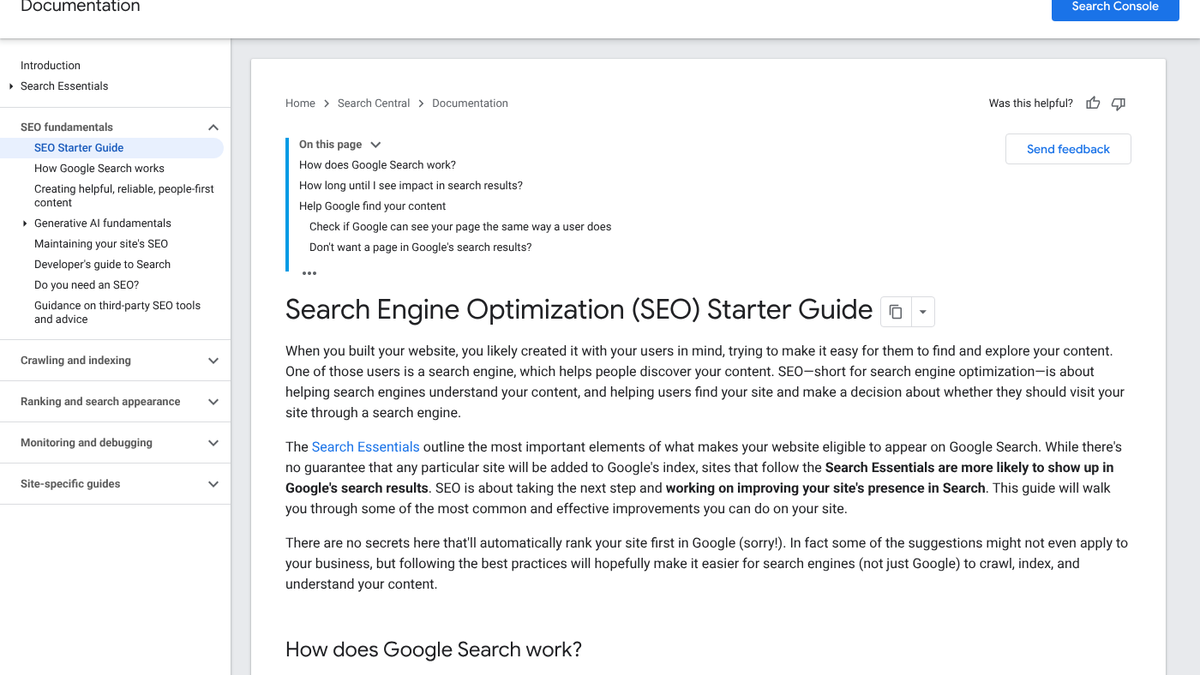
Also note the words. Google's SEO Starter Guide makes the point that experts and newcomers search differently: "some users might search for 'charcuterie', while others might search for 'cheese board'." The related searches and the titles of the top pages show you which words your readers use.
Know exactly what AI says about your competitors.
RankControl's Recon Agent monitors competitor citations across ChatGPT, Perplexity, Claude, Gemini, Grok, Google AI Mode, and Google AI Overviews. See where they show up and you don't.

Turn it into a five-line brief
Before you outline anything, write down five lines. We call this the SERP brief.
- Intent: what searchers want, in one sentence.
- Format: the type and rough length of page that ranks.
- Features: what else is on the page, and what that means for yours.
- Competition: who ranks, and how strong they are.
- Gap: what your page will have that the top results don't.
If you can't fill in line five, think twice about writing the page. Matching the top results gets you onto the list of candidates. The gap is what gives Google a reason to rank you above them.
Here's what it might look like for "serp analysis":
| Line | Note |
|---|---|
| Intent | Learn how to read search results before writing |
| Format | Step-by-step guide, 1,500 to 2,000 words |
| Features | AI Overview with a definition; People Also Ask; tools and videos in the top ten |
| Competition | Agency and tool blogs, one Reddit thread |
| Gap | A worked example and a brief template, beyond the definition |
When the SERP says don't write it
Sometimes the honest answer is to skip the keyword, or change the plan.
- The top ten are all free tools. A blog post probably won't win unless you build a tool.
- The top ten are all huge brands and your site is new. Pick a narrower version of the keyword first.
- The AI Overview fully answers a simple question. There may be little traffic left for anyone.
That's still a useful result. Ten minutes of reading just saved you a day of writing.
Common mistakes
- Checking from your own account. Your history changes your results. Use a private window.
- Only reading position 1. Patterns show up across the top five, not in one page.
- Copying the top page. Matching it isn't enough. You need the gap.
- Ignoring SERP features. An AI Overview or a video pack changes what kind of page can win.
Once your page is live, the same reading helps you improve it. Our guides to content optimization and pages stuck on page two pick up from there.
Doing it yourself or handing it off
A careful SERP analysis takes ten to fifteen minutes per keyword. That's easy for one article and a real cost across twenty a month, before the writing starts.
You can do it by hand with a private window and the five steps above. RankControl does it for every article we write. Each one is written against the pages already ranking for its keyword and scored for how easily AI engines can quote it, with a list of fixes. We publish to your site, and our AI visibility tracking checks up to 50 buyer questions a week across seven AI engines. Expect traffic from Google first, with AI citations following more slowly as links and mentions build up.
26 content formats. Published on your domain. Matched to your brand.
Guides, comparisons, listicles, case studies, and more. RankControl generates content that gets cited by ChatGPT, Perplexity, Claude, Gemini, Grok, Google AI Mode, and Google AI Overviews.