Traffic fell, the chart is ugly, and someone just said "it's probably the AI summaries." Maybe so. The suspect is popular because it's genuinely often guilty, and misdiagnosis here is expensive in both directions: blame the Overviews for an algorithm hit and you'll skip the audit you need, blame your content for an absorption problem and you'll rewrite pages that were never broken. This is the ordered checklist for the afternoon after the drop, each check paired with its method, so the AI search summaries traffic drop verdict rests on collected evidence instead of a hunch someone said out loud.
Check 1: Confirm the Drop Is Real
Boring first, always. Verify your analytics tags still fire, since a consent-banner update or a tag-manager change silently halving "traffic" is a classic false alarm. Compare like-for-like ranges, this month against the same month last year where seasonality exists. And check whether the decline is sitewide or concentrated, because a sitewide overnight cliff usually means something mechanical, while a slow bleed on one page type means something environmental. Search Console's totals against your analytics totals is the quick cross-check: if they disagree sharply, your problem is measurement, and congratulations, this was the cheapest possible outcome.
Check 2: Isolate Where It Lives
Split the decline by page and query before naming any suspect, then label every losing query informational or commercial. This single split carries most of the diagnosis, because answer absorption concentrates almost entirely on informational queries, definitions, how-tos, explainers, glossary lookups, while commercial and navigational queries mostly keep their clicks. A drop spread evenly across both intent bands points away from AI summaries and toward an update or a site problem. One practitioner thread's advice held the whole method in a sentence: isolate before you speculate.
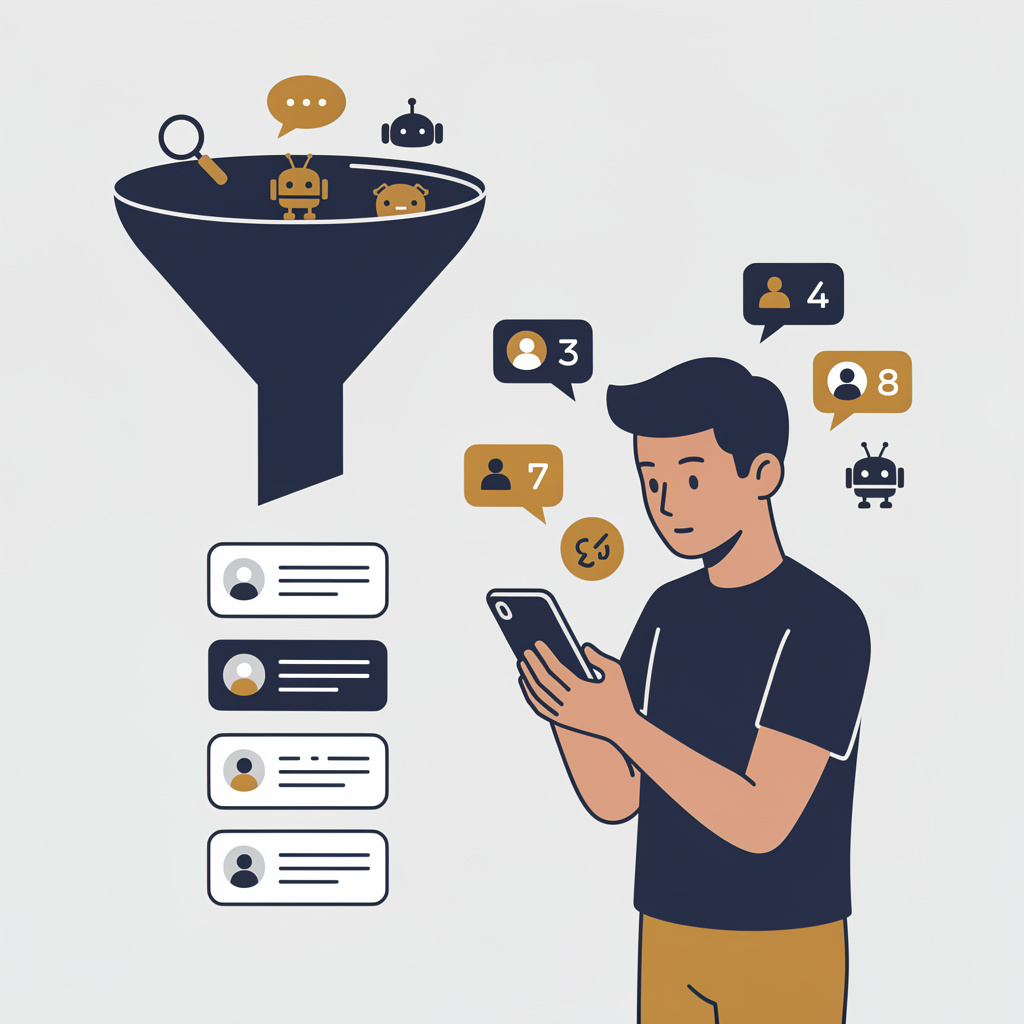
You're getting AI traffic. But do you know where it comes from?
RankControl credits every visit to the assistant that sent it: ChatGPT, Perplexity, Claude, Gemini, Copilot, or Grok. Full source attribution, next to your Google traffic.
Check 3: Read CTR at Stable Position
Now the signature test. For your losing queries, pull average position and click-through rate across the before-and-after windows. The absorption fingerprint is precise: position stable, impressions stable or rising, clicks and CTR falling. You're still ranked, still shown, and the searcher got satisfied above you. Here's a live case of exactly that shape, a 50% overnight click drop with impressions holding, on informational queries already sitting under Overviews:
Drop in clicks while impressions grow. AI overview impact or something else?
https://imgur.com/v6ppGnH About 3 weeks ago I noticed a drop in traffic. Clicks declined about 50% overnight, but impressions were holding steady. The trend has continued for the past 3 weeks. These are informational queries and a lot of my...
If instead position fell alongside clicks, stop blaming the summaries: something moved your rankings, and that's a different checklist entirely. And if CTR fell at stable position on commercial queries too, look for SERP-layout changes, new ad slots, or a competitor's rich results rather than AI absorption.
Check 4: Verify the Overview Is Actually There
Right, quick correction to the instinct that skips this step: seeing an Overview once on your own phone is anecdote. Verify presence properly, signed out, on the actual losing queries, and note whether an AI Overview appears, whether it expands to fill the page, whether you're cited inside it, and who is when you're not. Rank trackers with SERP-feature detection do this at scale. The cited-or-absent distinction matters most, because ranking first and being cited in the Overview are independent outcomes, and each combination has a different play.
On tooling: practitioners note Search Console added a limited generative-AI view under Performance in mid-2026, impressions only, no clicks, no query split, with AI Overviews blended into AI Mode. Glance at it for direction, then build the real split yourself with the intent and CTR method above, because the built-in view can't carry a diagnosis.
Check 5: Overlay the Calendar
Before the verdict, check the dates. Google's Search Status Dashboard lists updates with start and completion timestamps, and the recent window matters: a spam update ran August 18-21, Overview expansion changed some informational SERPs in the same season, and update-adjacent volatility is routine. A decline starting inside an update window, concentrated on specific tactics or page types, reads as algorithmic even when impressions look stable. One well-known search analyst makes a career of this exact correction, pointing out that sites crying "AI took our traffic" often show years of accumulating update damage in their visibility charts. Sound harsh? The charts usually agree with him. Annotate your analytics with the dashboard dates and the model-release dates, permanently, and this check takes thirty seconds forever after.
We'll show you exactly where your brand stands in AI search.
No commitment. $0 due today, cancel anytime. See how ChatGPT, Perplexity, Claude, Gemini, Grok, and Google AI Mode talk about your brand today.
Check 6: Rule Out Your Own Ship
Sites change themselves and forget. Anything deployed in the drop window: a migration, a redesign, a robots.txt edit, a CDN or bot-protection change, a consent flow, a URL restructure. Cross-reference the deploy log against the drop date before concluding anything about the outside world, and ask whoever ships changes what else went out that week. The environmental suspects get the headlines, and the self-inflicted ones get the actual traffic.
Check 7: Check Where the Attention Went
The last check reframes the loss. Pull your AI-referral traffic, visits arriving from ChatGPT, Perplexity, and friends, plus direct and brand-search trends over the same window. Some "lost" traffic moved channels: buyers who once clicked through informational results now meet you inside answers and arrive later, by name. A brand with falling informational clicks and rising brand queries is being discovered differently rather than less. That's also the moment to check the scoreboard most sites don't have yet: whether the answers absorbing your clicks actually cite or mention you, which is what AI visibility measures. Losing the click to an answer that recommends you is a very different event from losing it to an answer that recommends your competitor, and nothing in Search Console can tell you which happened.
A Worked Hour, On a Real Shape
Run the case from that embedded thread through the checks and watch the verdict fall out. The shape: clicks down roughly half overnight, impressions steady for three weeks, all informational queries, and the pages were already appearing inside Overviews while clicks still grew. Check 1 passes, since impressions holding means measurement and indexing are fine. Check 2 isolates cleanly to one intent band. Check 3 finds the fingerprint exactly: stable presence, collapsing clicks. Check 4 is where the interesting detail surfaces, because the pages were already cited in Overviews back when clicks were growing, so presence alone didn't cause the cliff; the plausible structural change is coverage and layout, more of the queries gaining Overviews at once, or existing ones expanding to fill the page, both of which happened in waves this season.
Verdict: absorption, with a layout-shift accelerant, and nothing about the site broken. The play follows directly: keep the citations the pages already earn, since cited presence is the surviving asset on those queries, and shift new-content effort toward the intents that still click. Total diagnosis time on a real case: under an hour, most of it exports.
The Client Conversation
Agencies keep asking each other how to explain these drops to clients, so here's the script the checklist buys you. What happened: the results page changed on the informational half of your queries, and the checks show our rankings held while the answer layer absorbed the click. What we verified: tracking, intent split, CTR at stable position, Overview presence, the update calendar, and our own deploy log, in that order. What changes now: we fight for citations inside the answers, reweight the calendar toward intents that click, and stop measuring success purely in sessions on queries where sessions no longer exist. What you'll see weekly: presence in the answers, per engine, next to the traffic that remains.
That last line is the reporting shift this whole era demands, and clients accept it remarkably well when it arrives with evidence instead of excuses.
The Verdict Table
| What you found | The diagnosis | The play |
|---|---|---|
| Tags broken or ranges mismatched | Measurement, not market | Fix tracking, recheck |
| Position fell with clicks | Update or site issue | Audit against the calendar and policies |
| Stable position, informational CTR bleeding | Answer absorption | Fight for citations, reweight intents |
| Drop starts in an update window | Algorithmic | Policy and quality audit |
| Deploy log matches drop date | Self-inflicted | Roll back or repair |
| AI referrals and brand queries rising | Channel shift | Measure the answer layer, feed it |
After the Diagnosis
If absorption is your verdict, the recovery is a reallocation rather than a restoration. The informational click that an answer consumed isn't returning, and the winnable ground is being the source those answers cite, weighted toward the commercial intents where clicks survive. That work is measurable weekly: which engines cite you, for which queries, against which competitors, and how each of those moved since the last check. RankControl runs exactly that scoreboard across ChatGPT, Perplexity, Claude, Gemini, Grok, and Google's AI surfaces, next to your rankings, so the next time a chart lurches, the first-hour question, absorption, update, or accident, gets answered by instruments you already have running. The checklist above is the manual version. Either way, run it before you rewrite anything.
Know exactly what AI says about your competitors.
RankControl's Recon Agent monitors competitor citations across ChatGPT, Perplexity, Claude, Gemini, Grok, and Google AI Mode. See where they show up and you don't.