
AI visibility is how often, and how favorably, AI engines mention your brand, cite your pages, and describe what you do when people ask questions in your category. It's the answer-layer counterpart to search visibility: where rankings measure your position in a list of links, AI visibility measures your presence inside the assembled answers of ChatGPT, Perplexity, Claude, Gemini, Grok, and Google's AI features. That's the definition. The rest of this entry unpacks the parts that make it usable: the metrics inside the term, how to measure them without fooling yourself, and what actually moves the number.
The Definition, Unpacked
Three words in that definition carry the load.
Often. Frequency of appearance across the questions that matter to your business, which makes AI visibility a rate rather than a badge. Appearing in one answer once is an anecdote; appearing in 30 of your 50 tracked buyer questions is a position.
Favorably. Presence has a quality dimension rankings never had. An engine can name you accurately or wrongly, freshly or three years out of date, recommend you first or list you as an also-ran, and describe you in your own framing or a competitor's. The description layer is part of the metric because buyers read it as the truth.
Your brand and your pages. The term spans two distinct events: the engine naming you, a mention, and the engine attaching your URL as a source, a citation. They move independently, and conflating them is the most common measurement mistake in the field.
AI Visibility vs the Alphabet Soup
The vocabulary around this space confuses buyers weekly, so here's the sorting. AI visibility is the outcome and the metric: your measurable presence in AI answers. GEO (generative engine optimization) and AEO (answer engine optimization) name the practice of earning that presence, the way "SEO" names the practice behind search rankings. Share of voice is AI visibility made comparative: your share of the mentions and citations in your category's answers, against named competitors. You do GEO; you measure AI visibility; you win share of voice. Anyone selling all three as interchangeable words is selling vocabulary rather than a method, and the invoice usually shows it.
Your competitors are building backlinks while you read this.
Organic outreach, social mentions, and link exchanges, with managed backlinks available as an add-on. Grow your domain authority without running the campaign yourself.

The Four Metrics Inside the Term
In practice, AI visibility decomposes into four measurable things, and a serious program tracks all of them per engine.
- Mention rate. Of your tracked questions, how many answers name you at all. The floor metric: it tells you whether the engines know you exist in this category.
- Citation rate. How many answers attach your URL as a clickable source. The traffic-and-trust metric, and the one that proves your pages, rather than your reputation, earned the slot.
- Share of voice. Your mentions and citations as a share of the category's total, against competitors. The strategy metric, because visibility is zero-sum inside any given answer.
- Description quality. What the engines actually say about you: accuracy of facts, freshness of framing, and whether the language echoes your positioning or someone else's. The metric nobody tracked until answers started writing first impressions at scale.
The mention-versus-citation split deserves one more sentence, because our own 90-day testing caught them moving in opposite directions on the same sites: mentions drifting up while citations stayed flat. A single blended score would have hidden exactly the thing worth knowing.
Why the Term Exists Now
The metric emerged because buyer behavior moved and the old instruments missed it. A growing share of research-shaped queries now end inside an AI answer, with no click for analytics to catch, and AI Overviews absorb clicks on a large share of informational queries where they appear. The result is a visibility gap the ranking report can't see: a brand can hold position three on Google while ChatGPT recommends two competitors and describes the brand with three-year-old facts. Nothing in the classic stack flags that. AI visibility is the metric that does, which is why it moved from curiosity to KPI in roughly two years. The timing wasn't gradual either: each model release reshuffles which sources the answers favor, sometimes overnight, and teams without a baseline discover the reshuffles a quarter late, in pipeline numbers nobody can explain.
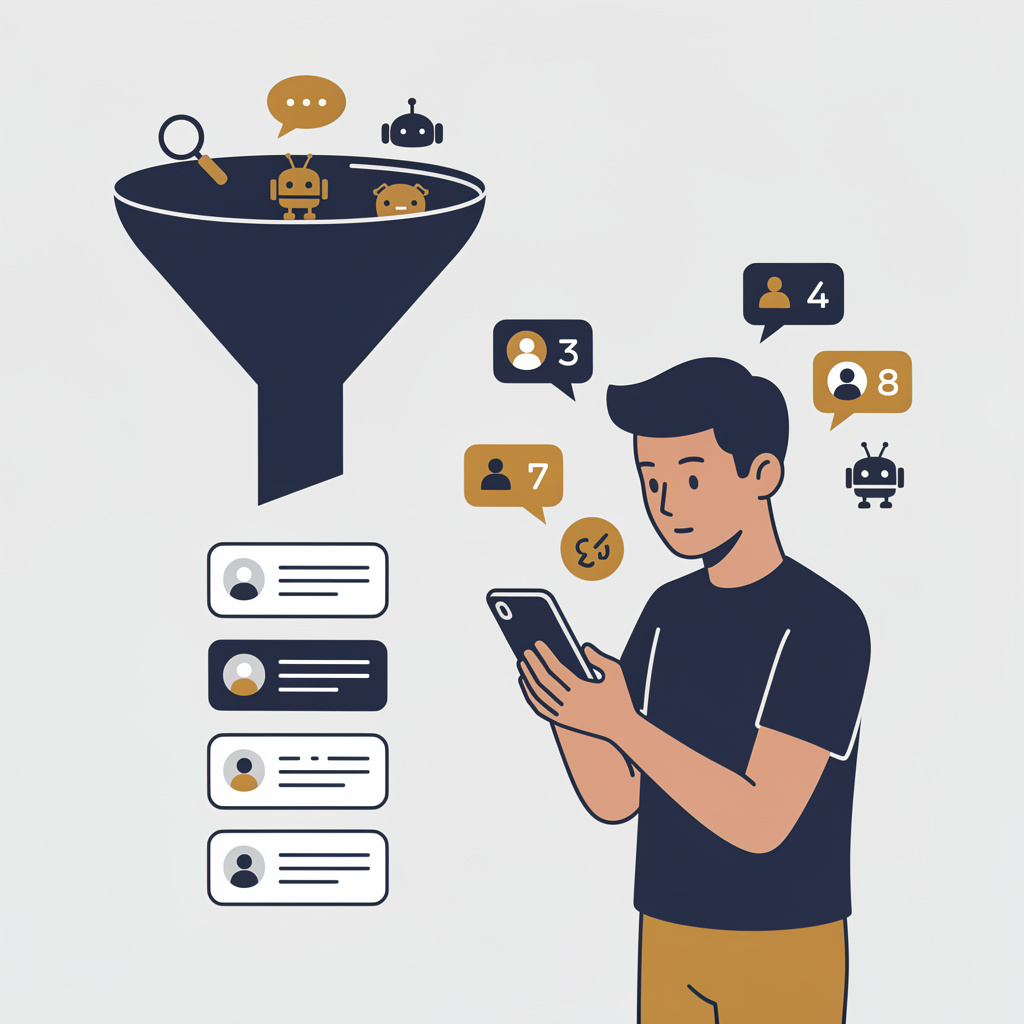
You're getting AI traffic. But do you know where it comes from?
RankControl credits every visit to the assistant that sent it: ChatGPT, Perplexity, Claude, Gemini, Copilot, or Grok. Full source attribution, next to your Google traffic.
How to Measure It Without Fooling Yourself
So how do you measure something this version-dependent without fooling yourself? The method that holds up, assembled from practitioner discussions and our own tracking:
Fix a panel. 25 to 50 buyer-style questions, the ones a real prospect would ask, held constant across checks. Changing prompts between checks measures your curiosity rather than your trend, and a drifting panel is the quiet way most homegrown tracking dies within a quarter.
Test the default surface, signed out. Your logged-in, history-soaked session is not your market's view. The default model on the default surface is what most real buyers meet, which settles the which-model anxiety that stalls most teams.
Start with identity prompts. Before measuring "are we mentioned for X," check "does it know who we are": ask each engine what your company is and does, and compare. An engine that can't resolve your identity won't recommend you, and identity gaps are the cheapest fixes in the whole discipline.
Log per engine, weekly. As one measurement builder put it in that thread, AI visibility isn't really one metric: results shift with the model, the version, the phrasing, and the retrieval behind the answer. Per-engine weekly logging is what turns that churn into a readable trend, and engine divergence is now large enough that a blended number actively misleads.
Hold on, one honesty note before the tooling talk: manually, that's a spreadsheet and several hours a week, sustainable for exactly as long as someone loves doing it. The automated version is the product category we work in: RankControl's tracking runs the panel weekly across all six engines, logs mentions, citations, share of voice, and description language, and flags the week-over-week shifts, which converts the definition above from a concept into a Monday-morning number.
A Worked Reading
Here's what the four metrics look like doing their job, for an imaginary B2B tool tracking 50 buyer questions. This week's panel: mentioned in 22 answers, cited in 9, share of voice at 14% against a category leader's 31%, and description language accurate on four engines but two versions stale on Gemini and wrong about pricing on Perplexity.
Each number is an instruction. The 22-of-50 mention rate says the engines know the brand but miss it on more than half the category's questions, so the content plan should target the 28 absent queries. The mention-to-citation gap, 22 against 9, says the brand's reputation outruns its pages: answers name it from third-party knowledge while its own URLs lose the source slot, which is an extraction and structure problem. The share-of-voice spread names the competitor whose presence to study. And the description faults are the cheapest wins on the board: a corrected pricing page and a refreshed entity footprint fix what two engines are currently telling every prospect.
That's the metric working as a steering instrument rather than a vanity score, which is the entire point of defining it carefully.
Four Common Misreadings
- The single-check verdict. Cited sources churn between answer regenerations, so one check is a coin flip. Trends over weeks are the unit of truth.
- The blended score. One number averaged across engines hides the divergence that tells you where to invest. Per-engine or nothing.
- Mentions celebrated as citations. The brand being named feels like winning; without the URL attached, no traffic moved and no page earned trust. Split them, always.
- The logged-in test. Your personalized session flatters you. Default surface, signed out, or the number describes your bubble rather than your market.
What Moves It
The levers, in the order they usually pay. Crawler access first, since engines can't cite pages their bots never reached, and silent CDN blocks remain the most common invisible failure. Extraction-friendly structure second: direct answers under honest headings, because engines lift passages rather than pages. Entity consistency third, the same facts about your company everywhere machines read, since trust-seeking retrieval verifies before it recommends. And third-party presence fourth, the reviews, mentions, listicles, and communities that vouch for you where the recommendation-shaped answers do their sourcing.
Notice what's absent from that list: any single magic file or tag. AI visibility moves the way search visibility always did, through accumulated legibility and trust, measured weekly so you can tell which investment moved it.
The One-Paragraph Version
AI visibility: how often and how favorably AI engines mention, cite, and describe your brand when buyers ask questions in your category. Measured per engine as mention rate, citation rate, share of voice, and description quality, on a fixed weekly panel. Improved through crawler access, extractable structure, entity consistency, and earned third-party presence. Related to GEO and AEO as outcome to practice. If your buyers ask engines questions, it's already a number about your business; the only choice is whether you're the one watching it.
We'll show you exactly where your brand stands in AI search.
No commitment. $0 due today, cancel anytime. See how ChatGPT, Perplexity, Claude, Gemini, Grok, and Google AI Mode talk about your brand today.