
Every agency now fields the same client question, usually forwarded with a screenshot: "ChatGPT recommended our competitor, what are we paying you for?" The honest answer requires instrumentation most agency stacks don't have yet, because rank trackers don't see answers, and the spreadsheet version of AI citation tracking dies somewhere around client number three. This list is the 2026 toolkit for that job: the best SEO software for agencies tracking AI citations, seven tools across the price range, each graded on the thing agencies actually care about, which is running this for many clients without burning the margin.
Disclosure up front: we build the first tool on this list, the grading criteria are stated so you can argue with them, and the three-jobs test from our stack guide applies to every entry including ours: does it track visibility, diagnose why, and drive action, or does it stop at a score?
Why This Category Exploded This Year
Two seasons of engine behavior created the client demand. August's GPT-5.6 retrieval overhaul reshuffled citation sources overnight, sites that had coasted on community citations lost them in days, and clients noticed because their prospects mentioned it. Google's AI features kept absorbing informational clicks while reporting on them only partially, so agencies got the traffic questions without the data to answer them. And the answer engines diverged hard enough that a brand can dominate Perplexity while ChatGPT ignores it, which no single-number report can express. The tooling below exists because the client questions arrived before the instruments did, and the agencies that closed that gap first are winning the pitches that mention AI in the first sentence.
How We Graded
Five criteria, weighted for agency reality rather than feature counts. Multi-client economics: does the pricing survive your book shape? Per-engine coverage: does it see the engines your clients' buyers actually use, separately? Reporting exportability: can the data land in the deck without screenshots and manual assembly? Action connection: does tracking link to something that moves the numbers, or does it end at a score? And price transparency: can you model the cost before a sales call? Re-weight freely; a thirty-client local-SEO shop and a five-client enterprise boutique should disagree with each other about this list, and both should disagree with us somewhere.
1. RankControl
The full-pipeline option: 50 tracked buyer queries per brand, checked weekly across ChatGPT, Perplexity, Claude, Gemini, Grok, and Google's AI surfaces, with per-engine citation history, share of voice against named competitors, and description-language tracking, wired to the layer most trackers lack, a content engine that plans, generates, interlinks, and publishes to the client's CMS, plus outreach drafted from the client's own mailbox.
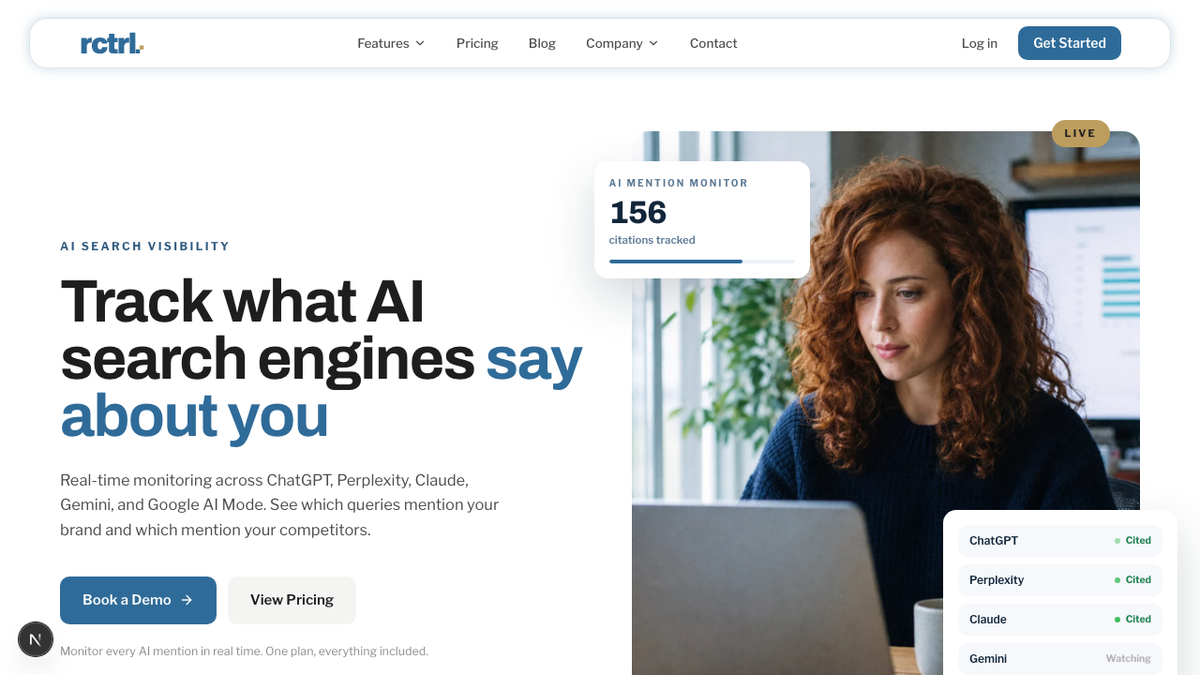
Agency fit, honestly. RankControl is built per-brand at a flat $400/month, with no white-label layer and no reseller program, which shapes who it serves well: agencies running deep retainers for a handful of clients, where each client justifies its own pipeline and the agency's value is judgment over the machine. An agency spreading thin tracking across thirty small accounts will find the per-brand model expensive, and should read on. For the deep-retainer shape, the pitch is that tracking, content, and links stop being three vendors and become one line item the agency operates.
2. Semrush AI Visibility Toolkit
The path of least resistance for the hundreds of agencies already living in Semrush: prompt tracking with search-volume context, AI visibility alongside the rank tracking, and client reporting in the workflows your team already knows.
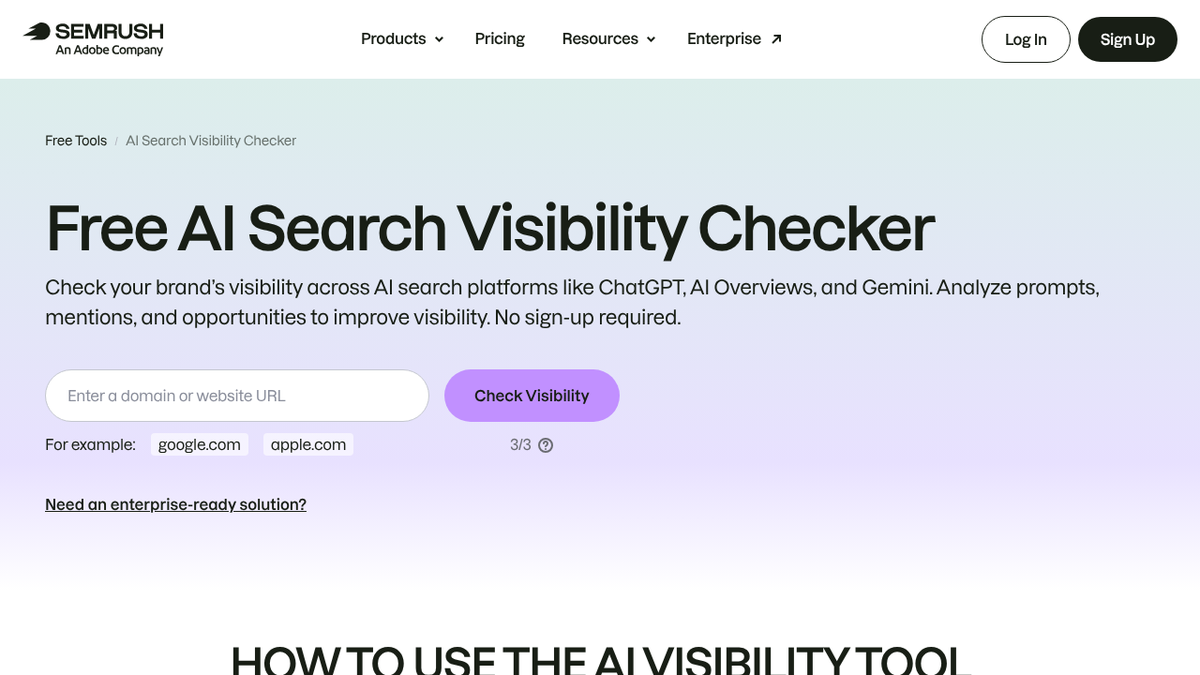
Agency fit. The integration is the feature. No new logins, no new training, no new line to explain on the invoice, and AI citations appearing in the same reports clients already receive. The depth trades against dedicated platforms, and the volume-context angle, seeing which prompts carry real search demand, maps neatly onto how agencies already prioritize work. If Semrush is your operating system, start here and add depth where clients demand it.
200+ SaaS teams already track their AI citations.
They know exactly when ChatGPT mentions their brand, and when it stops. Do you?
3. Profound
The enterprise-reporting pick: brand mention monitoring across nine AI platforms, starting around $99/month, with the competitive share-of-voice depth that enterprise clients expect in a QBR deck.
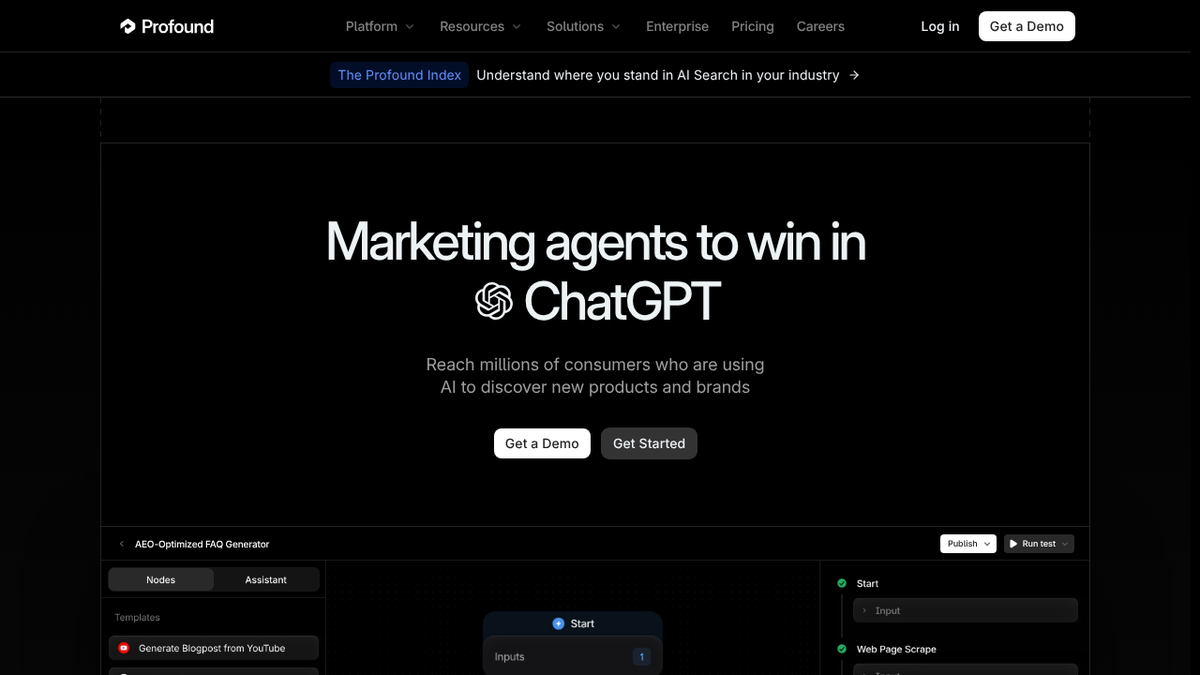
Agency fit. When the client is large, the competitor set is named, and the deliverable is a share-of-voice narrative, this is the tool the deck gets built from. Position drift is real, Profound's own tracking has citation positions moving 40-60% month over month across platforms, which conveniently for agencies makes the monthly report genuinely newsworthy rather than a formality.
4. AIclicks
The volume-book option: prompt monitoring in bulk, citation-source identification, action recommendations, and an explicitly agency-friendly posture, with managed services on top for accounts that want the work done too.
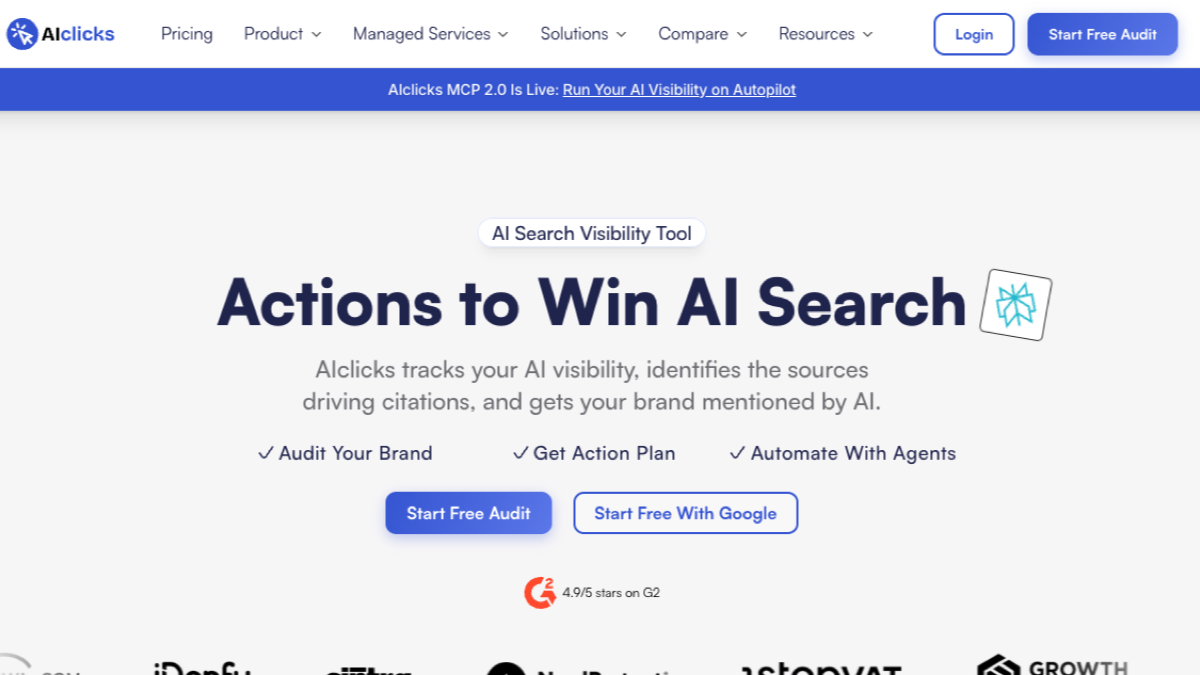
Agency fit. Where the per-brand economics of deep platforms break, prompt monitors shine: many small clients, standardized panels, recommendations juniors can execute, and per-account costs that still close. The recommendations-versus-throughput question applies at agency scale doubly, since unexecuted action items multiply across accounts, so pair it with a delivery process or the insights pile up as prettily as anywhere else.
5. Google Search Console's Generative AI Report
The free floor, first layer: since June 2026, Search Console reports impressions from AI Overviews and AI Mode per property. Impressions only, no clicks, no query split, no engines beyond Google's, which is exactly why it's the floor rather than the building.
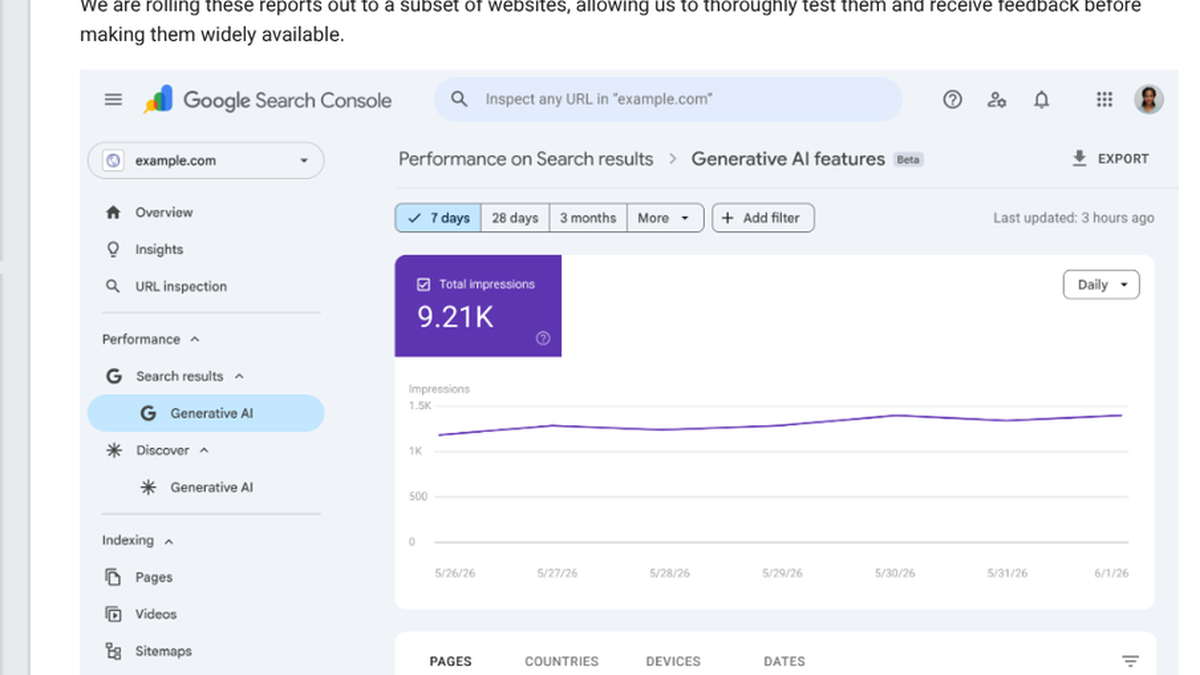
Agency fit. Deploys on every client property in minutes, costs nothing, and gives the Google-side AI baseline every report should include. No agency has an excuse for skipping this layer, and clients respond well to first-party Google data even when it's directional.
How often does ChatGPT mention your brand?
Most founders have no idea. The answer might surprise you.

6. GA4 With a Custom AI Channel Group
The referral layer: a custom channel group segmenting visits from chatgpt.com, perplexity.ai, and the rest of the answer-engine referrer set, per client, in the analytics they already have.
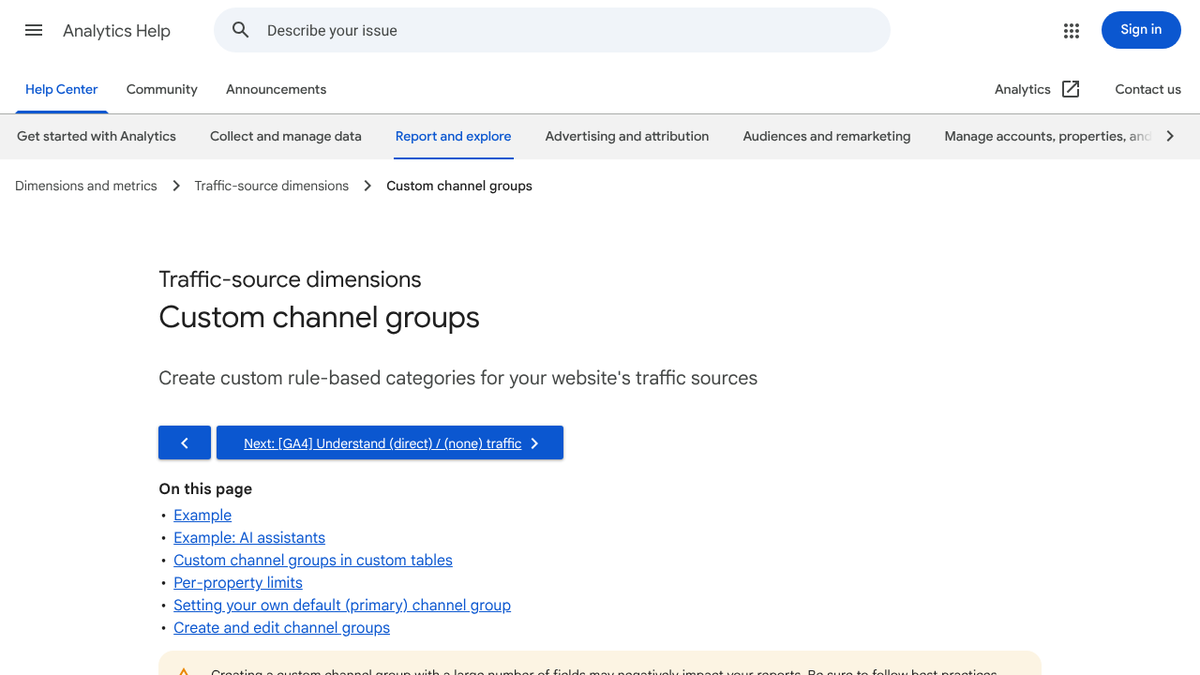
Agency fit. Twenty minutes of setup per client, then permanent visibility into the AI visits that carry a referrer. The caveat belongs in every client conversation: most AI referral traffic arrives with no referrer header and hides in Direct, and one monitoring vendor famously measured Claude driving 10.6% of its signups while GA4 credited 0.1%. Present this layer as the visible tip of the iceberg rather than the whole of it.
7. Cloudflare Bot Analytics
The technical layer: per-crawler analytics on what AI bots actually read across a client site, which turns "are the engines even seeing this content" from a guess into a report.
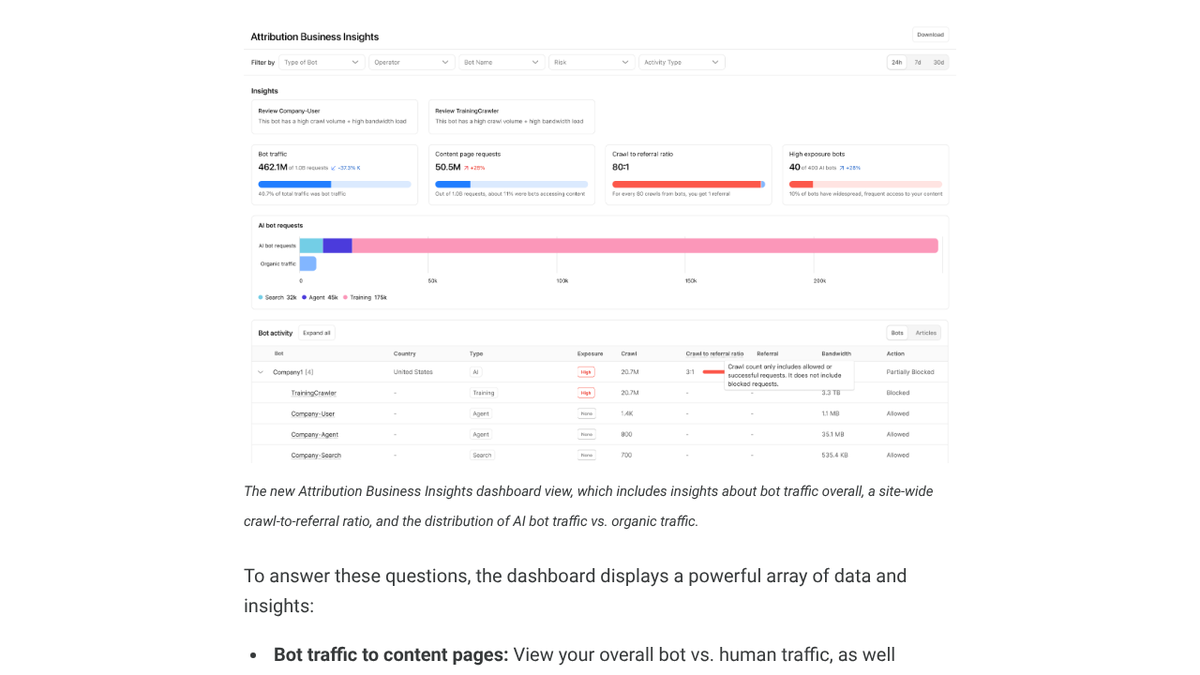
Agency fit. This is the audit tool: new client onboarding should include a crawler-access pass, because silently blocked AI bots remain the most common invisible failure on established sites, and finding one in week one makes an agency look like wizards. Requires the client's CDN cooperation, which is its own conversation.
The Pricing Shape, Side by Side
| Tool | Price shape | Agency sweet spot |
|---|---|---|
| RankControl | $400/mo per brand, all-in | Deep retainers, few clients |
| Semrush AI Toolkit | Suite add-on | Existing Semrush shops |
| Profound | From $99/mo | Enterprise SOV reporting |
| AIclicks | Tiered self-serve | Many small clients |
| GSC Gen-AI report | Free | Every client, the floor |
| GA4 channel group | Free | Every client, referrals |
| Cloudflare bot analytics | Paid CDN plans | Audits and debugging |
The One-Afternoon Setup, Per Client
However the paid layer shakes out, the onboarding sequence for a new client account is stable and fits an afternoon. Verify Search Console access and open the Generative AI report for the baseline screenshot. Build the GA4 AI channel group from the standard referrer list. Run the crawler-access pass, robots.txt plus a live fetch as the major AI user agents, and log anything blocked, because finding an accidental block in week one is the cheapest win in this discipline. Draft the client's prompt panel from their actual buyer questions rather than their keyword list. Then run the first full sweep, save it as the before-picture, and calendar the weekly slot. Every later report inherits its credibility from how boring and repeatable this first afternoon was.
The Weekly Workflow, Whatever You Pick
Tools change; the operating rhythm that makes any of them pay is stable, so here it is as a checklist your team can run Monday mornings.
Per client, a fixed panel of 25 to 50 buyer-style prompts, held constant, because a drifting panel measures curiosity instead of trend. A weekly sweep per engine, logged with four columns: mentioned, cited, citation position, and description language, since position multiplies the value of presence and descriptions are what prospects actually read. A monthly narrative pass that turns the deltas into the three sentences the client remembers: what moved, why, and what we're doing about it. And a quarterly panel review where prompts get retired or added deliberately, with a note in the log, so the trend line survives the edit.
The rhythm is the product, honestly. Every tool above is a way of making this loop cheaper, faster, or deeper, and none of them replaces the agency judgment that reads the columns and picks the next move.
Five Buying Mistakes Agencies Keep Making
- Grading tools on demo prompts. Vendors demo on prompts their tool tracks well. Bring your own panel from a real client and watch the coverage claims meet reality.
- Accepting one blended score. A single "AI visibility" number across engines hides the divergence that decides where client effort goes. Per-engine or walk away.
- Ignoring the client's vertical when picking engines. Developer-tool clients live in Perplexity answers; local-service clients live in Google's AI features. Coverage that doesn't match the vertical is coverage of nothing.
- Forgetting the action layer. Tracking that connects to no content, link, or fix workflow produces beautifully documented stagnation, billed monthly.
- Reselling the tool instead of the outcome. Margin lives in packaging the tracking inside a retainer that moves the numbers, and dies in passing through tool costs with a markup the client can Google.
Assembling the Stack by Book Shape
Let me be honest about the meta-answer, because "best" depends entirely on your client book. The free floor, GSC plus GA4, goes on every account regardless; that's twenty minutes per client and non-negotiable in 2026. A Semrush shop adds the toolkit and stops there for most mid-market clients. Enterprise books add Profound where the QBR demands share-of-voice narrative. Volume books standardize on a prompt monitor. And the deep-retainer clients, the ones paying for outcomes rather than reports, justify the full pipeline, where the tracking connects to the content and links that move it, which is the whole argument for measurement tied to action.
On margin, since that's the real agency question under every tool decision: the tracking itself is table stakes that clients increasingly assume, and the billable value sits in the interpretation and the actions. Price the AI visibility line as part of the retainer's outcome story, keep the tool costs inside your cost of goods, and resist the temptation to itemize a pass-through the client can price-check in one search. Agencies that learned this on rank trackers a decade ago already know the shape.
The one wrong answer is the spreadsheet past client three, and the second wrong answer is a tool whose only output is a proprietary score. Every entry above survives the three-jobs test at its own scale. Pick by book shape, deploy the floor everywhere, and when a client forwards the next "ChatGPT recommended our competitor" screenshot, be the agency that answers with a trend line instead of a shrug.
15 hours a week manually. Or 15 minutes with RankControl.
Track citations, monitor competitors, and fix content gaps across every AI search engine. Automatically.