
This is a comparison between two different species that happen to hunt the same territory. The HOTH is a productized SEO services marketplace: you order campaigns and deliverables, their team executes, you get reports. RankControl is software: a flat-fee pipeline that runs your content, publishing, outreach, and weekly AI citation tracking on one flat fee. Both now sell "AI search visibility" on the label, which is exactly why buyers keep lining them up against each other, and why the honest comparison is about which model fits your operation rather than which brand tries harder. Full disclosure applies throughout: we build RankControl, and we'll flag the places The HOTH is the better buy.
What Each One Actually Is
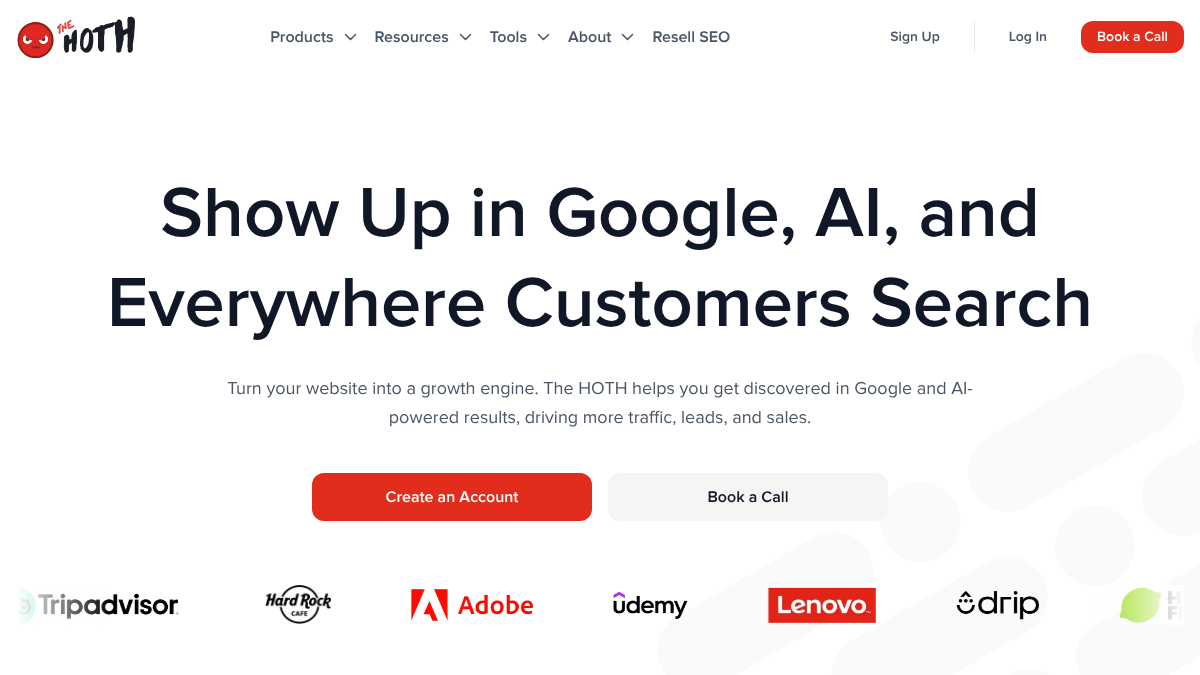
The HOTH has been a fixture of productized SEO since the early 2010s, and the current menu is broad: Managed SEO and managed services, link building in several formats including insertions and outreach, HOTH Blogger for content orders, content syndication and refresh services, digital PR, exclusive media links, and a newer AI wing with AI Discover and an AI Visibility service pitched as getting you cited by AI search. There's a reseller program for agencies and bulk buying for volume purchasers. The homepage promise sums up the positioning: show up in Google, AI, and everywhere customers search.
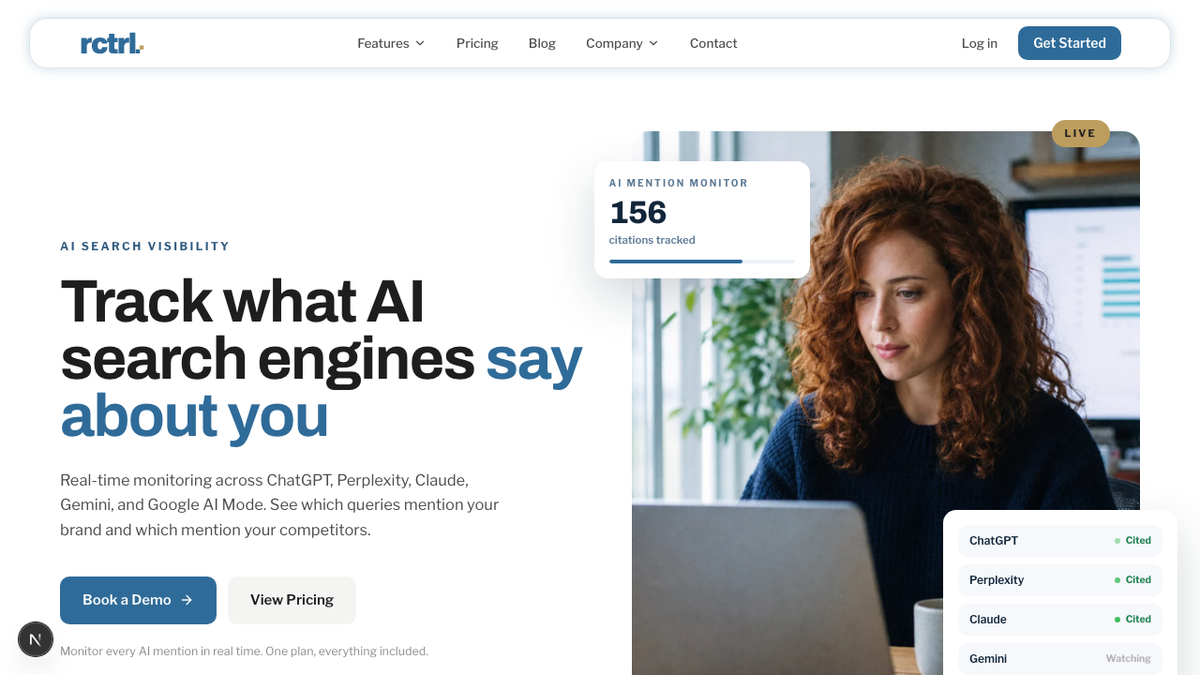
RankControl is a pipeline you subscribe to rather than a counter you order from. One plan at $400/month runs query discovery, content generation with internal linking designed in, native publishing to your CMS, backlink outreach drafted from your own mailbox, competitor monitoring, and weekly citation checks across ChatGPT, Perplexity, Claude, Gemini, Grok, and Google's AI surfaces, next to Google and Bing rankings. There's no order form; the system runs and your team reviews.
| The HOTH | RankControl | |
|---|---|---|
| Model | Services marketplace, per order | Software pipeline, flat fee |
| AI visibility | Managed service with reports | 50 queries checked weekly across 6 engines, in-dashboard |
| Content | Ordered per piece via HOTH Blogger | 100 pages/mo planned, generated, published to your CMS |
| Links | Packages, insertions, digital PR | Outreach from your mailbox; optional Managed Backlinks add-on |
| Who executes | Their team | The software, with your review |
| Agencies | Reseller program, bulk buying | Built for in-house teams |
Where The HOTH Genuinely Wins
Credit where due, because a comparison that pretends otherwise is an ad.
The menu breadth is real. Press releases, syndication, citation cleanup, digital PR, media placements: discrete deliverables RankControl simply doesn't sell. If your program needs those, they exist here in one cart.
The done-for-you posture is real too. A HOTH managed campaign means humans plan and execute while you receive summaries. Some teams want exactly that relationship with SEO, and software with a review queue is a different job description for whoever owns it.
Agencies are their home turf. The reseller program and bulk pricing exist because a large share of productized SEO is agencies packaging deliverables for clients. RankControl has no reseller motion at all, so for that buyer the comparison ends early, and honestly.
One more point in their favor: intellectual honesty. Their own published take after a year of running AI search campaigns was that there's no AI-specific hack, and that citations ride on content and authority fundamentals. That matches everything the measurement data shows, and a services vendor telling you the unglamorous truth is a good sign in a market full of magic-file salesmen.

You're getting AI traffic. But do you know where it comes from?
RankControl credits every visit to the assistant that sent it: ChatGPT, Perplexity, Claude, Gemini, Copilot, or Grok. Full source attribution, next to your Google traffic.
AI Visibility: A Report Versus a Scoreboard
Now the headline category, and the sharpest structural difference.
The HOTH's AI offerings run as campaigns: their team works on your citability and sends reporting on how your brand shows up in AI answers. The cadence and the depth are theirs to define, and the deliverable is a document. That's consistent with how a services company has to package measurement.
RankControl treats measurement as the product's spine. Fifty tracked queries, checked every week, across six engines, with per-engine citation history, share-of-voice against competitors, and the description language each engine uses about you, all living in a dashboard your team opens on Monday rather than a PDF that arrives when the campaign cycle says so. When ChatGPT reshuffles its sources, which it did dramatically in August, a weekly scoreboard shows the break the week it happens, and a campaign report shows it whenever the next report lands.
The deeper difference is what happens to the data when you leave. Cancel a service and the measurement stops with it; the historical baseline lives in whatever PDFs you saved. The scoreboard model accumulates a citation history you own and consult, which compounds exactly the way the content does.
Content: The Order Counter Versus the Calendar
HOTH Blogger and its Pro tier deliver articles to order: you pick topics and quantities, writers produce, pieces arrive for your site. Quality control happens through revisions, and the operational load, choosing topics, maintaining cadence, wiring internal links, stays with you between orders.
The pipeline model moves that load into software. RankControl mines the queries buyers actually ask, plans titles onto a calendar with cluster structure and internal links designed in before writing, generates the drafts, and publishes natively to your CMS, a hundred pages a month if your plan calls for it. The practical difference shows up in month three: the order model produces what you remembered to order, and the calendar model produces what the plan said, every week, including the unglamorous supporting pieces nobody ever orders but every cluster needs.
Hold on, though, the order model deserves its due here: one-off, high-stakes pieces where you want to brief a human writer directly, and content types outside a standard article pipeline, stay its territory. Teams that need five pages a month of very bespoke work are buying a different thing than teams running a visibility program.
Links: Bought Batches Versus Earned Motion
Here's the section where the community context matters. Practitioner forums have spent years litigating productized link building, and the sentiment on batch-bought links has curdled: the recurring complaints are guest-post farms, links that move nothing, placements a client can't defend, and money that would've bought a real campaign elsewhere. That criticism targets the category rather than any single vendor, and The HOTH's better lane arguably runs through its digital PR and media placements, which practitioners rate far above bulk packages.
RankControl's link motion is built on the earn-it model: the outreach agent finds prospects for your published articles, locates contacts, and drafts personalized emails that send from your own mailbox, so the relationships and reply history stay with you. It's slower than buying a batch, on purpose, because the governance direction of the engines keeps raising the price of manufactured authority. For teams that want some links simply handled, the Managed Backlinks add-on delivers five per month from DR 25+ sites at $350/month, which is our own admission that a fully earned motion isn't every team's month-one reality.
We'll show you exactly where your brand stands in AI search.
No commitment. $0 due today, cancel anytime. See how ChatGPT, Perplexity, Claude, Gemini, Grok, and Google AI Mode talk about your brand today.

Pricing: Flat Physics Versus Order Physics
RankControl's math is one line: $400/month or $4,000/year, everything included, seven-day free trial, with optional add-ons for a dedicated strategist and managed backlinks. Budgeting is trivial and the marginal cost of using the system more is zero.
The HOTH's math depends on your cart. Per-campaign and per-deliverable pricing means a light month costs little and a heavy month can pass any flat subscription without noticing. Neither model is cheaper in the abstract; they allocate risk differently. Flat fee risks paying for capacity you don't use, and per-order risks costs that scale with your ambition exactly when your ambition grows. The break-even question worth asking with your last six months of invoices in hand: what did coordination cost you on top of the orders, in hours spent choosing, briefing, chasing, and stitching deliverables together? The pipeline's quiet pitch is that it deletes most of that line item.
A Sample Month, Side by Side
Abstract models hide the texture, so run one concrete month. Say you're a mid-size B2B SaaS wanting ten solid articles published, a real link motion, and AI visibility you can report upward.
On the order model, that month starts with choices: which content package and topics, which link products at which tier, whether this quarter's AI visibility campaign is running. Someone on your team briefs the orders, fields the drafts, requests the revisions, publishes the approved pieces to the CMS, wires the internal links, and files the reports when they arrive. The deliverables land, and the coordination role quietly consumes a meaningful slice of a marketer's month. That role has no line on the invoice, which is why it survives every budget review.
On the pipeline model, the month starts with a review pass instead: the calendar already holds the planned titles with their cluster structure, so your job is approving and adjusting rather than originating. Articles generate, publish natively, and interlink on schedule. The outreach agent surfaces prospects and drafts, and your team hits send on the ones worth sending. Monday's dashboard shows the week's citation movement across six engines without anyone requesting a report. The trade is real: nobody outside your company is accountable for the outcome, and the judgment calls surface to you. What disappears is the stitching.
Neither month is objectively better. One buys execution with coordination, the other buys automation with responsibility. Pick the shape your team can actually staff.
Five Questions To Ask Either Vendor
Whichever way you lean, these five separate the marketing from the model.
- How often is my AI visibility measured, and can I see it between reports? Cadence is the whole game when engines reshuffle overnight.
- What happens to my measurement history if I cancel? Data you can export and keep versus reporting that ends with the engagement.
- Who owns the outreach relationships? Emails sent from your mailbox build your reply history; emails sent from a vendor's build theirs.
- Show me the per-engine breakdown. A single blended "AI visibility score" hides the divergence that decides where your effort should go.
- What changed in your product after August? Any vendor whose AI offering reads the same as it did before the GPT-5.6 reshuffle wasn't watching closely enough to sell measurement.
Who Should Pick Which
The honest segmentation, with no hedging.
Pick The HOTH if you're an agency reselling SEO deliverables, a team that buys discrete campaigns a few times a year, a buyer who needs press releases and media placements in the same cart, or an organization that wants humans managing the whole program and is happy paying per outcome.
Pick RankControl if visibility is an always-on operation you run in-house, you want AI citations measured weekly as a first-class metric rather than reported on a campaign cadence, you'd rather own the content calendar, the mailbox relationships, the citation history, and the domain equity they build, and you prefer one flat line on the budget.
The switch case is common enough that we wrote the full migration guide: teams that were ordering content and links monthly anyway, coordinating everything themselves, and realized they'd hand-assembled a pipeline out of purchase orders. Moving that to software mostly deletes the coordination, and everything The HOTH ever delivered, content on your domain, links pointing at it, stays yours.
The Verdict
Which wins AI search visibility in 2026? For the specific thing the title asks about, the always-on measurement and the compounding content machine behind it, the pipeline model wins on structure: weekly per-engine tracking you own beats campaign reporting you receive, and a calendar that executes beats a counter that waits for orders. For breadth of one-off deliverables, agency resale, and done-for-you management, The HOTH wins on model, and no software subscription changes that.
Both companies, notably, agree on the underlying physics: no hacks, just fundamentals that compound and measurement that decides who notices first. The question is whether you want to order the work or run it. If it's run it, start the trial and put your own queries on the scoreboard this week.
Know exactly what AI says about your competitors.
RankControl's Recon Agent monitors competitor citations across ChatGPT, Perplexity, Claude, Gemini, Grok, and Google AI Mode. See where they show up and you don't.