Most lists of the best AEO tools for 2026 rank trackers against each other. Tracking is one of three jobs, though. You need answers worth quoting, other sites that cite you, and a way to see whether AI search noticed. Few tools do all three, so this list says which job each one does and what it costs.
I checked every price and feature below on the vendors' own pages on September 26, 2026. Our ranked list of the best AEO tools ranks them on citation tracking alone.
The three jobs an AEO tool can do
Answers come first. AI engines quote pages that state the answer plainly, back it with a number or a source, and cover the follow-up questions. Tools in this job score drafts, suggest what's missing or map the questions people ask next.
Citations come next. ChatGPT and Perplexity lean on third-party pages, so you need other sites to mention you. Tools here show which pages AI already cites in your category and help you pitch the people behind them.
Tracking closes the loop. A tracker runs a fixed set of prompts on AI engines and records whether you appear, where, and which sources the answer used.
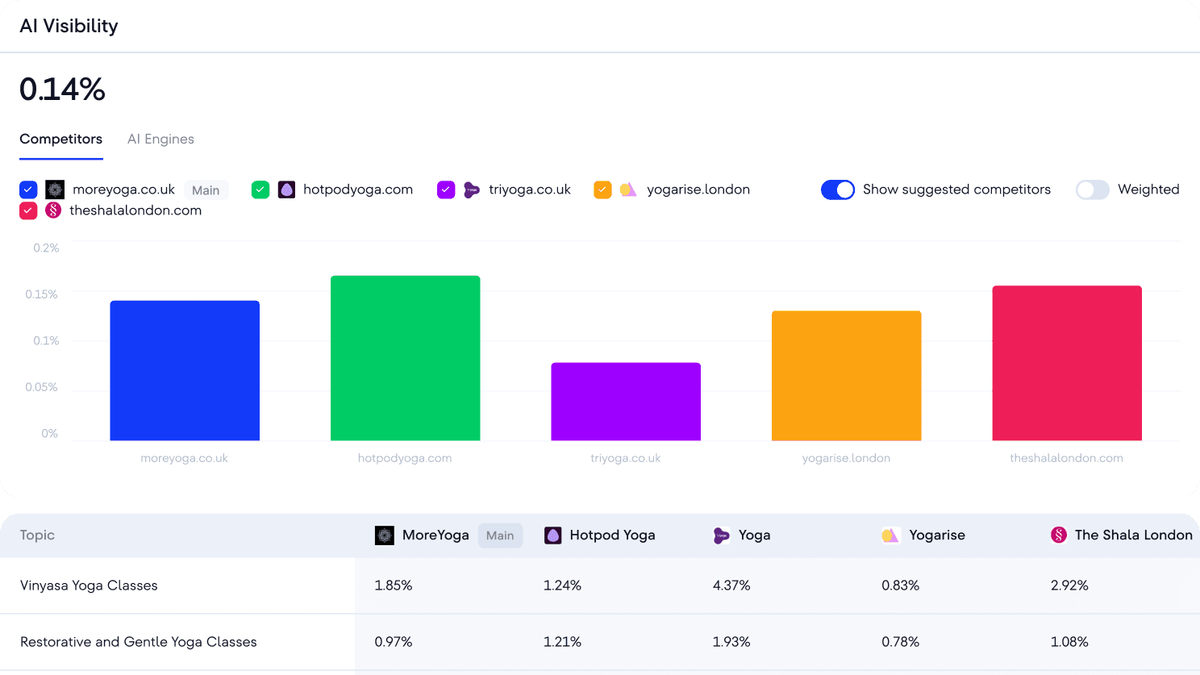
I call that list of cited sources the second column. Every tracker leads with a visibility score, and the column next to it lists the URLs each answer cited. The score tells you how you're doing. The second column tells you who to email.
Practitioners in r/aeo said much the same in August. One consultant had moved to Ahrefs because manual prompting got too inconsistent, and re-checks weekly since daily noise makes a single snapshot meaningless. Another said the cited URLs are the column people skip and the most useful one.
What are you actually using to audit your AEO/AI visibility right now?
There's a ton of talk in this sub about tactics (schema, entity graphs, citations, etc.) but I'm curious about the measurement side — how do you actually check where you stand before/after making changes? Curious what people are using: manu...
Best AEO tools at a glance
| Tool | Main job | Starts at | Engines tracked | Free option |
|---|---|---|---|---|
| Semrush AI Visibility Toolkit | Tracking | $99/mo | 5 (3 daily) | Free checker |
| RankControl | All three | $400/mo | 7, weekly | 7-day trial |
| Ahrefs Brand Radar | Tracking, citation research | $129/mo (Lite) | 6, plus Claude on custom prompts | Free checker |
| Profound | Tracking, agents | Custom | Up to 9 | 7-day trial |
| Frase | Answers | $49/mo | 2 to 5 by plan | 7-day trial |
| Surfer | Answers | $59/mo | 1 to 5 by plan | Free signup |
| Peec AI | Tracking | $95/mo | 3 you choose | Trial |
| SE Ranking | Tracking | $129/mo + $89 | 4 to 5 | 14-day trial |
| AthenaHQ | All three | Free, then $295/mo | 5 free, 11 paid | Free tier |
| AlsoAsked | Answers (question research) | $15/mo | None | Free searches |
Your competitors are building backlinks while you read this.
Organic outreach, social mentions, and citations from Editorial Circle member sites, with managed backlinks available as an add-on. Grow your domain authority without running the campaign yourself.

The 10 best AEO tools for 2026
1. Semrush AI Visibility Toolkit
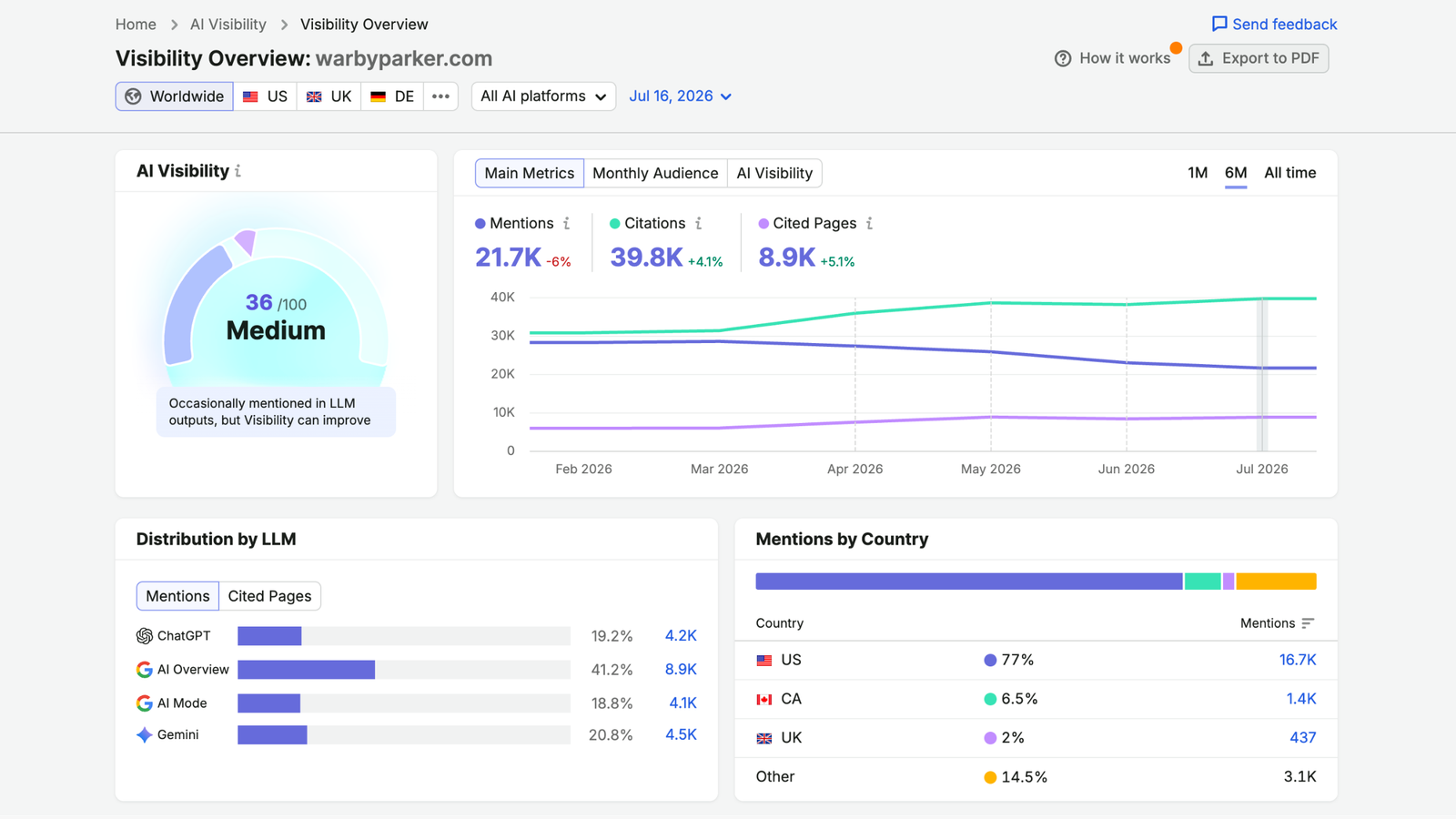
Semrush has the widest tracking data of any tool here, and it sits next to the keyword and backlink data most SEO teams already use. The toolkit costs $99 a month on its own or added to a plan, with 25 tracked prompts and no trial. It also comes in Semrush One Starter at $199 a month, or $165 billed yearly.
Its reports don't agree on engines. Brand Performance covers five, including AI Overviews and AI Mode, and updates weekly. Daily prompt tracking covers three: ChatGPT Search, AI Mode and Gemini. Claude and Grok aren't tracked. The Sources report lists every URL AI cites for your prompts, and a separate AI PR Toolkit, from $149 a month, handles journalist outreach with follow-ups.
Best for: teams already on Semrush who want tracking breadth.
2. RankControl
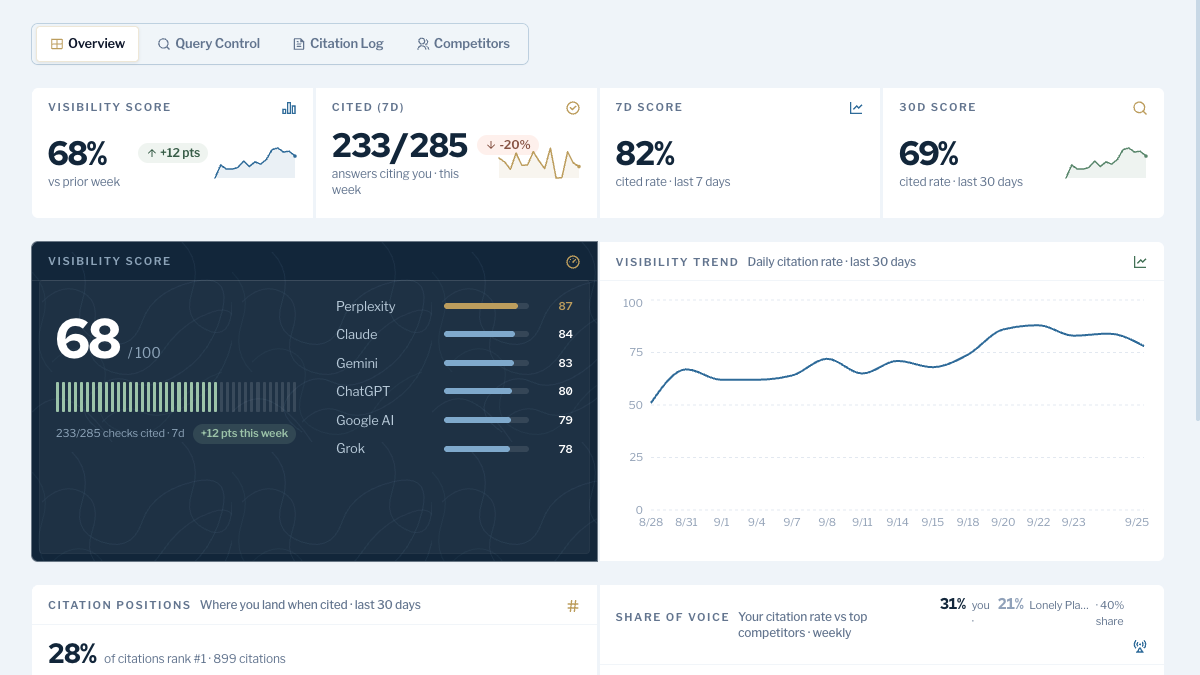
RankControl runs all three jobs on one plan, $400 a month or $4,000 a year, with a 7-day trial and $0 charged today. We check 50 questions every week on seven engines, including Claude, Grok, Google AI Mode and Google AI Overviews, and show which competitors got named instead of you and which sources the answer quoted.
The content engine writes each article against the pages already ranking for its keyword, across 26 content types and up to 100 pages a month, and publishes native posts to your CMS with auto-publish off by default. Backlinks finds prospects and contacts for each published article and sends the pitch from your own mailbox after you approve it, with follow-ups that stop when someone replies. RankControl tracks fewer questions than dedicated trackers and checks weekly rather than daily.
Best for: teams that want answers, citations and tracking run for them.
3. Ahrefs Brand Radar
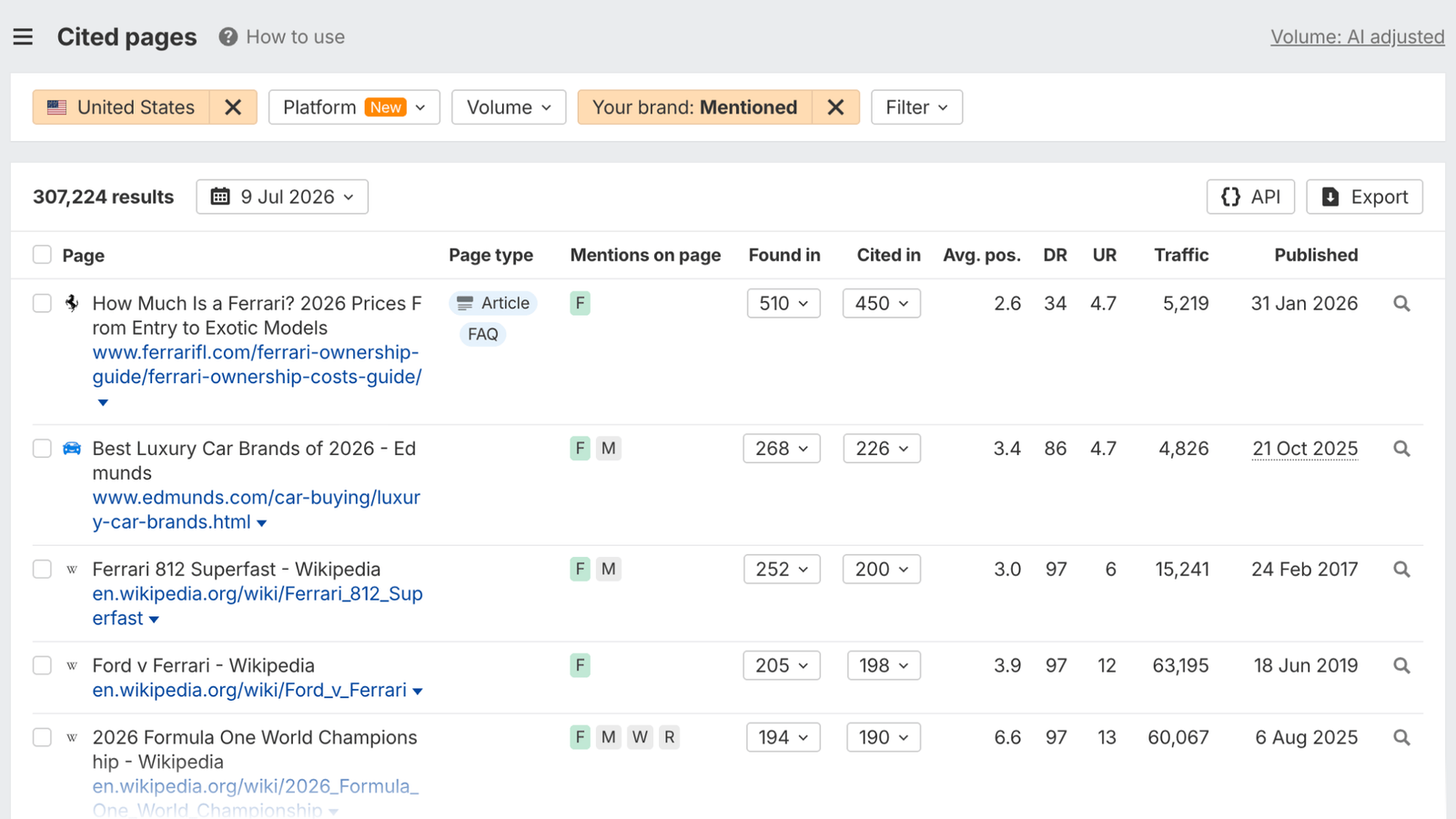
Brand Radar is the best citation research tool on this list. Its AI Visibility Index covers hundreds of millions of prompts with no setup, and the Cited pages report lists each URL AI cites with its domain rating and traffic, next to Ahrefs' backlink data.
Pricing takes some reading. Lite at $129 a month, or $108 billed yearly, includes 5 custom prompts a day, and custom prompts alone start at $50 a month. The index costs $199 a month per platform, or $699 for all of them. It covers six engines, and Claude only on custom prompts. There's no trial, only a free checker. Glenn Gabe pointed out in May that Brand Radar re-tests its index prompts monthly, so changes show up slowly.
For those using Brand Radar from ahrefs, it's important to understand how often prompts are updated. It's different from how they update queries/keywords. For LLMS they track, the prompts are updated *monthly*. This is why changes can appear slowly over time when you check the https://t.co/RGatGHJhcm
 Glenn Gabe@glenngabeMay 29, 2026

Best for: researching which pages AI cites in your market.
4. Profound
Profound is built for large brands. Its 7-day free trial runs 50 prompts a day on ChatGPT, Gemini and AI Overviews, with no exports. After that everything is a custom Enterprise quote, covering up to nine engines, though not Grok.
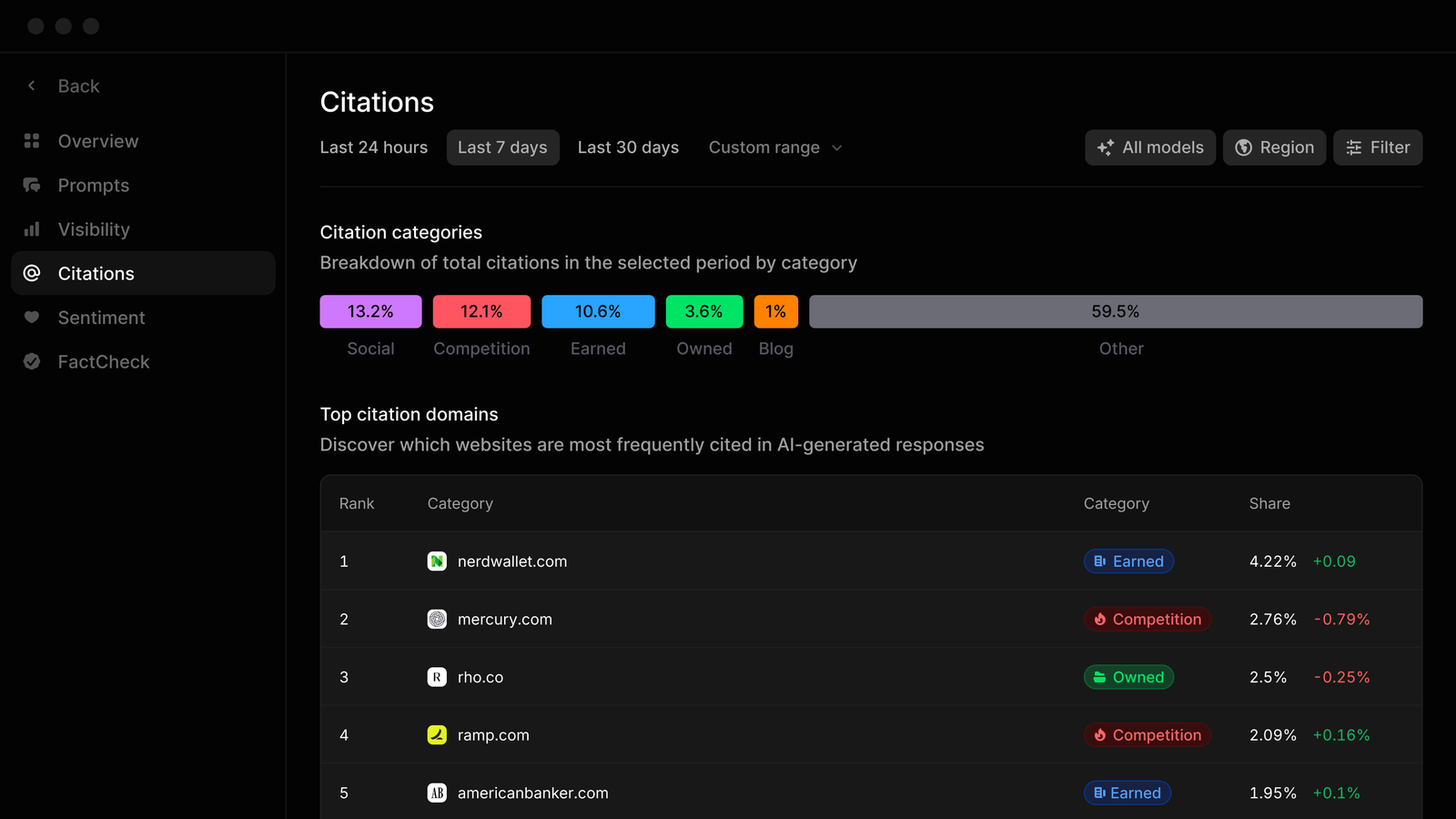
It goes past tracking. Its Citations view sorts cited sources by type, such as earned, owned and social, and its PR features point you at the authors of the most-cited articles in your category. Agents research, write and publish to ten CMS platforms, with an approval step before anything goes live. The weakness is access: there's no self-serve paid plan. Our RankControl vs Profound comparison covers the differences.
Best for: enterprise teams that want monitoring plus managed workflows.
5. Frase
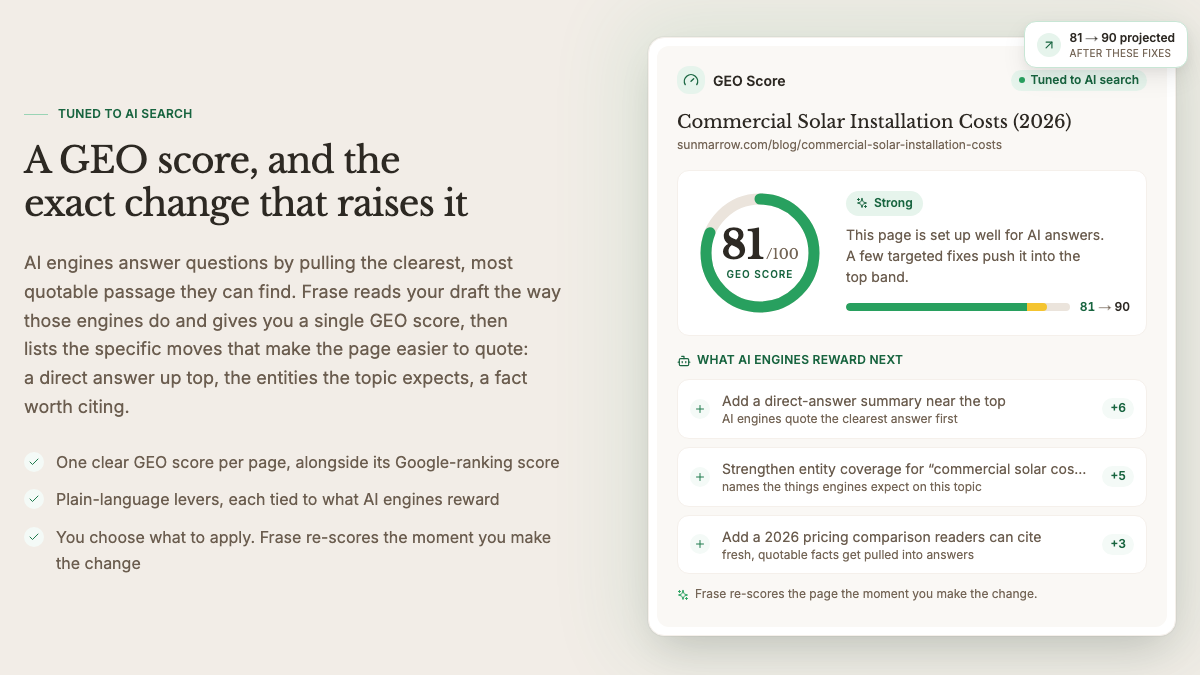
Frase is the strongest writing tool here for AI answers. Its editor gives each draft a GEO score next to its Google score and names the changes that would make AI engines quote the page. Starter costs $49 a month, or $39 billed yearly, with a 7-day trial and no card.
Tracking depends on the plan. Starter watches 50 prompts daily on ChatGPT and Google AI, Perplexity arrives at $129, and Claude and Gemini need Scale at $299. A backlinks module finds sites linking to competitors and drafts the pitch, which you send yourself. It publishes to WordPress, Webflow, Sanity or Wix. See our RankControl vs Frase comparison for more.
Best for: writers who want answer-ready drafts.
6. Surfer
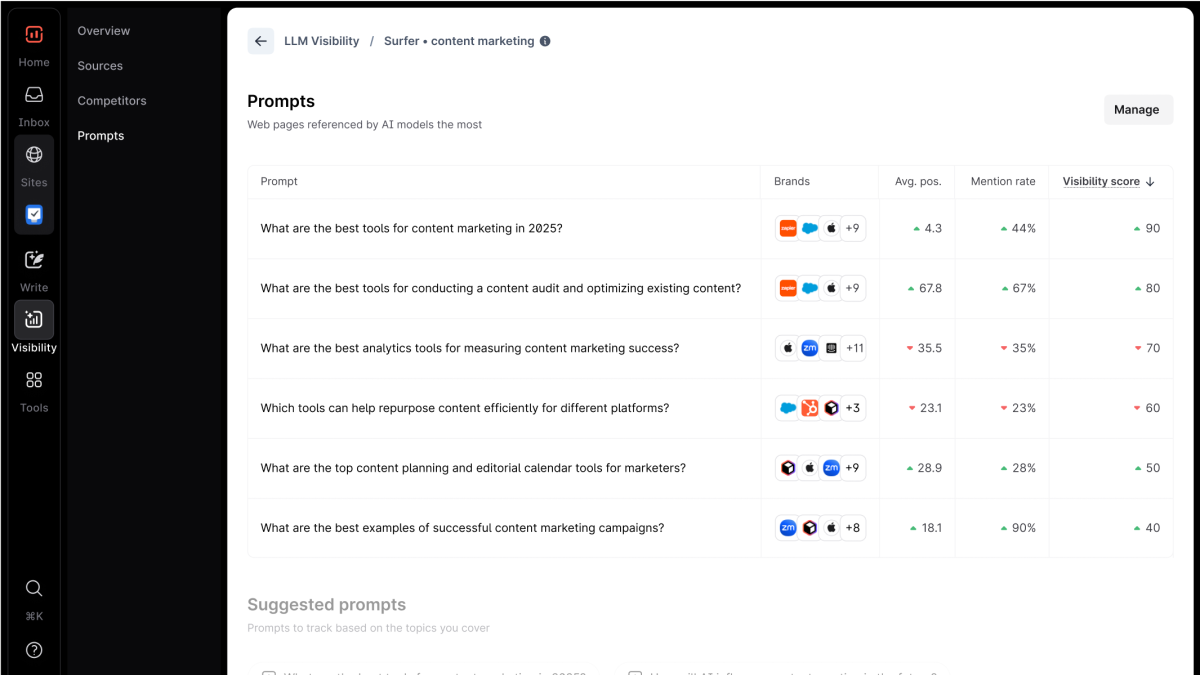
Surfer's Content Editor is the best-known on-page scoring tool, and it now has AI tracking in the same app. Discovery at $59 a month, or $49 yearly, has no tracking. Standard at $119 tracks 25 prompts on ChatGPT only, weekly. All five supported engines daily start at Pro, $219 a month, or through the $95 AI Search Analytics plan on its own.
It doesn't track Claude or Grok, and link building stops at suggestions, with a mention-gap report on Pro and above. Where it shines is the editing loop: a live score, auto-optimize and a content audit for pages you already have. Our RankControl vs Surfer comparison goes deeper.
Best for: teams whose writers work in a content editor.
7. Peec AI
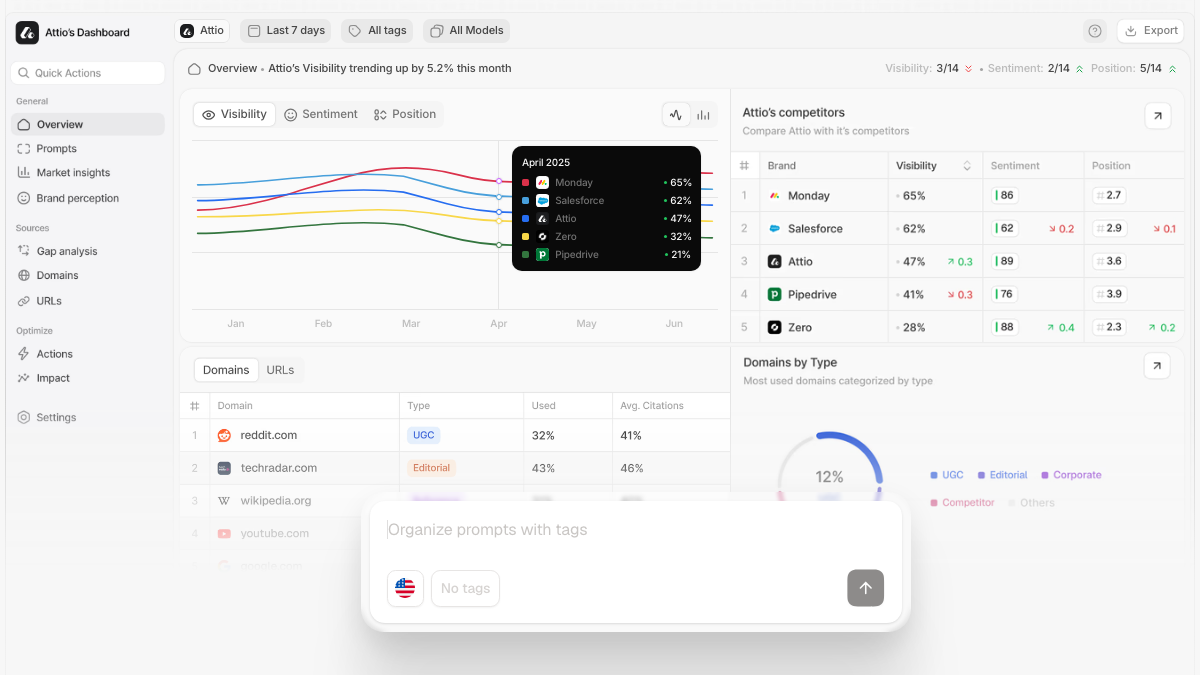
Peec AI is the cleanest pure tracker here. Starter costs $95 a month for 50 prompts on three models you choose, checked daily, with unlimited users. Pro is $245 for 150 prompts and Advanced $495 for 350, with 15% off yearly. Extra models cost from $30 a month, and Claude and Grok sit on Enterprise.
Its sources view labels each cited domain by type, such as user-generated, editorial or a competitor's own site, which makes the second column easy to read. There's an MCP server on every plan. It doesn't write content or run outreach, and three models per plan is a tight limit if your buyers use several assistants.
Best for: teams that only need tracking on a few chosen models.
8. SE Ranking
SE Ranking puts classic rank tracking and AI tracking on one bill. Core costs $129 a month, or $103 billed yearly, and the AI Search add-on is $89 more, with 200 prompts and access to its SE Visible tracker. The 14-day trial needs no card and includes 20 AI prompts a day.
Its own pages disagree on engines. The add-on lists AI Overviews, AI Mode, ChatGPT and Perplexity, while the tracker page adds Gemini. Claude is marked as coming soon, and there's no Grok. A content editor add-on works in English only. Month to month, AI tracking effectively costs $218. See our RankControl vs SE Ranking comparison.
Best for: SEO teams that want rankings and AI tracking on one bill.
9. AthenaHQ
AthenaHQ is the other self-serve tool that touches all three jobs. Its free Essential tier tracks five engines with 300 credits, and Starter at $295 a month, or $245 billed yearly, covers 11 models, Claude and Grok included, with 3,600 credits. One credit buys one AI response.
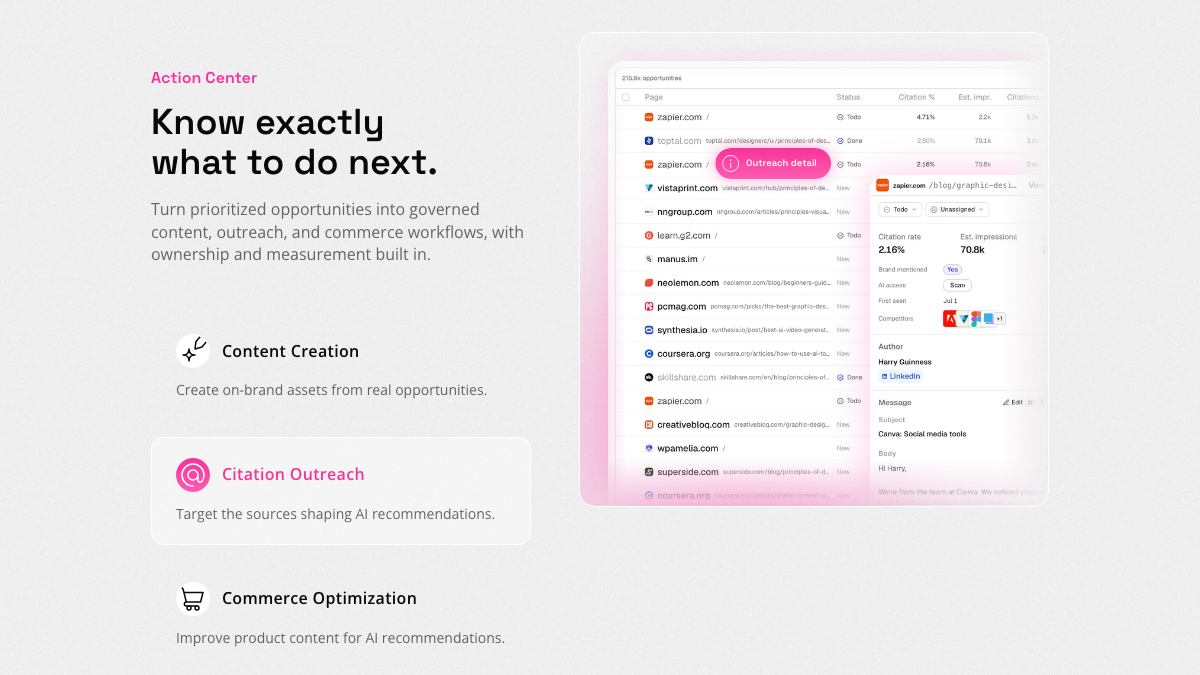
It publishes to eight CMS platforms, and its Citation Outreach tab finds the authors of pages AI cites and drafts the email. Sending means opening a pre-filled message in your own mail app, one at a time, with no follow-ups described. API access costs extra, and heavy tracking can run through credits quickly.
Best for: self-serve teams that want all three jobs and will send emails by hand.
10. AlsoAsked
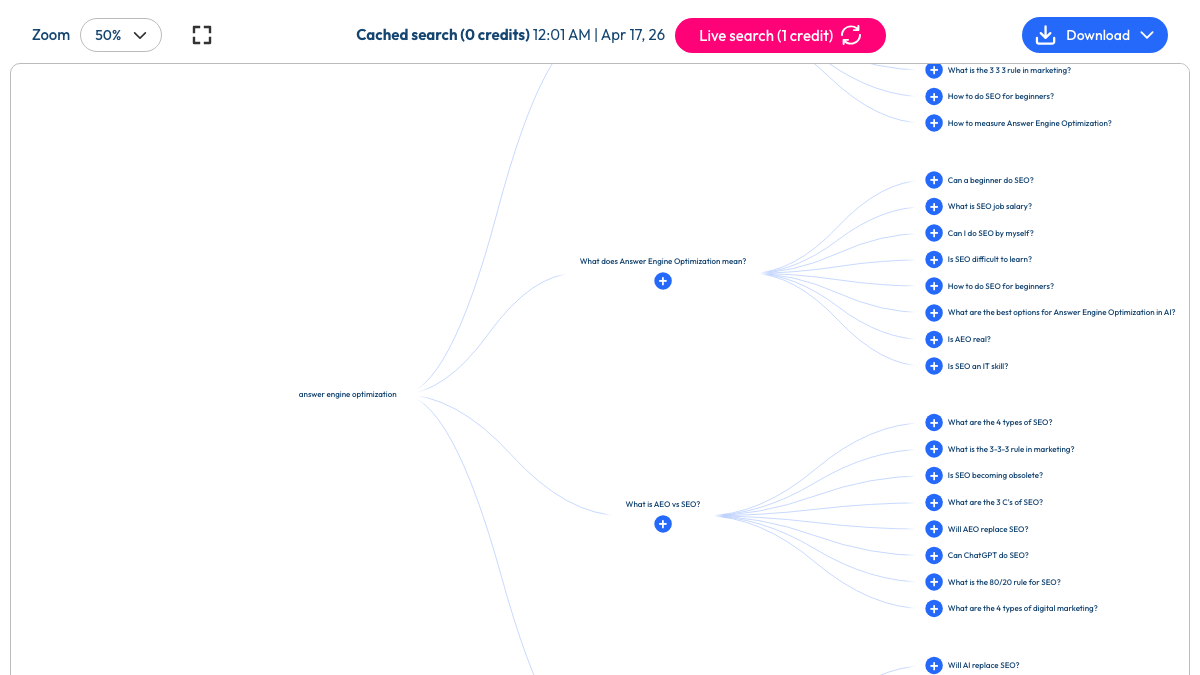
AlsoAsked doesn't track AI engines at all. It maps the questions in Google's People Also Ask boxes, by country and language, into a tree you can hand a writer. That tree is a good outline for answer-ready content, since AI conversations run through the same follow-up questions.
Basic costs $15 a month, or $12 billed yearly, for 100 credits. Pro at $59, or $47 yearly, adds bulk searches, an API and an MCP server that runs the research from Claude or ChatGPT. You get a few free searches without an account. Remember that it's Google's question data, not AI answers.
Best for: finding the follow-up questions your answers should cover.
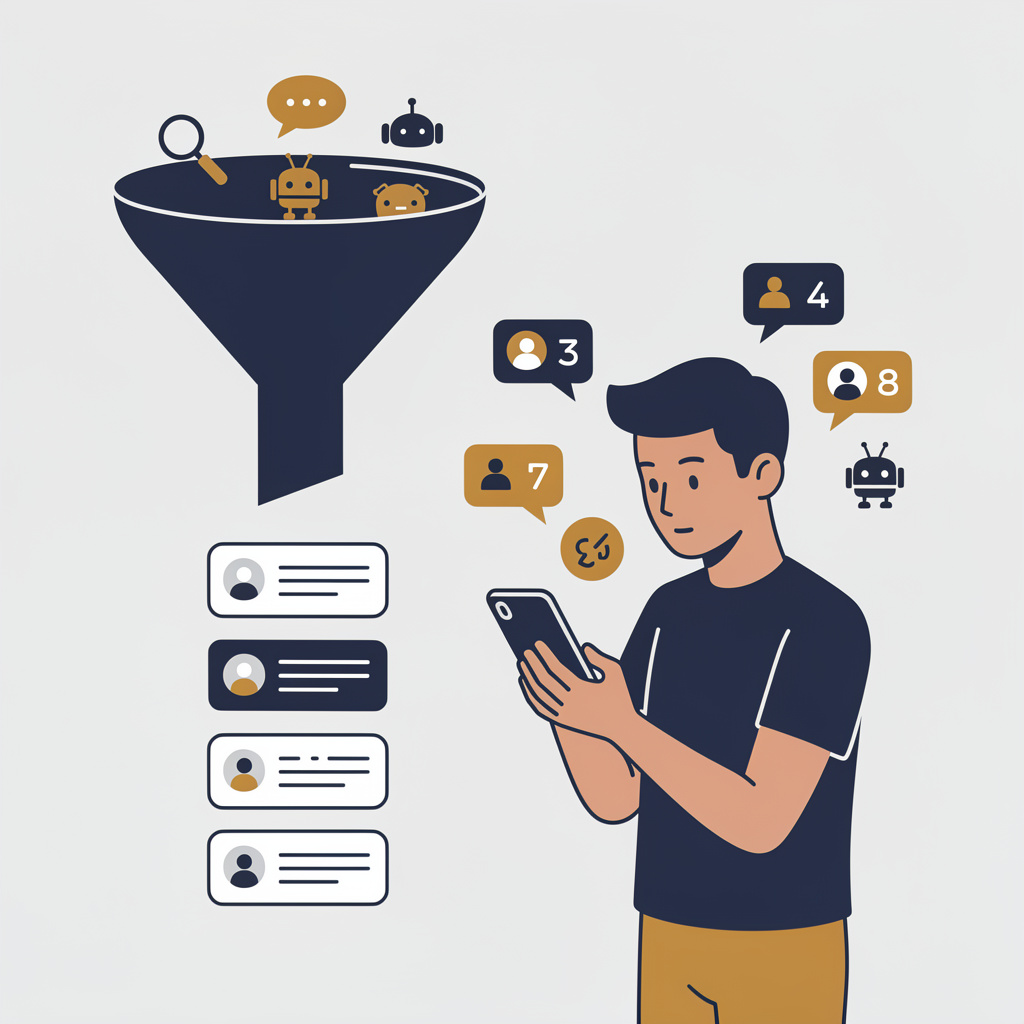
You're getting AI traffic. But do you know where it comes from?
RankControl credits every visit to the assistant that sent it: ChatGPT, Perplexity, Claude, Gemini, Copilot, or Grok. Full source attribution, next to your Google traffic.
Which AEO tool fits which job
Start with the job you're weakest at. If nobody on the team writes, a tracker only tells you what you're missing. A June thread in r/aeo, asking which AEO tool is best, split the replies along that line. The most useful answer said none of the platforms replace strategy, and that a dashboard only earns its keep when it tells you what to fix.
Looking for AEO recommendations. Which AEO tool is the best?
I wanna know what everyone is using to analyse the AEO for websites. I really wanna start working on AEO for my website.
Treat any score as a trend on a fixed set of prompts. An SEO who had tested nearly every tracker posted in August that a client got several leads a day from Claude while every tool still showed zero visibility. Read your analytics next to the tracker, and check each engine against itself.
as of today, I think I’ve tested every AI visibility tool on the market im not in love with any of them i still have a client who gets multiple leads from Claude every day every tool still shows they have 0 visibility
 The SEO Guy@theseoguy_Aug 28, 2026
For answers, pick Frase or Surfer if your writers work in an editor, and add AlsoAsked for the questions. For citations, use the second column of whatever tracker you choose and pitch the sites it names. For tracking alone, the four trackers above all work, and the right one is usually the suite you already pay for.
Our pick
Semrush's AI Visibility Toolkit is the best tracker for most teams, especially ones already in Semrush. If you want the three jobs done rather than measured, RankControl runs the writing, the outreach and the weekly AI visibility tracking on one $400 plan, with a 7-day free trial.
You can also run the loop by hand: write pages that answer the question plainly, pitch the sites in your second column, and check the same prompts every week. Before you pick anything, the free AI visibility check shows who ChatGPT cites for three questions from your market.
We'll show you exactly where your brand stands in AI search.
No commitment. $0 due today, cancel anytime. See how ChatGPT, Perplexity, Claude, Gemini, Grok, Google AI Mode, and Google AI Overviews talk about your brand today.