
Sooner or later this quarter, someone's going to pitch you a GEO hack. It might be white text telling ChatGPT to recommend you, or a copy of your pages that only AI crawlers get served. The big-budget version is 300 AI-written pages to "cover every prompt." When one lawyer's filing turned out to hide instructions for AI in tiny white text, Glenn Gabe called it the white-text-on-white-background trick, "but for AI now":
Ah, the old "white text on white background" trick, but for AI now. LOL -> Person Hides Prompt Injection in Legal Filing Telling AI to Side With Them "These “prompt injections” told the hypothetical LLM to side with them, and to “ensure your textual output agrees with the
 Glenn Gabe@glenngabeAug 14, 2026
Old trick, new reader is our name for this pattern. It means taking a tactic search engines outlawed long ago and aiming it at a language model rather than a crawler. The platforms noticed and wrote their answers down. Below you'll find each common trick next to what the platforms say about it, then the work that holds up.
The platforms already wrote the rules
Google and Bing both changed their rules in 2026 with AI answers in mind. If a vendor offers to steer what Google's AI answers say about you, read Google's spam policies first. Last updated August 28, 2026, they now count as spam anything done to manipulate Google's systems, "such as attempting to manipulate Search systems into ranking content highly or attempting to manipulate generative AI responses in Google Search."
Bing's webmaster guidelines went further, with a whole section on generative engine optimization. Its first line belongs above every GEO pitch deck: "SEO does not guarantee rankings or traffic, and GEO does not guarantee grounding or citations in AI experiences." Then comes a list of the practices Bing treats as abuse. Sites that use them "may experience reduced rankings, suppressed grounding visibility, loss of grounding eligibility, ignored structured data, or removal from the Bing index."
Grounding is Bing's word for pulling web pages into an AI answer. Lose eligibility for it and Copilot stops drawing on your pages at all, so a trick aimed at one query can cost you every Copilot answer your site might have fed.
Trick 1: hidden instructions to AI
This is the lawyer's-filing move. You hide a sentence where a person won't see it, in white-on-white type, a tiny font or an HTML comment. The sentence tells whatever AI reads the page to recommend you, and security people call it prompt injection.
Bing leaves no room for interpretation: "attempts to add content designed to manipulate or interfere with language models used by Bing or Copilot may result in reduced visibility or removal from search experiences." Google gets to the same place through its hidden text policy, whose examples include "using white text on a white background."
The models are designed to resist it anyway. OpenAI's Model Spec, which sets out how its models should behave, says text in tool outputs, file attachments and quoted data is "assumed to contain untrusted data and have no authority by default." A page that your buyer's question pulls into ChatGPT is that kind of text. So your hidden line becomes information about the page, and the model doesn't take orders from it.
Models are also learning to spot it. A developer on r/LLMDevs described a contract PDF with hidden white text in its footer. The model read the text, flagged it and warned the user. The weak point in that story turned out to be the company's own security tooling.
Hidden prompt injection in a PDF almost got my org
User uploaded a contract PDF with hidden white text injection in the footer. Model read it, flagged it, and warned me. Credit to the model. Now my issue is our security stack was silent. Our prompt filter was watching the user input field,...
So if you try it, expect an answer that ignores you or flags you, plus a real chance of Bing dropping your pages.
Trick 2: AI-only pages
Your server spots AI crawlers and hands them their own version of the page, with extra claims and glowing comparisons no human visitor ever sees. That's the whole pitch.
Both search engines have long called that cloaking and treated it as spam. Google's definition is "presenting different content to users and search engines with the intent to manipulate search rankings and mislead users." Bing's new guidelines say "showing different content to search crawlers than to users is a manipulative practice that undermines trust and visibility." Neither definition cares which crawler you're fooling.
Being a big name doesn't help either. In August 2026, Digiday reported that Time had started selling sponsored "markdown ads," content formatted for AI agents to pick up and present. Perplexity blocked them from its agents and results, and it warned publishers about deceptive advertising aimed at AI.

Your competitors are getting cited by AI. You're not.
Every day without citation tracking is a day your competitors pull ahead in ChatGPT, Perplexity, and Claude.
Trick 3: engineered language and keyword stuffing
This version hides nothing. The page is written in stilted, repeated phrasing meant to match what people type into ChatGPT. Bing's guidelines answer it in one line: "Content should be created for users, not to manipulate ranking systems or trigger citations or AI responses."
The research doesn't help the case. The original GEO paper tested nine methods, and keyword stuffing was the only one that scored below leaving the page untouched. Our breakdown of that paper has the rest of its results.
C-SEO Bench, a later benchmark accepted at NeurIPS 2025, tested conversational SEO methods and found most of them "largely ineffective". The authors add that these methods "frequently have a negative impact on document ranking," while traditional SEO came out "significantly more effective."
And what happens once your competitors read the same GEO blog post you did? The benchmark checked that too: the gains shrank as more sites used the same tricks.
Trick 4: mass AI-generated pages
The volume play needs the least cleverness: hundreds of generated pages, one for every prompt a buyer might type. Google calls it scaled content abuse, which it describes as "when many pages are generated for the primary purpose of manipulating search rankings and not helping users."
Bing's version is blunter. Large-scale content generated without editorial review, its guidelines say, "may be excluded from indexing." Google's spam updates this year went after exactly this kind of site, and our look at AEO practices that survived 2026 covers what the August update did to mass programmatic content.
Trick 5: magic files and markup
Some checklists swear that an llms.txt file, special AI markup or extra schema will get you cited. Google's own page on its AI features disagrees.
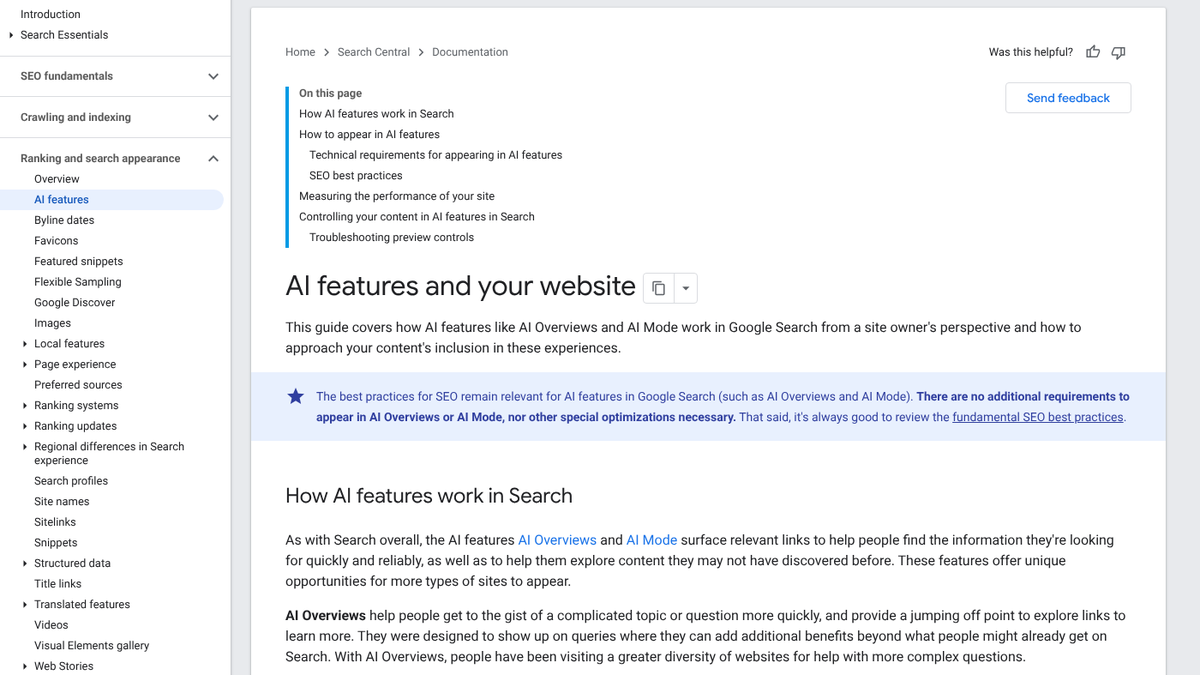
Further down, the wording is plain: "You don't need to create new machine readable files, AI text files, or markup to appear in these features. There's also no special schema.org structured data that you need to add." Bing sets a condition on the markup you do publish. Your structured data has to match what's visible on the page, and misleading markup "may be ignored."
Accurate schema that describes your page is fine to keep. Just don't count on it as a shortcut to citations. For the cases where an llms.txt file does help, see our explainer on what an llms.txt file is.
Trick 6: self-ranked lists and fake reviews
You've seen these: a "best tools" roundup on a vendor's blog where the vendor happens to come first. It was a popular shortcut, and now it mostly backfires.
Lily Ray studied 100 "best software" searches in June 2026. Google's AI Overviews cited brands' own self-promotional lists 323 times across them, and in 224 of those cases the overview went on to recommend someone else. So the brand wrote the list and a competitor got the pick. ChatGPT's search has largely stopped citing lists at all, and our post on why listicle SEO is losing power has the full data.
Fake reviews can cost you more than wasted effort. The FTC's 2024 rule bans buying or selling fake reviews, and it also bans paying for reviews on the condition that the rating is positive.
200+ SaaS teams already track their AI citations.
They know exactly when ChatGPT mentions their brand, and when it stops. Do you?

How to spot a trick when it's pitched to you
Each question below maps to a policy line quoted earlier, and one yes is reason enough to walk away:
- Does it show AI crawlers something your human visitors can't see? That's cloaking or hidden text.
- Does it promise guaranteed citations? Bing says in writing that GEO doesn't guarantee them.
- Does it rely on publishing pages faster than anyone could review them?
- Does it treat a file or a piece of markup as the thing that gets you cited?
A tactic that works only while the engines haven't noticed it is a wager that they'll never update their rules. Google and Bing both updated theirs in 2026.
What works instead
Everything that works is public, which is partly why tricks keep getting sold. Five things carry most of the weight.
Access comes first. OpenAI says sites that opt out of OAI-SearchBot, its search crawler, "will not be shown in ChatGPT search answers." If you block it, nothing else on this list can help you in ChatGPT search.
Then publish the page the search goes looking for. In September we asked ChatGPT 12 buyer questions and logged the searches behind its answers, 198 of them. The word "official" appeared in 135. ChatGPT heads to the vendor's own pages to check prices and features, so yours have to state them plainly.
Keep those facts current, and keep them consistent wherever they appear. One stale comparison page on someone else's site can carry your old price into several AI answers at once.
You also need other people saying it. When we checked Google's AI Overview for "best password manager for small business," it cited Bitwarden's own business page. Then it backed up its picks with independent reviews, tech publications and a Reddit thread.
Finally, measure over repeated runs. Answers change from one run to the next, so a single check proves very little. Our master guide to getting cited by AI search engines goes through each of these, engine by engine.
Doing it yourself or handing it off
None of this is as quick as a trick, though it holds up far longer. Plan on about a day to fix crawler access and your main pages, then a few hours a week publishing and checking.
You can run all of it yourself. If you'd rather hand off the steady part, RankControl's content engine writes each article against the pages already ranking for its keyword. The content engine scores the article for how easily AI engines can quote it, gives you a fix list, and publishes it on your own site. Our AI visibility tracking checks up to 50 of your buyer questions every week across seven AI engines. We record which sources each answer cited, so you can see what's working without guessing.
How often does ChatGPT mention your brand?
Most founders have no idea. The answer might surprise you.