
In September, an SEO specialist working on a visa website asked r/aeo how to get it mentioned or recommended in ChatGPT. The most useful reply didn't offer a trick. It pointed out that for a question like how to get a Canadian work visa, ChatGPT cites the government page and the embassy page. A private site doesn't get into that answer, whatever it does.
That's a good place to start, because most advice on how to rank on ChatGPT skips which questions you can win at all. This guide sticks to what OpenAI itself documents about how ChatGPT finds, picks and shows sources, from its crawler docs and its help pages on search and shopping. Where something is our own observation, I'll say so.
Need help! To rank on ChatGPT.
What "ranking" means in ChatGPT
There isn't one list. ChatGPT shows sources in at least three places, and each one picks differently.
- Web answers, with citations and a Sources panel.
- Shopping results, a product carousel for questions that sound like buying.
- Local results, like nearby businesses and restaurants, with maps on mobile.
Under all three sits the model's own knowledge, which shapes answers before any search happens. So "ranking" really means four jobs, and the steps below cover them in order.
Step 1: Let the right crawler in
This is the step people get wrong most often. OpenAI runs separate crawlers, and they do different jobs.
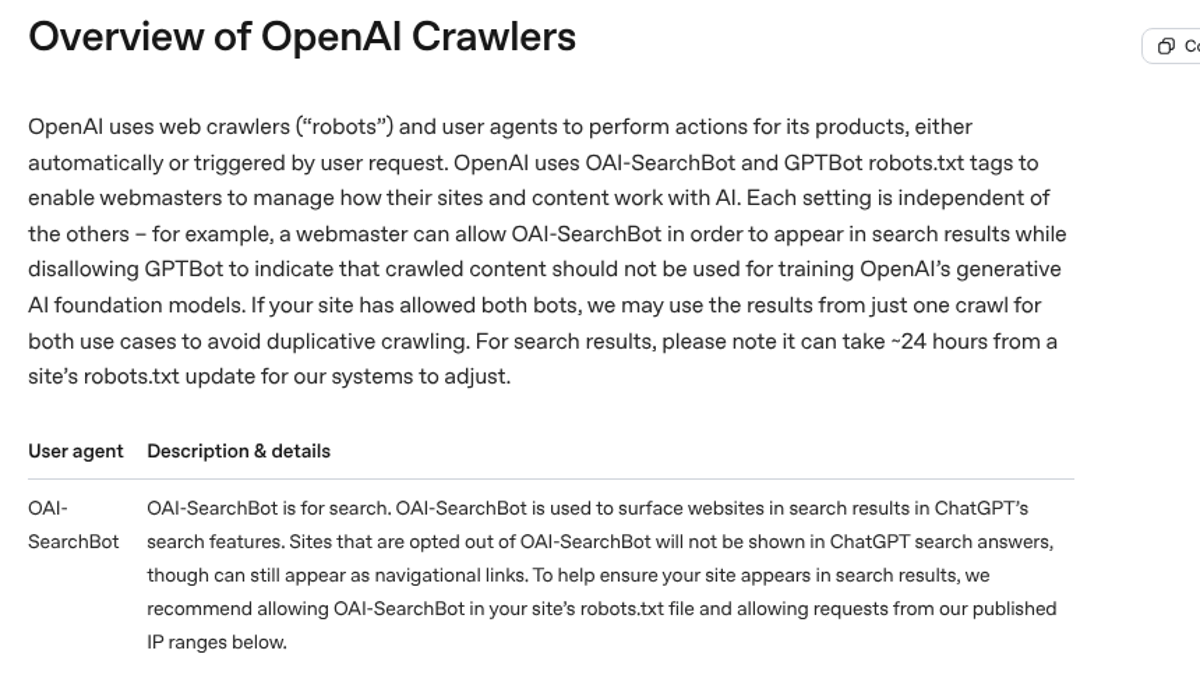
OpenAI's crawler docs say OAI-SearchBot is the one used to surface websites in ChatGPT's search features. Sites that opt out of it won't be shown in ChatGPT search answers, though they can still appear as navigational links. GPTBot is separate and collects content that may be used to train OpenAI's models. ChatGPT-User fetches a page when a person asks for it, and OpenAI says it isn't used to decide what appears in search.
A recent r/DigitalMarketing thread found plenty of sites with these mixed up. One commenter checked their own robots.txt and found OAI-SearchBot blocked by a template they'd copied two years earlier.
So check three things:
- Your robots.txt allows OAI-SearchBot.
- Your firewall or CDN doesn't block OpenAI's published IP ranges, which OpenAI recommends allowing.
- Your pages serve their text in the HTML, since a page that builds its content in the browser can look empty to a crawler.
OpenAI says robots.txt changes can take about 24 hours to reach its search systems. It's the fastest fix in this guide.
200+ SaaS teams already track their AI citations.
They know exactly when ChatGPT mentions their brand, and when it stops. Do you?
Step 2: Write for the search ChatGPT writes
OpenAI's help page on searching the web says ChatGPT "typically rewrites your query" into one or more targeted queries before sending them to search providers. If memory is on, it can also use saved details, so a vegan in San Francisco asking for restaurants might get a search for vegan restaurants in that city.
We've seen the rewriting ourselves. In October we ran 10 buyer questions through ChatGPT search and logged its searches. It added "2026" to 8 of them and asked for official pricing in 5. A plain question about the best CRM became a search naming five vendors and asking for official pricing. Our guide to LLM SEO strategies breaks that run down in detail.
So write for the longer search as well as the buyer's words. If ChatGPT keeps adding the year, pricing or your category's big names, the page you need has those in its title and first paragraph.
The same help page names Microsoft and Shopify among the providers whose privacy policies apply to these searches. Our explainer on whether ChatGPT search uses Bing covers what that means for indexing.
Step 3: Pick questions where you're the natural source
The visa example shows the limit. For some questions, ChatGPT reaches for an authority you can't replace, like a government page or a bar association. In our run, the personal injury lawyer question cited two American Bar Association pages, and the mattress question cited a clinical study.
Spend your effort where a company page is the obvious source. That means your pricing, your comparisons with named rivals, how-to questions about your own product, and cost questions for your service in your area. In our run, HubSpot's pricing page was cited for the CRM question and Gusto's product page for the payroll question.
Step 4: For products, feed the shopping results
If you sell products, the shopping carousel has its own rules, and OpenAI spells them out. Its help page says product results are "selected independently" and aren't ads or influenced by OpenAI partnerships.
When picking products, ChatGPT considers structured metadata from first-party and third-party providers, like price and product description. It also weighs its own model responses from before it checks new results, plus its safety policies. When several stores sell the same item, merchants are ranked by availability, price, quality and whether they're the maker or primary seller.
For most stores that means three things:
- If you're on Shopify, OpenAI says product data already flows into ChatGPT through Shopify Catalog, with no extra work.
- Other merchants can apply to send a direct product feed to OpenAI.
- Keep prices, stock and descriptions consistent across your site and marketplaces, since ChatGPT pulls from third-party sources too.
Reviews matter as well. OpenAI says ChatGPT writes review summaries from reviews on public websites. Our guide to Shopify product answers in ChatGPT goes further on the store side, and our ecommerce AI SEO test shows which store pages ChatGPT actually cites.
Step 5: For local businesses, fix your listings
OpenAI's search help page says ChatGPT uses an approximate location from your IP address for local results, and more exact location if you share it. For restaurants, it can show availability from OpenTable, Resy or Yelp, depending on the restaurant.
That makes your listings part of your ranking. Keep your name, address, phone number and hours the same everywhere, and be on the reservation or review platforms your category uses.
Get this wrong and ChatGPT can get it wrong for you. A business owner in r/ChatGPTcomplaints said ChatGPT had mixed another company's details with their website and phone number, because the two names were similar. Consistent, specific details across the web are the best defense against that.
How often does ChatGPT mention your brand?
Most founders have no idea. The answer might surprise you.

Step 6: Build the layer under the search
This is the slow part. OpenAI's shopping page lists "model responses generated by ChatGPT before it considers any new search results" as one input. In plain terms, what the model already believes about your category shapes the answer before your page is read.
That belief comes from training data and from what the web says about you over time. A commenter in the robots.txt thread made the trade-off clear. Blocking GPTBot keeps you in search answers, but it gives up the route into answers that name brands without fetching anything.
You influence that layer the same way you build any reputation. Get mentioned on the comparison and "best of" pages buyers read, on the forums where your category gets discussed, and in industry coverage. It takes months, and it's the part no on-page change can replace. Our post on how ChatGPT decides which websites to recommend covers what drives those recommendations.
Step 7: Check where you actually rank
ChatGPT answers vary from run to run, so a single check tells you little. In the r/aeo thread, one commenter said they'd logged the same buyer questions daily since August across 48 city and niche pairs, more than 9,000 answers. They said the lists were top-heavy, with one business appearing on most days in 25 of 36 local lists, and that the engines barely agreed with each other. That's one person's log, but it matches the case for tracking each engine separately.
Pick 20 to 50 questions buyers actually ask, run them on a fixed schedule, and log who gets named and cited each time. Our guide to checking ChatGPT citations walks through doing it by hand. RankControl's AI visibility tracking checks 50 questions every week across ChatGPT, Perplexity, Claude, Gemini, Grok, Google AI Mode and Google AI Overviews, and notifies you of new citations.
A 20-minute check you can run today
You don't need a tool to see where you stand. Pick five questions a buyer would ask before they buy from you, and ask each one in ChatGPT with search on.
For each answer, open the Sources panel and write down three things. Is your site cited? Is your brand named in the text, even without a link? And which sites does it cite in your place?
Then open yoursite.com/robots.txt and look for OAI-SearchBot. If you can read your server logs, search them for the same name to see if it has visited in the last month. If it hasn't, step 1 is your job for this week.
The sites cited in your place are your to-do list. If they're review sites or "best of" lists, you need to be on them. If they're rival pages, you need a better page for that question. If they're official sources, pick a different question.
What you can't buy
ChatGPT now runs ads, and OpenAI keeps them apart from answers. Its shopping help page says ads are separate from product results. So an ad budget buys a labeled placement, not a higher spot in the answer.
What this costs in hours
Checking robots.txt and your firewall takes an hour. Rewriting five key pages for the searches ChatGPT writes takes 10 to 15 hours. Cleaning up product feeds or local listings is a few more hours, and earning mentions on other sites runs for months. Then there's checking, about one to two hours a week by hand for 20 questions on one engine.
You can do all of it yourself. Or RankControl's agents can do it for you every month, writing and publishing the pages buyers search for and checking seven AI engines each week, while you focus on your product. To see where you stand today, the free AI visibility check runs three questions from your market through ChatGPT.
15 hours a week manually. Or 15 minutes with RankControl.
Track citations, monitor competitors, and fix content gaps across every AI search engine. Automatically.