The fastest way to learn what Google's AI Overviews cite is to look. On September 26, 2026, we ran 10 searches a B2B buyer might type, from "what is a data room" to "zapier alternatives," and pulled every page each AI Overview cited.
All 10 searches showed an AI Overview. Between them they cited about 90 different pages, and 42 of those didn't appear anywhere in the top 20 regular results for the same search. So "rank first, get cited" only explains about half of what we saw. Here are the examples, and the patterns we'd copy.
What we searched and what Google cited
We ran the searches from the US on desktop and compared each AI Overview's sources with the top 20 organic results.
| Search | What the AI Overview cited | Cited pages outside the top 20 |
|---|---|---|
| what is a data room | Wikipedia, a16z, Carta and three others | 2 of 6 |
| best crm for small business | Zoho, PCMag, four YouTube videos, one Reddit thread | 4 of 10 |
| how to reduce customer churn | SuperOffice, Gainsight, Stripe, YouTube, Reddit | 2 of 7 |
| hubspot vs salesforce | Reddit, Forbes, comparison blogs, YouTube | 3 of 9 |
| how much does payroll software cost | QuickBooks, Square, Patriot Software, Forbes, YouTube | 9 of 16 |
| what is soc 2 compliance | Vanta, Drata, Reddit, YouTube | 4 of 9 |
| best project management software for agencies | Zapier, Productive, Float, PCMag, YouTube | 6 of 9 |
| how to write a sales follow up email | Five LinkedIn posts, Adobe, sales blogs | 6 of 9 |
| zapier alternatives | Two Reddit threads, two YouTube videos, four blogs | 6 of 8 |
| is quickbooks good for freelancers | Wise, Bench, Fondo, Reddit, YouTube | 3 of 8 |
Ten searches is a snapshot, not a study, and AI Overviews change from day to day. The patterns below held across most of the ten, though, and they line up with the larger studies we cite along the way.
The answer sits in the first sentence
Every cited page we opened answered the search in its opening line. Wikipedia's data room page starts with the definition. Vanta's SOC 2 guide, cited for "what is soc 2 compliance," opens with this: "System and Organization Controls 2 (SOC 2) is a security framework created by the American Institute of Certified Public Accountants (AICPA) in 2010."
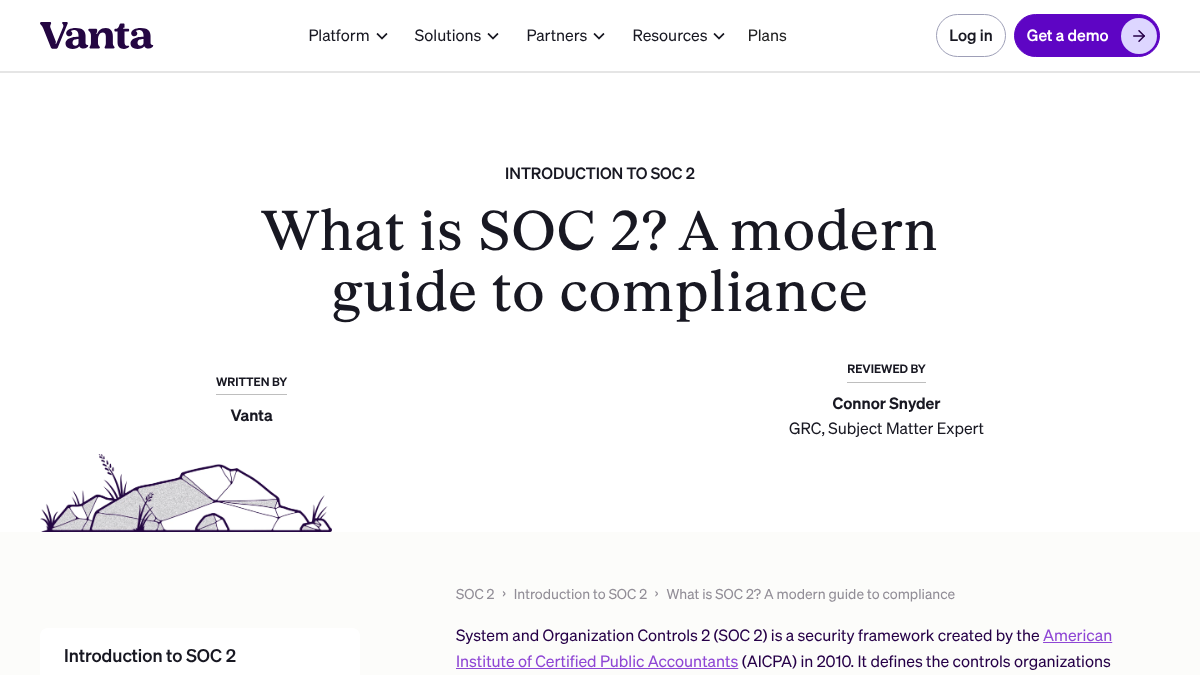
That page is over 7,000 words long, with 21 H2s and four tables. Length didn't keep it out. The answer being findable in one sentence is what let Google lift it.
The check for your own page is simple. Read the first sentence under your title and ask whether it would work as the opening line of Google's answer. If it's a welcome, a story or a line about how fast your market is changing, rewrite it.
For a data room guide, "A data room is a secure online space where a company shares confidential documents with investors or buyers during due diligence" can be lifted straight into an answer. "Raising a round is one of the most exciting moments in a founder's life" can't.
200+ SaaS teams already track their AI citations.
They know exactly when ChatGPT mentions their brand, and when it stops. Do you?
Side-door citations: half the sources didn't rank
We call these side-door citations: pages Google cited without ranking them for the search itself. There were 42 in our set. Wise's post comparing QuickBooks' self-employed and small business plans was cited for "is quickbooks good for freelancers" without a top-20 ranking. For "zapier alternatives," six of the eight cited pages were outside the top 20, including three comparison posts from smaller automation tools.
Google's documentation explains the mechanism. AI Overviews and AI Mode "may use a 'query fan-out' technique," running several related searches behind the one you typed. A page that ranks for one of those side searches can get cited for the main one.
The larger studies point the same way. Ahrefs found that the share of AI Overview citations also ranking in Google's top 10 fell from about 76% in July 2025 to about 38% by March 2026.
Here's the part we didn't expect. Half of our 42 side-door citations were YouTube videos, Reddit threads and LinkedIn posts. The other half came almost entirely from sites with no page in the top 20 at all. Google was reaching past the usual big sites to pages from sites that weren't in the running for the main search at all.
The flip side shows up on Reddit too. In r/content_marketing, one marketer asked what to check when a page ranks top five but still isn't cited in the AI Overview.
Your page ranks top 5 but isn’t cited in the AI Overview. What do you check first?
This is becoming a much more interesting SEO problem to me. I found a recent study that shows how only 37.9% of cited URLs appeared in the first 10 SERP blocks for the exact query. Around 31% were beyond the top 100. Say your page ranks #3...
For you, the takeaway is to cover the side questions around your main topics, since each one is another way in. Our tracking guide covers how to measure AI Overview presence apart from your rankings.
The search decides the source type
The kind of question shaped the kind of page Google reached for, and this was the clearest pattern in the whole set.
Definition searches went to reference-style pages. "What is a data room" cited Wikipedia, a16z's guide for founders and Carta, with no videos or forums at all.
Comparison and "best" searches pulled in people. YouTube showed up in 8 of the 10 AI Overviews and made up about one in five citations overall, and Reddit appeared in 7 of the 10. Both clustered on searches like "hubspot vs salesforce" and "best crm for small business."
How-to searches about work skills went to LinkedIn. For "how to write a sales follow up email," five of the nine cited sources were LinkedIn posts by individual salespeople, not company blogs.
So before you write, search your target question and look at what Google already cites. If the answer is YouTube and Reddit, a blog post alone is fighting the format. A short video, or a real answer in the thread people already read, may earn the citation faster.
Dates and names sit near the top
Several of the cited pages made it easy to see who wrote them and when. SuperOffice's churn guide shows "Last updated: 22 May, 2026" directly under its title.
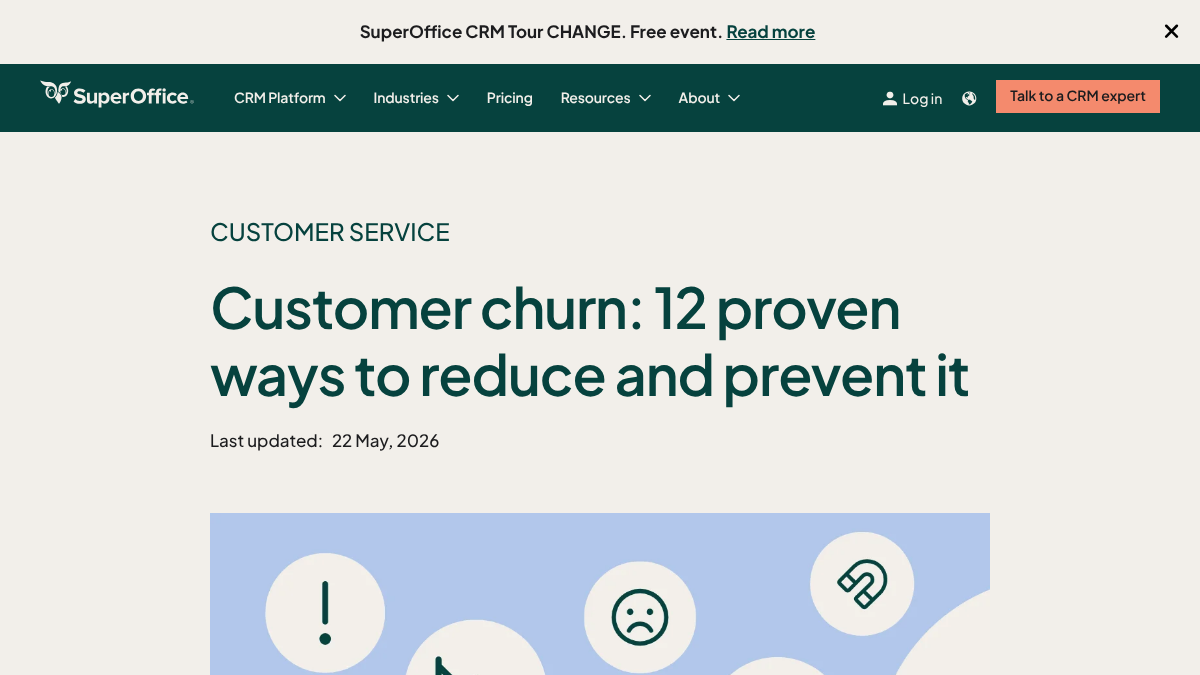
Vanta's page names a reviewer with a compliance credential. QuickBooks' payroll cost guide names its author, and PCMag puts the year in its CRM roundup's title.
We can't prove these signals caused the citations, and plenty of cited pages had neither. But on searches where trust matters, like compliance, payroll and money, the cited pages usually showed a date or a name without making you scroll for it. If your page has been updated, say when, near the top.
How often does ChatGPT mention your brand?
Most founders have no idea. The answer might surprise you.
What Google says you don't need
Google's own guidance is short. Its AI features documentation says there are "no additional requirements to appear in AI Overviews or AI Mode." A page has to be indexed and eligible to show with a snippet, and "there's also no special schema.org structured data that you need to add."
The same page lists the controls for going the other way. The nosnippet, data-nosnippet, max-snippet and noindex controls limit what Google can show from your page, in AI features and regular results alike.
One caveat is worth keeping in mind. One reader in r/BetterOffline, a community skeptical of big tech, pointed out that the sources under an AI Overview don't always back up what the overview says. Being cited and being quoted accurately aren't the same thing, so read what Google says about you as well as whether you're linked.
AI overview sources
This may be a minor issue, but one thing I observed while using search engines in the last year is that those sources the AI overviews provide do not necessarily back up the answer provided in the overview. Like, the overview could be rough...
How to use these examples on your own pages
Pick the ten searches that matter most to your business and run them yourself, signed out. For each one, note what Google cites, what type of page it is, and whether it ranks. Then look at your own page for the same search:
- Does the first sentence answer the question outright?
- Is it the type of page Google cites for this search, or should the answer also live in a video, a comparison table or a community thread?
- Do you have pages for the side questions around the topic?
- Is the update date or author visible near the top?
That's about two hours for ten searches. Our AI Overviews checklist covers the full fix list once you know where the gaps are, and our guide to structuring content for ChatGPT covers writing the passages themselves.
You can repeat that check every month by hand. Or RankControl can take over most of it. AI visibility tracking checks up to 50 buyer questions every week on seven engines, including ChatGPT, Perplexity, Google AI Mode and Google AI Overviews. You see those answers next to your Google and Bing rankings. The content engine writes pages built to answer those questions in the first line.
For a quick baseline, run a free check of your brand in AI answers.
15 hours a week manually. Or 15 minutes with RankControl.
Track citations, monitor competitors, and fix content gaps across every AI search engine. Automatically.