Paid search and organic search show up on the same page, often for the same query. They work in opposite ways. Paid traffic starts the day you turn it on and stops the day you turn it off. Organic traffic takes months to build, then keeps arriving without a per-click bill.
This post compares the two on what each costs, how much of the click share each gets, what happens over time and how ads inside Google's AI answers change the picture. Every figure comes from a dated source, and where a source sells one side of the comparison, we say so.
The short version
| Paid search | Organic search | |
|---|---|---|
| Speed to first visit | Same day | Months, often |
| Cost model | Every click | The page, once, plus upkeep |
| When you stop paying | Traffic stops | Traffic continues while the page ranks |
| Average click cost | $5.42, LocaliQ 2026 | No per-click cost |
| ROI, FirstPageSage | 36% | 748% |
| Best for | Testing, launches, urgent demand | Long-term, compounding traffic |
We call the difference the meter problem. Paid search runs on a meter that never stops ticking. Owned content is closer to buying the car: a bigger cost up front, then each extra mile costs very little.
26 content formats. Published on your domain. Matched to your brand.
Guides, comparisons, listicles, case studies, and more. RankControl generates content that gets cited by ChatGPT, Perplexity, Claude, Gemini, Grok, Google AI Mode, and Google AI Overviews.
What paid clicks cost
LocaliQ, which runs ad campaigns with WordStream, published its 2026 search advertising benchmarks on June 1, 2026. They're built from "data from thousands of our customers' advertising campaigns across Google Ads and Microsoft Ads." LocaliQ sells PPC management, so this is a vendor benchmark.
The all-industry averages: a cost per click of $5.42, a conversion rate of 8.18% and a cost per lead of $66.69.
| Industry | Average cost per click |
|---|---|
| Attorneys and legal services | $9.87 |
| Home and home improvement | $8.33 |
| Dentists and dental services | $8.00 |
| Personal services | $7.17 |
| Health and fitness | $6.17 |
| Business services | $5.87 |
| Education and instruction | $4.81 |
| Finance and insurance | $3.39 |
| Real estate | $3.22 |
| Travel | $2.14 |
| Restaurants and food | $2.05 |
| Arts and entertainment | $1.63 |
One trend is worth knowing. LocaliQ said clicks got a little more expensive over the year, but "cost per lead decreased overall for the first time in five years." Better conversion rates made up for pricier clicks.
Who gets the clicks
The bigger shift is how many searches send a click to anyone at all. SparkToro's study, published June 9, 2026, found "68.01% of Google searches ended without a click" in the US from January to April 2026. That was up from 60.45% in 2024 and 49% in 2019.
Rand Fishkin, who wrote it, called the rise "the fastest acceleration of this phenomenon in the last decade." The same study said paid clicks "also grew tremendously" over the period. The exact paid and organic split is shown only in a chart, so we're using the direction, not a number.
Two caveats. Fishkin notes the years use different data panels, so "we're comparing a bit of apples and oranges." And SparkToro's own advice leans toward marketing that doesn't depend on clicks at all, which is a view, not a finding.
What it means here: fewer searches send any click, while paid clicks grew over the same period. So the organic clicks that remain go to the pages that rank at the very top. Our click-through rate by position data shows how steep that curve is.
What happens when you stop
This is the core difference. A paid campaign is traffic you rent. When the budget runs out, the ads stop showing and the clicks go with them.
An r/indiehackers thread asked founders which had worked better for them long term. The top reply said organic had been far more sustainable, and that paid is great for validating demand quickly, but you're renting that traffic rather than owning it. Another reply added that organic is more forgiving. You can adjust and rewrite and it still compounds, while a mistake with paid ads costs you money right away.
Paid traffic vs organic traffic what’s actually worked for you long term?
I’ve been thinking a lot about what is organic traffic versus paid traffic lately. Paid can bring fast SEO leads, but it also feels fragile. One policy change or cost spike and everything resets. With SEO organic, it’s slower, but I’ve noti...
Organic traffic isn't permanent either. Rankings move with algorithm updates and competitors. But a page that ranks keeps working without a per-visit cost, and it can be updated instead of replaced.

Your competitors are getting cited by AI. You're not.
Every day without citation tracking is a day your competitors pull ahead in ChatGPT, Perplexity, and Claude.
The cost per visit over time
Here's a simple model. The assumptions are ours and illustrative, so swap in your own numbers.
Paid: every visit costs the average click price. At LocaliQ's $5.42, 100 visits a month costs $542 a month, every month.
Organic: say an article costs $400 to produce and reaches 100 visits a month after a few months, holding there for two years.
| Months after publishing | Organic visits so far | Organic cost per visit | Paid cost for the same visits |
|---|---|---|---|
| 6 | 300 | $1.33 | $1,626 |
| 12 | 900 | $0.44 | $4,878 |
| 24 | 2,100 | $0.19 | $11,382 |
The organic column assumes zero traffic for the first three months, then 100 a month. The paid column is simply those visits times $5.42.
The real numbers vary a lot. Some articles never rank, and some bring thousands of visits. But the shape holds: paid cost scales with every visit, while organic cost per visit keeps falling for as long as the page performs. Our guide to measuring SEO ROI covers how to track the real version for your site.
Break-even by industry
The higher the click price in your industry, the faster an article pays for itself. Using the same illustrative $400 article, here's how many organic visits it takes to match what those visits would cost as ads.
| Industry | Average cost per click | Visits to break even on a $400 article |
|---|---|---|
| Attorneys and legal services | $9.87 | About 41 |
| Home and home improvement | $8.33 | About 48 |
| All-industry average | $5.42 | About 74 |
| Real estate | $3.22 | About 124 |
| Arts and entertainment | $1.63 | About 245 |
In legal or home services, one article that brings 50 visits has already matched the ad spend it replaced. In cheaper-click industries, organic still wins over time, but it needs more traffic to get there.
What organic costs that paid doesn't
Organic isn't free, and it's worth being honest about where its costs sit.
- Time to rank. In Ahrefs' study of a million new pages, only 1.74% reached Google's top 10 within a year. Our SEO statistics roundup covers the details.
- Writing. Every article takes research and writing, or someone to do it.
- Upkeep. Pages need updating as facts and competitors change.
- Links and mentions. Pages that rank tend to have links from other sites, which take effort to earn.
So the real comparison isn't paid versus free. It's paying per visit forever versus paying up front for pages that keep working, and accepting that some won't.
The ROI comparison
FirstPageSage's digital marketing ROI report, last updated April 1, 2024, put the two side by side.
| Channel | Return on ad spend | ROI |
|---|---|---|
| SEO | 9.10 | 748% |
| Paid search (SEM/PPC) | 1.55 | 36% |
FirstPageSage is an SEO agency, so it has a stake in that result. Treat it as one firm's data, not a law. But it points the same way as the model above: the gap comes from paid search paying for every visit, forever.
Where paid search is the better tool
Paid search is faster. If you're launching a product, testing whether anyone wants it, or need leads this month, ads deliver traffic the day you switch them on, and you can test headlines and offers in days. That's a real job organic can't do quickly.
A beginner on r/DigitalMarketingHack asked which gives better ROI right now. The top reply argued for starting with organic, because it compounds and leaves something behind: content, rankings and proof you can attract attention without spending cash on every click.
What gives better ROI for beginners right now: SEO, content, or paid ads?
If someone was starting from scratch today with a small budget, what would you recommend focusing on first and why? I’m curious what people here think gives the best return in real-world situations, especially for beginners or small busines...
Ads are moving into AI answers too
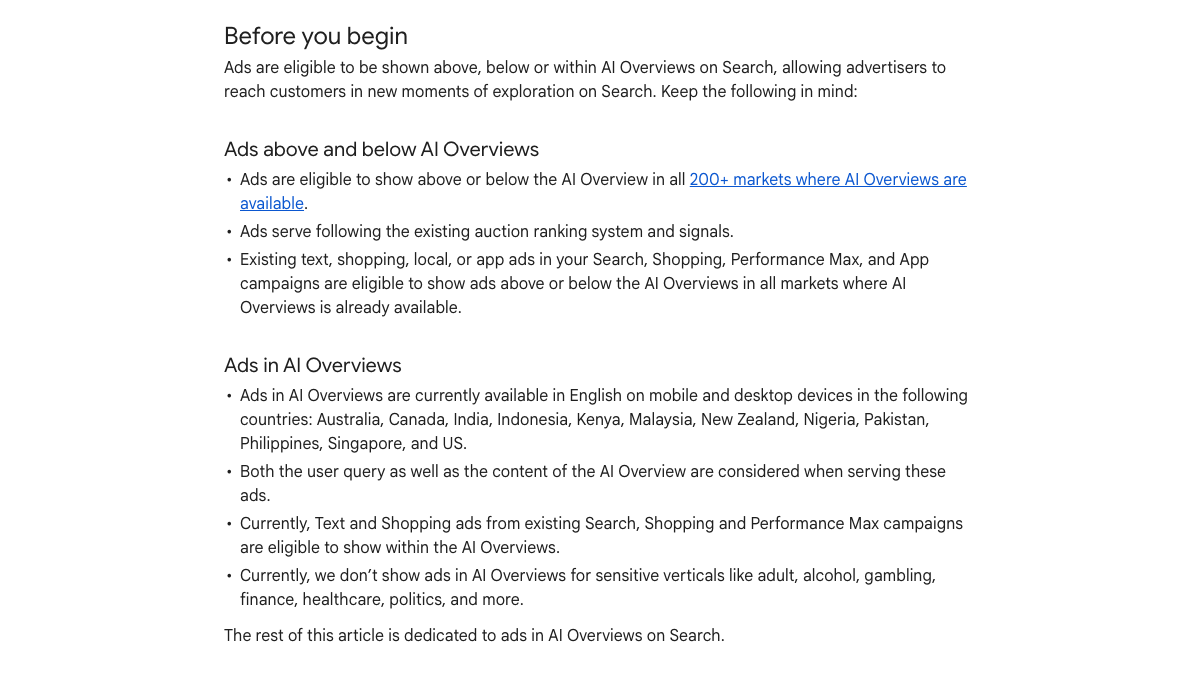
The line between paid and organic is getting more crowded on the page itself. Google says ads "are eligible to show above or below the AI Overview in all 200+ markets where AI Overviews are available." Inside the AI Overview, ads are available in English in a list of countries including the US, Canada, Australia, India, New Zealand and Singapore.
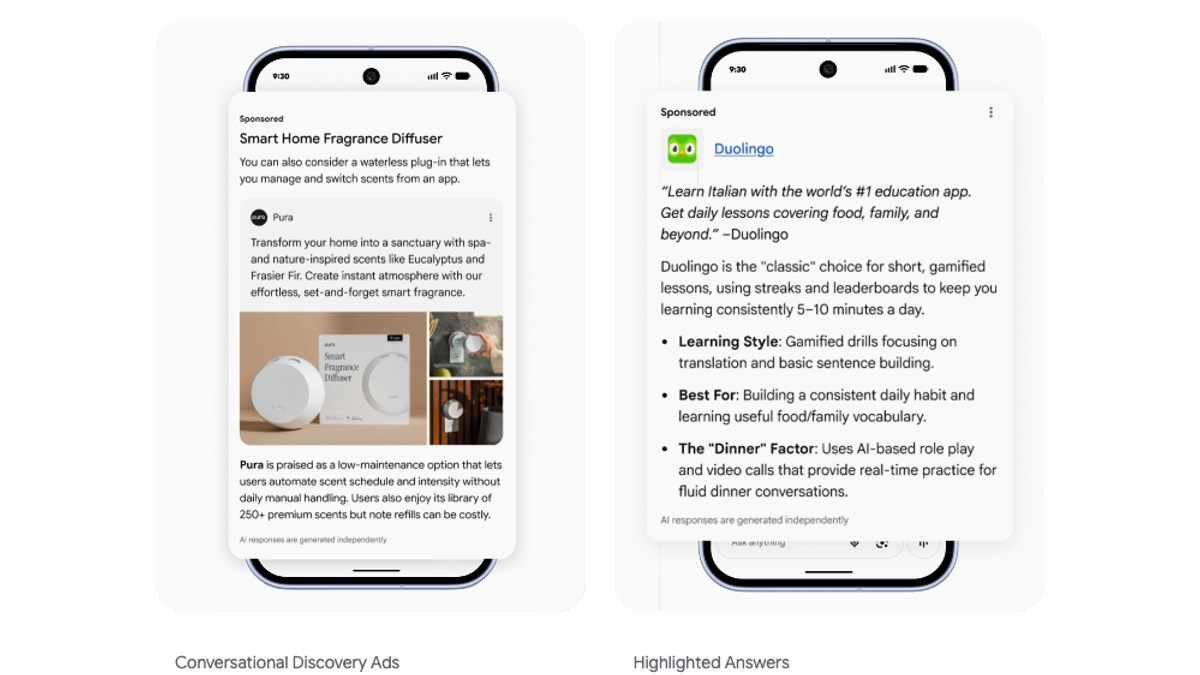
At Google Marketing Live on May 20, 2026, Google added ad formats for AI Mode, including Conversational Discovery Ads, which answer a person's specific question, and Highlighted Answers, which can appear in AI Mode's recommendation lists, labeled as ads.
But it isn't happening on every query. When we pulled Google's US results for "best project management software" on October 19, 2026, the page had an AI Overview at the top and no ads anywhere on it. One query on one day isn't a pattern. It does show the paid and organic contest now plays out query by query.
Our post on ads in AI Overviews covers the placements in full.
Using both, in the right order
Most businesses shouldn't pick only one. A common split:
- Use paid for speed. Launches, tests and urgent demand.
- Use paid to learn. Find which keywords and messages convert before you invest in content for them.
- Build organic for the long run. Turn the keywords that convert into pages you own.
- Shift budget as organic grows. When a page ranks for a term you're paying for, test cutting the ad and see what happens to total leads.
A simple way to run step 4: pick one keyword where you rank in the top three organically and also run ads. Pause the ad for two weeks and compare total clicks and leads from that search with the two weeks before. If the organic listing picks up most of the clicks, the ad was mostly paying for visits you'd have had anyway. If leads drop, the ad was earning its keep, and you can keep it.
Our post on owned content versus rented visibility makes the wider case for building assets you control.
Mistakes that skew the comparison
- Comparing one month. In month one, paid always looks better, because organic hasn't started yet. Compare over 12 to 24 months.
- Ignoring cost per lead. A cheaper click isn't better if it converts worse. LocaliQ's figures show cost per lead can fall even as clicks get pricier.
- Counting organic as free. Writing, upkeep and links cost time or money. Put a number on them.
- Cutting ads before organic is ready. Shift budget only when a page actually ranks for the term you're paying for.
- Forgetting AI answers. Some searches now end in an AI Overview, with or without ads. Track whether your pages are cited there too, alongside rankings.
The verdict
Paid search is the faster tool and the better testing tool. Organic search is the one that gets cheaper the longer you keep it running, and the content you publish stays yours.
The catch is that organic takes steady work: an article for each question worth ranking for, published consistently, for months. RankControl does that work. We find the questions your buyers search, write each article against the pages already ranking for it and publish it to your site. Our AI visibility tracking checks up to 50 buyer questions every week across seven AI engines. Expect traffic from Google first, with AI citations following more slowly as links and mentions build up.
200+ SaaS teams already track their AI citations.
They know exactly when ChatGPT mentions their brand, and when it stops. Do you?