
An agency SEO posted in r/SEO this month that one client's backlink scan had just flagged 3,800 new toxic links. The client's disavow file was less than two months old. The replies were close to unanimous. Google ignores that junk, and so should you.
Massive Increase in Toxic Backlinks?
I work at an agency, and we’ve seen a HUGE increase in toxic backlinks being picked up by SEMRush starting on September 29th-ish and getting REALLY bad the last couple of days These are clearly spammy AI generated sites coming from the same...
So if most of your backlink count is noise, which links are worth your attention? We pulled every site linking to six real businesses, 29,077 in all, and checked how many had real readers. It was about one in five. Here's how to check your own backlinks and find that fifth.
Step 1: Pull your backlink list
Start with the free sources, then add a paid index if you need the full picture.
- Google Search Console. Open the Links report and look under External links. It shows top linking sites, top linked pages and top linking text, and you can export each table.
- Bing Webmaster Tools. Its backlinks report is free too, and it comes from a different crawl.
- A third-party index. Backlink tools like Ahrefs, Semrush and Moz crawl the web themselves, so they show more links, plus links you've lost.
Google's Links report help page is clear that its report isn't the whole story. It calls the Links report a sample, not a complete list, and caps each table at 1,000 rows. Our guide to seeing your backlinks in Search Console walks through the export.
Expect the numbers to disagree. Each index crawls a different slice of the web, so treat any one count as a rough size, not a fact.
What we found in six sites' backlinks
On October 19, 2026, we pulled every live referring domain for six businesses from a data provider's backlink index. We chose a mix of a kids' bike store, a pet food brand, a Chicago pizza restaurant and three software companies. Then we estimated monthly Google traffic for a random 1,000 linking sites per business.
| Site | Linking sites | No Google traffic | Spam score 30+ | Real traffic and low spam |
|---|---|---|---|---|
| woom.com (kids' bikes) | 4,725 | 56% | 55% | 24% |
| onpay.com (payroll software) | 5,685 | 63% | 50% | 20% |
| pequodspizza.com (restaurant) | 3,432 | 65% | 63% | 22% |
| ollie.com (pet food) | 4,502 | 65% | 60% | 16% |
| savvycal.com (scheduling software) | 4,974 | 60% | 49% | 16% |
| baremetrics.com (analytics software) | 5,759 | 49% | 46% | 25% |
| All six | 29,077 | 60% | 53% | 20% |
"Real traffic" here means 1,000 or more estimated monthly visits from Google. The spam score is the data provider's, from 0 to 100. Two other numbers stood out. 65% of linking sites had only one link to the business, and 18% linked with nofollow only.
You're getting AI traffic. But do you know where it comes from?
RankControl credits every visit to the assistant that sent it: ChatGPT, Perplexity, Claude, Gemini, Copilot, or Grok. Full source attribution, next to your Google traffic.
Step 2: Throw out the junk
Most of the noise looks the same. When we read through the linking sites with no Google traffic, about three in four had names like rank checkers, backlink makers and "website worth" calculators, by a rough name match. Pequod's Pizza had links from sites like freeseorankchecker.store and unlimitedbacklinkgenerator.online. They list every domain they can find, so nearly every site has them.
The spam score lined up with this. Of linking sites scored 30 or higher, 91% got no estimated Google traffic, and just 2% got 1,000 visits or more. A June thread in r/SEO had the best description. One reply called these links spam messages aimed at people who look at backlink reports.
Majority of backlinks are SEO spam?
Hi all, I'm going through some backlinks reports right now, and it looks like the majority of backlinks are from shady SEO companies. I work in post-secondary education, and and I'm getting backlinks from pages about "crafting SEO-friendly...
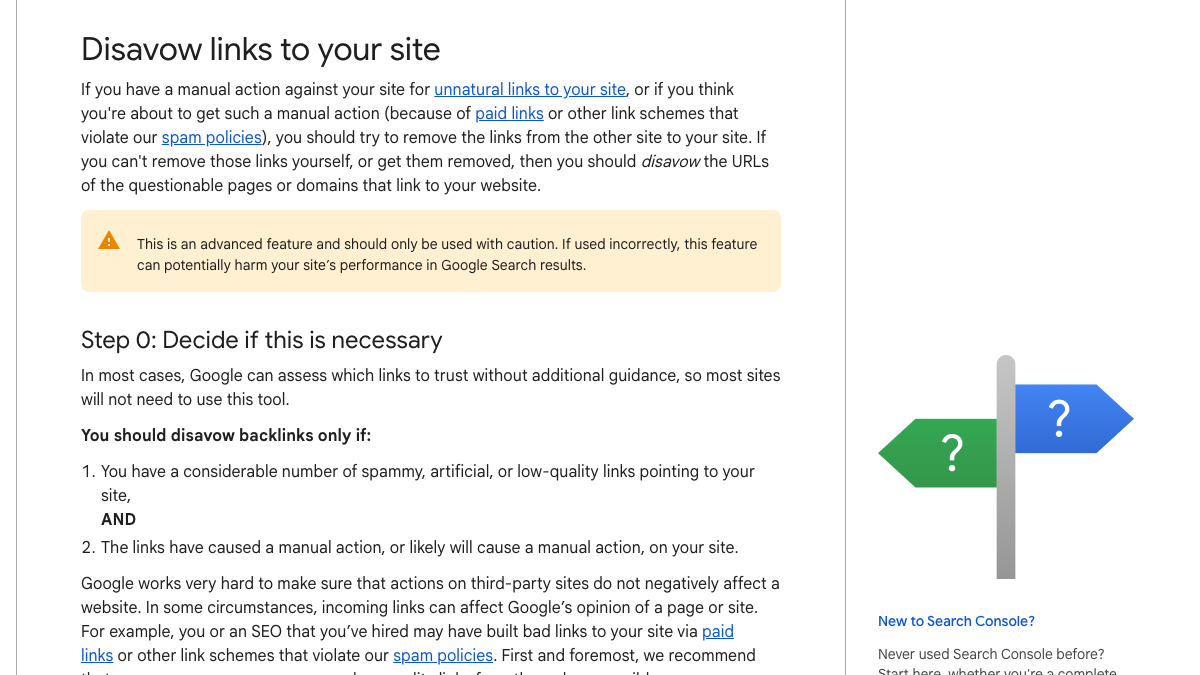
Don't rush to disavow them. Google's disavow help page says most sites won't need the tool, and it suggests disavowing only when spammy links have caused, or likely will cause, a manual action.
What Google does penalize is described in its spam policies. It defines link spam as creating links mainly to manipulate rankings, with examples like buying or selling links, excessive link exchanges, automated link-building programs and keyword-rich anchors in guest posts. Checker sites that list your domain on their own aren't links you created. The disavow page's example of trouble is bad links that you, or an SEO you hired, built.
If you did buy links or hired someone who did, that's different. Our backlink audit guide covers when cleaning up is worth it.
Step 3: Keep the ones with real readers
Once the junk is gone, the list gets short and interesting. For woom, the linking sites with real traffic and a clean score included CNET, Outside, Bicycling and GearJunkie. For Pequod's, they included the BBC, Lonely Planet, The Infatuation and the Chicago Sun-Times. For SavvyCal, they included Y Combinator and Coda.
Those are links a person might actually click. They also tell you which publications already know you, which is useful when you pitch the next story. Domain scores are a weaker guide than traffic and topic, a point one SEO made well on X this month.
If you are into SEO, then you should know: DR is a vanity metric. A DR 80 guest post farm: - publishes anything for $150. - links out to casinos, crypto and CBD. - zero real readers. A DR 30 blog in your niche: - written by people in your industry. - read by your buyers. -
 andrei saioc@asaio87Oct 14, 2026
Traffic is a starting filter, not the whole test. A small blog in your exact niche with a few hundred readers can be worth more than a big site that mentions you once in passing. Our guide to high-quality backlinks covers the quality checks in more depth.
Step 4: Don't drop nofollow links from sites AI cites
Here's where a classic audit can mislead you. In an earlier test, we asked ChatGPT for the best pizza in Chicago. Its answer named Pequod's and cited 18 other sites. Four of those link to Pequod's, namely Axios, Condé Nast Traveler, The Infatuation and Time Out.
Condé Nast Traveler's links to Pequod's are all nofollow, and Time Out's are mostly nofollow. A link audit built around followed links would rank them low. Yet they're the pages ChatGPT read when it recommended the restaurant.
The same thing showed up for woom. When we asked ChatGPT for the best kids' bike for a 6-year-old, it cited woom's own site and two review sites that link to it, Two Wheeling Tots and Kidding Zone. Kidding Zone gets almost no estimated Google traffic, so a traffic filter would have dropped it too.
So check your linking sites against the AI answers in your topic. If a site keeps showing up as a source when you ask ChatGPT or AI Mode your buyers' questions, its link or mention matters, followed or not. Our post on brand mentions vs backlinks covers why mentions count in AI answers.
We'll show you exactly where your brand stands in AI search.
No commitment. $0 due today, cancel anytime. See how ChatGPT, Perplexity, Claude, Gemini, Grok, Google AI Mode, and Google AI Overviews talk about your brand today.

Step 5: See which pages get the links, and watch for losses
In Search Console, the Top linked pages table shows which of your pages earn links. If it's mostly your homepage, your articles aren't pulling their weight yet.
Then keep an eye on the short list. Losing one of 3,000 checker-site links means nothing. Losing your one link from a site like CNET or The Infatuation is worth an email to ask why. Our list of backlink monitoring tools compares the tools that send lost-link alerts.
A quick way to sort your list
| Signal | Keep | Ignore |
|---|---|---|
| Google traffic | Real readers, ideally in your topic | None at all |
| Site type | Publications, blogs, communities, partners | Checkers, "website worth" and backlink-maker sites |
| Spam score | Low | 30 or higher, with no traffic |
| AI answers | Cited when you ask your buyers' questions | Never shows up |
| Nofollow | Keep if the site has readers or gets cited | Not a reason to drop a link on its own |
Limits of our check
We used one data provider's backlink index and its traffic estimates, which are models, not real visit counts. Other indexes will find different links. We estimated traffic for a random 1,000 linking sites per business, not all of them. The checker-site share came from matching words in domain names, which is rough. The AI answers came from tests run on October 19, 2026, once each.
What this takes by hand
Here's a rough budget for checking backlinks properly, by our estimate.
| Task | Hours |
|---|---|
| Exporting from Search Console, Bing and one paid tool | 1 to 2 |
| Removing junk and adding traffic data | 2 to 4 |
| Checking the short list against AI answers in your topic | 2 to 3 |
| Monthly check for lost links on the short list | 1 to 2 a month |
Doing it by hand or with help
You can run this check yourself a couple of times a year. Or RankControl can take on the ongoing part every month while you focus on your product. Our Link Control monitors your backlinks and drafts outreach for each article we publish, sent from your own mailbox only after you approve it. Our AI visibility tracking shows which sources ChatGPT, Perplexity, Claude, Gemini, Grok, Google AI Mode and Google AI Overviews cite for your buyers' questions, so you know which sites are worth a pitch.
Know exactly what AI says about your competitors.
RankControl's Recon Agent monitors competitor citations across ChatGPT, Perplexity, Claude, Gemini, Grok, Google AI Mode, and Google AI Overviews. See where they show up and you don't.