
A marketer posted in r/seogrowth in September that most of their referring domains scored between 50 and 62. That sounds healthy. Then they admitted every one of those sites was a scraper or news farm they never asked for, and together the links were worth roughly zero.
We wanted to know how common that is, even for pages that win. So on October 19, 2026, we took 15 pages ranking first in Google for buyer searches and checked every site linking to them. The short version is that a high score tells you less than you'd hope, and the links that count are easy to spot once you know where to look.
What we checked
The pages came from our earlier test of 30 small business software searches, like "best CRM for small business" and "how much does bookkeeping cost for a small business." We skipped Reddit threads and giant brands like Salesforce and HubSpot, whose pages rank on the brand's strength alone.
For each of the 15 pages, we pulled the sites linking to it and each site's estimated US Google traffic and authority score, from a commercial SEO data provider. The authority score runs from 0 to 100, like Ahrefs' DR or Moz's DA. In all, 344 sites linked to 13 of the pages.
One caveat matters. The traffic figures are estimates for US Google search only, so a strong German or Swiss site looks smaller than it is. Read the numbers as a pattern, not a verdict on any one site.
Finding 1: The winners had fewer links than you'd guess
Seven of the 15 first-place pages had four or fewer sites linking to the page itself. Two had none at all. The page with the most, a Business News Daily guide to Google Business Profile descriptions, had 122.
So a page can rank first with almost no links of its own. The site's overall strength, the content and how well it matches the search do most of the work. That's good news for anyone who can't build 100 links, because you don't need to.
Finding 2: Most links even winners have come from sites nobody visits
Of the 344 linking sites, 205 had under 100 estimated monthly visits from US Google search. That's 60%. Another 101, or 29%, had no measurable search traffic at all. Only 89 had 1,000 visits or more.
| Authority score | Linking sites | Under 100 visits a month | 1,000+ visits a month |
|---|---|---|---|
| 0 to 19 | 83 | 92% | 2 |
| 20 to 29 | 55 | 62% | 6 |
| 30 to 39 | 89 | 58% | 22 |
| 40 to 49 | 56 | 46% | 23 |
| 50 to 59 | 38 | 24% | 25 |
| 60 and up | 23 | 35% | 11 |
These pages rank despite the junk. Google's own disavow guidance says it ignores most junk links, which fits what we saw. The few links from real sites with real readers are the ones worth chasing. Our guide to checking your own backlinks found the same pattern across 29,077 sites linking to six businesses.
200+ SaaS teams already track their AI citations.
They know exactly when ChatGPT mentions their brand, and when it stops. Do you?

Finding 3: The score alone doesn't sort good from bad
If authority scores told the whole story, the high bands would be clean. They aren't. Among sites scoring 25 or more, 117 of 239 had under 100 monthly visits, about half. Even in the 40 to 49 band, 46% did.
The scores only start to separate real sites from empty ones around 50, and even above 60 a third looked empty from the US. Several of those sites were foreign, so part of that gap is our US-only estimate. The rest were sites with high scores and no readers, which is what people on Reddit warn about. One r/seogrowth reply said owners pump up scores with expired domains and redirects, then sell links on the result.
So use the score as a first filter, then check what it hides. A reply in the same thread put it well. A relevant DR 35 site can be worth more than a random DR 80 one.
What the good links looked like
The 89 linking sites with 1,000 or more monthly visits looked different from the rest. The biggest of them were sites that publish their own guides and reference pages for their own readers.
Some were reference sites, like Grokipedia and HandWiki. Others were software companies with busy content sites, like Jotform, which links to the email marketing comparison, and Gravity Payments, which links to the Business Profile guide. Business resource sites such as Outsource Accelerator showed up too.
One stood out for a small business. The Port Orange South Daytona Chamber of Commerce linked to the contractor invoicing page, one of only four sites linking to it. A local chamber is a real site with real readers, and joining one is open to any business in the area.
Sites like these link when they need a source for something they're writing. The five methods below are ways to be that source, or to be in front of the people who pick one.
The five-minute quality check
Before you chase a link, or accept one someone offers, run these five checks.
- Traffic in your market. Look up the site's estimated organic traffic in any SEO tool, and check which country it comes from. Under 100 a month is a warning sign at any score.
- Topic fit. Does the site write about your field, or at least about your customers' world? A link from an unrelated site still counts, but a related one sends visitors who care.
- The page itself. Is it indexed, linked from the site's own menus or articles, and written for readers? A page buried with no internal links passes little.
- The outbound links. Open a few recent articles. If every one links to a casino, a VPN, a SaaS tool and a dentist, the site is selling links. A commenter in r/DoSEO used almost exactly that test.
- How it got there. Would the writer link to you if you hadn't asked or paid? If not, it's the kind of link Google's spam policy describes.
How often does ChatGPT mention your brand?
Most founders have no idea. The answer might surprise you.

How to earn the links that pass the check
These five methods tend to produce links from real sites, because a person decides to link. None of them is fast, but each one compounds.
- Publish one thing worth citing. Original numbers, a pricing study or a free tool give writers a reason to link. Our guide to digital PR backlinks shows how one dataset can earn links for months.
- Answer journalist requests. Platforms like Qwoted and Featured match you with reporters looking for sources. Our guide to outsourcing link building compares what they cost.
- Reclaim unlinked mentions. Search for your brand name and ask the sites that mention you without a link to add one. It's the easiest yes you'll get.
- Ask the people you already work with. Suppliers, partners, customers and local groups often list who they work with. Those are real sites, in your field, with real readers.
- Replace broken links. Find resource pages in your field with dead links and offer your page as a working one. Our guide to broken link building walks through it.
Our guide to building backlinks covers each method in more depth, ranked by effort.
What junk looks like
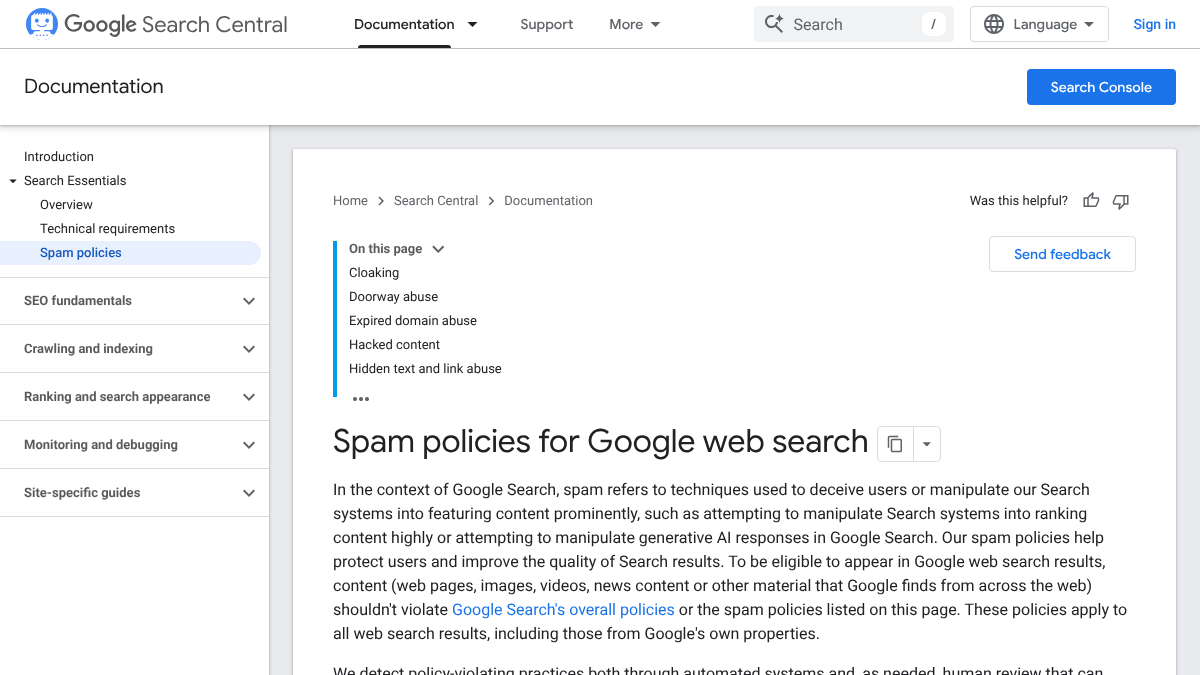
Google's spam policies list buying or selling links for ranking, excessive link exchanges and automated link building as link spam. Most of the junk you'll be offered fits one of those.
Watch for a few patterns in particular. One r/DoSEO commenter warned about Gmail offers from "managers" with huge lists of domains, where the link often disappears a month later. Others are site lists priced by DR, "guaranteed" placements and networks that link sites to each other in loops.
The clean alternatives are mostly relationships you already have, and our white hat link building guide lists the ones we found in small business profiles.
If you already have junk links pointing at you, you can usually leave them alone. Google's disavow guidance says most sites don't need the tool, and our backlink audit guide covers the rare cases where you do.
What this takes each month
Here's a rough monthly budget for earning three to five good links by hand. These are my estimates.
| Task | Hours a month |
|---|---|
| Check prospects with the five-minute test | 3 to 4 |
| Pitch journalists and reclaim mentions | 4 to 6 |
| Outreach to partners and resource pages | 4 to 6 |
| One linkable asset, spread over a quarter | 6 to 10 |
| Total | 17 to 26 |
Expect a slow first month. Most of the early time goes into finding the right sites, not writing to them.
Doing it yourself or handing it off
You can run all of this by hand. Or RankControl's Link Control can do much of it for you. For each article it publishes, it finds link prospects and their contacts and drafts personalized outreach that goes out from your own mailbox. It refreshes your link profile weekly, checks the links it built every week and notifies you when one is lost, while you focus on your product.
15 hours a week manually. Or 15 minutes with RankControl.
Track citations, monitor competitors, and fix content gaps across every AI search engine. Automatically.