
You ask ChatGPT the question a buyer asks the week before a demo. Three brands come back. One is the market leader, which you expected, and the other two are rivals you barely think about. Your name isn't there.
That's when people go looking for a way to track competitors in ChatGPT, and plenty of vendors want to sell you one. TechCrunch reported in May that Peec AI, founded in 2025, had passed $10 million in annual revenue.
The ten tools here are Semrush AI Visibility Toolkit, Ahrefs Brand Radar, RankControl, AthenaHQ, Profound, Peec AI, SE Ranking, Scrunch, Otterly.AI and Similarweb AI Search Intelligence. Each is judged on rivals, so on how many it tracks, share of voice against them, where they're named and you aren't, and whether it tells you when one moves. For your own brand, see our list of tools to track brand mentions in AI search. Every price, engine list and limit below was checked on 2026-10-19 against each vendor's pricing page and docs.
The short list
| Tool | Starts at | Engines | Rivals tracked | Share of voice vs rivals | Gap view | Rival alerts | Trial |
|---|---|---|---|---|---|---|---|
| Semrush AI Visibility Toolkit | $99/mo | 5, no Claude or Grok | Up to 4 at once | Yes | Yes | Not listed | None on the toolkit alone |
| Ahrefs Brand Radar | Lite $129/mo; index $199/mo | 6, plus Claude on custom prompts | No published limit | Yes | Yes | Mentioned on its page | Not stated |
| RankControl | $400/mo | 7, incl. Claude and Grok | Up to 10 | Yes, weekly | Yes | In-app, on sharp weekly moves | 7 days |
| AthenaHQ | Free; Starter $295/mo | 5 free, 11 on Starter | Unlimited on Starter | Yes | Sources and competitor insights | Not listed | Free tier |
| Profound | Custom | 3 on trial, up to 9 on Enterprise | No published limit | Brand vs rivals | Not detailed | Not listed | 7 days, free |
| Peec AI | $95/mo | 3 you pick | Not stated in page text | Yes, daily | Source analysis | Not listed | Not stated |
| SE Ranking | Core $129/mo + AI Search $89/mo | 4 | Up to 5 in the tracker | Presence over time | Yes | Not listed | Free trial, no card |
| Scrunch | $250/mo | 4 on Core, 9 on Enterprise | 5 on Core | Not listed | Not listed | Not listed | 7 days |
| Otterly.AI | $29/mo | 4, more as add-ons | Unlimited | Yes | Citation sources | Not listed | Yes, length not stated |
| Similarweb AI Search Intelligence | $99/mo | 6 plus AI Mode | No published limit | Yes | By topic | On the $542 tier | Free to try |
"Not listed" means the vendor's pricing page and docs didn't mention it when I read them. It may still exist in the product.
What tracking competitors in ChatGPT should show you
Most AI visibility tools were built to answer "does ChatGPT name me?" Tracking rivals is harder, and four things decide whether a tool can do it.
The first is how many rivals you can add. Two clear competitors fit in any plan, but a crowded category outgrows a four-rival cap fast, and that cap is the number most roundups leave out.
Second is share of voice, meaning how often each brand appears across the same set of answers (our explainer goes deeper). Your number alone tells you little, but next to five rivals it shows who's winning.
Third is a gap view, the list of questions where a rival gets named and you don't. A score shows that you're behind, while the gap list shows which buyer questions you're losing.
The fourth is alerts on rival changes, so you hear the week a rival's numbers jump. Few tools list this, which surprised me more than anything else on the pricing pages.
You're getting AI traffic. But do you know where it comes from?
RankControl credits every visit to the assistant that sent it: ChatGPT, Perplexity, Claude, Gemini, Copilot, or Grok. Full source attribution, next to your Google traffic.
The 10 best tools to track competitors in ChatGPT and AI answers
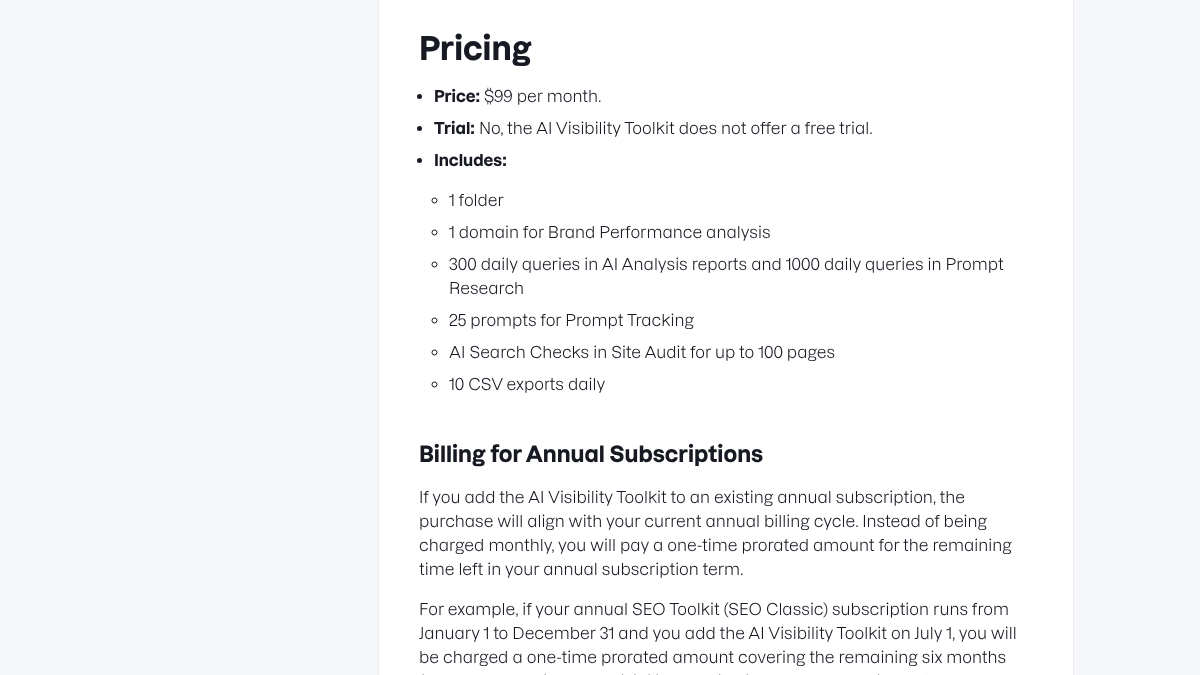
1. Semrush AI Visibility Toolkit
Semrush's toolkit is the default if your team already lives in Semrush. Its Competitor Research report benchmarks you against up to four competitors at once and shows, in Semrush's words, "where you're winning and where you're falling behind."
It costs $99 a month on its own, and Semrush One bundles it from $199. It covers Google AI Overviews, AI Mode, ChatGPT, Perplexity and Gemini, so Claude and Grok are out. According to Semrush's billing help page, the standalone toolkit has no trial.
2. Ahrefs Brand Radar
Brand Radar measures AI share of voice, which Ahrefs defines as how often brands are mentioned or cited in answers from ChatGPT, Perplexity, Gemini, Copilot and Google's AI Overviews and AI Mode. Its page invites you to "benchmark your brand against competitors in AI search and spot the big players," and it doesn't publish a cap on how many you can compare.
Custom prompts come with paid Ahrefs plans, five on Lite at $129 a month up to 20 on Advanced, and they're where Claude coverage lives. The AI Visibility Index starts at $199 a month and draws on more than 485 million prompts, so you can look up any rival across prompts you never wrote.
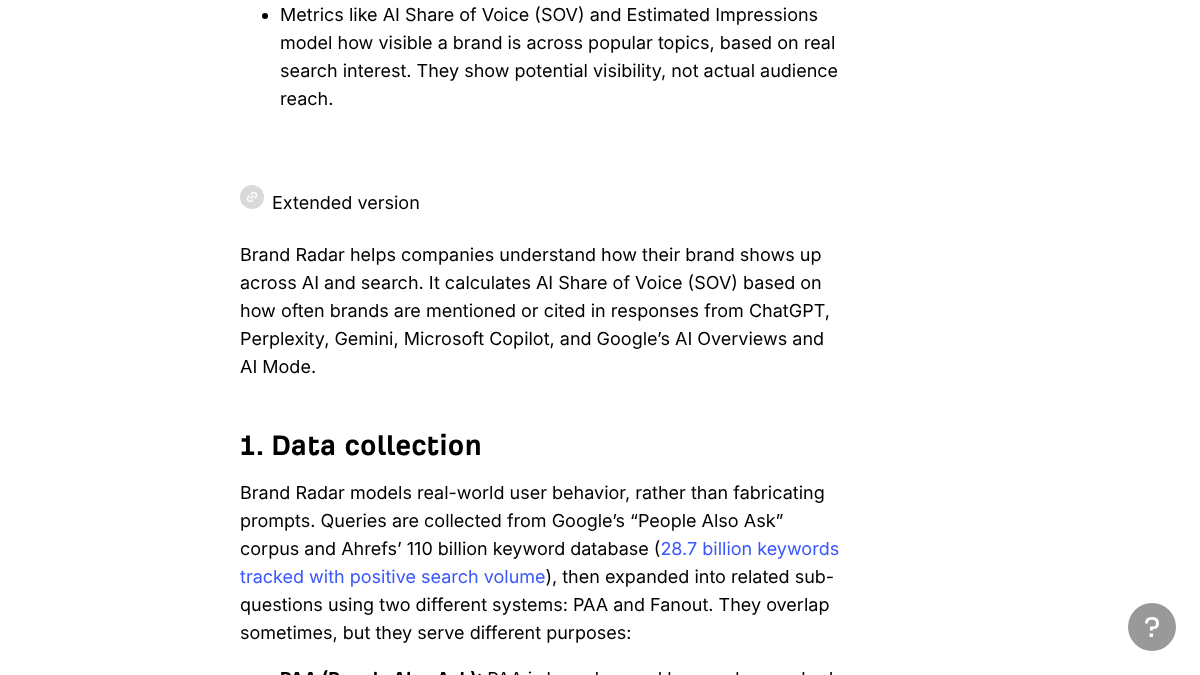
Grok isn't covered, and like Semrush, it leaves the fix to you.
3. RankControl
RankControl tracks up to 10 competitors on one plan, across ChatGPT, Perplexity, Claude, Gemini, Grok, Google AI Mode and Google AI Overviews. AI visibility tracking checks 50 of your queries every week and records which rivals were named when you weren't. The Competitors tab shows your citation rate against your top rivals as weekly share of voice, and an in-app notice appears when a rival's weekly AI score rises or falls sharply.
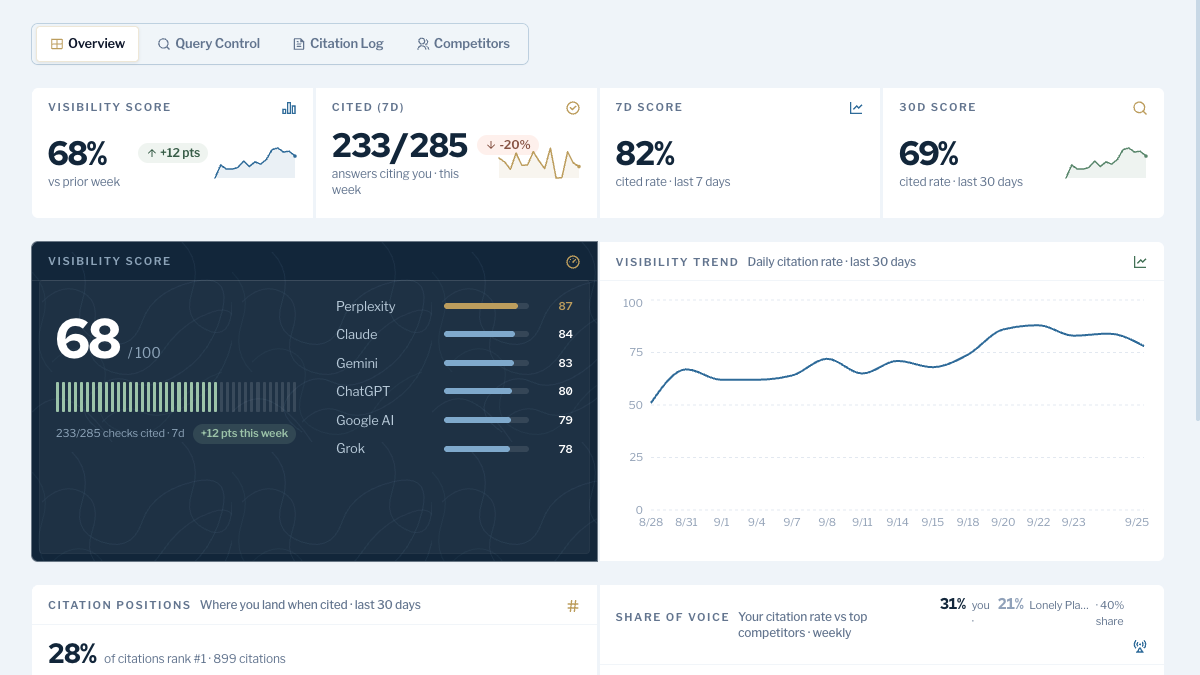
The difference is what happens to the gap. Questions where rivals show up and you don't feed the content engine, which plans titles from them, writes each article against the pages already ranking and publishes it on your site. RankControl costs $400 a month with a 7-day free trial, and checks run weekly rather than daily.
4. AthenaHQ
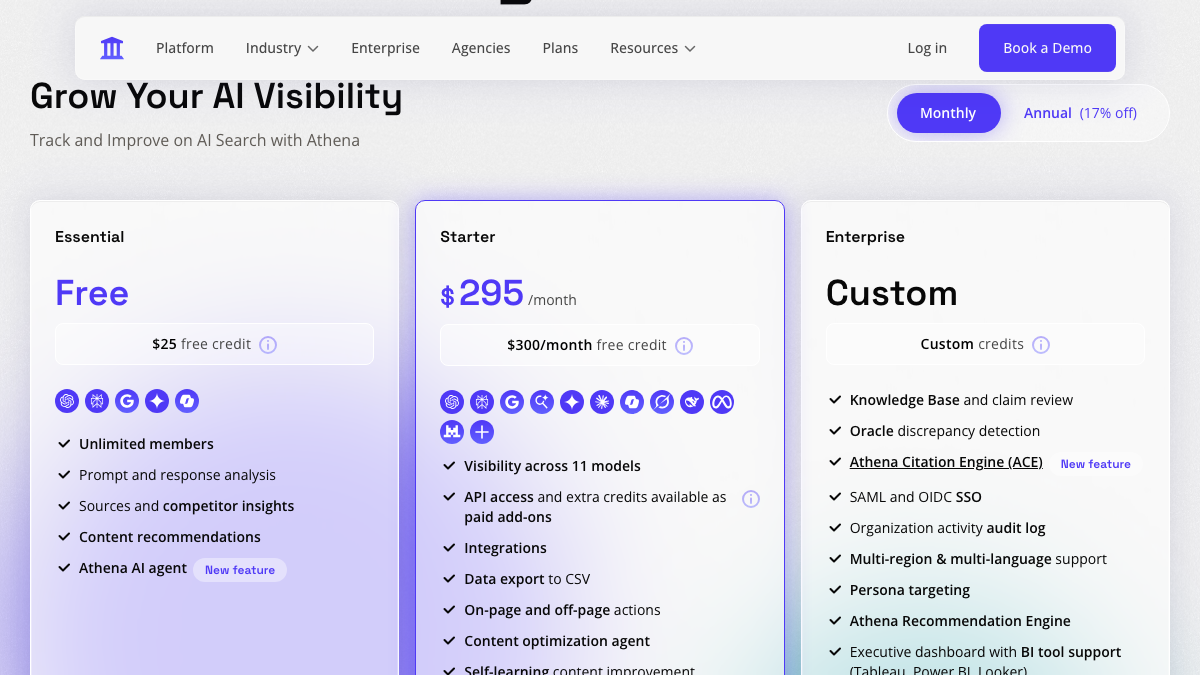
| AthenaHQ | |
|---|---|
| Free plan | Essential, $25 of free credit, five engines, "Sources and competitor insights" |
| Paid plan | Starter at $295 a month, 11 models including Claude and Grok |
| Rivals | "Unlimited Competitors" on Starter |
| Beyond tracking | Content recommendations and an optimization agent |
AthenaHQ is the most generous on rival count among the paid plans, and the free tier shows competitor insights before you pay. It also recommends content, which puts it closer to RankControl than most here. Our RankControl vs AthenaHQ comparison covers the differences.
5. Profound
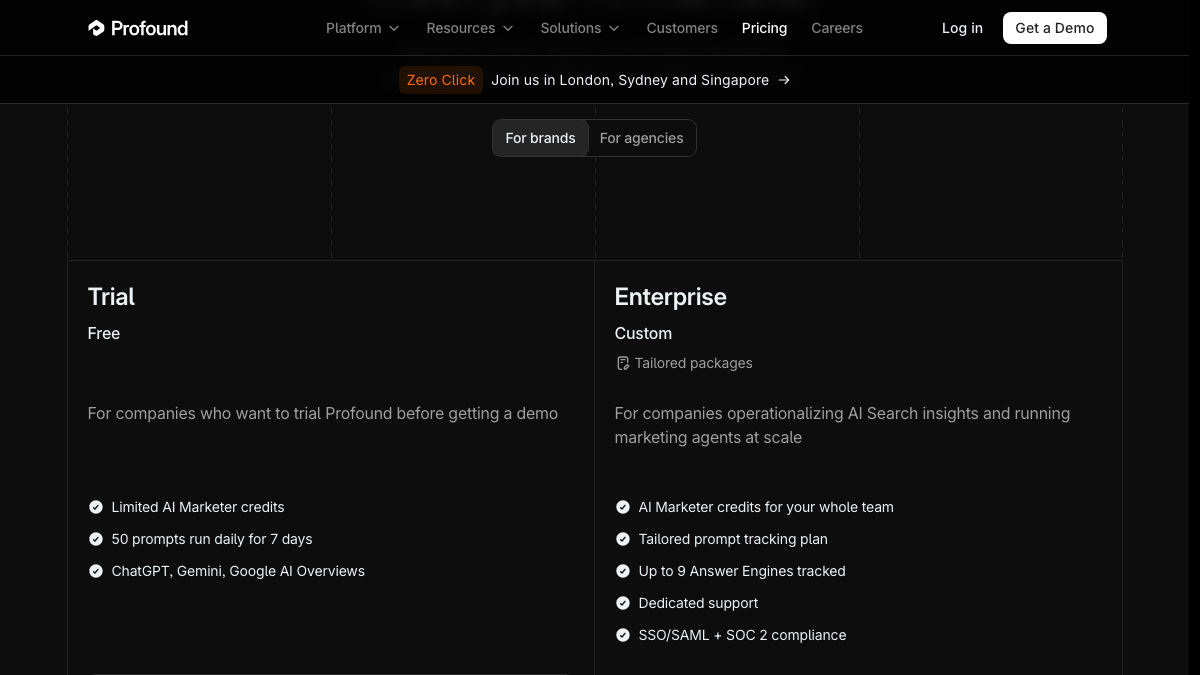
Profound is the enterprise name. Its pricing page describes Answer Engine Insights as a way to "analyze how your brand and competitors appear in AI platforms," and Enterprise covers up to nine engines, Claude and Copilot among them. It doesn't publish a competitor limit.
The free trial runs 50 prompts daily for seven days on ChatGPT, Gemini and Google AI Overviews, and everything past that goes through sales. Our RankControl vs Profound breakdown compares the plans.
6. Peec AI
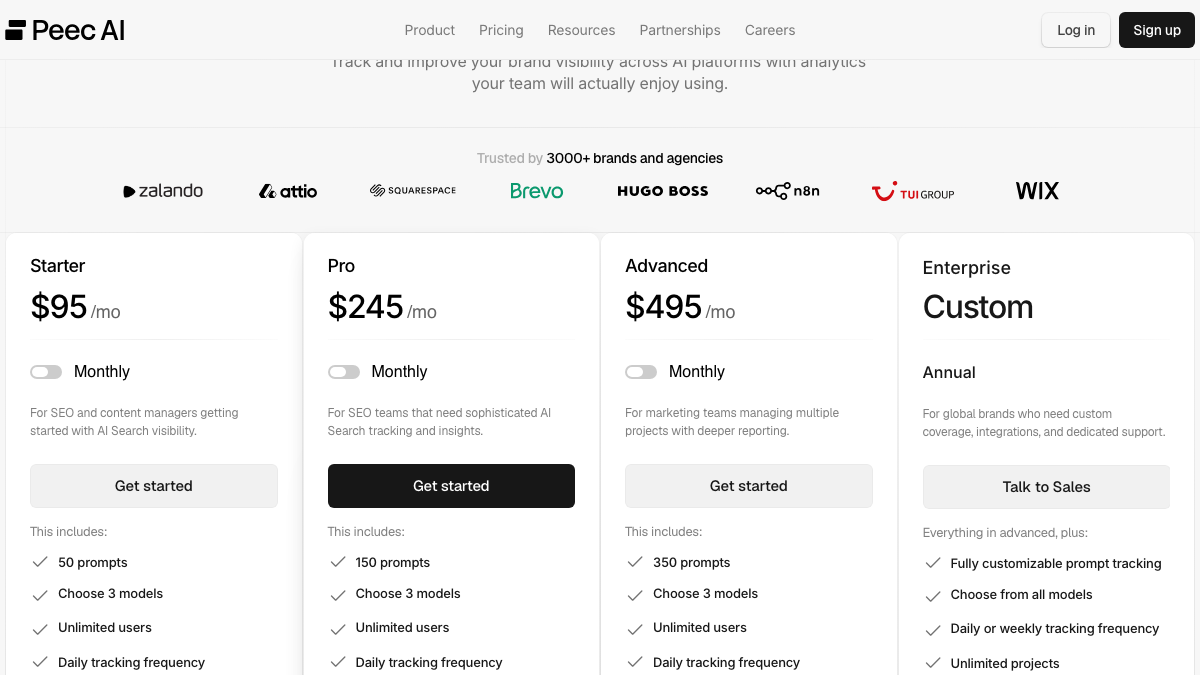
According to its pricing page, Peec AI tracks "your visibility, position, sentiment, and share of voice, tracked daily against competitors," and it suggests rivals for you. Starter is $95 a month for 50 prompts on three models you pick, Pro is $245 for 150, and Advanced is $495 for 350.
The rival limit sits in a feature table I couldn't read in the page text, so check it before you commit. Its source analysis shows which domains each answer drew on, which tells you why a rival got picked. Teams leaving it can read our Peec AI switch guide.
7. SE Ranking
SE Ranking sells AI tracking as an add-on to its SEO suite. The AI Search add-on costs $89 a month, or $71.20 billed yearly, on top of Core at $129, and covers AI Overviews, AI Mode, Perplexity and ChatGPT. The add-on card promises "unlimited competitor research," while the tracker page says you can add up to five competitors and "spot competitive gaps where rivals show up, and you don't."
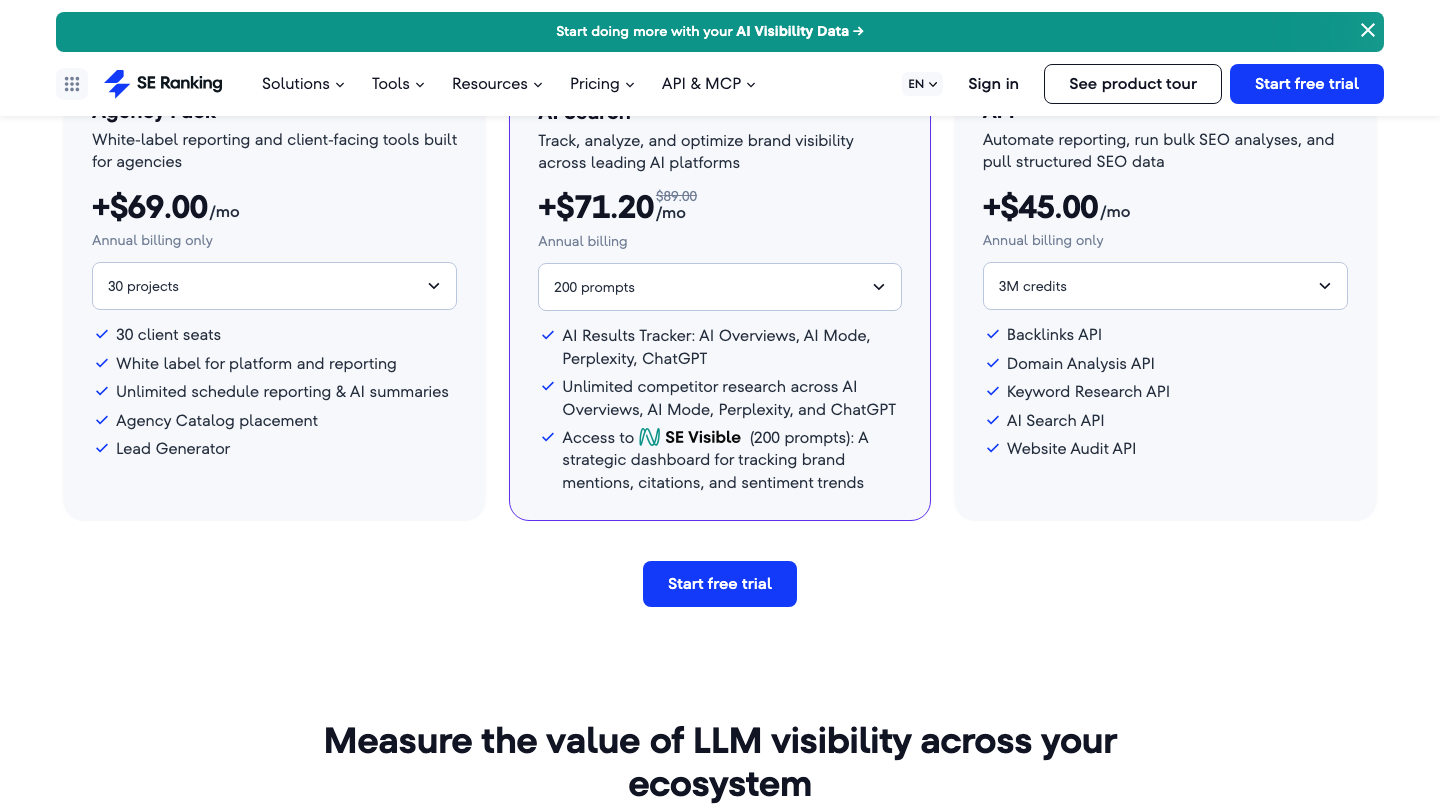
There's a free trial with no card, plus a free checker against up to five rivals. See RankControl vs SE Ranking for the wider platform.
8. Scrunch
Scrunch puts a hard number on rivals. Core is $250 a month for 125 prompts on ChatGPT, Perplexity, Google AI Overviews and Copilot, with five competitors and five site audits a month. Enterprise lifts the rival count and covers nine engines, Claude and Grok among them.
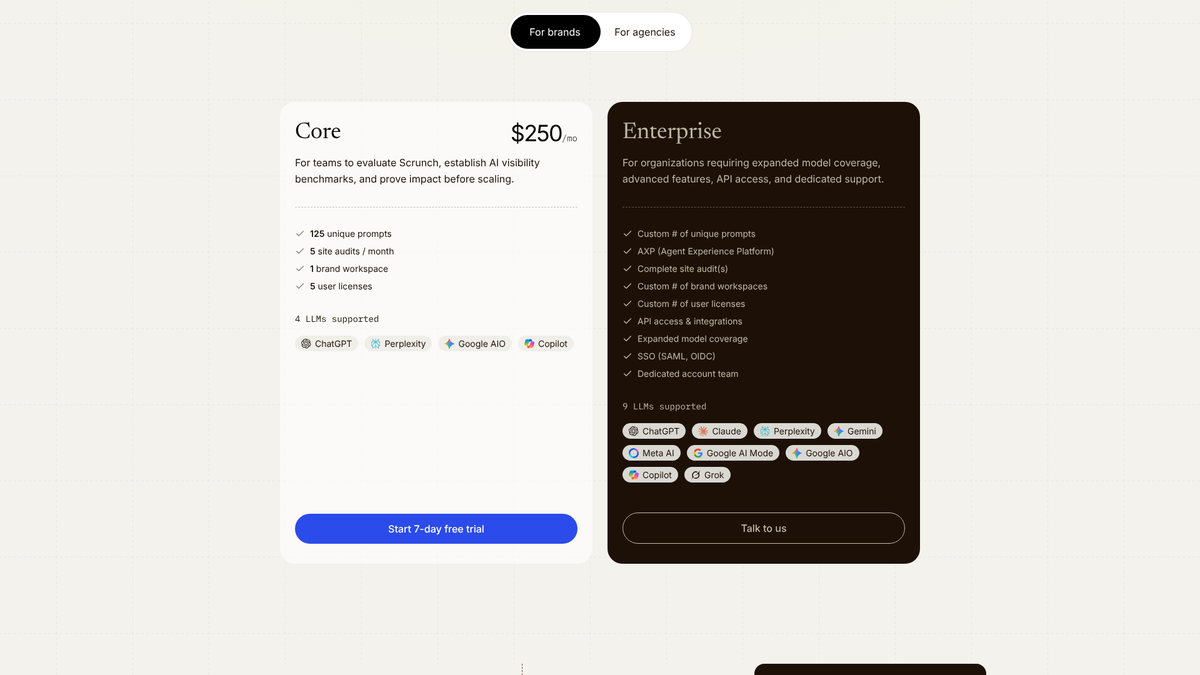
Core has a 7-day free trial. Its AXP feature serves an AI-friendly copy of your existing pages, and according to Scrunch's FAQ it doesn't publish new content.
9. Otterly.AI
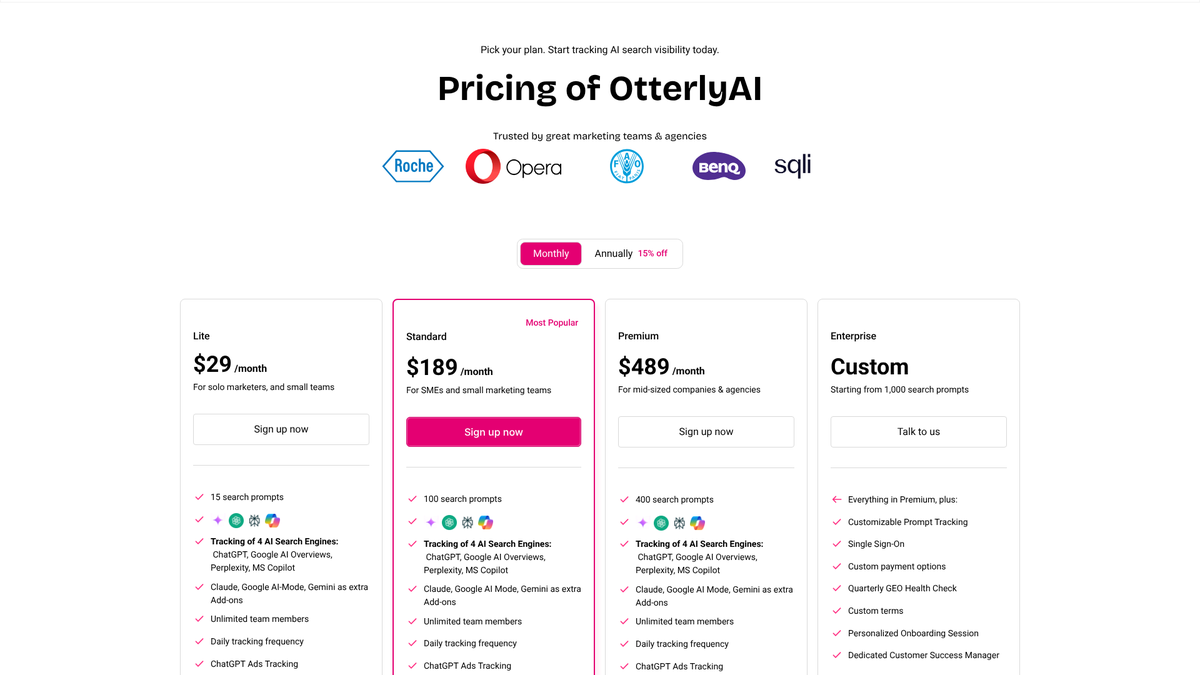
Otterly.AI is the cheapest way in, and on rivals it's the most open. Every plan lists "Unlimited Brands & Competitors," from Lite at $29 a month for 15 prompts up to Premium at $489 for 400. Share of voice is a named metric on each tier, along with citation source tracking.
The trade-off is coverage. Plans track ChatGPT, Google AI Overviews, Perplexity and Copilot, other engines cost extra, and the trial length isn't stated. We compared it in RankControl vs Otterly vs AthenaHQ.
10. Similarweb AI Search Intelligence
Similarweb comes at this from web traffic data. Its AI search product charts brand visibility for you and your rivals over time, split by topic. AEO Intelligence is $99 a month for 150 tracked prompts, and Competitor Alerts appear on the $542 tier, one of only two rival alerts I found on this list.
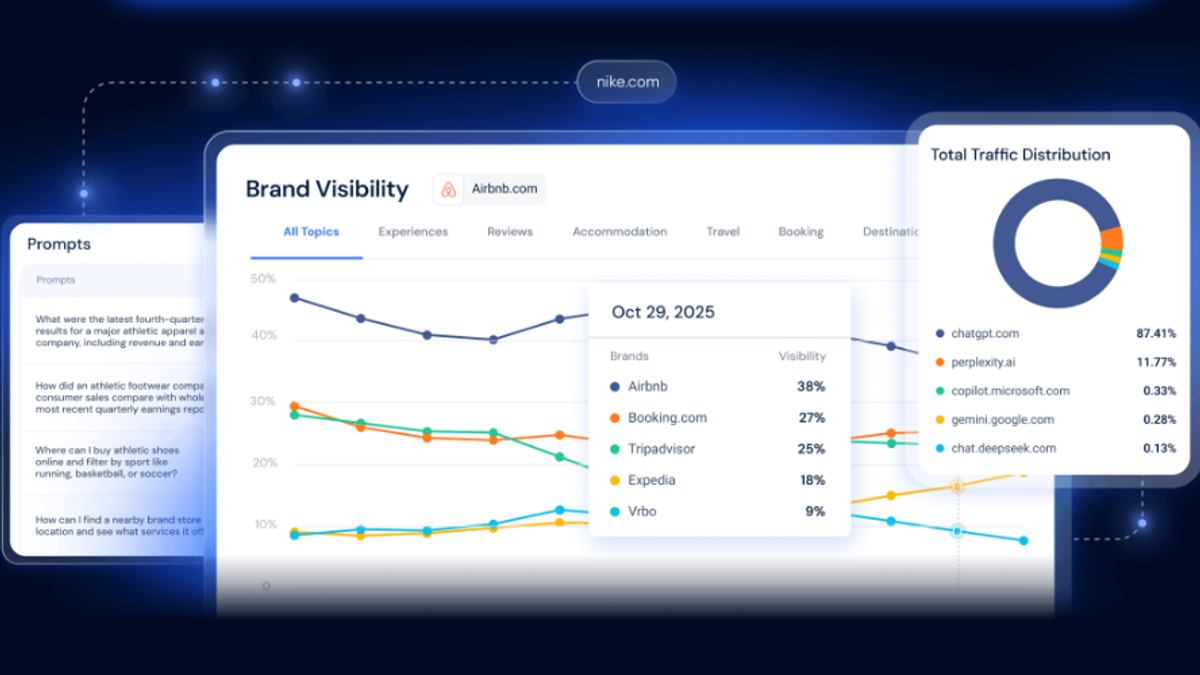
It covers six chat engines plus AI Mode, every plan can be tried for free, and there's no published rival limit.
We'll show you exactly where your brand stands in AI search.
No commitment. $0 due today, cancel anytime. See how ChatGPT, Perplexity, Claude, Gemini, Grok, Google AI Mode, and Google AI Overviews talk about your brand today.

Why two tools never agree on your share of voice
Run one brand through two of these tools and you'll get two different numbers. A thread in r/DigitalMarketing asked why, and one reply said it plainly. Each tool samples "different prompts, geos, and model versions, so 'visibility %' is basically their own made-up metric."
The root cause came up in a 46-comment r/aeo thread too. OpenAI and Google don't publish what people really type, so "every tracker runs its own list of prompts and reports on those." Your share of voice is a share of that vendor's list, and nothing more.
The buyer tip, then, is to never compare a rival's 40% in one tool with your 25% in another. Pick one tool, keep the query list fixed, and watch the gap between you and each rival week over week. I call it the same-ruler rule, since you can only measure a lead with one ruler.
How to set up rival tracking that means something
Semrush's advice on X in September was to start with 10 to 15 buyer prompts across your brand, category, competitors and pricing. Then do four things before you trust any chart.
- Pick rivals by who shows up in answers today, which may differ from your sales team's list.
- Write buyer questions with no brand in them, plus a few "X vs Y" ones.
- Keep the list fixed for at least a month.
- Read the sources behind each answer where a rival wins.
By hand, ten queries on seven engines is 70 answers a week, each read for five rival names and a source list. At a minute an answer, that's over an hour a week before you've written a page. Our playbook for scouting rival mentions shows a lighter setup.
Which tool fits your team?
For teams already paying for Semrush, the best pick is the AI Visibility Toolkit, because it puts a four-rival benchmark next to your keyword data.
For teams on Ahrefs, the best pick is Brand Radar, because its prompt index lets you look up any rival without writing prompts.
For teams that want the gaps worked on, the best pick is RankControl, which tracks 10 rivals on seven engines and writes articles for the questions where they beat you.
For crowded categories, the best pick is AthenaHQ Starter, because it lists unlimited competitors across 11 models.
For large brands with a sales-led budget, the best pick is Profound, because it covers up to nine engines on Enterprise.
For the tightest budget, the best pick is Otterly.AI at $29 a month, because every plan allows unlimited competitors.
The pick for tracking competitors in AI answers
For pure monitoring, start with the suite you already pay for. Semrush and Ahrefs both show where rivals beat you, next to the SEO data you trust.
A gap list doesn't close itself, though. Each question where a rival gets named is a page you haven't written yet, or one nobody links to. You can track rivals in a spreadsheet and write those pages by hand. Or RankControl's agents can do it every month while you focus on your product. For a quick read first, run a free AI visibility check.
Know exactly what AI says about your competitors.
RankControl's Recon Agent monitors competitor citations across ChatGPT, Perplexity, Claude, Gemini, Grok, Google AI Mode, and Google AI Overviews. See where they show up and you don't.