
This comparison sits closer than most in our series, because Outranking and RankControl genuinely overlap: both plan content, both generate drafts with AI, both care about structure winning in search. The split is the unit of work. Outranking is a workbench where a human drives each document to a better score; RankControl is a pipeline that runs the whole visibility operation and reports what the answer engines did about it. Which wins AI search visibility in 2026 turns on that split, and as always, disclosure first: we build RankControl, the criteria are stated, and Outranking's real strengths get their section before the verdict.
What Each One Actually Is
Outranking is a data-backed SEO writing and optimization suite. The core loop: pick keywords, let the tool cluster and prioritize them, generate SERP-grounded briefs and first drafts personalized by style guides, then optimize in an editor scoring you in real time against on-page factors, NLP terms, headings, internal links, readability, with auto-optimization to close the gaps. It's built for predictable ranking success, their phrase, and the workflow features, brief templates, content inventory, SERP analysis, team workflow, aim at teams producing documents at volume.
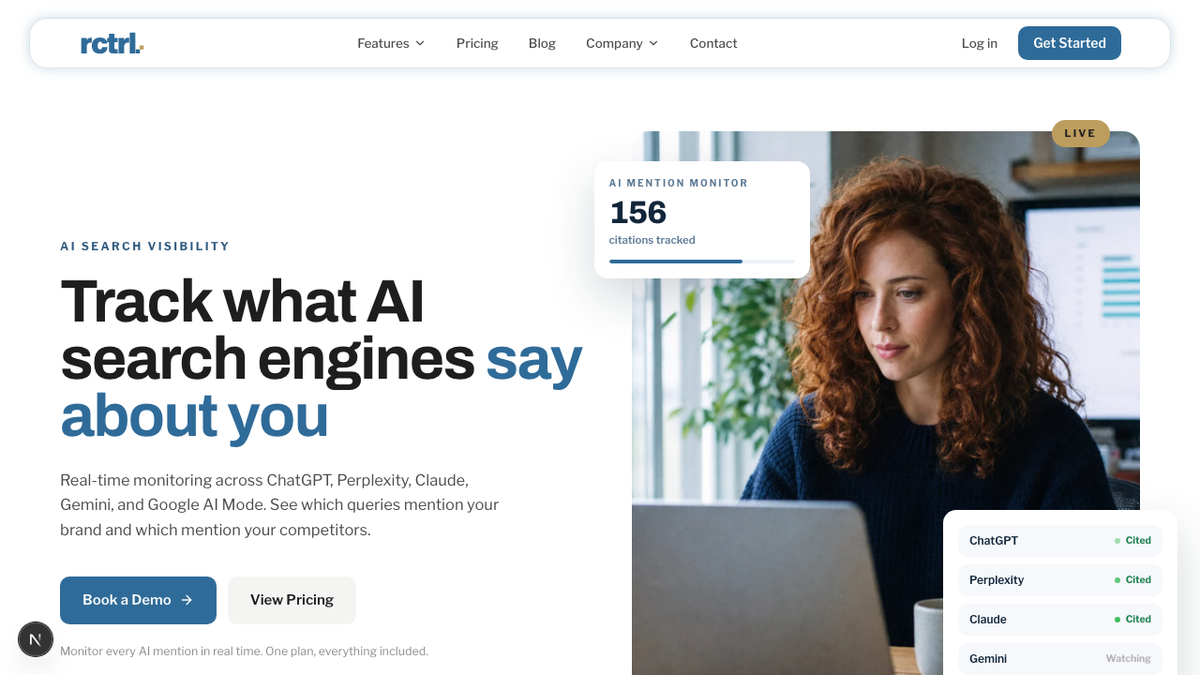
RankControl runs a different loop with no document editor at its center. Buyer queries get tracked weekly across ChatGPT, Perplexity, Claude, Gemini, Grok, and Google's AI surfaces; the content engine plans titles from those queries with cluster structure designed in, generates articles, and publishes them natively to your CMS; outreach drafts from your own mailbox; competitor monitoring feeds the plan; and the Monday scoreboard says what moved. Flat $400/month, everything included.
| Outranking | RankControl | |
|---|---|---|
| Model | SEO content workbench | Visibility pipeline |
| Core loop | Human drives documents to better scores | System runs plan → publish → measure |
| Optimization | Real-time on-page scoring, auto-optimize | Extraction-first structure built into generation |
| Publishing | Your workflow after export | Native to your CMS, on schedule |
| AI citation tracking | Ranking-oriented instrumentation | 50 queries weekly, 6 engines, per-engine history |
| Links | Internal link suggestions | Outreach agent + managed add-on |
Where Outranking Genuinely Wins
The optimization workbench itself. For a human writer mid-document, real-time scoring against SERP-derived factors is genuinely useful instrumentation, and Outranking's version is thorough: NLP terms with volumes, structural checks, auto-optimization for the mechanical parts. Teams that draft by hand get guidance a pipeline never gives them, because the pipeline isn't watching a human type.
Briefs at volume. Agencies and content teams that live on briefs, personalized, SERP-grounded, workflow-managed, are the buyer this product was shaped for, and the brief-to-draft-to-optimize flow is a real production system for that shape of team.
SERP-grounded drafting. Drafts built from analysis of what currently ranks start closer to the target for classic rankings, and the style-guide personalization addresses the generic-output problem at the drafting layer.
Price of entry. Tiered subscriptions for a workbench undercut a flat-fee operation at the low end, and a team testing whether instrumented writing helps them can start small.
200+ SaaS teams already track their AI citations.
They know exactly when ChatGPT mentions their brand, and when it stops. Do you?
The Title Question: What Actually Decides AI Search Visibility
Now the event being judged, and the structural issue any optimization-score product faces in 2026, ours would too if we sold one. Scores encode the patterns of what already ranks, which is precisely the corpus answer engines learned to see through: content optimized toward the SERP mean converges on sameness, and sameness is what both Google's systems and AI retrieval now filter hardest. Meanwhile the factors that decide citations, first-screen answerability, verifiable specifics, entity consistency across surfaces, visible freshness, passage-level extraction, live mostly outside any on-page score, and several live outside the document entirely.
Then there's the measurement gap, which decides the title question on its own. AI search visibility is a per-engine, weekly, positional metric: who cites you, where in the answer, describing you how, against which competitors. A workbench oriented to ranking scores doesn't run that instrument, and without it, "did the optimization work in AI search" stays a feeling. The pipeline's whole premise is that the instrument comes first and the content follows what it shows, which is the inverted order and, for this specific contest, the winning one.
The Workflow Test: One Article, Two Systems
Hold on, before any verdict, trace one comparison article through each system. In Outranking: keyword chosen, brief generated from the SERP, draft produced against the style guide, human optimizes to a strong score, exports, publishes through your CMS process, assigns internal links, and waits on rank tracking. Quality instrumentation throughout, human hours at every step, and the answer layer unmeasured. In RankControl: the query arrived on the calendar because tracked buyers ask it, generation builds extraction-first structure with links designed in, the piece publishes natively, and next Monday's per-engine check reports whether any engine noticed, feeding the next plan. Fewer human hours, no document editor, and the loop closes. The honest summary: Outranking instruments the writing; RankControl instruments the outcome. Which instrument your team lacks is the actual buying question.
How often does ChatGPT mention your brand?
Most founders have no idea. The answer might surprise you.

A Sample Month, Counted in Hours
Run a month for a B2B SaaS wanting eight solid articles and a visibility readout, and count where the human hours land.
The workbench month: eight keywords chosen from research, eight briefs generated and reviewed, eight drafts produced and hand-optimized to strong scores, call it three to five focused hours per piece across drafting, optimizing, and polishing. Then the untooled tail: exporting, formatting in the CMS, internal links from memory, metadata, and publishing, another hour each. Rank tracking reports in a few weeks; the answer layer reports nowhere. Total: thirty to fifty human hours, producing eight genuinely well-instrumented documents and no per-engine visibility data.
The pipeline month: a planning review of the calendar the tracked queries produced, edits where judgment disagrees, roughly two hours. Articles generate, interlink, and publish on schedule. Reviews of what shipped, a few minutes each. The outreach queue gets human eyes before sending. Monday scoreboards accumulate four weekly per-engine readings. Total: six to ten human hours, eight published pieces, and a citation trend line.
The workbench buys craft attention per document; the pipeline buys coverage and measurement per hour. Teams with writers to spend choose the first trade happily. Teams with a founder or one marketer holding the whole channel almost always need the second, which is less a quality judgment than an arithmetic one.
The Score Question, Examined Fairly
Since scoring is Outranking's centerpiece, it deserves a fair examination rather than a drive-by. What scores genuinely catch: mechanical hygiene, term coverage against the ranking corpus, structural gaps, thin sections, missing internal links. That's a real floor, and content below it fails everywhere, answer engines included. Teams whose drafts routinely miss the floor get real value from a scoring editor, full stop.
The 2026 caveat is about the ceiling. A score derived from what currently ranks can only pull content toward the current SERP's center of gravity, and the center of gravity is exactly what saturated: engines on both surfaces now discount the well-optimized eleventh version of the existing answer. The work that clears the ceiling, your data, your cases, first-screen answers, entity truth, freshness, doesn't score, because no SERP-derived metric can see it. Our own generation bakes the structural floor in and leaves the ceiling work explicitly human, which is a design choice rather than a feature gap: the score-chasing loop is one we deliberately declined to build, having watched where score-driven sameness ends up.
So the fair summary: scores are a floor detector, valuable to teams below the floor, neutral to teams above it, and mildly dangerous to teams that mistake them for the game.
15 hours a week manually. Or 15 minutes with RankControl.
Track citations, monitor competitors, and fix content gaps across every AI search engine. Automatically.

Five Questions for Both Demos
Take these into any evaluation, ours included, and the category sorts itself in an hour.
- Show me per-engine citation history for a real account. Weekly, per engine, with position. A ranking chart is not an answer-layer instrument.
- What happens after the draft is done? If the answer involves exporting and pasting, the publishing operation remains your unbudgeted job.
- Where do topics come from? Keyword-tool volume, or queries tracked against what buyers actually ask engines. The difference decides the library's fate before writing starts.
- What changed in the product after last August? The retrieval reshuffle was the industry's stress test; a vendor without a concrete answer wasn't watching the surface they sell.
- What does month three look like if my team stops touching it? Workbenches idle when humans stop; pipelines keep publishing and measuring. Neither answer is wrong, and the answer is the category.
The Migration Path, If You're Switching
Teams moving from workbench to pipeline carry more than they expect. Export the keyword clusters and any content inventory; they distill into the tracked-query list and the calendar's starting subjects. Export unproduced briefs; they become planning notes attached to their calendar slots. And carry the style guides, since brand-voice inputs transfer straight into the brand profile that steers generation. The one thing that doesn't transfer is the habit of grading by score, which the first month of per-engine citation data replaces with a better question: did the engines notice. Most teams report the reorientation takes exactly one Monday.
Pricing Shapes, Compared Honestly
The price conversation only makes sense after the category one, so it goes here at the end. Outranking sells tiered subscriptions for the workbench, scaling with documents and seats, and its entry tiers undercut any flat-fee operation, which is exactly right for a team buying instrumented writing and nothing else. RankControl's single number, $400 a month, covers the operation: up to 100 published pages, the 50-query six-engine tracking, outreach, and monitoring, with the 7-day trial in front.
The comparison that misleads is tier-versus-flat on sticker price. The comparison that works is cost per outcome you're actually buying: per well-optimized document, the workbench wins; per published-and-measured month of visibility operation, the pipeline wins, and the untooled hours in the workbench month, the exporting, pasting, linking, and un-run measurement, are real costs that never appear on its invoice. Price the whole month, including your team's hours, and the models sort themselves by the same logic as everything else in this comparison: buy the instrument you lack, at the altitude your team actually operates.
Who Should Pick Which
Pick Outranking if your team drafts with human writers and wants serious optimization instrumentation, you run an agency producing briefs and documents at volume, or your bottleneck is document quality for classic rankings and you have the publishing and measurement layers handled elsewhere.
Pick RankControl if the goal is AI search visibility as an operated outcome: content planned from tracked buyer queries, published without a paste step, links earned from your own mailbox, and the per-engine citation scoreboard running weekly so every month's plan learns from the last.
The combination is coherent for teams mid-transition: the workbench for the hand-crafted flagship pieces, the pipeline for the library and the measurement. Guard the same seam as always, one owner for the domain's calendar, so the two systems don't publish into each other, and let the citation data arbitrate which flagship topics deserve the hand-crafting budget next quarter.
The Verdict
Which wins AI search visibility in 2026? RankControl, on the strength of the two layers the workbench model doesn't carry: the closed publishing loop and the per-engine citation instrument that makes the outcome legible. Outranking wins the event it was built for, instrumented human writing toward rankings, and teams shaped around that event should buy it happily. If your event is the answer layer, put your queries on the scoreboard, let the first weekly check land, and judge from your own per-engine data, which is the only verdict that outranks anyone's comparison post, including this one.
AI search traffic grew 835% this year. Is your content ready?
RankControl generates 26 content formats optimized for ChatGPT, Claude, and Perplexity. Published on your domain, matched to your brand.