
This comparison is between two philosophies of automation. Enrich Labs builds AI marketing employees: hire Helena and she runs your content, ads, email, and social, every day, like the last marketing hire you'll ever make, which is literally their headline. RankControl builds a specialist: one pipeline, pointed at one outcome, being found and cited when buyers ask Google and AI engines about your category, with everything else deliberately out of scope. Generalist versus specialist is one of the oldest buying decisions in software, and the AI-agent era has made it vivid again. Full disclosure: we build the specialist, and this comparison will treat the generalist's wins as real, because they are.
What Each One Actually Is
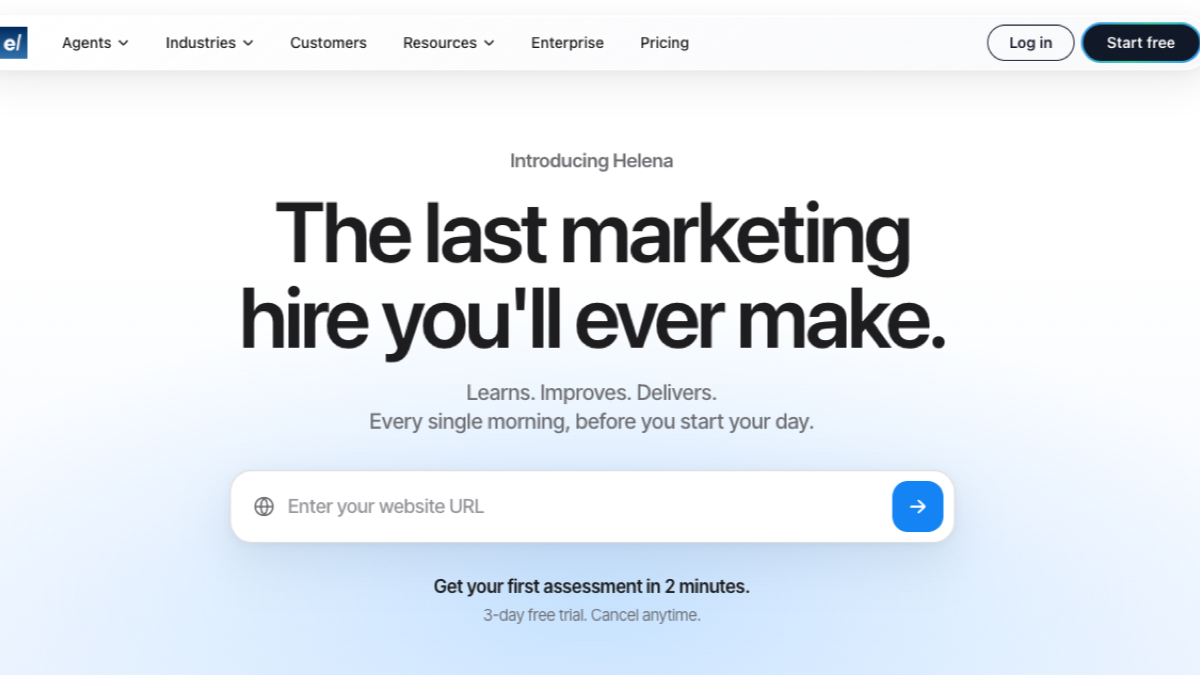
Enrich Labs sells named AI agents as workers. Helena, the flagship, is a generalist digital marketing agent available self-serve: she reads your analytics, ad accounts, store data, and social accounts into one plan, then creates and ships work across search, email, ads, and social, with daily performance briefings on what moved and what she did next. Around her sits a bench of specialists in the enterprise tier: Sam for SEO and GEO, Kai for social listening, Angela for email, Paul for paid ads. The pitch is employment, an always-on worker instead of an agency, and the customer stories include serious logos.
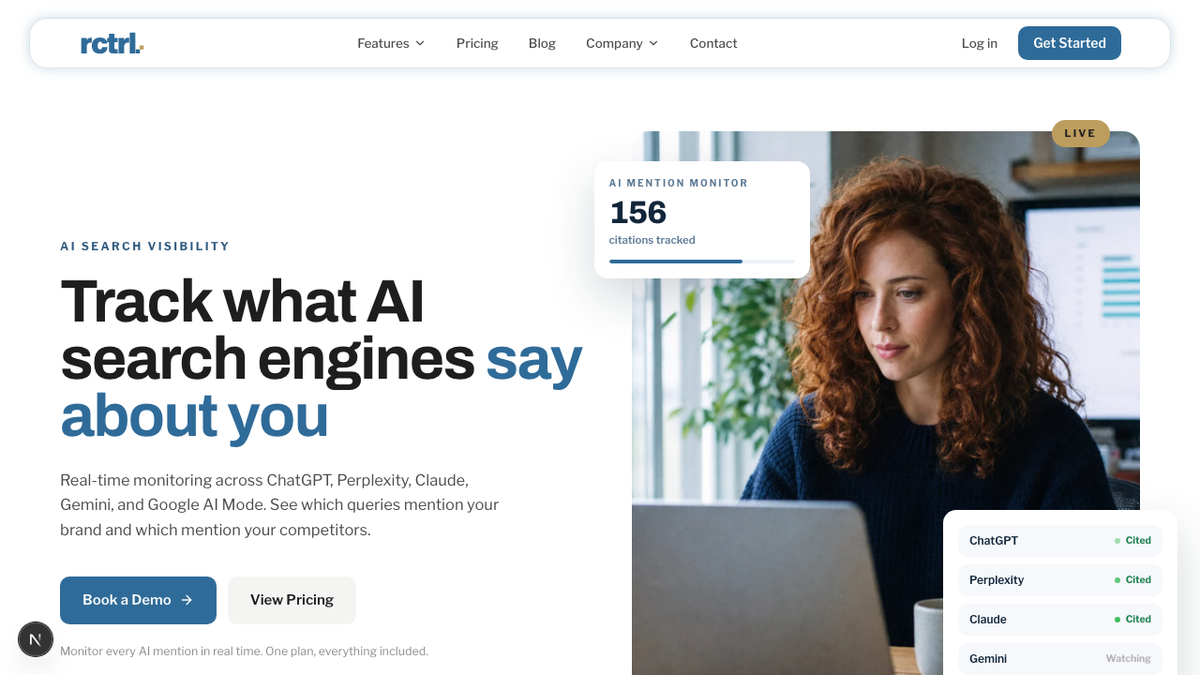
RankControl is a pipeline rather than a persona. It mines the queries buyers ask, plans content onto a calendar with cluster structure designed in, generates and publishes natively to your CMS, drafts backlink outreach from your own mailbox, monitors competitors, and checks citations weekly across ChatGPT, Perplexity, Claude, Gemini, Grok, and Google's AI surfaces, next to Google and Bing rankings. One flat $400/month. No ads, no email campaigns, no social calendar: the scope boundary is the product decision.
| Enrich Labs | RankControl | |
|---|---|---|
| Model | AI marketing employees (generalist + enterprise specialists) | Specialist AI search visibility pipeline |
| Scope | Content, ads, email, social, SEO/GEO | Search and AI citations, end to end |
| AI search measurement | Within the SEO/GEO agent's remit | The product's spine: 50 queries, weekly, 6 engines |
| Publishing | Agent-driven across channels | Native CMS publishing, 100 pages/mo |
| Links | Within agent workflows | Outreach agent from your mailbox + managed add-on |
| Pricing shape | Self-serve tier + enterprise tier | Flat $400/mo, everything included |
Where Enrich Labs Genuinely Wins
Breadth as the product. If the job is "run all my marketing," a specialist pipeline simply doesn't apply. Ads budgets that follow results, email flows, social publishing, and a daily briefing across the lot is a real offering, and for a solopreneur or a lean local team it answers the actual question being asked, which is "who does all this now?"
The employment frame works for its buyer. A daily briefing that says what moved and what the agent did next is a genuinely good interface for a busy owner. The one-hire pitch lands because the alternative for that buyer was a patchwork of freelancers or an agency retainer, and against that baseline the economics and responsiveness read well.
Engineering seriousness. Their public engineering and research writing, on scaling agent tool surfaces and measuring self-improving marketing in production, reads like a team building real infrastructure rather than wrapping a chat window. Credit where due.
200+ SaaS teams already track their AI citations.
They know exactly when ChatGPT mentions their brand, and when it stops. Do you?

The Title Question: Depth Where It Counts
Now the event this article actually referees: AI search visibility. Here the structural difference shows, and it's about where each product keeps its center of gravity.
For the generalist, search is one channel among five, and AI search sits inside a specialist agent that their packaging places in the enterprise tier. That's a rational design for a breadth product, and it has a consequence: the self-serve buyer's AI search work rides on a generalist's attention, splitting focus with ads and email, and the depth question, which engines get checked, how often, against which queries, with what history, depends on an agent's judgment inside a wider remit.
The specialist inverts that. Weekly citation checks across six engines are the product's spine, with per-engine history, share of voice against competitors, description-language tracking, and week-over-week deltas as first-class objects on a scoreboard built for Monday mornings. Content planning starts from the queries those checks reveal, publishing feeds the next check, outreach targets the sources the answers keep citing, and competitor monitoring reroutes the plan when the answers shift. Every gear turns the same shaft. When an engine reshuffles, as ChatGPT did dramatically in August, a system whose whole job is watching notices in its next weekly pass, and the depth of the record is what makes the before-and-after legible.
The general principle, stated without prejudice: generalists win when the buyer needs coverage, and specialists win when one outcome carries disproportionate business weight. The title question names the outcome, which is why the title question has a clear answer.
Content: Two Automation Philosophies
Both products generate and publish content, so the difference is in the surrounding system. Helena creates across channels in your learned brand voice, with the plan drawn from your connected data. RankControl's engine is narrower and deeper on its lane: titles planned from mined buyer queries with cluster structure and internal links designed before drafting, native publishing into your CMS at up to 100 pages a month, and each piece's fate tracked through the citation checks that follow. Neither approach is wrong. One optimizes for a coherent presence across channels; the other optimizes for a library that wins retrieval, which is a different engineering target.
Hmm, one wrinkle worth flagging for buyers eyeing both: two systems publishing into one blog without coordination produce overlap, and duplicate angles cannibalize rather than compound. Pick one owner for the domain's library.
How often does ChatGPT mention your brand?
Most founders have no idea. The answer might surprise you.

A Sample Month, Side by Side
Make it concrete with one buyer: a B2B SaaS whose pipeline depends on showing up when prospects ask engines about its category.
The generalist month runs on delegation. Helena assembles the plan from your connected data, ships work across search, email, ads, and social, and narrates it in daily briefings. Search gets its share of an agent's attention alongside four other channels, and the AI-visibility question, are we cited more than last month, and where, gets answered at whatever depth the generalist's remit affords. For the owner who wanted marketing handled, this month feels wonderful, because the alternative was doing none of it or paying three vendors.
The specialist month runs on instrumentation. Monday opens the per-engine scoreboard. The calendar publishes cluster pieces aimed at queries the checks flagged, the outreach agent drafts pitches to two sources Perplexity keeps citing instead of you, and by week four the deltas say which of it moved anything. Nothing happened in email or ads, on purpose. For the team whose growth concentrates in the answer layer, every hour of system attention landed on the metric that pays them.
Same month, different physics. Delegation buys coverage and costs depth; instrumentation buys depth and refuses coverage. The buyer's growth model, not the products, decides which trade is right.
The Instrumentation Test
For buyers who care about the title question, here's a three-ask test that sorts any platform claiming AI search capability, agent or pipeline.
First: show me last month's per-engine citation history for a real account, week by week. Depth of record is the difference between measurement and vibes. Second: show me what your instrument recorded the week ChatGPT's retrieval reshuffled in August. A system watching closely has a visible step-change in its data; a system summarizing loosely has a sentence about it. Third: show me share of voice against three named competitors on twenty buyer queries. If the answer to any of these is a narrative rather than a screen, the AI search capability is a feature, and features lose named events to products.
We built RankControl to pass this test on demand, and we'd genuinely encourage running it on every vendor in the space, us included, during a trial. Ten minutes of asking for screens tells you more than any comparison article, this one included, because instruments survive inspection and positioning doesn't.
The Agency Replacement Frame, Examined
Both products, amusingly, sell a replacement story. Enrich Labs' is explicit: never hire another agency, Helena ends the retainers and the turnover. Ours replaces a quieter line item: the coordination layer of a content operation, the human hours spent choosing topics, wiring links, chasing publication, and pasting answers into spreadsheets. Different jobs, both real.
The accountability question differs too, and buyers should notice it. A daily briefing is the generalist's accountability: trust the narration, spot-check the work. A weekly scoreboard is the specialist's: the citation numbers either moved or they didn't, per engine, against competitors, with nowhere for a bad month to hide in prose. Neither is dishonest, but they train different habits, and teams that run on dashboards tend to find narration-based accountability hard to audit six months in. Ask which reporting style your team will actually challenge when the numbers disappoint.
Pricing: Flat Specialist, Tiered Generalist
RankControl's number is public and single: $400/month or $4,000/year, everything included, 7-day trial, with optional strategist and managed-backlinks add-ons. Enrich Labs runs a self-serve tier with a 3-day trial and an enterprise tier where the specialist bench lives, without a single published flat rate to quote, so honest cost comparison depends on which tier and scope you'd actually buy. The structural read: with the specialist you know the price of the whole capability on day one; with the generalist the price tracks how much of the marketing operation you hand over, which is fair, since the offering scales with scope.
Who Should Pick Which
Pick Enrich Labs if you're a solopreneur, a local business, an early-stage team, or a marketing department of one that wants the whole operation handled by a single system, values a daily briefing over channel-level instrumentation, and would otherwise be hiring an agency or a first marketer.
Pick RankControl if your growth concentrates in being found and cited when buyers ask engines about your category, you want the deepest available measurement of that outcome, weekly, per engine, with history, and you'd rather own a specialist pipeline at a flat price than rent attention from a generalist.
Split the stack if you're big enough to run both cleanly: the generalist on ads, email, and social, the specialist owning the domain's content and the citation scoreboard. The seam to guard is content ownership, which should live on exactly one side.
The Verdict
Which wins AI search visibility in 2026? The specialist, for the unsurprising reason that specialists win named events: every part of RankControl exists for that outcome, and the measurement depth alone, six engines, weekly, with history and share of voice, decides the comparison for buyers who care about this particular scoreboard. Enrich Labs wins a different and bigger event, the one called "run my marketing," and nothing here argues otherwise.
One postscript on how these categories will age. Generalist agents will keep absorbing channels, specialists will keep deepening instruments, and the buyers best served by each will keep diverging rather than converging, because attention and depth trade off in any system, human or agent. Expect this comparison to sharpen over the next year rather than blur, and expect the buyers who chose deliberately to be the ones happy with either purchase.
The buying advice compresses to one question: is AI search visibility a channel in your marketing, or the channel your growth runs through? If it's the former, hire the generalist and check the box. If it's the latter, put your queries on the specialist's scoreboard and watch what six engines say about you by next week.
15 hours a week manually. Or 15 minutes with RankControl.
Track citations, monitor competitors, and fix content gaps across every AI search engine. Automatically.