
On September 15, Profound announced a $180 million Series D at a $1.8 billion valuation, and the same week it named Estée Lauder Companies as a partner. That's a company moving upmarket, and its pricing page says so. There's a free 7-day trial with 50 prompts a day on three engines and no exports, and everything after that is Enterprise at a custom price.
An agency practitioner comparing tools on r/automation this month put the consequence plainly: evaluating Profound "basically means taking a sales call." So this list of Profound alternatives is for everyone below that line, with prices you can read before you talk to anyone. Every price and engine list was checked on the vendor's own site on September 26, 2026.
The short list
| Tool | Best for | Entry price | AI engines tracked | Does the work? |
|---|---|---|---|---|
| Semrush AI Visibility Toolkit | Teams already in Semrush | $99/mo, or $199/mo with SEO | 5, no Claude or Grok | Recommendations |
| RankControl | Teams that want it done | $400/mo flat | 6, Claude and Grok included | Writes, publishes, drafts outreach |
| Ahrefs Brand Radar | Market research | $199/mo index | 6, Claude on custom prompts | Recommendations |
| Peec AI | Agencies and SEO teams | $95/mo | 3 of 6 on Starter | Reporting |
| SE Visible | Daily data on a budget | $99/mo | 5, Claude "coming soon" | Gap analysis |
| Writesonic | Tracking-led teams | $79/mo billed yearly | 3 below Enterprise | Action center, articles |
| Otterly.AI | Small-budget testing | $29/mo | 4, plus paid add-ons | Audits |
Why teams look for Profound alternatives
Price is the obvious reason, and the pricing page is the evidence. The trial runs ChatGPT, Gemini and Google AI Overviews only, for seven days, without exports. Agencies can add full client workspaces at $399 a month each, but a single brand that wants to track more than a week has to buy Enterprise.
To be clear about what you give up, Profound is still the deepest tool in this category. Its Enterprise plan tracks up to nine engines, including Copilot, DeepSeek and Claude, and its agents can draft content and publish it to your CMS after a person approves it.
The second reason is harder to fix with a cheaper tool. Across the threads we read, the most common complaint about AI visibility tools, Profound included, was that they answer "are we cited?" and never "which change moved it?"
Is anyone else's "AI visibility" dashboard just... making numbers up?
Been doing SEO for a few years now and lately every client call ends with someone asking why their "AI ranking" dropped from a tool we're paying for. So I went down a rabbit hole trying to figure out if these numbers mean anything, and hone...
That thread is the sharper version. An SEO practitioner fielding client questions about a dropped "AI ranking" found SparkToro's study showing the same prompt returns the same brand list less than 1% of the time, and concluded that ranking positions are mostly false precision. Mention and citation trends over time, they wrote, still seem meaningful.
What Profound's trial can and can't tell you
Seven days of 50 prompts on three engines is enough to see Profound's interface and a first snapshot. It isn't enough to learn much about your visibility, because AI answers move so much from one run to the next. SparkToro's January study found the same prompt almost never produced the same brand list twice, and a week of daily checks is still only seven samples per prompt.
The trial also has no exports, one language and one region. Whatever baseline you build during those seven days stays inside Profound unless you buy Enterprise. If you trial it, write down the handful of numbers you care about by hand, so you can compare them with whichever tool you pick next.
The work-order test
One builder in r/GEO_optimization described their renewal test for any AI visibility tool: the output has to be something a person can ship, and the tool has to show afterward whether shipping it moved anything. We call that the work-order test, and it's the lens for the list below.
Most tools here pass half of it. They measure well and hand you recommendations. Very few turn a gap into a published page, and that's where the monthly price and the actual cost of AI search part ways, since writing, publishing and pitching those pages is the expensive part.
The 7 best Profound alternatives for AI search visibility
1. Semrush AI Visibility Toolkit
Semrush's toolkit tracks five AI surfaces, ChatGPT and Perplexity plus Gemini and Google's AI Overviews and AI Mode, with reports that update weekly. It sells on its own from $99 a month, or inside the Starter plan at $199 alongside Semrush's SEO tools, with 50 prompts tracked a day.
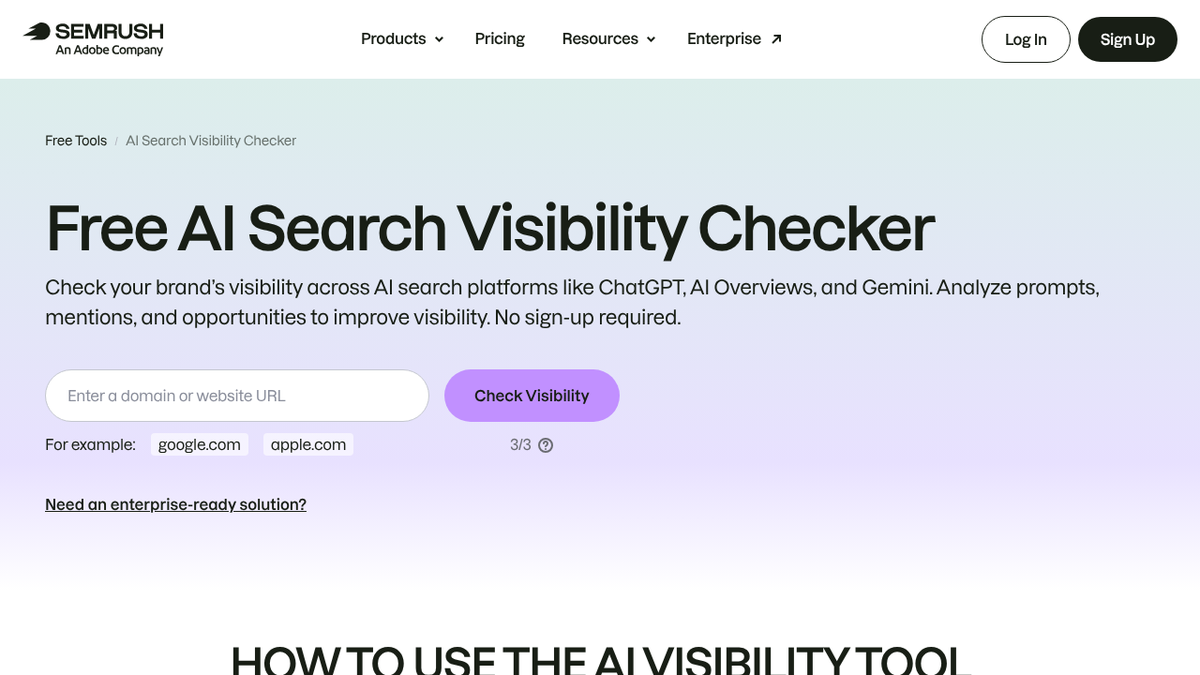
For a team already living in Semrush, this is the easiest move off Profound. It has search volume behind the prompts and the rest of the suite one click away. It doesn't track Claude or Grok, and the fixes it recommends are yours to make.
2. RankControl
RankControl is the option that passes both halves of the work-order test. AI visibility tracking checks up to 50 questions every week on six engines, including Claude, Grok and Google AI Mode. When a question shows a gap, the content engine plans an article, writes it against what already ranks and publishes it to your CMS once you approve.
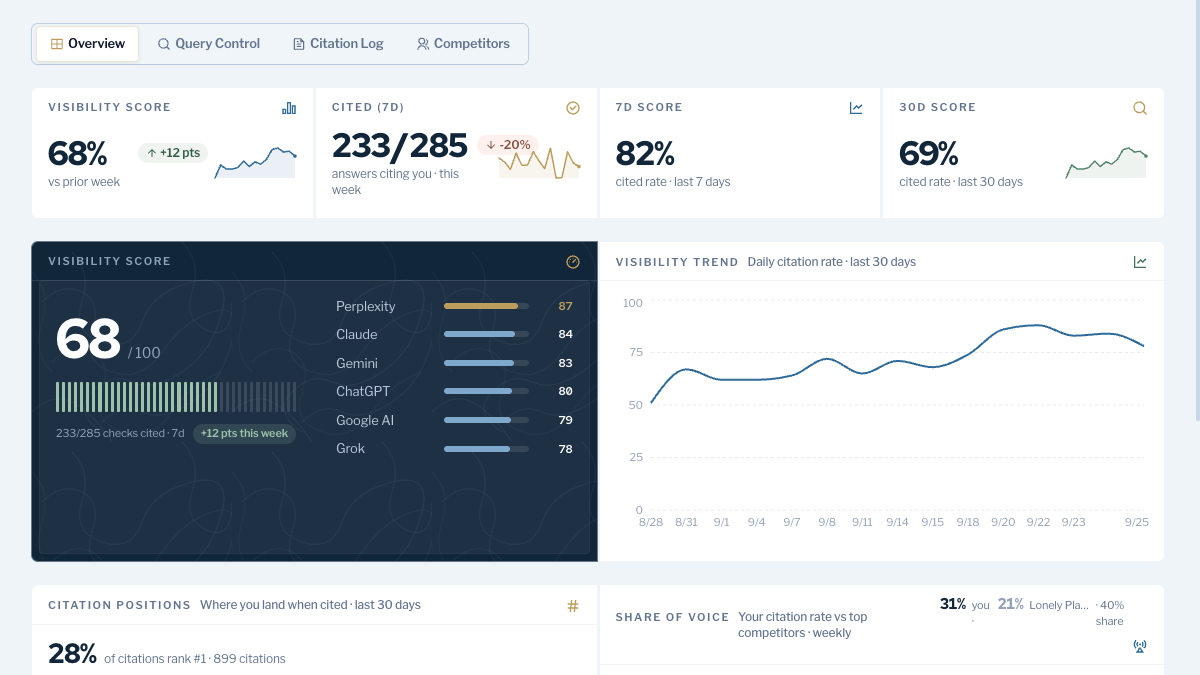
Link Control then finds link prospects for each published article and drafts outreach from your own mailbox. It's one plan at $400 a month with five seats and a 7-day free trial, and our RankControl vs Profound comparison goes through the two side by side.
Your competitors are building backlinks while you read this.
Organic outreach, social mentions, and link exchanges, with managed backlinks available as an add-on. Grow your domain authority without running the campaign yourself.

3. Ahrefs Brand Radar
Brand Radar has the biggest dataset here: an index of more than 449 million prompts across six AI surfaces, Copilot and AI Mode among them. It lets you research any brand without setting anything up. The AI Visibility Index starts at $199 a month.
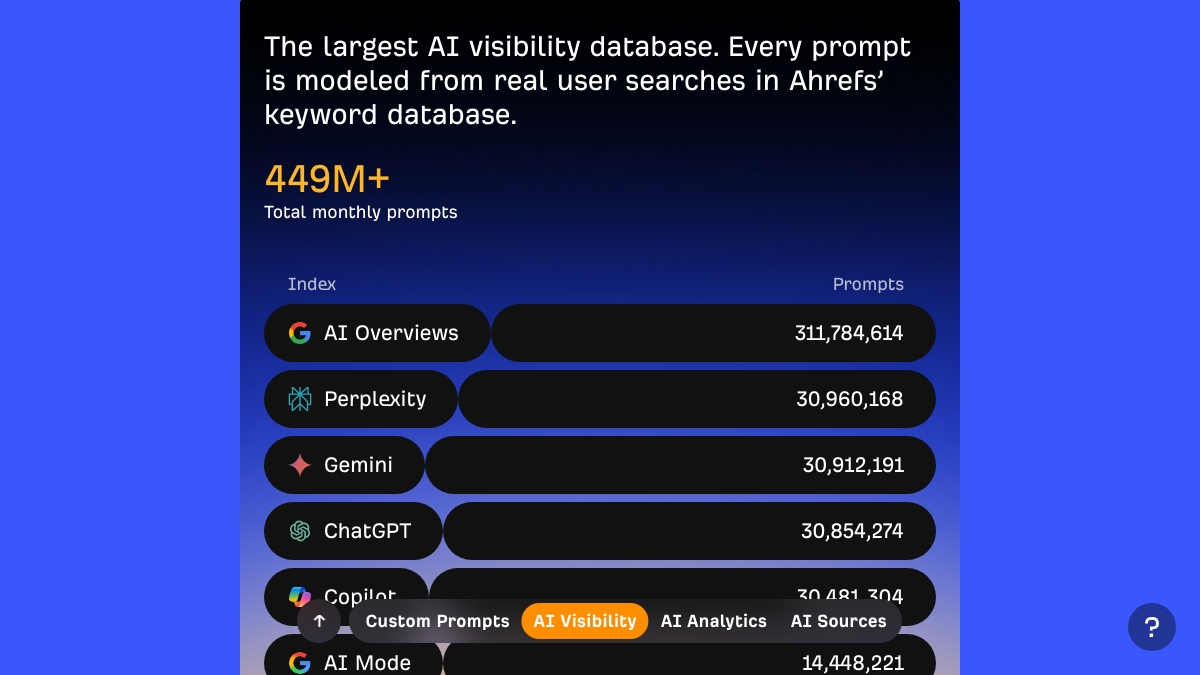
Tracking your own prompts works differently. Every paid Ahrefs plan includes a small quota, 5 prompts a day on the $129 Lite plan, with packages from $50 a month for more, and custom prompts add Claude. It's research-first, and the fixes are yours. Brand Radar can also be bought on its own, which comes with a free Ahrefs account.
4. Peec AI
| Peec AI | |
|---|---|
| Plans | Starter $95/mo (50 prompts), Pro $245/mo (150), Advanced $495/mo (350) |
| Engines | Choose 3 of 6 base models; Claude and Grok on Enterprise |
| Cadence | Daily |
| Users | Unlimited on every plan |
| Also | Source analytics, sentiment, MCP on every tier; multi-country and Looker Studio on Advanced |
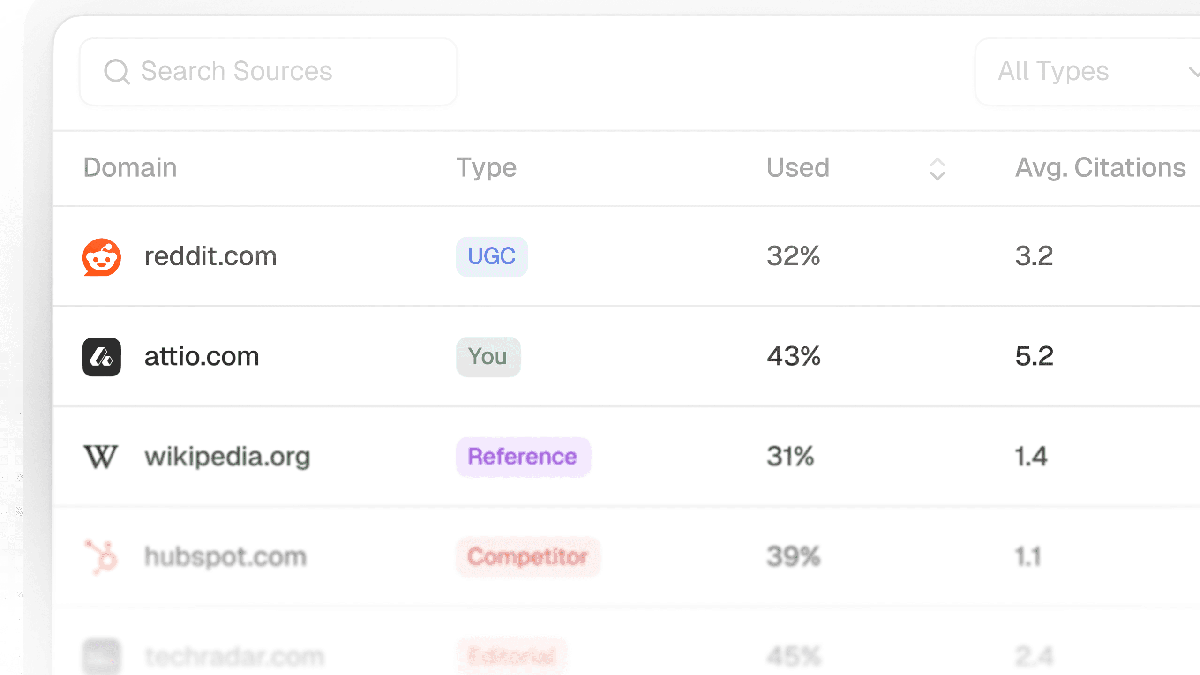
Peec came up in almost every Profound comparison thread we read, usually alongside Otterly. Unlimited users makes it popular with agencies, and its source analytics show which domains the engines lean on for your category. It doesn't write or publish anything.
5. SE Visible
SE Ranking's standalone AI tracker collects answers daily through a real browser rather than an API, across ChatGPT, Gemini, Perplexity and Google's AI Overviews and AI Mode. Plans run $99, $189 and $355 a month for 200, 450 and 1,000 prompts, and its FAQ says Claude "will be added soon." It covers seven countries in five languages, and its trial runs 10 days.
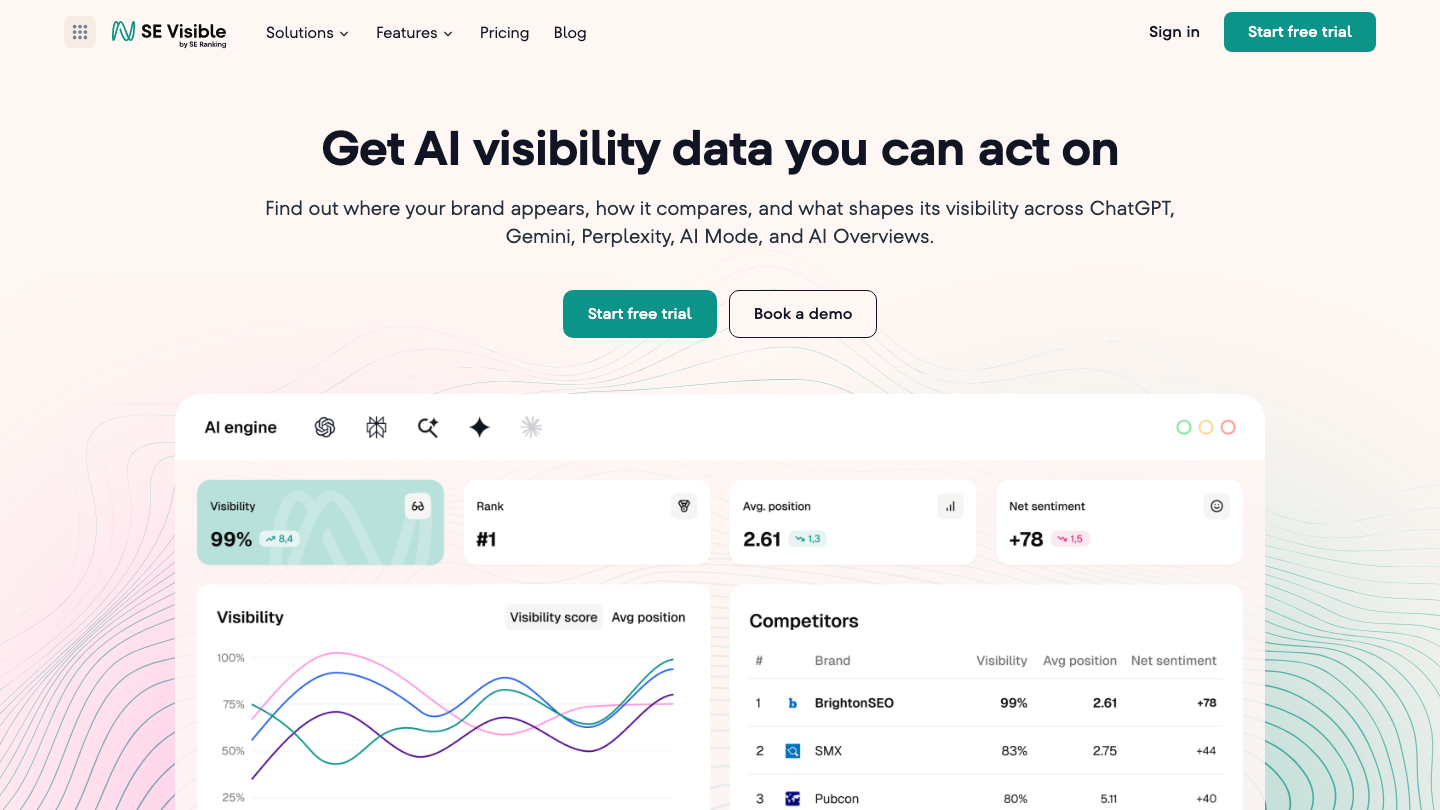
In July it added a gap view showing which sources cite your competitors but not you. That's the most useful to-do list on this list; working through it is still your job. Our RankControl vs SE Ranking comparison covers SE Ranking's wider suite.
6. Writesonic
Writesonic now sells itself as an AI search visibility platform first. Starter costs $79 a month billed yearly and checks 50 prompts daily on ChatGPT, Gemini and Google AI Overviews, with 15 AI articles a month and an action center that suggests fixes.
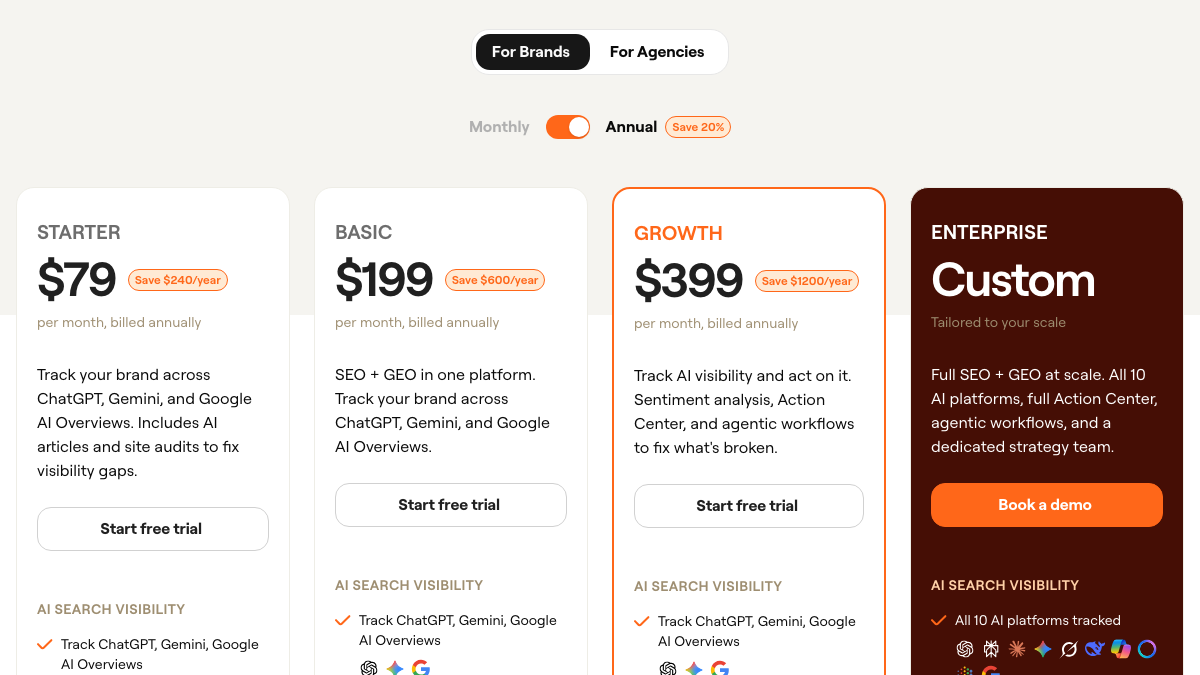
It's the closest thing here to tracking plus writing in one tool below RankControl's price. Growth, at $399 a month billed yearly, raises that to 200 prompts a day and 50 articles a month. Claude, Perplexity, Grok and AI Mode only arrive on the custom Enterprise plan.
7. Otterly.AI
Otterly is the cheapest way to start. Lite costs $29 a month, or $25 billed yearly, for 15 prompts on ChatGPT, Google AI Overviews, Perplexity and Copilot. Standard at $189 raises that to 100 prompts and adds API and MCP access.
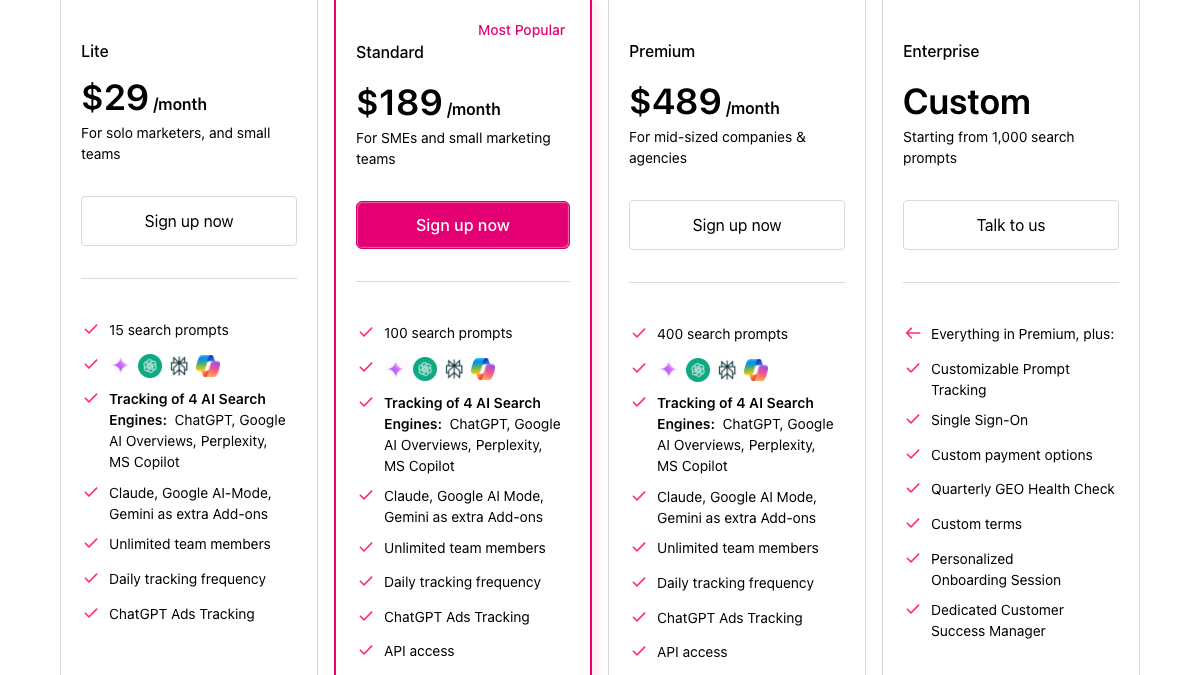
Claude, Gemini and AI Mode are paid add-ons, and no plan lists Grok. It's a good way to find out whether AI tracking tells your team anything useful before committing a budget.
What closing a gap actually costs
Every tracker on this list will find gaps faster than a small team can close them. It helps to put hours on that. A gap usually means a page that doesn't exist yet: an answer to a specific buyer question, a comparison, or a guide the engines can quote.
If writing and editing one good article takes four to six hours, publishing and internal linking another half hour, and a round of outreach to get it mentioned a couple more, each gap costs most of a working day. Ten gaps a month is a quarter of someone's time, before anyone checks whether the answers changed. That's the number to set against a monthly subscription, whichever tool you choose.
Questions to ask before an annual contract
Profound isn't the only vendor in this category that pushes annual deals, so a few questions are worth asking on any demo:
- Can we export our prompt history and results, and in what format?
- Which engines are included, and which cost extra?
- How many times is each prompt asked, and can we see results per engine?
- Can we see the pages each engine cited, as well as any score?
The answers separate a tool you can leave from one that keeps your baseline. RankControl's tracked queries and their weekly results stay in your workspace, and its API and CLI read the same data the dashboard shows.
Which Profound alternative fits your team?
If you already pay for Semrush or Ahrefs, add their AI tracking first and see whether the data changes what you do. Peec suits agencies that want many users, and SE Visible or Otterly suit anyone testing on a small budget.
If the tracking already told you where the gaps are and nobody has time to close them, that's what RankControl is for. It writes the pages, publishes them, drafts the outreach and checks six engines every week to see whether the answers moved.
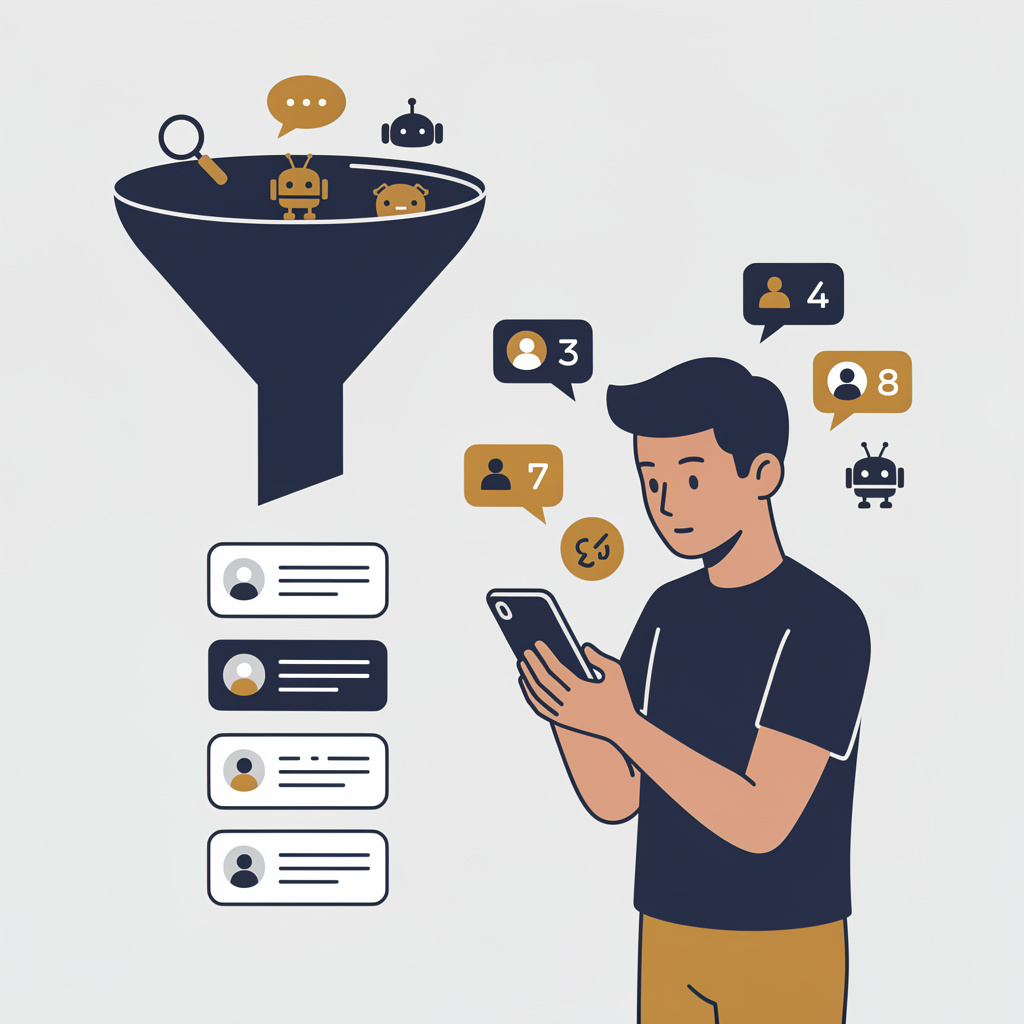
You're getting AI traffic. But do you know where it comes from?
RankControl credits every visit to the assistant that sent it: ChatGPT, Perplexity, Claude, Gemini, Copilot, or Grok. Full source attribution, next to your Google traffic.
The pick for AI search visibility
Profound earned its valuation by going deep, and the alternatives here earn their place by being easier to buy. The question worth asking of each one is the work-order test: does it tell someone what to ship, and does it show whether shipping it worked?
For teams that want both halves done, RankControl is the pick. If you're moving off Profound specifically, our guide to switching from Profound covers exports and setup. You can run the loop by hand with any tracker on this list, writing, publishing and pitching every gap it finds. Or RankControl's agents can do that work every month for $400, with a 7-day free trial.
We'll show you exactly where your brand stands in AI search.
No commitment. $0 due today, cancel anytime. See how ChatGPT, Perplexity, Claude, Gemini, Grok, and Google AI Mode talk about your brand today.