
Search "local seo tactics" on Google and the AI Overview at the top answers from a Reddit thread on r/localseo and an SEO software company's guide. That was the live result on October 19, 2026. The organic pages under it are mostly agency blog posts, some still with 2022 or 2024 in the title, and none of the top three mentions AI answers at all.
The local SEO tactics that matter in 2026 are scattered across practitioner threads, Google's help pages and two big surveys. Below are ten of them, each with a verdict. Some work, one is mostly a myth, and a few work right up until they get your profile suspended.
If you want a fast audit list instead, use our local SEO checklist.
The verdicts at a glance
| # | Tactic | Verdict | The source behind it |
|---|---|---|---|
| 1 | Narrowest true primary category | Works | Whitespark 2026 survey |
| 2 | Steady review pace | Works | r/localseo, Whitespark |
| 3 | Reviews that name the job | Works | r/localseo, BrightLocal |
| 4 | Review gating | Risky, against policy | Google review policy |
| 5 | Keywords in the business name | Works short-term, breaks the rules | Google guidelines, Whitespark |
| 6 | Checking for third-party edits | Works | r/GoogleMyBusiness |
| 7 | Cloned service-area pages | Risky | Google spam policies |
| 8 | Local links | Works | Google Business Profile Help |
| 9 | Consistent name, address and phone | Myth as a growth lever, needed as upkeep | r/localseo |
| 10 | Answering the questions people ask AI | Works, slowly | BrightLocal, r/smallbusiness |
What Google says decides local rankings
Start with the rulebook. Google's Business Profile Help page, "Tips to improve your local ranking on Google," says local results come down to relevance, distance and prominence. Relevance is "how well a Business Profile matches what someone is searching for." Distance is how far you are from the person searching. Prominence "means how well-known a business is."
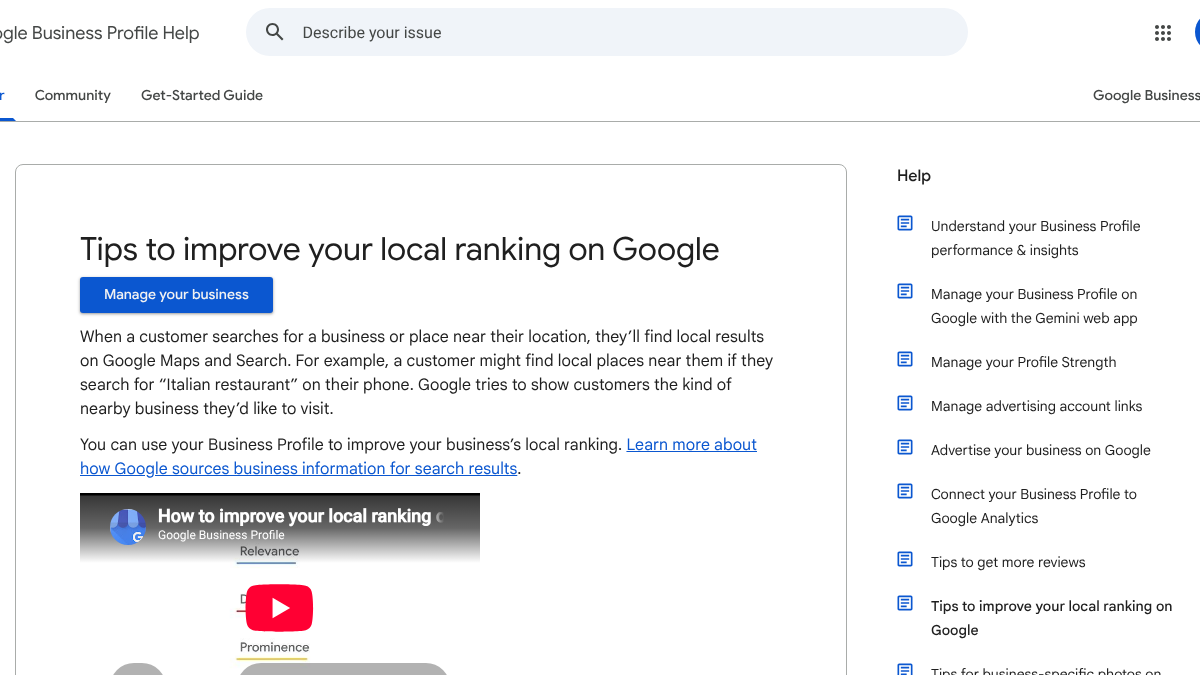
It shows no last-updated date, so I checked it on October 19, 2026. The page also says, "There's no way to request or pay for a better local ranking on Google." Every tactic below works on relevance or prominence, because you can't do much about distance short of moving.
For the step-by-step version of those three factors, see our guide to the Google local pack. The verdicts below assume you've claimed and verified your profile already.
How often does ChatGPT mention your brand?
Most founders have no idea. The answer might surprise you.

10 local SEO tactics, with a verdict on each
1. Pick the narrowest true primary category (works)
This is still the biggest single lever, and it's a quick change. Whitespark's 2026 Local Search Ranking Factors report, published November 6, 2025, gave the primary profile category a score of 227, the highest of any local pack factor. Proximity to the searcher came second at 225.
When a marketer back from a five-year break asked r/localseo what had changed, the replies kept saying the same thing. Local has moved less than the rest of SEO, and the primary category is still the main lever. They also said to fill out services properly and use real photos.
Whitespark's scores come from a survey of 47 local SEO experts, so they're informed opinion, not a measured ranking study.
One thing to skip is polishing the profile description for rankings. A reply in r/GoogleMyBusiness said descriptions have zero impact on rankings or AI Overviews. That's one person's read, so write the description for customers and move on.
2. Get reviews at a steady pace (works)
In that same r/localseo thread, people said a steady trickle of reviews beats 20 in one week. A profile with two new reviews every week looks like a busy business. One that got 20 in March and nothing since looks like it ran a promo.
Whitespark's report backs the direction. Its summary says the biggest change for 2026 is "an increased importance of review signals and behavioural signals."
Customers count too. BrightLocal's 2026 Local Consumer Review Survey found that 47% of consumers won't use a business with fewer than 20 reviews, and only 9% are fine with five or fewer. That survey asked 1,002 US adults through SurveyMonkey and came out on February 11, 2026, so it covers US buyers only.
The habit is boring. Ask after every job, the same day, with a direct link to your review form.
3. Ask for reviews that name the job (works)
A five-star review that says "great service" helps your rating. A review that says "they replaced our water heater the same afternoon" helps your rating and tells Google what you do. The r/localseo replies rated job-naming reviews well above the generic kind.
AI makes this matter more. BrightLocal found 82% of consumers read AI-generated review summaries, and 23% rely on them alone. A summary can only repeat what's in the review text, so a pile of "5 stars, great people" gives it nothing to say about your services.
You can't write the review for the customer. You can remind them what you did in the request, and "Thanks for having us out to fix the furnace" is enough.
Then reply in the same spirit. Half of the people BrightLocal surveyed said generic or templated replies put them off, so a reply that names the job does double duty.
4. Review gating (risky, against Google's policy)
Gating means asking "how did we do?" first, then sending happy customers to Google and unhappy ones to a private form.
Google's review policy lists it as prohibited, in plain words. Businesses may not "discourage or prohibit negative reviews, or selectively solicit positive reviews from customers." The same page bans offering discounts or free services for a review.
Customers take a dim view of review tricks in general, and 97% of BrightLocal's sample said businesses should be punished for fake reviews.
Our guide to local SEO automation covers which review tools stay inside the rules.
5. Keywords stuffed into the business name (works short-term, breaks the guidelines)
This one is awkward, because it works. Whitespark's experts scored keywords in the profile name at 223, third among local pack factors and only a few points behind category. A local SEO agency founder posted on r/localseo in March that stuffing the name was "still working like a charm," with a screenshot attached.
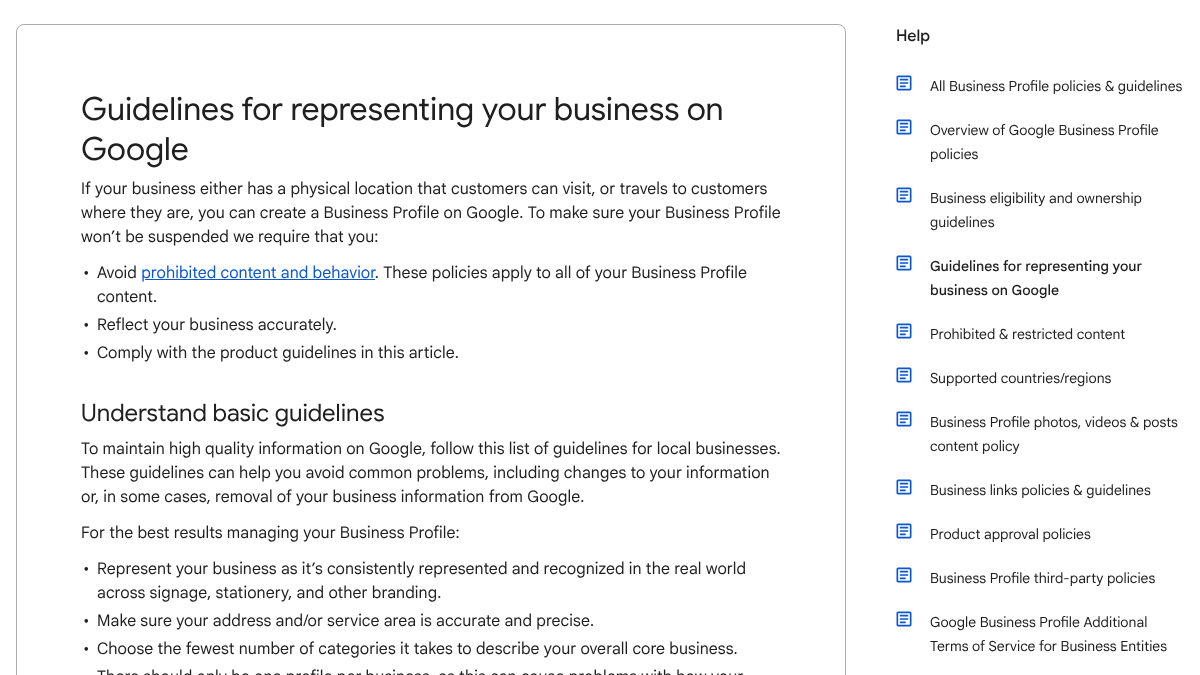
Google's guidelines say no just as clearly. Your name "should reflect your business's real-world name, as used consistently on your storefront, website, stationery, and as known to customers." The page adds that extra words in the name "could result in the suspension of your Business Profile."
So why do stuffed listings survive? A reply in that thread said enforcement is almost entirely complaint-driven, which gives every stuffed name what I'd call a complaint clock. It ranks until a competitor files a report, and you don't control when that happens.
My verdict is to leave it alone. The only clean way to get a keyword into the name is to make it the name on your sign and your invoices too. If you run several locations, our post on naming multiple Google Business Profiles covers the harder cases.
6. Check your profile for third-party edits (works)
Most owners don't know this happens. Anyone with a Google account can suggest an edit to your listing, and some of those edits go live without the owner hearing about it. A September post in r/GoogleMyBusiness laid out the problem and a two-minute fix.
Your competitors can edit your Google Business Profile (and probably already have)
Most owners don't know this: anyone with a Google account can click "Suggest an edit" on your listing and change your hours, your phone number, even your business name. Google applies a lot of these without telling you. Here's how to check:...
The poster said the two most abused fields are hours and phone number. A listing marked closed on Saturdays loses every weekend searcher, and a swapped phone number sends calls to someone else. They said they see wrong data on about half the profiles they look at.
One owner replied that their phone, hours and even their name had been changed, over and over. Another said a bad edit can move your map pin miles away, which kills calls from the profile. A third noted that owners can skip the public "suggest an edit" button and fix it from their own profile.
So once a month, search your business name and city, open the listing and read every field as if you were a customer.
15 hours a week manually. Or 15 minutes with RankControl.
Track citations, monitor competitors, and fix content gaps across every AI search engine. Automatically.

7. Cloned service-area pages (risky)
You serve 30 towns, so you make 30 pages that read "Plumber in [Town]" with only the town name changed. Plenty of sites still carry pages like that.
Google's spam policies, last updated August 28, 2026, describe doorway abuse with an example that fits almost word for word. "Having multiple domain names or pages targeted at specific regions or cities that funnel users to one page."
A 10-year practitioner's 2026 tips in r/localseo made the same point. Location pages should be useful, not thin, and nobody should build AI-written pages just because someone says they'll help.
The version that works is one real page per area you really serve. Use what I'd call the next-town test. Would someone in that town learn something they couldn't get from the next town's page? Jobs you did there, local permits, drive times and the questions people there ask all pass. A swapped town name doesn't.
8. Earn local links (works)
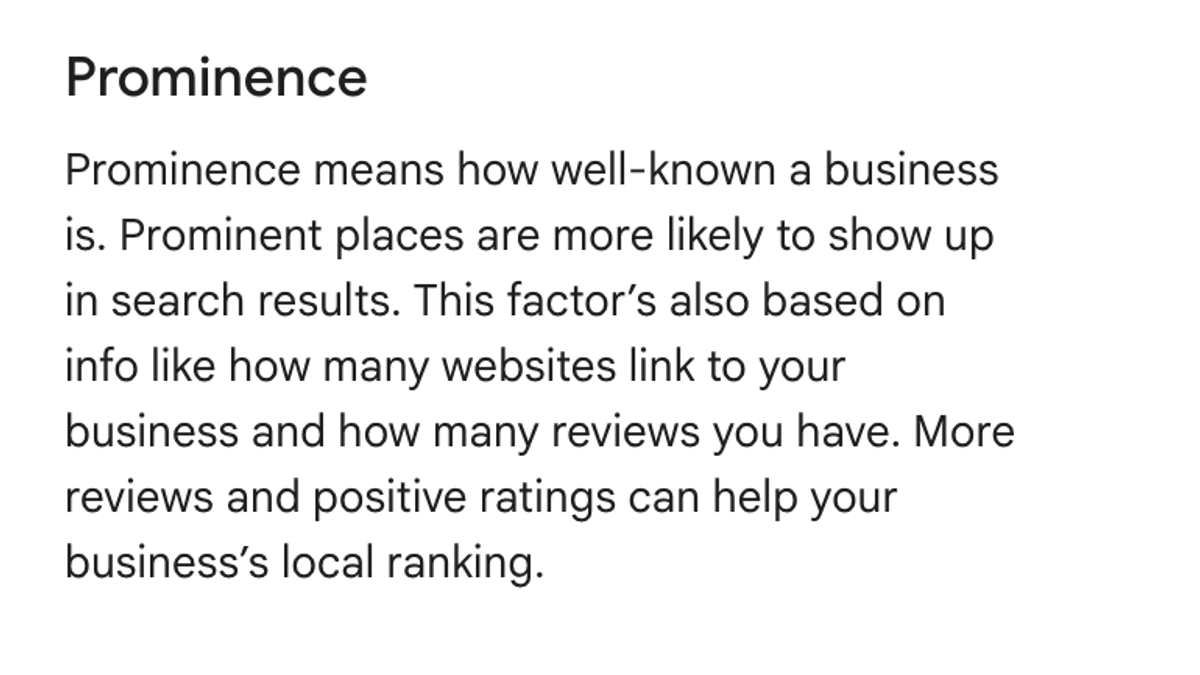
Links are in Google's own definition. Prominence, the Help page says, is "based on info like how many websites link to your business and how many reviews you have."
Most small businesses never chase local links, which is why they work. You don't need a big outreach campaign, only the places that already know you.
- Your trade association or chamber of commerce member directory.
- The suppliers and brands you're a dealer or installer for, many of which keep a "find an installer" page.
- Local events, teams and charities you sponsor.
- Local news, when a reporter covers your street, your trade or the season's problem.
- Your city's "best of" lists and local guides.
That last one matters for AI too. Whitespark scored AI search visibility as its own category for the first time in 2026, and three of its top five AI factors were about mentions rather than links. Its line was that "mentions (citations) are the new link." For the prospecting side, see our guide to finding link and mention chances in a small niche.
9. Keep your name, address and phone consistent (myth as a growth lever)
Agency lists love this one, and as a way to grow it's mostly myth. Matching details across directories won't lift you past a rival with more reviews. A mismatch can still make Google and AI tools unsure two listings are the same business, so it's upkeep you can't skip.
The practitioner from tactic 7 listed it as a basic, next to a warning against churning out low-quality citations. So fix it once, properly. Our post on local citations explains which ones still count, and the citation cleanup guide walks through fixing duplicates and errors. After that, a quarterly check is plenty.
10. Answer the questions people ask AI (works, slowly)
Here's the number that should change how you plan. In BrightLocal's 2026 survey, 45% of consumers said they use ChatGPT or other AI tools for local business recommendations. That puts AI third, behind Google at 71% and Facebook at 59%.
Those are people describing their own habits, which surveys tend to overstate. Even half that figure is a lot of people asking a chatbot for a plumber. Trust runs a little lower, with 40% saying they trust AI platforms for recommendations.
What do those answers draw on? Several r/localseo replies said AI Overviews for "near me" style searches mostly show the same businesses as the map pack. So tactics 1 to 9 already carry most of the load.
The AI-specific part is content. In one r/smallbusiness thread, the poster asked ChatGPT for local picks in 30 searches. The replies agreed that plain copy saying who you are, where you work and what you do gets reused. One reply flagged the ugly failure mode. The AI recommends you but quotes old hours or an old phone number, and you never hear about the lost call.
Write pages that answer real customer questions, on your own site, with your current details on every one. Our guide to local SEO for AI search goes deeper on the AI side.
A local SEO tactics routine you can keep
Here's how often each tactic needs you.
| How often | What to do |
|---|---|
| After every job | Ask for a review, the same day, and remind them what you did |
| Weekly | Reply to new reviews by name and job |
| Monthly | Search your business and city, read every field, fix third-party edits |
| Monthly | Ask one local partner, supplier or association for a link |
| Quarterly | Check name, address and phone across your main directories |
| Quarterly | Add or update one page that answers a real customer question |
Doing it yourself or handing it off
Most of this list only you can do. RankControl doesn't manage Google Business Profiles or reviews, so the category, the review asks and the monthly listing check stay with you.
The content and the checking are where the hours go. RankControl writes the articles that answer your customers' questions and publishes them on your own site. Then we check every week whether seven AI engines name your business for your local questions, and track your Google and Bing rankings. Fifty questions on seven engines is 350 answers a week to read by hand, so that's the part worth handing off.
You can run all of it yourself with a spreadsheet and a lot of tabs. Or RankControl can handle the pages and the weekly checks while you handle the jobs. RankControl is $400 a month with a 7-day free trial, and you can see how the AI visibility tracking works first.
AI search traffic grew 835% this year. Is your content ready?
RankControl generates 26 content formats optimized for ChatGPT, Claude, and Perplexity. Published on your domain, matched to your brand.