
On September 26, 2026, we ran the same keyword request through GPT-5.5 four different ways and checked every answer against Google's own search data. The product was a made-up time tracker for creative agencies, and the goal was simple: find ChatGPT prompts for SEO keyword research that don't hand you the same list every competitor already has.
The results were more lopsided than we expected. One prompt made up search volumes after admitting it had no data. Another produced ideas so specific that Google had no volume on any of them, which turned out to be useful anyway. Here's what each prompt returned, what the search data said, and the prompt kit we'd use now.
What the lazy prompt gives you
The first prompt was the one most people type: "Give me 20 SEO keywords for time tracking software." It came back in seconds with a clean list headed by "time tracking software" and "employee time tracking."
Every one of the 20 has real search volume, and that's the trap. "Time tracking software" gets about 12,100 US searches a month, and the top of that results page belongs to established time tracking brands and big software roundups. A small site isn't getting in there this year.
The list also mixed up buyers. Six of the 20 were about clocking hourly staff in and out or feeding payroll, which is a different product bought by a different person. Nothing on the list mentioned agencies or margins, because the prompt never said who the product was for.
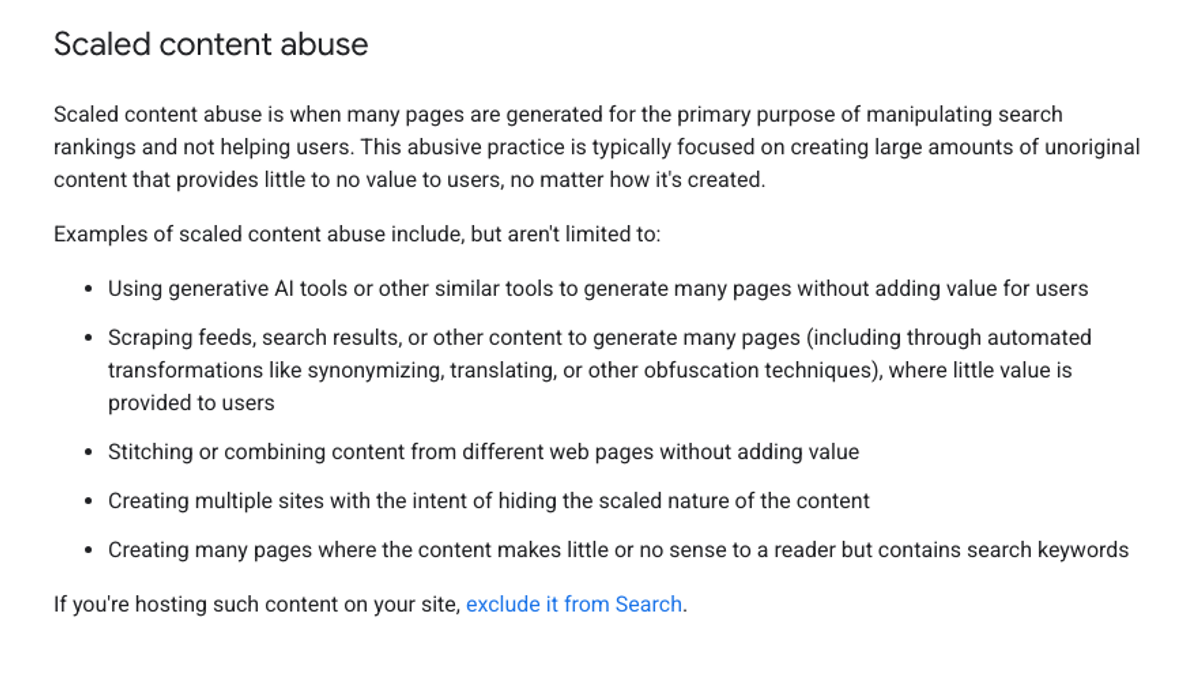
Publish pages against lists like that and you end up with the same articles as everyone else. Do it at volume with AI and you're close to what Google's spam policies call scaled content abuse: many pages generated to rank without adding value for users.
One r/SEOTips101 poster described the time cost of the same problem in September: AI hands you hundreds of suggestions, and filtering out the broad and irrelevant ones can take as long as doing the research the old way.
Can AI Really Save Time on Keyword Research?
Don't ask ChatGPT for search volume
The second prompt added one phrase: "with the monthly US search volume for each." GPT-5.5 opened by saying it didn't have live access to Keyword Planner or the big SEO tools, so the numbers were rounded estimates. Then it gave 20 precise-looking numbers anyway.
We checked all 20 against Google Ads search volume data. Only 2 landed within 25% of the real figure, 12 were at least double, and the list added up to about 108,800 monthly searches when the real total was closer to 53,500.
| Keyword | ChatGPT's estimate | Google Ads volume |
|---|---|---|
| employee time clock app | 6,600 | 590 |
| time tracker | 33,100 | 8,100 |
| best time tracking software | 1,600 | 390 |
| time tracking software | 6,600 | 12,100 |
| employee time tracking software | 2,900 | 2,900 |
The errors ran in both directions, which is worse than a steady bias you could correct for. Google's own volumes are rounded buckets, so they aren't perfect either, but they come from real query logs and ChatGPT's don't.
People in SEO threads keep landing on the same rule. In an r/digital_marketing thread about what to trust ChatGPT with, one reply listed keyword research among the things not to trust it for, because "it hallucinates search volumes."
Can ChatGPT do SEO?
200+ SaaS teams already track their AI citations.
They know exactly when ChatGPT mentions their brand, and when it stops. Do you?

Write a brief, not a request
The third prompt was a proper brief. We told the model who the product was for and what the buyer worries about. We also named the head terms we weren't going to chase and pasted seven phrases that agency owners and staff used in Reddit threads this year, such as "which clients are eating your margins" and "without making your designers feel watched." A trimmed version looked like this:
Product: a time tracker for creative agencies of 10 to 50 people.
It shows time and cost per client and per project, with no
screenshots or activity monitoring.

Buyer: the agency owner or ops lead, worried about project
costing, margins, and the team's reaction to time tracking.

Phrases real buyers used (use their words, not marketing words):
[paste 5 to 10 phrases from Reddit, sales calls or support tickets]

We won't target head terms like "time tracking software" this year.

Give 20 keyword or question ideas this site could realistically
rank for and that could lead to a demo. For each: the query, the
intent, the page type that would answer it, and whether it came
from the buyer phrases or is your guess. Do not estimate volume.
The output was a different kind of list. It had ideas like "agency project costing by client" and "how to introduce time tracking without micromanaging," each with a page type attached. Thirteen ideas came from the pasted phrases or were built on them, and the other seven were the model's own guesses, labeled as such.
The source column is the part we'd keep in every brief. It tells you which ideas rest on something a buyer actually said.
Run the parent check
The brief had its own failure. A few ideas copied the Reddit phrases word for word, such as "screenshots or activity tracking not sure yet," which is something a person writes in a thread, not something anyone types into Google.
When we checked the list against search data, none of the 18 ideas short enough to check had measurable volume. The other two were too long for Google's keyword tool to accept at all.
Does that make the list useless? It doesn't. Each idea is a page angle that needs a searched parent term above it, and we call that step the parent check. For each specific idea, ask what shorter phrase a buyer would type first, then check that phrase:
| Specific idea from the brief | Parent term | US monthly searches |
|---|---|---|
| agency project costing by client | project costing | 1,000 |
| track time spent per client for creative agency | agency time tracking | 210 |
| how to track project margins in a design agency | project profitability | 140 |
| Harvest alternative for creative agencies without screenshots | harvest alternative | 90 |
| time spent per client report | client profitability report | 20 |
The parent term also tells you whether you can win. The top ten for "agency time tracking" was a grab bag when we looked: a roundup of project management tools, a list of client portals, a competitor-alternative page and an integration page. Nothing on it answered the query head-on, so a focused page would be up against near-misses rather than category leaders.
How often does ChatGPT mention your brand?
Most founders have no idea. The answer might surprise you.

Ask what it would search
The fourth prompt came at the problem from the AI search side. We gave the model the buyer's actual question, about which tool would show the clients eating their margins without making designers feel watched, and asked it to list the web searches it would run before answering.
It returned 20 searches. It looked up review sites and Reddit by name and ran head-to-head comparisons between specific time trackers. It also hunted for "time tracking software without employee surveillance screenshots" and for client profitability reports. None of the 20 had any Google Ads volume, and that's expected, because they're written by a machine for a machine.
They're still a map of what an AI answer needs. If a buyer asks ChatGPT this question, pages covering those sub-topics have a better chance of being cited, which is why this list belongs next to your keyword list rather than inside it. Lily Ray made the same point in July about fan-out queries: cluster them into topics and compare those topics with your existing pages, but don't build one page per fan-out, and keep real search volumes in the process. Our piece on why keyword research is turning into prompt research goes further into that shift.
Once you have a few months of Search Console data, the stronger move is to point ChatGPT at it instead, and our seven prompts for your own Search Console exports show how.
Turn keywords into prompts you can track
The last step runs the other way. Once you have a checked keyword list, you can turn each keyword into the question a buyer would ask an AI assistant, and track those questions.
A little AI search hack I've been using: Take your SEO keyword research & convert keywords into prompts for AI search within Google sheets' AI function using a prompt like this one: =AI("You are converting a terse SEO search keyword into the natural-language query a real person https://t.co/NTJd2LCx2j
 Lily Ray 😏@lilyraynycJun 9, 2026

Ray's version runs inside Google Sheets: an AI formula rewrites each terse keyword as the conversational question a person would ask, keeping the intent and any brand or location without inventing details. That gives you a prompt set that mirrors your SEO research instead of a separate list invented from scratch. Our guide to finding the prompts your buyers ask ChatGPT covers other sources for that list.
A prompt kit you can copy
Here's the sequence we'd run for any new product or category after this test:
- Brief first. Describe the product and the buyer, paste real buyer phrases, name the head terms you won't target, and ask for intent and page type with a source label. Ban volume estimates in the prompt itself.
- Parent check. For every idea, ask ChatGPT for the shortest phrase a buyer would type first, then check that phrase in real search data and look at who ranks for it.
- Fan-out list. Give the model a real buyer question and ask which searches it would run before answering. Cluster the results into topics your pages should cover.
- Prompt conversion. Rewrite the checked keywords as conversational questions and track them on the AI engines every week.
Most of the time on the brief went into pulling phrases from Reddit threads, and that was the step that changed the output from generic to specific. We wrote about why that pattern holds for all AI writing in better AI content comes from better context.
Where the manual version gets heavy
The research above is an afternoon for one product. Keeping it current is the bigger job: publishing eight solid articles a month from a list like this takes 16 to 24 hours, and checking 50 questions on seven engines takes about six hours a week. Those are rough estimates.
RankControl's Radar agent finds the questions your buyers actually search and checks them against real search data. Radar then plans titles onto your content calendar. The content engine writes each article against the pages already ranking for its keyword and publishes it on your own domain. Then AI visibility tracking checks your 50 questions every week on seven engines. For a quick first read, the free AI visibility checker shows who ChatGPT cites for three questions from your market.
You can run the prompt kit yourself with ChatGPT and a search data tool. Or RankControl's agents can run the whole loop every month while you work on the parts only your team knows, like which clients are eating your margins.
15 hours a week manually. Or 15 minutes with RankControl.
Track citations, monitor competitors, and fix content gaps across every AI search engine. Automatically.