
There's a sentence I keep seeing in SEO automation threads, and an r/seogrowth reply put it most plainly. The commenter had chased full automation once and spent more time fixing mistakes than doing the work. A few comments down someone else agreed that the decisions that move rankings still need a human, and that most tools only automate the data collection.
They're half right, and the half that's wrong is where the money is. Some SEO automation tools now do real work while you're away, from fixing title tags to publishing articles. Others only collect data faster, which still leaves Monday morning full of tasks. I've found one question sorts them quickly, and I call it the Monday test. If nobody on your team logs in this week, what does the tool do on its own?
This list compares RankControl, Search Atlas, Alli AI, AirOps, SE Ranking, Screaming Frog, n8n, Gumloop, Zapier and Koala AI on that question. Every price was read off each vendor's pricing page on October 18, 2026.
The Monday test, side by side
| Tool | Entry price | What it does with nobody logged in | What still needs you | Trial |
|---|---|---|---|---|
| RankControl | $400/mo | Plans, writes and publishes articles, checks Google and six AI engines weekly | Approving articles, unless auto-publish is on | 7 days |
| Search Atlas | $99/mo | OTTO applies on-page fixes | Reviewing fixes, the content plan | 7 days |
| Alli AI | $299/mo | Deploys on-page changes across sites | Choosing which changes to run | 10 days |
| AirOps | Not published | Runs the workflows you built | Building and maintaining them | Free start |
| SE Ranking | $129/mo | Tracks 2,000 keywords and 100 AI prompts daily, runs site audits | Acting on the report | 14 days |
| Screaming Frog | $279/yr | Runs scheduled crawls, exports to Google Sheets | Reading the audit and fixing issues | Free version |
| n8n | €20/mo yearly | Runs your workflows, 2,500 executions a month | Designing every step | Free trial |
| Gumloop | $37/mo | Runs your AI flows on 20,000 credits | Building the flows | 14 days |
| Zapier | Free or $29.99/mo | Moves data between apps | Setting up each Zap | Free plan |
| Koala AI | $99/mo (Boost) | Writes on a content calendar autopilot | Publishing choices, links | Free words to start |
Three verdicts come out of that table. For automating content from topic to published page, the best pick is RankControl, because it's the only tool here that also checks whether the pages rank and get cited. For on-page technical fixes, the best pick is Search Atlas, since OTTO starts on its $99 plan. For automating monitoring, the best pick is SE Ranking, which tracks keywords and AI prompts daily on one plan.
Know exactly what AI says about your competitors.
RankControl's Recon Agent monitors competitor citations across ChatGPT, Perplexity, Claude, Gemini, Grok, and Google AI Mode. See where they show up and you don't.

The 10 best SEO automation tools
1. RankControl
RankControl automates the most expensive part of SEO, which is turning gaps into published pages. The content engine finds the questions buyers in your market search, plans titles onto a calendar, writes each article against the pages already ranking and publishes it to your CMS, up to 100 pages a month.
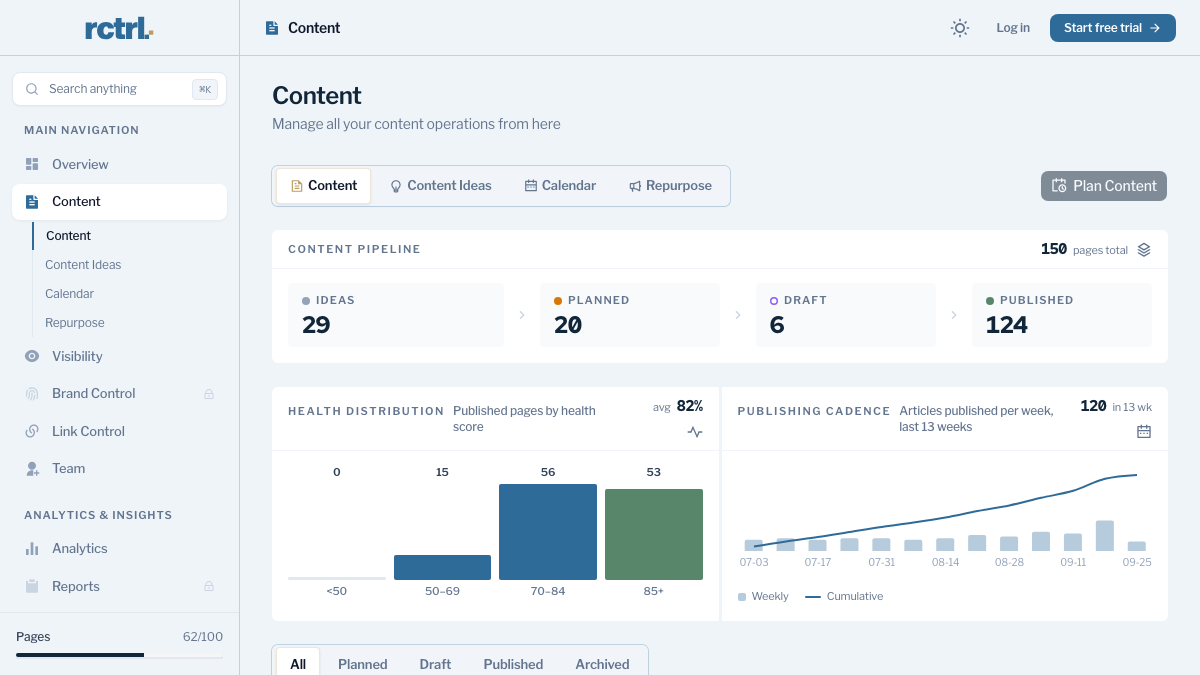
Auto-publish is off by default, so a person approves each article until they trust the output. Then AI visibility tracking checks 50 buyer questions weekly across six AI engines, and Google rankings run on the same weekly cycle. It's $400 a month with a 7-day free trial.
2. Search Atlas
Search Atlas passes the Monday test on the technical side, and it's one of the agents we sort by permission level in our best AI SEO agents list. Its OTTO agent applies fixes like page titles, meta descriptions and schema across a site, and it's included from the $99 Starter plan with 50,000 Universal Credits.
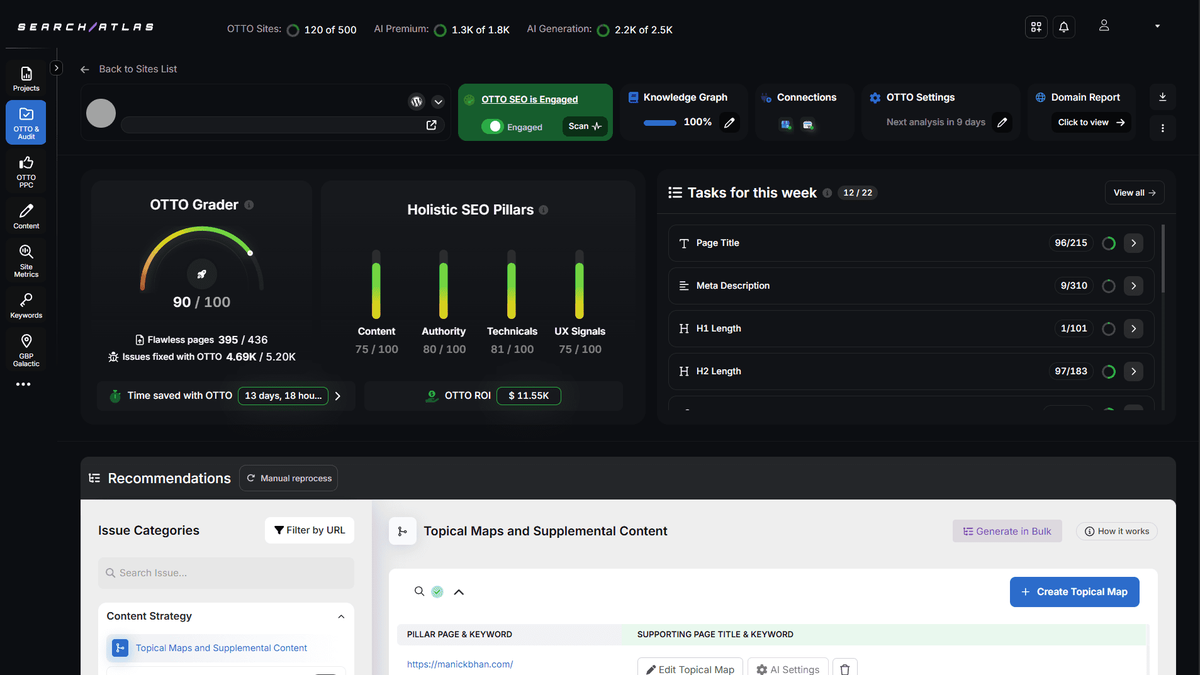
One install detail matters. OTTO can run through a JavaScript pixel or a Cloudflare DNS setup, and fixes made by script may not reach AI crawlers that don't run JavaScript. See RankControl vs Search Atlas for the full comparison.
3. Alli AI
Alli AI deploys on-page changes across many sites at once. Business costs $299 a month for 5 sites and 1,250 pages, and it installs through a WordPress plugin, a JavaScript snippet or a tag manager.
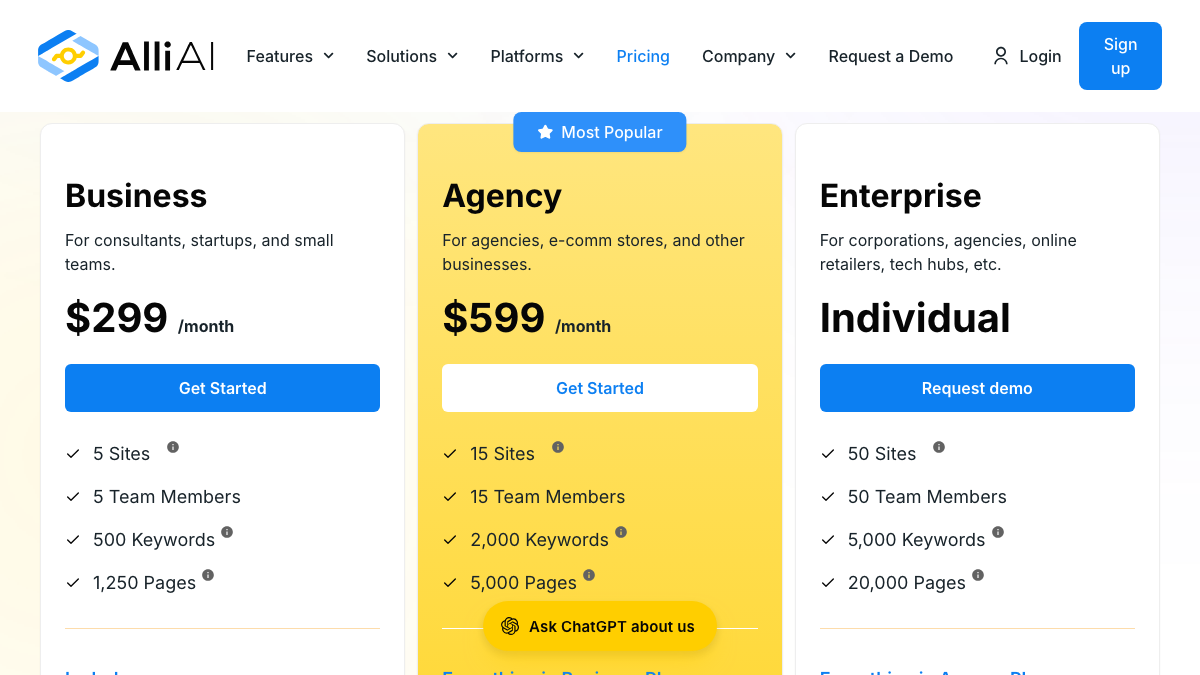
It pre-renders pages for more than 50 AI crawlers, which solves the script problem above. That makes it a strong pick for agencies, and RankControl vs Alli AI covers how the two split the work.
4. AirOps
AirOps is a workflow platform for content, sized in tasks, with 35,000 a month on Solo and 100,000 on Pro. Its pricing page shows no monthly prices, so you'll need a conversation to get one.
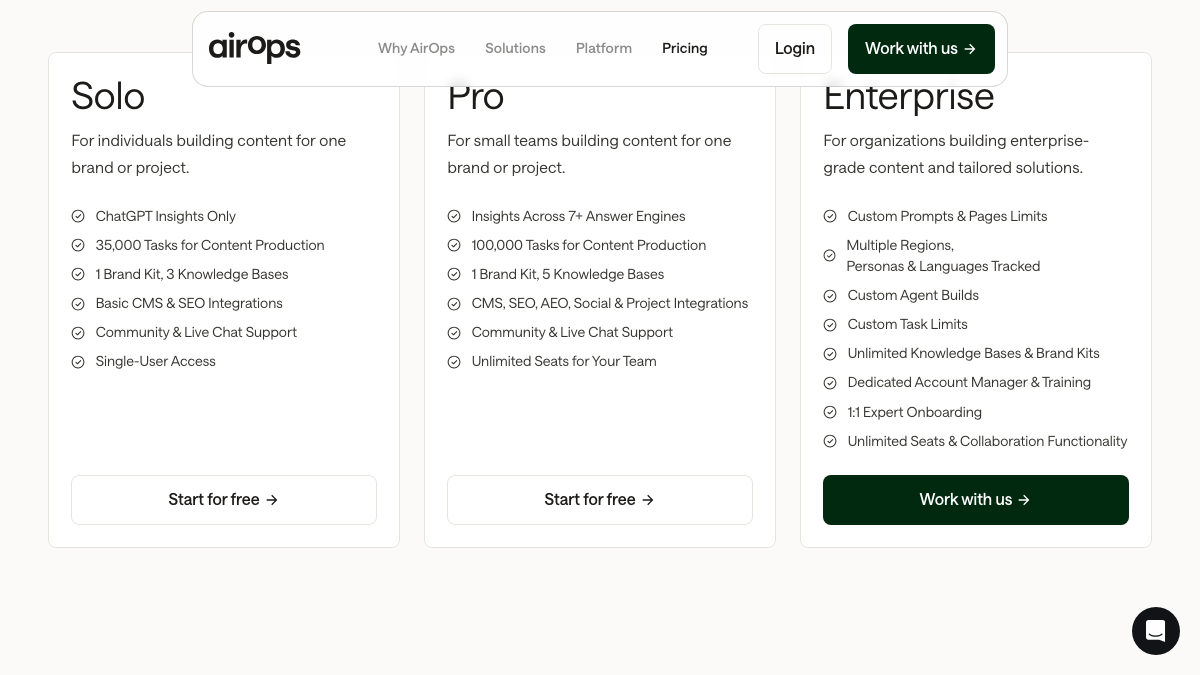
On the Monday test it runs whatever you built, which is the catch. Someone has to design the workflows and keep them working, which is why it suits teams with a technical marketer. Our RankControl vs AirOps guide for teams without engineers counts how much of its docs assume code.
26 content formats. Published on your domain. Matched to your brand.
Guides, comparisons, listicles, case studies, and more. RankControl generates content that gets cited by ChatGPT, Perplexity, Claude, Gemini, Grok, and Google AI Mode.

5. SE Ranking
SE Ranking automates the monitoring. Core costs $129 a month, or $103.20 billed yearly, and tracks 2,000 keywords and 100 AI prompts daily across 10 projects, with site audits covering 250,000 pages a month.
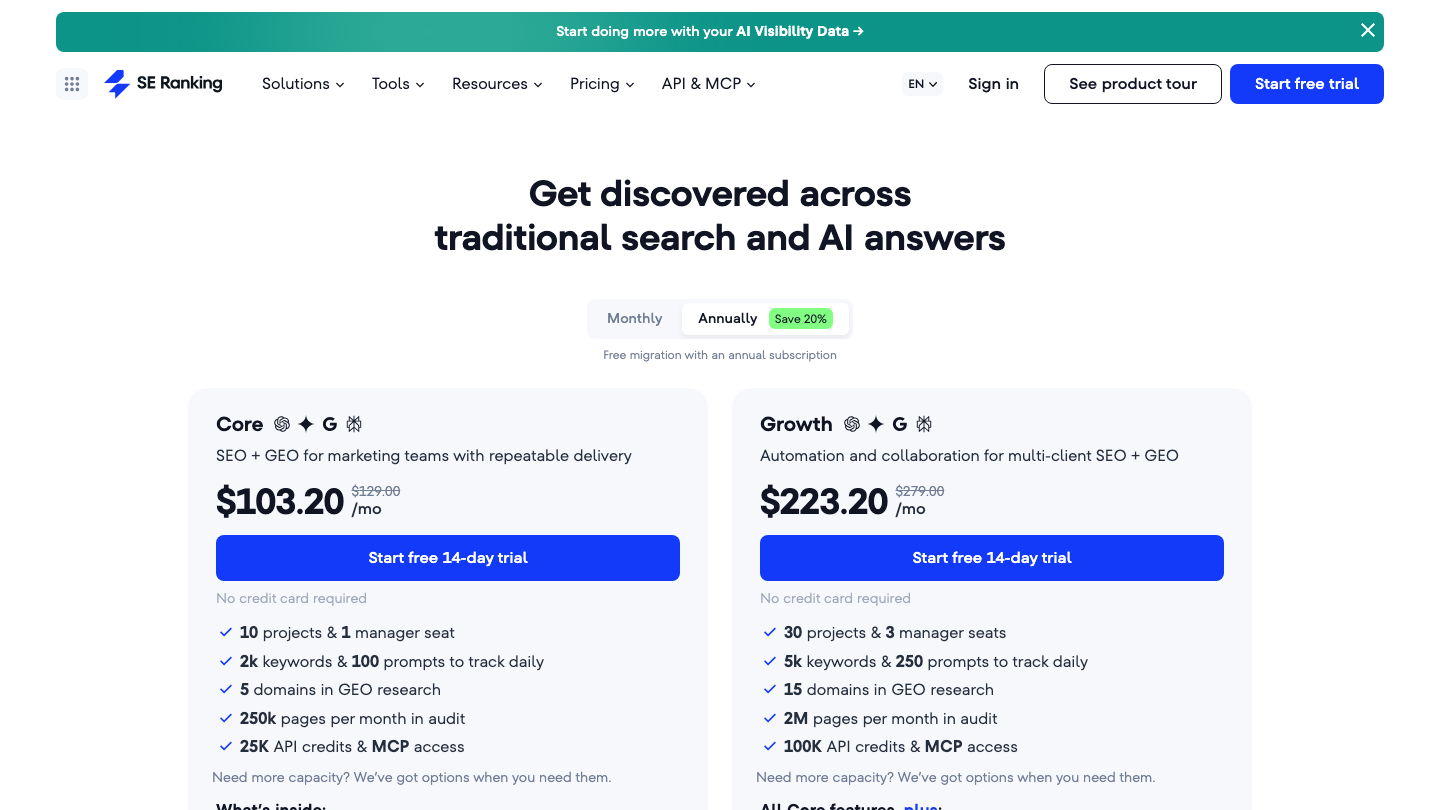
That's a lot of data arriving on its own every morning. Turning it into fixes is still yours, and RankControl vs SE Ranking shows where the two meet.
6. Screaming Frog
The SEO Spider can schedule crawls to run on their own, once or at set intervals, and export any report straight to Google Sheets. Scheduling is a licence feature, so you'll need the $279-a-year version rather than the free one capped at 500 URLs.
That turns a manual audit into a weekly sheet that fills itself. The licence also connects the crawl to Search Console and Google Analytics, so the sheet can show which broken pages actually get traffic. Someone still reads it and fixes what it finds.
7. n8n
| n8n Starter | |
|---|---|
| Price | €20 a month billed yearly |
| Volume | 2,500 workflow executions a month |
| Includes | AI nodes, MCP, unlimited users |
n8n sits behind many of the custom SEO pipelines people share on Reddit, from keyword research flows to drafting pipelines. It'll do almost anything you can design.
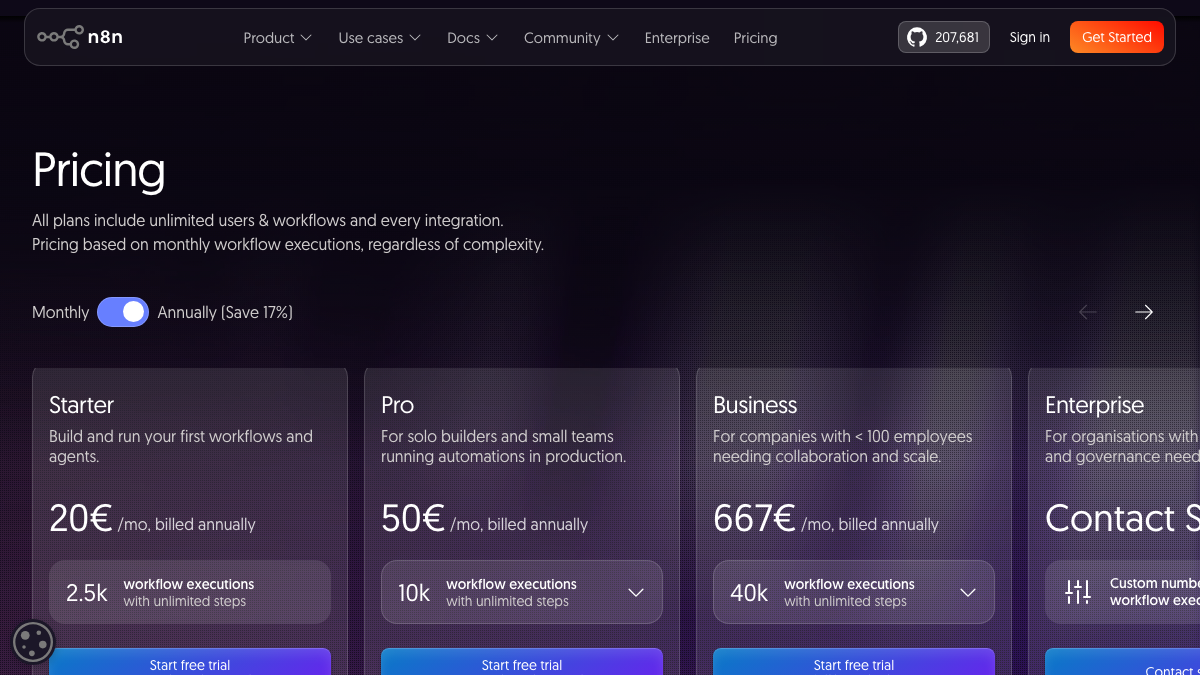
The trade is maintenance. When an API changes or a model behaves differently, the workflow breaks, and the person who built it fixes it.
8. Gumloop
Gumloop is the no-code version of the same idea, with AI agents and flows built by dragging blocks. Pro starts at $37 a month with 20,000 credits and a 14-day trial, and it supports 35-plus models with your own API keys if you prefer.
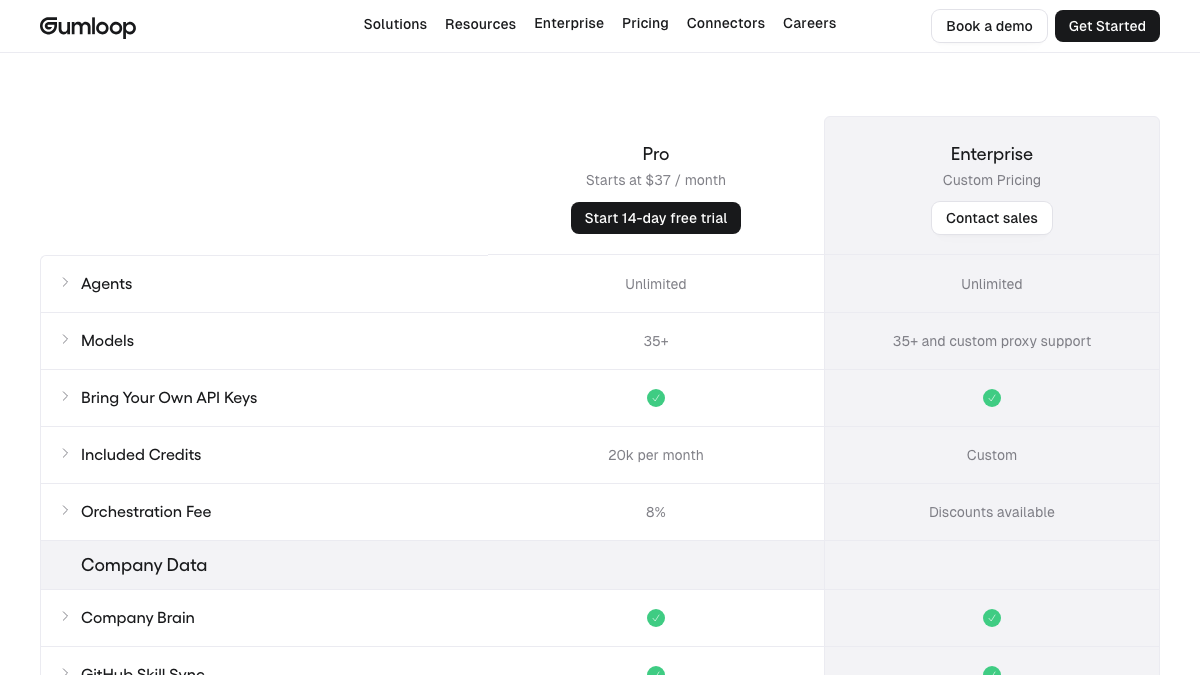
Read the line that says "orchestration fee". It's 8% on Pro, on top of the plan.
9. Zapier
Zapier doesn't do SEO itself. It connects the tools that do, so a new citation, a ranking drop or a published post can land in Slack, a sheet or your CMS. The free plan covers 100 tasks a month, and Professional starts at $29.99 a month.
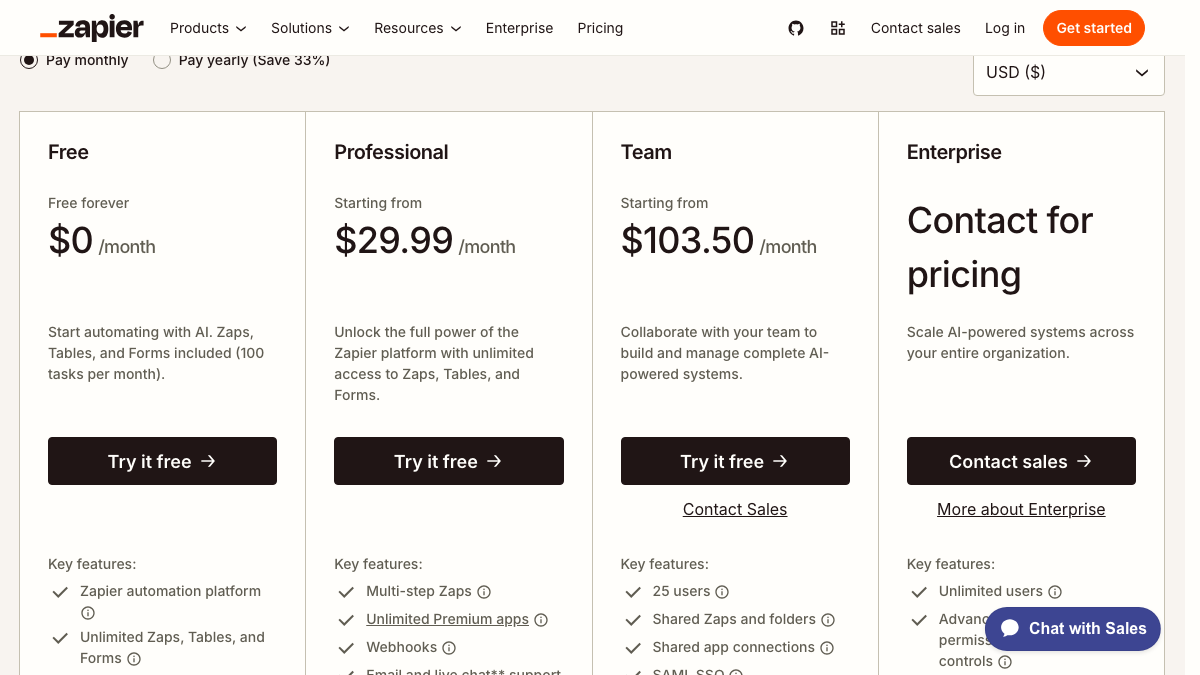
Our guide to publishing content with Zapier shows one way to wire it in.
10. Koala AI
Koala's Boost plan at $99 a month adds a content calendar autopilot on top of its writer, with 250,000 words a month and publishing to WordPress, Shopify, Webflow and Ghost. It's built for affiliate and niche sites that want steady output. RankControl vs Koala AI compares the two writers.
What practitioners say works best
The most useful answer I found came from an r/localseo thread asking for the most impressive SEO automation people had seen. The top reply said it wasn't content generation at all. It was content maintenance, a weekly workflow that pulls Search Console data and flags pages that slipped from positions 3 to 10 down to 10 to 20.
That matches what a founder in r/founder found after six months of automating their own site. Traffic grew from almost nothing to 40 to 60 clicks a day, and one reply pointed out that a 0.4% click-through rate at an average position of 11.9 showed exactly where the next gains were. Moving page-two pages up would beat writing new ones.
So whichever tools you pick, automate the watching first. A weekly check that tells you which pages slipped is worth more than a tool that writes 50 new pages nobody reads.
How to build the page-two watch yourself
If you'd rather build that maintenance workflow than buy it, the pieces are simple. The Search Console API returns up to 50,000 rows of performance data a day per search type, which is plenty for a small site.
- Once a week, pull the last 28 days of query and page data for your site through the API, using n8n, Gumloop or a Zapier step.
- Compare each page's average position with the same pull four weeks earlier.
- Flag pages that moved from 3 to 10 down to 10 to 20, with at least 100 impressions so you skip the noise.
- Send the list to a sheet or a Slack channel, with the top queries for each flagged page.
Building it takes an afternoon, and keeping it running takes an hour here and there when something breaks. The fix for each flagged page, a rewritten title or a stronger opening, is still a human job.
Three starter stacks by budget
| Budget | Stack | What runs on its own |
|---|---|---|
| Under $30 a month | Search Console, Screaming Frog licence, Zapier free | Weekly crawl, alerts into Slack |
| About $150 a month | SE Ranking Core plus Zapier Professional | Daily rank and AI prompt tracking, audits, alerts |
| About $400 a month | RankControl | Topics, articles, publishing, weekly Google and AI answer checks |
The cheapest stack automates the watching and leaves all the doing to you. The middle one adds daily tracking and AI prompts. The top one automates the content work itself, which is where most of a small team's SEO hours go.
What to keep a human on
Automation is safest where it only reads data, like crawls, rank checks, AI visibility checks and reports. Anything that changes your live site or publishes under your name should keep an approval step until you've seen a few weeks of output. Google's spam policies name scaled content abuse specifically, so publishing at volume without review is the riskiest kind of automation you can run.
What a manual week costs
Without any of these tools, a small site's SEO week looks roughly like this. A crawl and fix pass takes two hours, rank and AI answer checks take another two, reporting takes one, and writing and publishing two articles takes 8 to 12. That's 13 to 17 hours a week, or about 60 a month.
You can do all of it by hand. Or RankControl's agents can take the content and tracking half off your plate every month, finding the questions, writing and publishing the pages and checking six AI engines weekly, while you focus on your product.

Your competitors are getting cited by AI. You're not.
Every day without citation tracking is a day your competitors pull ahead in ChatGPT, Perplexity, and Claude.