
If you've spent a few years getting good at SEO, you've probably wondered this year whether any of it still counts. It's a reasonable worry. AI answers take clicks, AI tools write drafts in seconds, and every conference seems to announce a new acronym.
But the documentation from Google and Bing, and the job postings companies are writing right now, tell a steadier story. Most of the skills that made someone good at SEO still pay. A few are gaining value. The ones fading are mostly the shortcuts.
We call the pattern the judgment premium. As AI makes producing content cheap, the skills that decide what deserves to rank and why gain value, and the skills built on doing more of something lose it. Below are ten skills on the right side of that line, each with the evidence behind it.
What the job postings say first
Before the list, a quick look at hiring. In late September 2026, we read through a sample of live SEO job postings on LinkedIn. Of roughly 60 open roles in the New York area, at least 18 had AI search, GEO, AEO or LLM in the job title. Titles like "Specialist, Global SEO & GEO" at Tiffany & Co. and "Senior Strategist, SEO and GEO" at Verizon were typical.
None of those was a standalone GEO job. Every one was an SEO role with AI search folded in. That matches what we argued in our post on whether GEO is replacing SEO: the work is being absorbed into SEO, not split off from it.
We then read three detailed postings line by line: one at a global consultancy, one at a digital agency and one senior strategist role. Between them, all ten skills below appeared at least once. It's a small convenience sample, so treat it as a signal and not a survey.
The ten skills
Each of these comes with the evidence that it still pays, from search engine documentation or the postings we read.
1. Crawling and indexing
This is still the foundation, and AI search made it matter more. Google's own guidance on its AI features says "the best practices for SEO remain relevant" and "there are no additional requirements to appear in AI Overviews or AI Mode." A page Google can't crawl or index can't be cited.
What's new is the number of crawlers. OpenAI, Anthropic and Perplexity each run search crawlers with their own robots.txt rules, and many sites block them by accident through a CDN setting. Someone who understands crawling can find that in an afternoon, and knows that a fix isn't instant: OpenAI says it can take about 24 hours for its systems to pick up a robots.txt change.
Bing's webmaster guidelines put it plainly: Bing and Copilot "rely on the same core crawling, indexing, and ranking foundation as traditional search." One consultancy posting we read asked for exactly this: "crawlability, indexing, site architecture and Core Web Vitals."
2. Search intent analysis
Knowing what a searcher needs from a query is the skill AI tools are worst at replacing, because it depends on knowing the buyer. Bing's guidelines ask for content that fully satisfies user intent and can be understood "without external context."
AI search raised the stakes. Buyers now type long, specific questions with their constraints in them, and an answer engine rewards the page that answers that exact question. The consultancy posting named search intent directly, alongside metadata and internal linking.
3. Site structure and internal linking
Structure tells engines which page is the answer and how pages relate. Bing's guidelines have a section on using links to establish structure and authority, and another on focusing each URL on a single topic. Google's starter guide calls links "a great way to connect your users and search engines to other parts of your site."
This matters more when AI answers pick one page to cite. If three of your pages half-answer the same question, none of them is the obvious choice. Both detailed postings we read named internal linking by name.

Built by the team that got cited in 48 hours.
Content generation, backlink building, AI visibility tracking, and Google rankings. One platform, zero guesswork.
4. Writing answers that stand alone
AI answers quote passages. A page that states its main fact early, in a plain sentence, gives them something to quote. Bing's guidelines tell writers to surface important information early and avoid long introductions before addressing the main topic.
This is a writing skill more than an SEO trick, and it's where content people have an edge. The agency posting we read described the role as needing "a strategist's brain and a writer's hands." Our guide to writing reference posts AI assistants cite shows the pattern in practice.
5. Earning mentions and links
AI answers lean on what other sites say about you: review sites, industry coverage, comparison posts and forums. Earning that coverage is digital PR, and it's gaining value. Bing lists authority and trust signals among the practices that support AI grounding, and its guidelines say links "should be earned organically through high-quality, useful content."
The agency posting was the most specific. It asked for "a proven track record of earning high-quality backlinks through content, digital PR, or outreach," including guest posts and podcast placements. What's fading is the shortcut version: bought links and link schemes, which Bing now names as abuse.
6. Reading Search Console and GA4
The measurement tools changed a lot in 2026, which makes reading them a skill of its own. Google launched a generative AI performance report in Search Console in June and rolled it out to all websites by August 31. It shows impressions from AI Overviews and AI Mode by page, but not whether you were named or recommended.
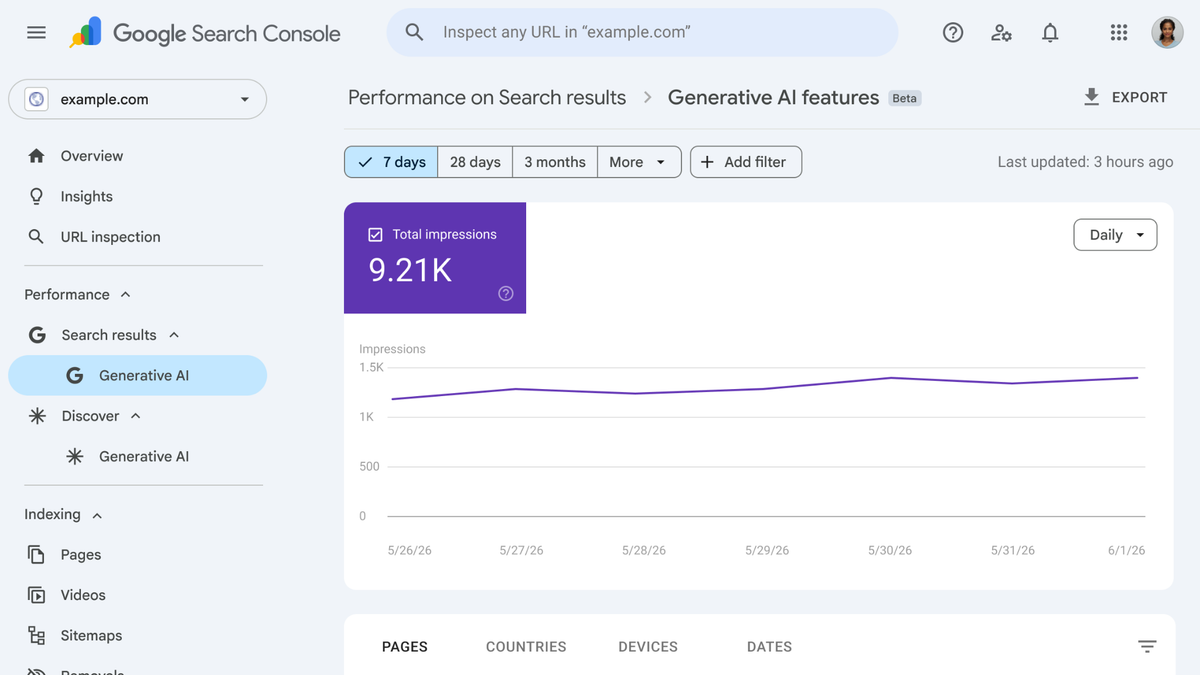
The report is still growing. In September, Search Console added a filter for image-based searches in the same reports:
.@googlesearchc has just announced a new web multimodal filter on Search results and Generative AI features reports 👇 rolling out globally starting today: "This update is designed to give you insights into how your content is surfaced when users search using images (such as https://t.co/NPEn9uz8vr
 Aleyda Solis 🕊️@aleydaSep 24, 2026
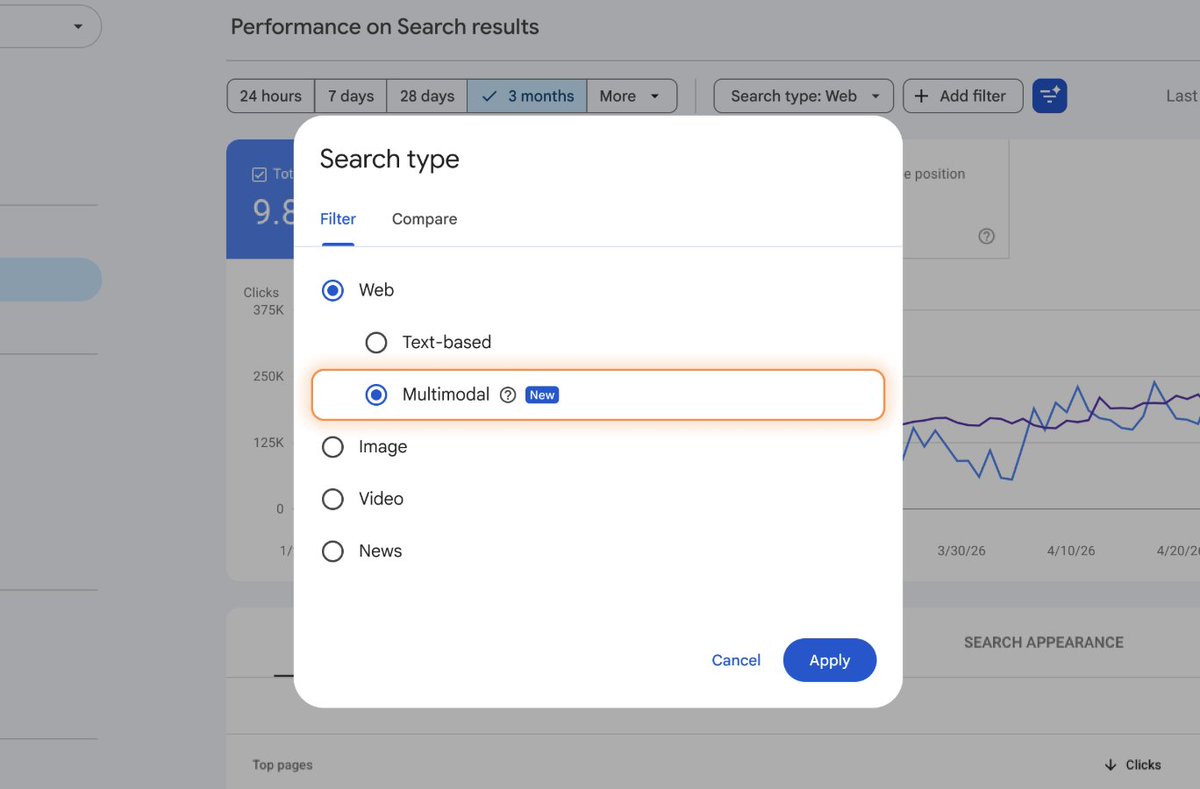
GA4 added an AI Assistant channel in May. Someone who knows what each report counts, and what it leaves out, can tell a manager what the numbers mean instead of just forwarding them. Both detailed postings listed Search Console and GA4 among required tools.
7. Log-file analysis for AI crawlers
Logs are the only place you see which bots read your pages. Google's own March 2026 post on how Googlebot works told site owners to "monitor your server logs," and AI crawlers made that advice more useful. A clean robots.txt tells you what you allow. Logs tell you what happened.
This is still a niche skill, which is part of why it pays. Of the three postings we read in detail, only the agency role named "log analysis" outright. Our walkthrough on auditing AI crawlers in server logs covers the method.
8. Structured data judgment
The skill here is knowing when markup helps and when it doesn't. Google says "there's also no special schema.org structured data that you need to add" for its AI features. Bing says structured data "may support clearer grounding but does not guarantee visibility or grounding traffic," and that markup must match the visible content.
So adding more schema isn't the skill. Adding accurate schema where it describes the page, and skipping markup sold as an AI shortcut, is. Misleading markup can hurt, since Bing says it may be ignored and can affect trust.
See your first AI citation report in under 5 minutes.
No setup calls. No onboarding meetings. Connect your domain and see where AI mentions your brand right now.

9. Entity consistency
This one moved up the list. Bing's guidelines include a section titled "Define Entities Clearly and Consistently." It asks for consistent names for people, organizations, products and locations. It also says "clear entity definition improves grounding visibility and citation accuracy."
In practice, that means your product has one name everywhere, your pricing page and help center agree, and old names are clearly marked as old. When they don't, AI answers repeat the confusion.
When we asked OpenAI's model about ConvertKit's rename to Kit from memory in September, it got the new name right and the year wrong, which is the kind of small error consistent naming and dated announcements help prevent. Our guide to updating what ChatGPT says about your company covers fixing it. The agency posting asked candidates to research "keywords, queries, entities," and the prompts buyers use in AI tools.
10. Testing and measuring beyond clicks
The last skill ties the others together. Clicks from search are falling on many queries, and Bing says it directly: "A decline in clicks does not always indicate a loss of visibility." Someone has to measure what's left, including citations in AI answers, and design tests that show which changes work.
The senior strategist posting put it at the center of the job: "Data will play a central role in your work, from measuring performance to designing and evaluating experiments." The agency role listed AI citations and share of voice next to rankings and traffic. Our guide to AI visibility metrics that matter covers which of those numbers are reliable.
The skills that are fading
The fading skills have one thing in common: they depend on doing more of something rather than deciding what's worth doing.
Publishing volume is the clearest case. Google ran its fourth spam update of 2026 in September, and Glenn Gabe pointed to companies gaming AI search as one reason there have been so many:
Good Morning Google Land! This is the 9/25 edition of "Spam Update Notes". As announced yesterday, Google rolled out yet another spam update following the powerful August spam update and spam updates in March and June. Like I've been saying, many companies are gaming AI search https://t.co/jl8b755qzJ
 Glenn Gabe@glenngabeSep 25, 2026
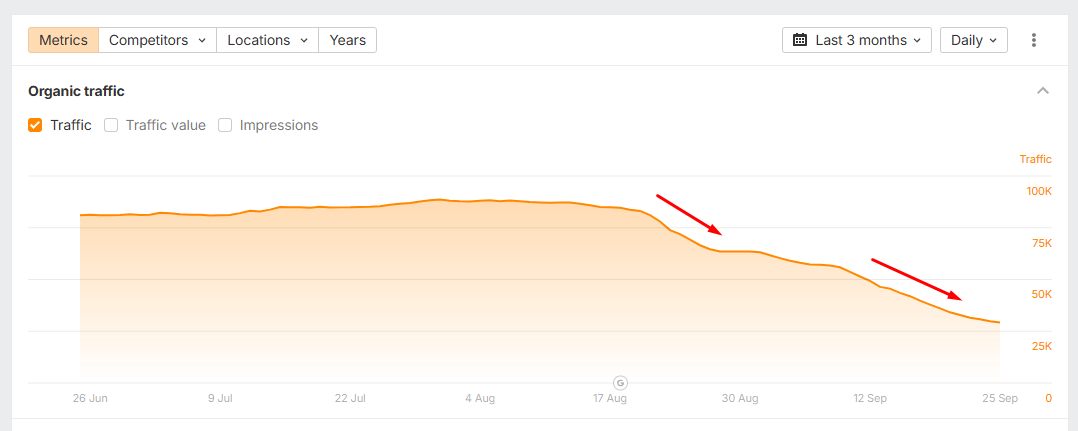
Link buying, keyword-density tuning and rank-only reporting are fading for the same reason. Each was a way to push numbers without making a page more useful, and both Google and Bing have spelled out that they treat that as spam.
On r/digital_marketing, someone asked whether SEO is still worth learning when AI writes so much content. The most upvoted reply listed what hadn't gone away: keyword research, search intent, technical SEO, internal linking, authority and measurement. The shift, it said, was from publishing to figuring out what deserves to rank and why:
Is SEO still worth learning when everyone is using AI?
With AI-generated content becoming so common, I've been wondering what happens to traditional SEO. Creating content is easier than ever, but getting people to actually trust and engage with it seems harder. Does SEO still have the same care...
For a longer look at the career question, our post on whether SEO is still worth learning goes through what transfers and what expires.
A quick self-audit
If you want to know where you stand, answer these ten questions about your own work. Anything you can't answer is the next thing to learn.
- Can you tell, without guessing, whether OAI-SearchBot and PerplexityBot can reach your main pages?
- For your top ten pages, can you say in one sentence what the searcher needs?
- Is there exactly one page on your site that answers each of your main buyer questions?
- Does each of those pages state its main fact in the first two paragraphs?
- Can you name three independent sites that wrote about your brand this year?
- Do you know what Search Console's generative AI report counts, and what it doesn't?
- Have you looked at your server or CDN logs for AI crawler visits in the last quarter?
- Is every piece of schema on your site describing something a visitor can see?
- Does your product have one name across your site, your profiles and your docs?
- When a number moves, can you tell whether it's a real change or noise?
If you answered no to any of the first four, start there, since the rest depend on pages that can be found and understood. Log analysis is the easiest gap to close quickly: most hosting and CDN dashboards already keep the data, and a first look at which AI crawlers visited your site takes an afternoon.
Doing it yourself or handing it off
A strong SEO can do all ten of these by hand, and the ones that need judgment should stay with a person. The repetitive parts are where the hours go: checking buyer questions across engines every week and producing the pages that fill the gaps.
RankControl covers much of that repetitive work. Our AI visibility tracking checks up to 50 buyer questions every week across seven AI engines and records every source each answer cited. Our content engine writes each article against the pages already ranking for its keyword and publishes it on your own site, so your team's time goes to the skills on this list.
Your competitors are building backlinks while you read this.
Organic outreach, social mentions, and citations from Editorial Circle member sites, with managed backlinks available as an add-on. Grow your domain authority without running the campaign yourself.